Despite near-universal agreement that social media is essential to brand building, most marketers still fail to use it across the full marketing funnel, according to new research from We Are Social. A survey of 300 marketers in the U.S. and UK found that while 95% view social media as critical to brand building in 2026, fewer than one-third deploy it consistently across awareness, consideration, conversion, and retention.
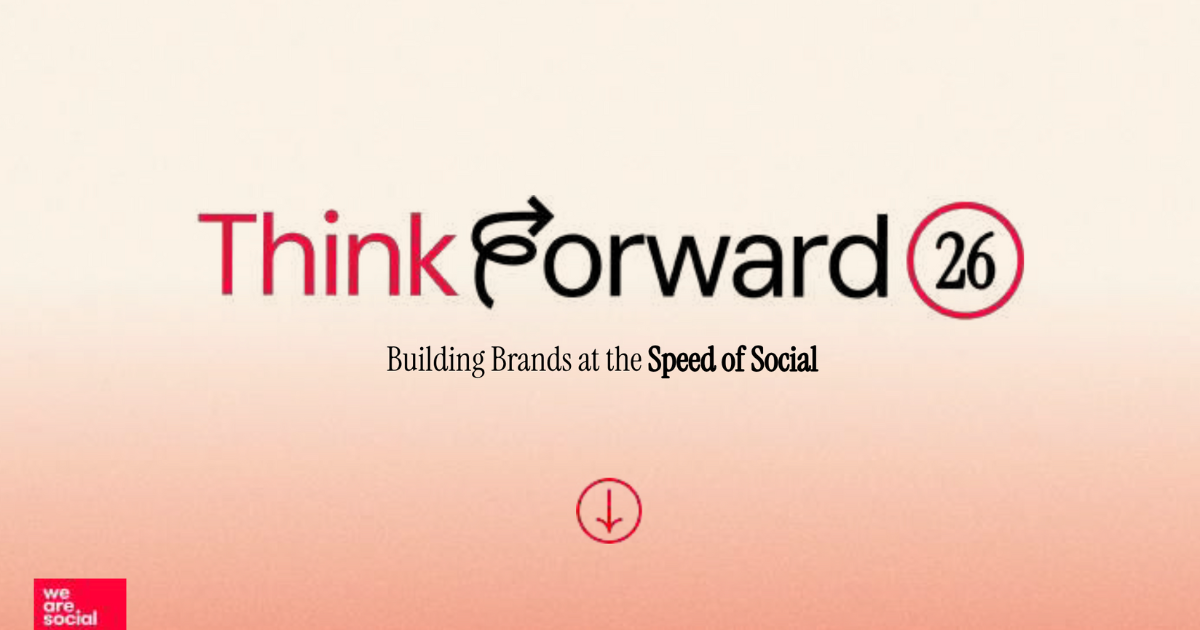
The findings, released as part of the agency’s “Think Forward 2026” report, point to a persistent gap between how brands perceive social media’s importance and how they operationalize it in practice.
“Marketers universally agree on the importance of social media in 2026, with 95% of respondents to our Think Forward 2026 survey identifying it as a critical tool for brand building,” the report stated. “Yet many businesses don’t make the most of what social media has to offer for brand building. Less than a third use it through the entire marketing funnel.”
The report characterizes this disconnect as a structural issue, rather than a lack of awareness, noting that many brands continue to deploy social primarily through isolated tactics rather than coordinated, end-to-end strategies.
Social’s Emotional Advantage
Survey respondents ranked social media as the most effective channel for building emotional connection with audiences, ahead of traditional media such as television and print, as well as owned digital channels. The report highlights social’s ability to drive affinity and cultural relevance as a defining advantage.
However, the limited use of social across the full funnel suggests that many brands may capture this emotional impact only at specific moments, rather than reinforcing it throughout the customer journey, according to the report.
Platforms Outpace Strategy
The report describes social media’s rise “from the supporting act to the main stage,” citing its growing dominance in time spent, cultural influence, and marketing return on investment. It characterizes social platforms as “the world’s most powerful entertainment ecosystem.”
According to the research, consumer behavior has shifted faster than corresponding changes in marketing structures, measurement systems, and budget allocation. As a result, many brands appear to be operating with frameworks designed for an earlier media environment.
Performance Versus Presence
We Are Social’s analysis found that brands typically use social media in one of two ways: as a broadcast channel for message distribution, or as a short-term performance lever focused on immediate conversion. Both approaches, the report notes, represent partial use of social’s capabilities.
Supporting this point, data cited from Analytic Partners and Meta research conducted in 2025 showed a 21% increase in sales when brands aggregated higher-frequency, short bursts of attention rather than relying on fewer, continuous moments.
“Social is uniquely placed to build this presence through the notion of ‘lots of littles,’” the report stated, referring to marketing effectiveness analysis that suggests repeated short exposures can drive stronger brand uplift than a single, longer-format ad.
The Creator Economy Factor
The report also pointed to creator-led marketing as an underutilized driver of long-term brand impact. Data from System1’s 2025 research showed creators outperforming the average media channel by 51% in long-term ROI, influencing brand perception, memory structures, trust, and salience among non-active buyers.
According to the report, this advantage is most effective when creator partnerships are integrated across the customer journey, rather than deployed only at isolated funnel stages.
Revenue Impact of the Funnel Gap
Additional analysis cited from WARC found a 90% median revenue ROI increase when brands moved from a performance-only strategy to a combined performance and brand-equity approach. The report suggests this gap represents not just a missed opportunity, but a measurable revenue impact.
Together, the findings indicate that while marketers broadly understand social media’s importance, many organizations have yet to realign workflows, investment models, and success metrics to support full-funnel execution.
The report concludes that social media’s current deployment often falls short of its demonstrated capabilities, highlighting what it describes as a fundamental misalignment between platform potential and brand strategy, leaving significant value unrealized.
Cecilia Carloni, Interview Manager at Influence Weekly and writer for NetInfluencer. Coming from beautiful Argentina, Ceci has spent years chatting with big names in the influencer world, making friends and learning insider info along the way. When she’s not deep in interviews or writing, she's enjoying life with her two daughters. Ceci’s stories give a peek behind the curtain of influencer life, sharing the real and interesting tales from her many conversations with movers and shakers in the space.












Despite near-universal agreement that social media is essential to brand building, most marketers still fail to use it across the full marketing funnel, according to new research from We Are Social. A survey of 300 marketers in the U.S. and UK found that while 95% view social media as critical to brand building in 2026, fewer than one-third deploy it consistently across awareness, consideration, conversion, and retention.
The findings, released as part of the agency’s “Think Forward 2026” report, point to a persistent gap between how brands perceive social media’s importance and how they operationalize it in practice.
“Marketers universally agree on the importance of social media in 2026, with 95% of respondents to our Think Forward 2026 survey identifying it as a critical tool for brand building,” the report stated. “Yet many businesses don’t make the most of what social media has to offer for brand building. Less than a third use it through the entire marketing funnel.”
The report characterizes this disconnect as a structural issue, rather than a lack of awareness, noting that many brands continue to deploy social primarily through isolated tactics rather than coordinated, end-to-end strategies.
Social’s Emotional Advantage
Survey respondents ranked social media as the most effective channel for building emotional connection with audiences, ahead of traditional media such as television and print, as well as owned digital channels. The report highlights social’s ability to drive affinity and cultural relevance as a defining advantage.
However, the limited use of social across the full funnel suggests that many brands may capture this emotional impact only at specific moments, rather than reinforcing it throughout the customer journey, according to the report.
Platforms Outpace Strategy
The report describes social media’s rise “from the supporting act to the main stage,” citing its growing dominance in time spent, cultural influence, and marketing return on investment. It characterizes social platforms as “the world’s most powerful entertainment ecosystem.”
According to the research, consumer behavior has shifted faster than corresponding changes in marketing structures, measurement systems, and budget allocation. As a result, many brands appear to be operating with frameworks designed for an earlier media environment.
Performance Versus Presence
We Are Social’s analysis found that brands typically use social media in one of two ways: as a broadcast channel for message distribution, or as a short-term performance lever focused on immediate conversion. Both approaches, the report notes, represent partial use of social’s capabilities.
Supporting this point, data cited from Analytic Partners and Meta research conducted in 2025 showed a 21% increase in sales when brands aggregated higher-frequency, short bursts of attention rather than relying on fewer, continuous moments.
“Social is uniquely placed to build this presence through the notion of ‘lots of littles,’” the report stated, referring to marketing effectiveness analysis that suggests repeated short exposures can drive stronger brand uplift than a single, longer-format ad.
The Creator Economy Factor
The report also pointed to creator-led marketing as an underutilized driver of long-term brand impact. Data from System1’s 2025 research showed creators outperforming the average media channel by 51% in long-term ROI, influencing brand perception, memory structures, trust, and salience among non-active buyers.
According to the report, this advantage is most effective when creator partnerships are integrated across the customer journey, rather than deployed only at isolated funnel stages.
Revenue Impact of the Funnel Gap
Additional analysis cited from WARC found a 90% median revenue ROI increase when brands moved from a performance-only strategy to a combined performance and brand-equity approach. The report suggests this gap represents not just a missed opportunity, but a measurable revenue impact.
Together, the findings indicate that while marketers broadly understand social media’s importance, many organizations have yet to realign workflows, investment models, and success metrics to support full-funnel execution.
The report concludes that social media’s current deployment often falls short of its demonstrated capabilities, highlighting what it describes as a fundamental misalignment between platform potential and brand strategy, leaving significant value unrealized.
The full report is available here
Subscribe to Our Newsletter
Check Out Our Podcast