






Agency
Building Influencer Marketing From The Inside Out: How Jeremy Barbara Is Rethinking The Agency Model

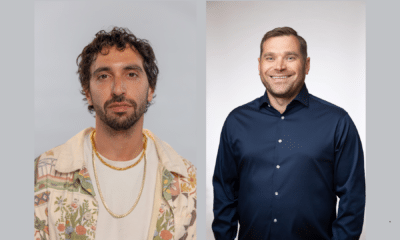
Jeremy Barbara is the founder of InHouse Influencer Marketing, a New York-based consultancy launched in late 2025. Rather than operating like a traditional influencer agency, InHouse positions itself as a fractional, embedded influencer marketing team designed to function as if it were part of a brand’s internal organization. The goal, Jeremy says, is to help companies build durable influencer programs without forcing them to choose between outsourcing control or spending a year hiring and onboarding internally.
“I don’t even really consider it an agency,” Jeremy says. “I think to truly help brands build influencer programs, you really have to dive in, be creative rather than plug-and-play.”
That philosophy stems from both his background and his diagnosis of a growing problem in the creator economy: influencer marketing has become essential, but the systems brands use to run it often prioritize scale over learning, and spend over sustainability.
From In-House Operator to Founder
Before launching InHouse Influencer Marketing, Jeremy spent nearly ten years building performance-driven influencer programs from the brand side. He worked across multiple industries, often joining companies early and developing influencer strategies from scratch.
“One of the things that really excites me is that I’ve built influencer programs basically from the ground up at three very different brands,” he says. “Each time, while there are core things I believe to be true across influencer marketing, every program ends up being very unique.”
That hands-on experience shaped Jeremy’s view that influencer marketing cannot be templated effectively across companies. Audience behavior, platform mix, pricing dynamics, and creative formats vary too widely. Yet many agencies, he argues, rely on standardized playbooks optimized for speed and volume.
Jeremy’s most visible in-house success came during his tenure at SeatGeek, where he helped build an influencer and audio marketing channel from the ground up. He reveals that the program ultimately generated more than one billion views on sponsored videos, grew the company’s Instagram account to over 1.3 million followers, and involved collaborations with more than 1,000 creators.
“That experience taught me how much you learn when influencer marketing actually lives inside the business,” he says. “There are so many small, brand-specific insights you just don’t get when it’s fully outsourced.”
The Limits of the Agency vs. In-House Debate
Jeremy says the question he heard most often from founders and CMOs was deceptively simple: should we build influencer marketing in-house or hire an agency?
Both options come with trade-offs. Agencies can move quickly and manage execution at scale, but often charge a percentage of media spend, an incentive structure that Jeremy believes creates inefficiencies.
“If an agency is charging a percentage of ad spend, there isn’t much incentive to negotiate creator rates down,” he says. “You might end up paying more for content that doesn’t actually perform better for the brand.”
On the other hand, building in-house requires time and risk. Hiring an entry-level influencer manager can take months, followed by another stretch of testing and learning before a program stabilizes.
“You’re realistically looking at close to a year before you have a fully functioning influencer program,” Jeremy says. “And even then, that person could leave, and you’re back to square one.”
In his view, the industry’s framing forces brands into an unnecessary all-or-nothing decision.
A Fractional Model Built to Feel Internal
InHouse Influencer Marketing was designed to sit between those extremes. Jeremy describes the company as a “fractional influencer marketing team” that integrates directly into a client’s existing structure.
In practical terms, that means more than weekly status calls. Jeremy typically asks clients to set him up with a company email address, add him to Slack channels across marketing and creative teams, and include him in relevant internal meetings.
“I want to feel like I’m your influencer marketing manager internally,” he says. “Anyone on the team should be able to message me and say, ‘I saw this creator,’ or ‘I have an idea.’”
The services themselves span the full lifecycle of influencer marketing: strategy development, creator sourcing, outreach and negotiation, campaign execution, and, critically, measurement infrastructure. Brands can choose whether to have InHouse execute campaigns directly, train internal hires, or hand off strategy once a foundation is in place.
Why Measurement and Incentives Matter
One of Jeremy’s sharpest critiques of traditional agency models centers on analytics. He argues that many agencies stop at surface-level reporting, providing brands with promo codes or link performance without helping them interpret results or build long-term benchmarks.
“Every brand tracks performance differently,” he says. “If you don’t build the infrastructure to measure influencer performance properly, you’re flying blind.”
Jeremy emphasizes direct-response measurement, connecting influencer content to downstream outcomes such as purchases and repeat behavior. Over time, this allows brands to develop internal averages and expectations, i.e., data they can use to evaluate new creators more rigorously, according to Jeremy.
Aligned incentives also shape how programs develop. When agencies profit primarily from spend, Jeremy says, they tend to prioritize volume over renewal.
“The real goal is renewals,” he says. “Long-term creator partnerships compound. They make programs stronger without needing exponentially more resources.”
Rethinking How Brands Evaluate Creators
Jeremy is equally critical of how brands select creators. He believes follower count and engagement rate remain overemphasized, often at the expense of consistency and audience trust.
“Followers are a vanity metric,” he says. “Even engagement rate can be misleading.”
Instead, Jeremy focuses on average views and performance stability. According to him, a creator who reliably generates 50,000 views per video may offer more predictable value than one who oscillates between viral spikes and low reach.
“To me, influence is consistency,” he points out. “Someone who performs no matter what they post or when they post.”
That perspective feeds back into InHouse’s testing-first approach. Early campaigns span platforms, creator sizes, and formats to identify what works for a specific brand before scaling.
Creative Freedom as a Performance Lever
Across his career, Jeremy has found that creative integration, rather than rigid briefing, drives the strongest outcomes. He points to examples where brands identified a “superpower” that made influencer content feel native rather than inserted.
At SeatGeek, that meant trading tickets instead of paying flat fees, giving creators real experiences to build content around. At Current, a mobile banking startup where he worked and which is now one of his clients, it meant enabling creators to pay audience members live on stream, turning product functionality into entertainment.
“If the content is better, everyone wins,” Jeremy says. “The creator wins, the audience wins, and the brand performs better.”
He believes closer brand-creator relationships make that kind of creativity easier. Fewer intermediaries reduce what Jeremy describes as the “game of telephone” that often flattens ideas as briefs pass through managers and agencies.
Who the Model Is For
Jeremy points out that the fractional model isn’t universal. He notes that brands with mature influencer engines and large, predictable budgets may prefer traditional agencies optimized for scale.
Where InHouse fits best, he says, is with early to mid-stage companies that are spending meaningfully on marketing, but lack confidence in influencer performance, or that want to diversify beyond paid social dependence.
“There are brands that say influencer marketing didn’t work for us,” he says. “My goal is to get rid of that phrase.”
A Constrained Vision for Growth
When it comes to InHouse’s roadmap, Jeremy is not chasing expansion. He intends to keep the company small enough to remain deeply involved with each client.
“I actually want to get to a point where I have to turn clients away,” he says. “If I can’t stay in the weeds, I’m not delivering what I promised.”
That mindset also shapes his view on churn. If a brand eventually builds internal capability and no longer needs him, Jeremy considers that success rather than failure.
“If they can take what we’ve built and run with it themselves, that’s mission accomplished,” he says.
He also expects influencer marketing to continue to professionalize, with more senior hires within large brands and an increasing demand for specialized expertise. But he hopes the channel avoids becoming as fragmented and formulaic as podcast advertising.
“There’s so much room for creativity still,” Jeremy says. “I don’t think that has to go away.”
As InHouse Influencer Marketing moves through its first full year, Jeremy’s focus remains narrow: deliver results for current clients, onboard selectively, and preserve the integrated model that prompted him to start the company.
“At the end of the day, I just want to keep doing what I enjoy,” he says. “As long as I’m helping brands build influencer programs that actually work for them, that’s enough.”
Subscribe to Our Newsletter
Check Out Our Podcast