




Strategy
Why Lowe’s Is Betting On A Creator Network To Turn DIY Into Social Commerce

Jennifer Wilson has spent nearly two decades inside Lowe’s – long enough, she says, to have “grown up in the brand.” Now, as the home improvement retailer’s Senior Vice President & Chief Marketing Officer, she’s trying to rewire how people discover and buy DIY projects by building what she calls a creator network: an extensive, vetted roster of influencers who don’t just promote products, but also create full projects that can be shopped through social platforms and Lowe’s digital storefronts.
The problem Lowe’s is trying to solve is scale and speed at a moment when younger shoppers often discover, decide, and purchase inside social feeds.
Jennifer argues that a one-off influencer partnership can deliver a “flash in the pan” impression spike, but doesn’t reliably cover Lowe’s national footprint or the variety of its categories. “We wanted scale,” she says. “We wanted there to be coverage across the footprint for Lowe’s.”
That’s why Lowe’s moved toward a network model that blends affiliate-style monetization with brand-safety vetting, coaching, and feedback loops designed to improve Lowe’s own assortment and fulfillment. Jennifer reveals that the company has already reached “26,000 members” since launching earlier this summer, and she describes the group as both a growth channel and a real-time proxy for customers.
“We measure a lot of KPIs across the creator network, from total creators to activation rate to engagement stats,” Jennifer says. “But in the end, we’re really leveraging our creator network to drive traffic and revenue to our site. Those are our hero metrics.”
She adds that Lowe’s ultimately wants to move the industry toward multi-touch attribution to capture creator-driven sales both online and in-store.
Why Lowe’s Built a Creator Network Instead of Relying on One-Off Deals
Jennifer says Lowe’s isn’t abandoning traditional influencer partnerships, but she believes the retailer needed a programmatic structure to avoid gambling for sporadic hits. She believes that home improvement creators differ from fashion and beauty influencers in a fundamental way: their work is project-based and labor-intensive, and credibility comes from doing, not styling.
“They wouldn’t just be picking an item off the rack,” she says. “They were going to be literally creating.”
That shapes Lowe’s value proposition. Jennifer points to “incentives and commissions” that are “extremely competitive,” but emphasizes another lever: encouraging creators to tackle larger builds, such as “a bathroom remodel, a kitchen remodel, an entire garden project,” rather than a single product post.
The goal, she says, is content that feels “hands-on” and “authentically” connected to Lowe’s, instead of a quick item haul.
“Success for us goes beyond scale,” Jennifer says. “We want a large portion of the network actively engaged, and we want creators producing content that goes beyond product and into the project.”
She adds that Lowe’s is closely tracking the balance between project-based content and product-specific posts, and maintaining the right mix of creators who speak to both homeowners and professionals.
Vetting, Brand Safety, and a Wide Range of Creators
Jennifer says Lowe’s accepts creators “of most sizes,” with a heavy skew toward micro-influencers. “A micro-influencer is somewhere around 50,000 to 100,000 followers,” she says, adding that Lowe’s typically looks for “at least usually 10,000 followers” to join, while also working with creators “all the way up to millions and millions.”
The company also runs a vetting process focused on “brand safety,” audience fit, and creator intent. Jennifer says Lowe’s is intentionally building a diverse roster: DIY project doers, home decor creators, beauty creators, and professionals who stress-test tools because Lowe’s merchandising breadth demands different narratives.
“We have 13 different merchandising divisions within the company,” she says, and shopping behavior varies by category.
The network model, she argues, solves for that complexity: it’s “really hard to find the one or two influencers” who can cover multiple departments with credibility. With a network, Lowe’s can “strike a lot of chords at one time.”

Photo: Lowe’s “Move Like Messi”
Source: Lowe’s
‘Skating to Where the Conversation Is Happening’
Jennifer’s north star is Millennial and Gen Z shopping behavior, particularly the idea that discovery and purchase now collapse into a single social moment.
She describes Lowe’s as “obsessed with social commerce” and says the company isn’t trying to force shoppers to leave a platform to complete the funnel. “The discovery, inspiration, the activation, and the purchase all happen in social,” she says.
Her point is partly cultural: she questions whether younger consumers still follow the traditional ritual of planning a home-improvement weekend trip. “When is the last time that you’ve heard a Millennial or a Gen Zer say that? Never,” she says. Instead, she frames social as the place where “impulse signals” and peer influence translate directly into checkout.
For Lowe’s, that means meeting customers where they are. “We’re not trying to ask people to come to us, per se; we’re going to them,” Jennifer says. “And I think the brands that are doing that well today are the ones that are winning.”
Creators as a Customer Proxy
Jennifer notes that Lowe’s creator network scaled quickly after its summer launch, reaching 26,000 members.
She attributes momentum to a mix of free samples, commission rates, open houses, and feedback sessions, and a hands-on enablement approach for smaller creators. “We do a ton of coaching and teaching,” she says, including “templates” meant to help micro-influencers grow.
But her bigger takeaway is the direction of learning: “We’re not only teaching them, but they’re teaching us.” Lowe’s has begun bringing creators into roundtables and summit-style sessions where “nothing’s off limits,” she says, discussing not only program mechanics but also broader Lowe’s issues, such as assortment and fulfillment.
Jennifer describes these sessions as a kind of live customer research. Creators flag pain points – delivery costs that were “unintended,” or category gaps such as flooring selection – and Lowe’s uses that feedback to reshape priorities. “They’re effectively a proxy for a customer,” she says, calling the feedback loop “invaluable” and “unexpected.”
She also ties the feedback mechanism back to internal alignment. The challenge, she points out, is ensuring business units don’t “resist” what creators surface. Instead, Lowe’s tries to bring teams into those conversations, so merchants can hear the issues directly and “take notes.”
From Transactional Posts to Two-Way Relationships
Jennifer argues that the industry’s next phase depends on whether brands treat creators as vendors or partners.
“If you create a transactional relationship, you’re going to get what you paid for,” she says. In her view, the upside comes when brands “deepen” the relationship, stay open to “insights and feedback,” and treat creator programs as two-way systems rather than media buys.
That’s also how she frames Lowe’s network strategy: not chasing the biggest roster possible, but building loyalty and mutual accountability. “We want creators who love our brand, who are loyal to our brand, and who are willing to tell us where we have opportunities to improve the experience,” she says.
A Black Friday ‘Wow Moment’ and the Traffic Question
Jennifer cites Black Friday as evidence that the creator network is working.
Lowe’s offered “50 loyalty buckets per store” to members: five-gallon buckets filled with nearly a hundred dollars’ worth of merchandise, plus a “golden ticket” for a “$2,000 free appliance.” The company seeded the promotion to its creator network ahead of the holiday, and Jennifer says the campaign reached “over 60 million views” in the run-up.
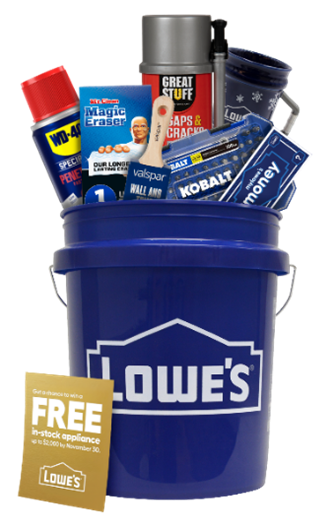
Photo: Lowe’s Black Friday bucket giveaway
Source: Lowe’s
She compares that reach to marquee sports inventory, such as the Super Bowl, then shifts to outcomes. “Placer AI traffic data marked us at a 6% traffic comp for that day,” Jennifer says, adding that “one of our primary competitors” posted “a 0.3 traffic comp.”
For Jennifer, the campaign did more than drive foot traffic. She says it helped Lowe’s recreate “the old nostalgic Black Friday camp out” and generated human-interest follow-on stories, such as a shopper gifting a golden ticket to another family in the store, that creators amplified afterward. “If somebody in the building said what was the difference maker for Black Friday for you this year, the answer is our creator network,” she says.
The Future of Influence
When Jennifer talks about the future of influence, she doesn’t start with platforms or cost per milles. She starts with children, and the idea that the strongest purchase pressure inside a household may come from the youngest person in it.
“A lot of our research tells us that particularly Millennials and Gen Z, say that their kids have the biggest influence over their purchasing power,” she says.
Her shorthand for that insight comes from a personal example. “My son likes to go to Starbucks because they have cake pops,” she says. “But I keep asking my team, ‘What’s our cake pop?’”
Jennifer says Lowe’s is already testing ways to connect with Gen Alpha through in-person experiences such as kids workshops tied to well-known figures, because parents are looking for hands-on activities that pull kids away from screens.
“Nearly every month, we’re releasing new features and benefits across the creator network,” Jennifer says, pointing to self-serve creator storefronts, one-click tools, project bundles, and the integration of creator content directly into the Lowes.com shopping experience.
She adds that Lowe’s plans to appear in new places throughout 2026, both at major industry moments and through its own events, to recruit more creators and expand the network’s relevance.
“I believe the future of influence for our children is the Gen Alpha generation,” she says. “I want to give them new ways to think about Lowe’s and not just about traditional home experiences.”
Subscribe to Our Newsletter
Check Out Our Podcast