






Strategy
Don Silvestri On The Trust Shift To Creator-Led Finance And Why Debt.com Reimagined The FinTalk Awards

For decades, Americans learned how to manage money through banks, financial advisors, and legacy media. That trust model is now fracturing, Don Silvestri argues. More people are turning to creators across social media for guidance on debt, budgeting, investing, and long-term financial stability.
As President of Debt.com, Don – a longtime digital media and marketing executive and former NFL professional football player – has repositioned the company around this shift, reimagining its FinTalk Awards to reflect how financial trust is now built online.
The Breakdown of Institutional Financial Authority
Economic cycles, debt crises, and rising financial complexity are not new. What is new, according to Don, is how openly people now discuss money, and who they trust when they do.
“The economy changes. There are ebbs and flows,” he says. “But what hasn’t happened until the last 10 years is that there’s more of a conversation now. There’s more transparency about money challenges.”
Historically, financial guidance flowed top-down; consumers were expected to trust banks, advisors, or financial journalists they had never met. That model assumed authority was conferred by credentials and institutions. Today, Don believes that assumption no longer holds.
“What used to happen is you’d go to the top news sources and trust the writer,” Don says. “Now it’s flipped.”
He notes that part of that shift is structural: debt has become more common, more visible, and more emotionally charged. Credit cards, student loans, housing costs, and inflation touch daily life in ways that abstract financial advice often fails to address. At the same time, confidence in institutions has eroded, leaving consumers skeptical of one-size-fits-all solutions.
That skepticism created space for a different kind of authority.
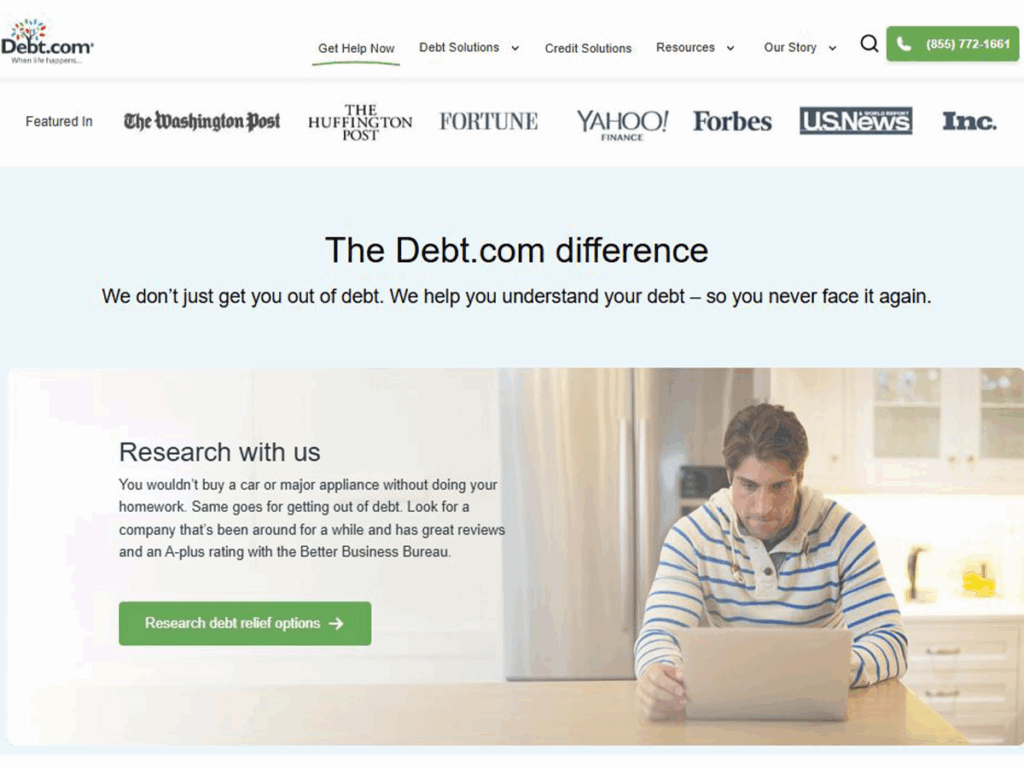
Image: Debt.com homepage
Source: Debt.com
Why Creators Have Become Financial Trust Brokers
Creators didn’t replace institutions overnight, as Don points out. They filled a gap institutions struggled to address: relatability.
“When Facebook first launched, it was about sharing gossip. When Instagram launched, it was about food and fashion photos. When TikTok launched, it was about dancing and dating. Now, all those platforms have matured,” he explains. “Financial educators have found a new home, with a new way of reaching Americans where they live, which is frankly on their phones. I don’t know what the next social media platform will be to catch fire, but I’m fairly certain that, after a few years, financial education will thrive there.”
Don also notes the shift toward the “world of storytelling,” adding that “people resonate toward [creators]. ‘I’m a single mom,’ ‘I’m a dad struggling,’ ‘Do I need a second job?’ Somebody else is doing it and talking about it.”
Unlike traditional financial experts, creators often share their personal context: mistakes, debt totals, tradeoffs, and emotional strain. For audiences navigating similar situations, that transparency feels safer than polished institutional messaging.
“You didn’t see that 20 or 30 years ago,” Don says. “But you’re seeing it now.”
He adds that this is not just about platform preference. It reflects a deeper recalibration of trust. People increasingly believe those who have lived the problem over those who simply explain it.
“I would much rather trust somebody that I have a relationship with,” Don says. “That’s why people go to their parents. Now it’s easier to build that relationship with someone online.”
He argues that creators have become intermediaries, bridging financial complexity and human experience.
Debt.com’s Strategic Pivot Toward Creator-Led Education
Debt.com’s response to this shift has not been to compete with creators, but to integrate them. Founded as a consumer platform helping people understand credit card debt, student loans, tax relief, and bankruptcy, the company has expanded its role beyond transactions.
“Our real mission is to keep people from getting into debt,” Don says. “And if they do, help them out of it as quickly and simply as possible.”
To do that, Debt.com increasingly functions as a hybrid: fintech infrastructure at the core, content and creator collaboration at the edges. Don describes the company today as “a little bit of everything,” technology-driven, but content-led.
“We’re definitely a fintech company,” he says. “But we’re very much a content-driven company, and we welcome experts in the industry.”
That includes creators who already command trust among audiences facing financial stress. Rather than pushing users down a single path, Debt.com positions itself as a guide, connecting people with the right information, creators, or vetted providers, depending on their situation.
“In the old days, they’d say, ‘Just go get bankruptcy, and you’ll be fine,’” Don says. “It’s not the best choice for everybody.”
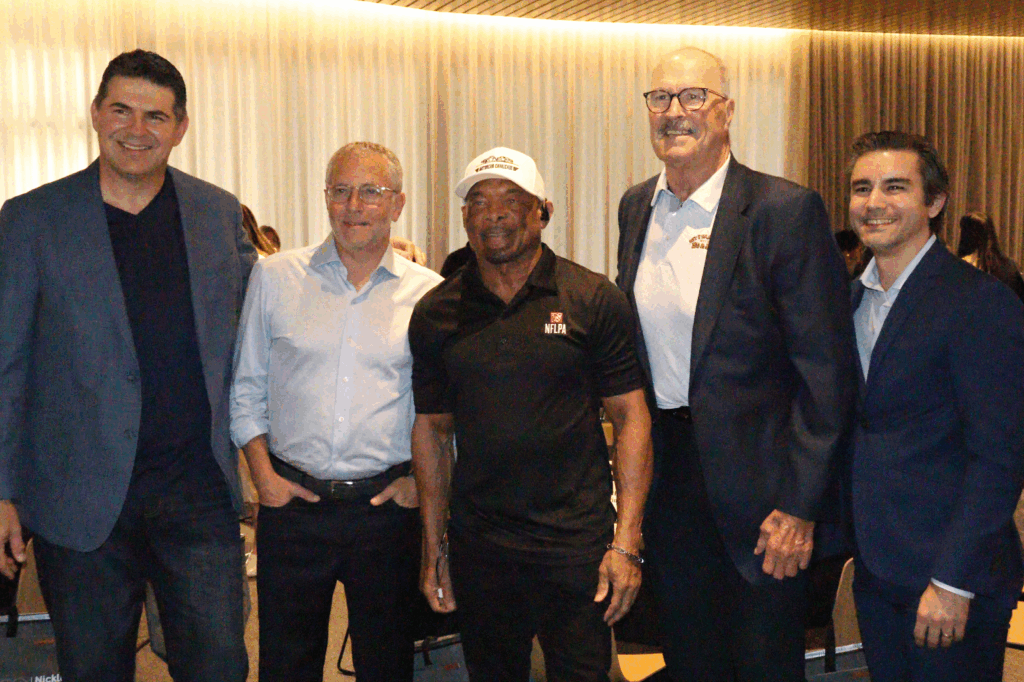
Photo: Touchdown Luncheon 2025
Source: Debt.com
Why the FinTalk Awards Needed to Change
The FinTalk Awards emerged from that same realization. Originally conceived to spotlight financial creators, particularly on TikTok, the awards were designed to recognize quality rather than popularity.
“It wasn’t about who had the most views,” Don says. “It was whose content is original, who’s doing it for the right reasons, and who’s giving good advice.”
Over time, however, the creator space changed. Financial education has expanded beyond short-form video to podcasts, long-form YouTube content, newsletters, and blogs. For Don, the awards needed to reflect that shift.
“The world has changed,” Don says. “Social media has changed.”
Reimagining the FinTalk Awards was not about rebranding for novelty’s sake, he stresses. It was about acknowledging how audiences actually consume financial guidance today and how creators operate as businesses.
“We wanted to diversify the types of content we celebrate,” Don says. “There’s really good stuff out there that people may not even know about.”
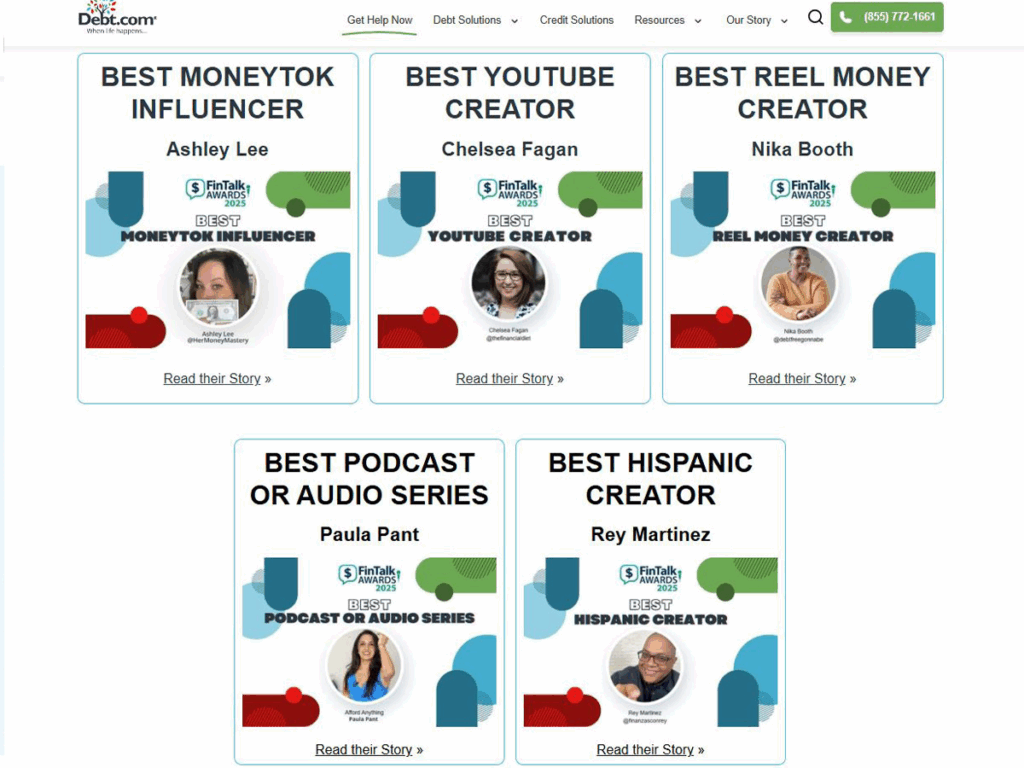
What the 2025 Awards Revealed About Creator-Led Finance
Reviewing this year’s nominees, Don says the most striking insight was the depth of talent.
“There were so many really solid contestants,” he says. “It was difficult to choose.”
For Don, that abundance reflects how normalized creator-led financial education has become. Creators are no longer fringe voices; they are primary educators for large audiences, often crossing borders and cultures.
“These content providers are not just speaking to their hometown anymore,” Don says. “It’s going worldwide.”
Equally notable was what didn’t stand out: gimmicks. Don draws a clear line between creators who build trust and those who chase shortcuts. “This isn’t ‘Top 10 steps,’” he says. “These are real situations and real guidance.”
Creators as the New Financial Front Door
One of the most consequential implications of this shift is where financial journeys now begin. As Don explains, in many instances, the first touchpoint is not a bank website or advisor consultation. It’s a creator.
“People will take the influencer’s advice before they’ll go back to anything traditional,” Don says.
That doesn’t mean creators replace institutions entirely. Instead, they act as filters, helping audiences decide when and where to seek professional help.
Debt.com’s role, in Don’s view, is to support that transition responsibly. “We don’t throw just one solution,” he says. “We want to understand your scenario.”
In practice, that means sometimes directing users away from services and toward DIY education or creator content that better fits their needs. “Sometimes we’ll tell somebody it’s really not in your best interest to go to a company,” Don says. “Here’s a place on our website, or here’s an influencer that fits you.”
This approach reframes monetization as secondary to trust.
Community Over Competition
In light of the new FinTalk Awards, Don envisions deeper collaboration among creators and potentially more physical community-building.
“Could we eventually have a real awards-type thing?” he asks. “A banquet. Bringing people together.”
That vision reflects a broader shift Don sees in the creator economy: from zero-sum competition to shared credibility. “It’s not competition,” he says. “It’s celebrating each other’s success.”
The reimagined FinTalk Awards are less about trophies and more about signaling legitimacy. For creators, this validation affirms that financial education is not just entertainment or side income, but a serious business category with real impact.
In a financial space shaped by uncertainty, Don believes that collective trust may prove more durable than any institution alone. “Go to the content that resonates with you,” he advises. “But if you ever get stuck, there are people who can help guide you.”
Subscribe to Our Newsletter
Check Out Our Podcast