



Platform
How a Century-Old Comics Syndicate Became a Creator Economy Accelerator

Tommy Devoid launched his daily comic strip “Never Been Deader” on Instagram in April 2023. Three years later, he had a book deal, newspaper print distribution, and a specialty coffee line built around skeleton-themed puns. None of it came through a talent agency or a creator fund. It came through Comics Kingdom.

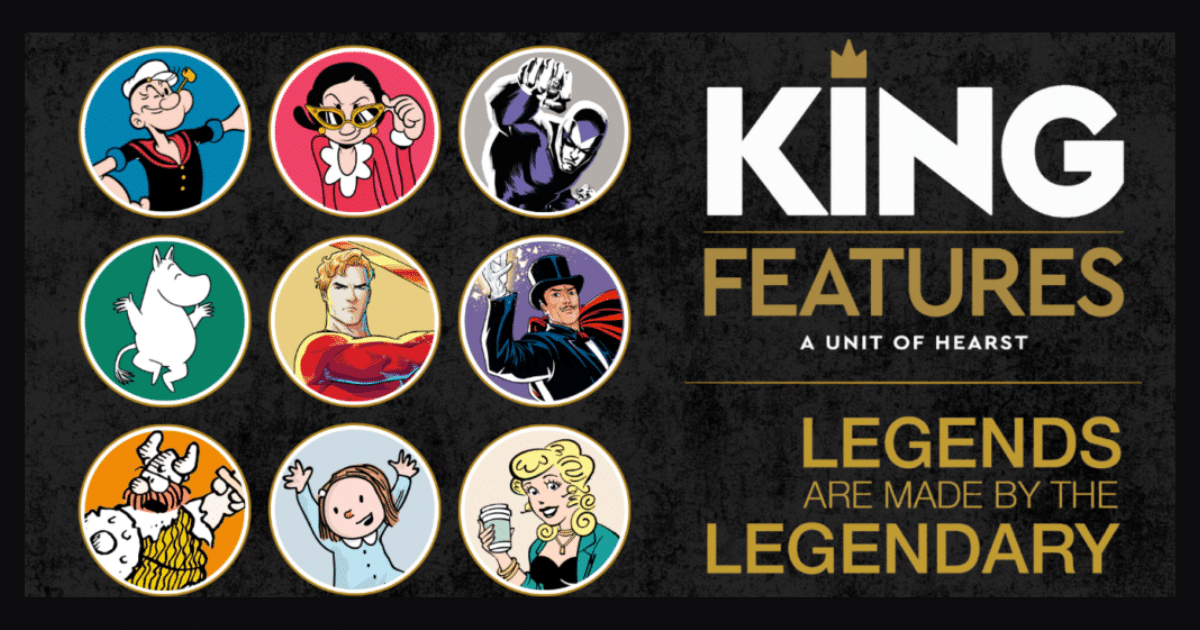
Comics Kingdom is the direct-to-consumer platform operated by King Features, a Hearst division founded in 1915 to distribute comic strips to newspapers worldwide. CJ Kettler, the division’s president, calls it “a 130-year-old startup,” and the framing is not entirely ironic. Under her leadership, Comics Kingdom has been rebuilt from a subscription portal into something closer to a creator accelerator: offering syndication, licensing, e-commerce infrastructure, and print distribution to digital-native cartoonists who had no path into those markets before.
“I like to think of it now as more than just a distribution channel, but also a platform for cartoonists to bring their comics out,” CJ says.
Alex Garcia, who oversees the D2C business as Director of Direct-to-Consumer Comics, rebuilt Comics Kingdom after years in digital marketing at King Features and an earlier decade at Barnes & Noble studying how retail-scale audiences behave. He calls the old platform the “Purple Nightmare.”
The redesign was built around a specific strategic bet: a comics platform could mirror the native experience of social media while offering something social media cannot, a direct line between content discovery and paying subscribers.
The Platform Rebuilt Around Social, Not Newspapers
Alex’s redesign touched the experience from the ground up. “We went from left to right, top to bottom,” he says. “We introduced vertical comics in addition to panel formats.” The site was rebuilt to feel native on mobile, support multiple comic formats, and move readers from discovery to subscription without friction.
The results, by Alex’s own account, are notable. Subscription revenue grew close to 40% post-relaunch despite structural declines in legacy pageview traffic across the category. E-commerce revenue is up roughly three times, with 2026 pacing to double again. 2025 was the platform’s most profitable year on record.
One piece of infrastructure behind the e-commerce growth is an AI commerce agent Alex built in-house, called George. It manages catalog review, pricing analysis, and product ideation across the platform’s more than 2,100-product Shopify store. The limit on AI’s role is explicit. “We never really let it creep into the art,” Alex says. “That’s always been a no-go zone.”
The revenue mix across subscriptions, advertising, and e-commerce responds to different levers. “When we really relaxed the paywall, our revenue for ads went up,” CJ says. “We’re just constantly moving the levers to see how you can optimize.”
Finding Talent Before It Knows It’s Talent
King Features’ talent pipeline runs in parallel tracks. Traditional paper submissions still arrive. The faster one runs through social media.
PHOTOS
When Tommy’s skeleton character work started gaining traction on Instagram and Facebook in 2023, Alex noticed it. “I had an impulse for what’s working, what isn’t working, things that just make me laugh,” he says. “I bring it to the broader group.” That group, which includes an editorial team, roundtable candidates, and votes collectively. In one 13-month window, that process signed roughly 20 new strips, a pace Alex describes as “breakneck considering what traditional syndication was before.”
The team also pursues talent before a complete property exists. During the pandemic, a manga-style piece of Popeye fan art circulated online. CJ flagged it, the team tracked down the artist, Marcus Williams, and the result was “Eye Lie Popeye,” a long-form manga interpretation of one of King Features’ legacy characters. “He didn’t even do a full comic,” CJ says. “But he knows how to do a comic, and Alex went after him.”
Most recently, the team commissioned a cartoonist to cover the NBA Finals in comic strip form for the San Antonio Express-News. CJ describes this as a new category: comic sports journalism. “It’s a brand-new art form,” she says. “And again, it’s by discovering talent primarily through social and then finding ways to bring talent into the ecosystem and creating new stuff.”
What the Machine Opens Up for Creators
Before King Features, Tommy managed a Shopify store alongside daily comic production. The combination became unsustainable. “It was a lot of pressure to track all these orders, and the business end of things was becoming a little bit too much on top of making a comic strip,” he says.
Once Comics Kingdom absorbed the commerce operation, the creative work improved directly. “I had way more time to focus on the comic, which then just got that much better.”
The infrastructure behind that handoff is substantial. King Features holds more than 250 active licenses and 5,000 distribution partners globally. When Tommy joined, the team targeted a book deal quickly, aiming for a Halloween release window. Print distribution into newspapers followed. CJ notes that newspaper real estate for comics is effectively committed, with editors reluctant to displace established strips. “Nobody ever moves a comic out and changes the page,” she says. “But we got Tommy into a lot of newspapers.”
The revenue picture shifted accordingly. “The digital and the print revenue monthly is fantastic,” Tommy says. “I would not have seen any of that had I just done social media.”
Fandom Depth Over Follower Count
Most platforms measure success in reach. Comics Kingdom is measuring something different: whether the reader who comes in for “Blondie” sticks around long enough to discover “Never Been Deader.”
“There’s no reason why a 70-year-old ‘Blondie’ reader isn’t going to read ‘Never Been Deader’ and say, ‘Oh my God, this is the funniest thing I’ve ever seen,’” CJ says. “Because funny is funny.”

The recommendation architecture is still being developed. CJ compares the challenge to Netflix’s clustering problem, where users get pegged to a genre and cannot easily break out of it. “My Spotify is constantly giving me the same songs,” she says. “I want to experience more.” The target at Comics Kingdom is audience crossover between clusters, not deeper segmentation within them.
Alex frames the platform’s advantage over social in conversion terms. “You can only monetize as much as you can visualize,” he says. Social provides discoverability at scale but no guaranteed path to subscription or purchase. Comics Kingdom is designed to be the conversion layer: directing followers toward exclusive content, full archives, and merchandise available nowhere else.
For Tommy, operating both channels simultaneously is the point. “It provides more opportunity for people to want to purchase something or subscribe to something,” he says. “It’s just nice to have options.”
The Franchise Logic
Brand partnerships at King Features run through its classic IP first. Popeye has appeared in collaborations with Coach, Supreme, and Moschino, each structured around whether the brand’s direction aligns with the character’s positioning. CJ’s framework is direct: “What do you want to do? Does it jive with what our characters’ core brand promise aligns to? And then we come up with a creative idea together.”
For newer creators on the platform, the path to brand partnerships requires building the fan base first. Licensees move cautiously unless a property has real audience support behind it. The Tommy Devoid coffee collaboration started inside the team. Alex and Tommy worked through mortuary-themed flavor names. A small brew house produced the line. CJ conducted a taste test at the office.
The broader message CJ delivers to brand partners is about creative ambition rather than scale metrics. “If you don’t have a big idea, you don’t come up with something that resonates,” she says. “It’s just not going to fly.”
The Next 100 Years
2025 was Comics Kingdom’s most profitable year on record, according to CJ and Alex. The question King Features is now positioned around is whether the model holds: whether the syndication infrastructure built for a newspaper economy translates into durable franchise development for creators who came up through Instagram and Facebook.
Alex believes the logic is sound. “Our job,” he says, “is to help originality travel farther,” from webcomic to publishing to syndication and beyond. “King Features and Comics Kingdom are turning the strength of legacy syndication into a platform for the Creator Economy and new cartoonists.”
For Tommy, the cost-benefit calculation came out clear. “I didn’t sacrifice a single thing,” he says. “It’s a dream come true.”
Subscribe to Our Newsletter
Check Out Our Podcast