






Influencer
How Tre Welch Turned Unscripted Family Moments Into a Calculated Media Business

For eight months, Tre Welch went live almost every night while keeping the existence of his newborn daughter, Renzie, hidden from his audience, even when viewers occasionally heard what sounded like a baby in the background. How it felt and what it took is the core of his business.
Tre, 33, loads trucks at UPS before dawn in Booneville, Mississippi, a town of roughly 10,000 people, and paints houses as an independent contractor on the side. He holds a Kinesiology degree from Mississippi State. He is also the man behind @juicecupbox, a cross-platform family content account with more than 4.3 million followers across Instagram, TikTok, Facebook, and YouTube, two television credits on TLC and Peacock, and a People Magazine feature. The through line across all of it is an argument: that the most durable content business is the one that looks least like a business.
That content features a cast. Tre’s mother, Lorenda, and her best friend Shelly, two women in their sixties who have been close for more than fifty years, drive much of what makes his TikTok videos work. Their dynamic, a Black woman and a white woman from the same small Mississippi town talking the way people talk when nothing is staged, became the unexpected engine of the JCB franchise.
“When it’s all three of us,” Tre says, “more people engage, more people are in the room, more money is being put out.”
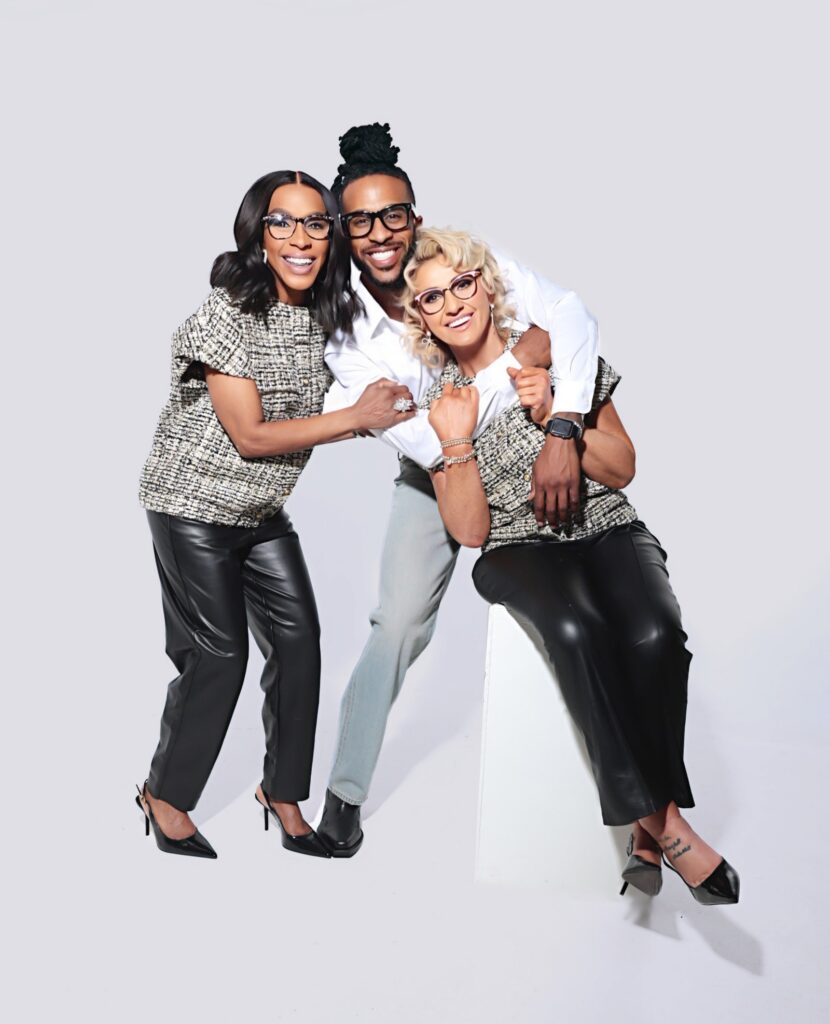
Photo: Lorenda, Tre, and Shelly
Credit: Casey Diggs
Managed by Drew Orey and represented by Viral Nation, Tre now has a podcast, active Cameo bookings, and brand partnerships that can generate five figures in a month. He is also still loading trucks at UPS in the morning. The economics, as he describes them, are less surprising than they should be.
How a Prank Video in Mississippi Became 24 Million Views
In high school, classmates kept telling Tre to get on Vine. He didn’t know what Vine was. A few years later, friends told him TikTok was where his personality belonged. He downloaded it quietly, watched other creators to understand the format, and noticed content featuring mothers. His own mother, he decided, was extremely easy to frighten.
The first prank video got 22 million views, 2.3 million likes, and more than 500,000 shares. “That let me know,” Tre recalls. “This is it.” It was not typical for a debut. It took him nearly three years of daily posting to build his first million followers on that account. His second account reached a million in nine months. A Meta creator event in Atlanta shifted his distribution approach: the guidance was to cross-post every video everywhere simultaneously and spend the first hour engaging in comments. He has been doing it that way since.
Shelly’s arrival added the ingredient that locked the format in. She returned to Booneville to care for her aging parents and stopped by to visit Lorenda. Tre was recording everything. He filmed the two women talking about clothes and posted without much ceremony. That video got 3 million views.
“People saw the friendship through the videos,” Tre says. “They saw how genuine, they saw how real.”
What the Platform Actually Pays
The raw economics of Tre’s business are harder than the follower count suggests. When he started, TikTok paid around $600 to $800 per million views. Now the same million earns closer to $200. “As social media is growing, more people want to be content creators,” he says. Platform rates diluted by supply are not a theory. It is his monthly statement.
Brand partnerships make up the difference when they come. Tre describes months where partnerships generated five figures and months where nothing came in. “The content life of seeing money from it is always up and down,” he says. “You can have a good month and then a bad two months.”
The house painting work and the UPS position are not remnants of a prior life. They are the financial floor that allows him to say no.
It took Tre three years before content produced any real income. He spent those years posting daily while his mother told him to get a job, and his friends told him he needed sleep. “I knew it was something that was calling me,” he says. “Being in front of a phone was so natural to me.”
What Brands Get Wrong About Creators Like Tre
When beverage brand ZEROES came looking for representation at Rock the South, a major outdoor country music festival, they wanted high energy and an authentic lifestyle fit. The campaign required an Instagram Reel. What made it work, Tre says, was straightforward. “They wanted me to be myself. That’s a plus.”
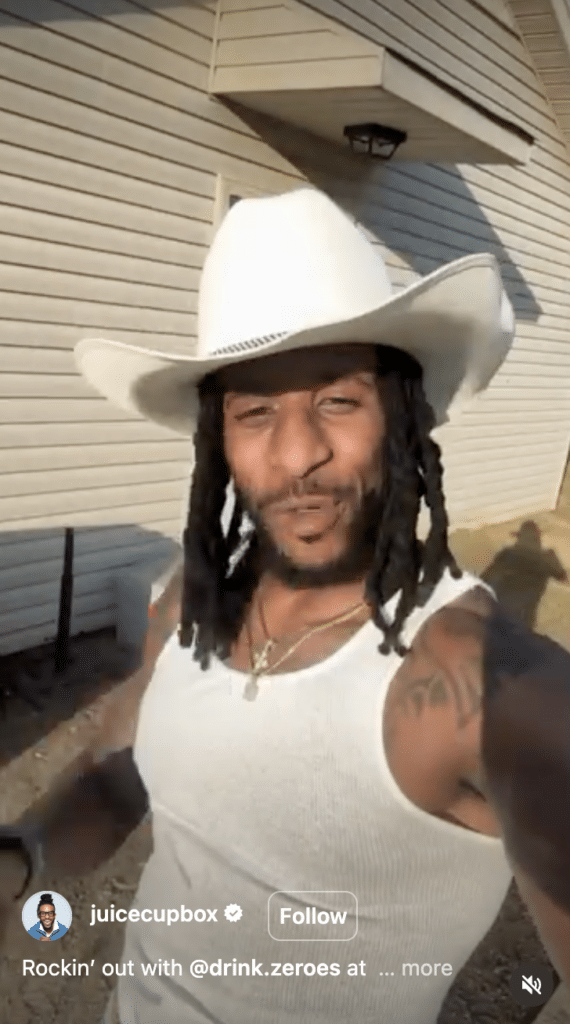
He is explicit about where brand partnerships fail. “It’s hard when a brand tries to write out what they want you to be,” he says. His content is unscripted by design, and a scripted deliverable creates a visible seam in something that only works because it is seamless. The ZEROES deal let him film the way he always films: a moment with his people, a product in the frame, no pretense. He ended the event with the company owner’s personal number.
Monthly meetings with Orey and Viral Nation map out which brand categories Tre is genuinely interested in promoting. He brings the categories: gym gear, health products, and family-aligned items. The agency brings contacts. Everything gets vetted. “I don’t want to promote brands that I don’t really know much about,” he says. The filter is the same one his audience applies to him.
The Eight Months Nobody Knew About Renzie
When Tre found out he was having a third child, he told almost no one. Lorenda didn’t find out until the pregnancy was six or seven months along, and only because the mother of his child reached out to her first. Shelly, whom Tre describes as someone who would have told the entire town, had no idea. He went live almost every night through the pregnancy and the first months of his daughter’s life. When viewers heard what sounded like an infant in the background, he told them it was the television.
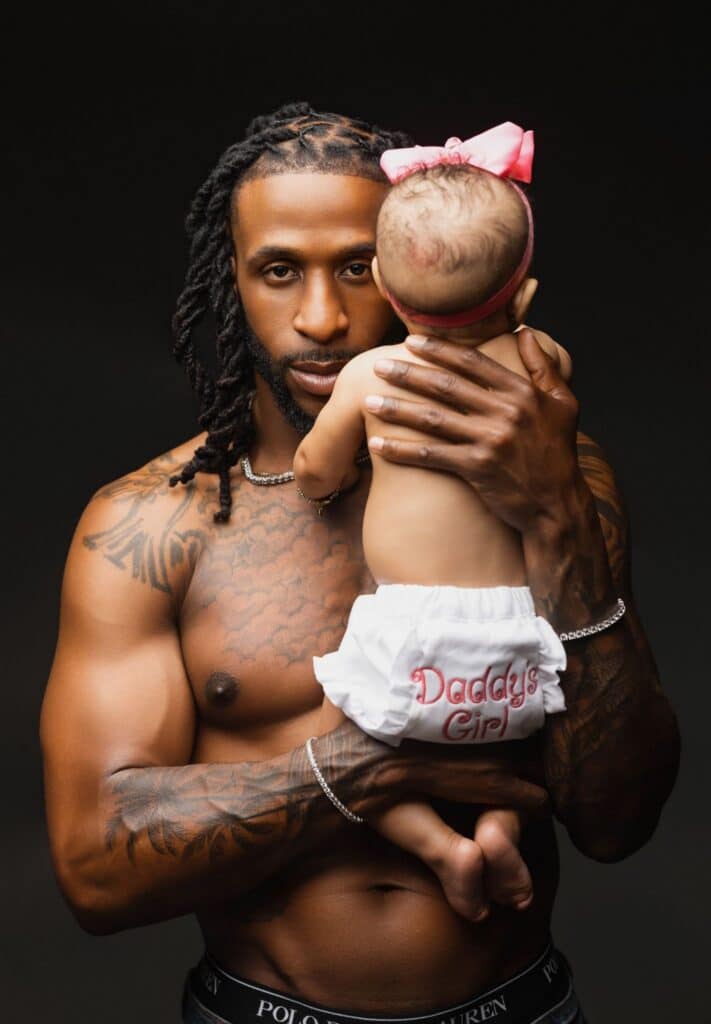
Photo: Tre and Renzie
Credit: Katherine Jones, Katherine Michelle Photography
“I want it to be big. I want it to be special. I want it to be something to remember,” he says of the decision to turn the reveal into something deliberate. He brought the concept to Orey, who worked his contacts and came back a few days later with People’s interest. Tre sent 28 photos. The magazine selected their images and published the story in May.
The response included comments calling the birth of a baby something that “made them sick.” Tre says the hostility put him in a dark place. He lost connections he had built through years of content. What the People Magazine partnership also demonstrates, without Tre naming it this way, is the infrastructure behind his most intimate content: the timeline was his, the format was his, and his audience experienced it as a gift rather than a product.
Passing Down the Franchise
“The Juice Room” podcast, two episodes in with a third arriving this month, is Tre’s move toward longer-form storytelling. He sees it as a precursor: if the audience builds, the next step is a streaming format following the cast around Booneville. Merch branded JCB, for Juice Cup Box, is in development, with pricing structured to remain accessible to younger fans.
His oldest son, Kam, 11, already dances on TikTok and has inherited his father’s stage presence. Tre passes the same instruction down that the whole franchise was built on: be yourself, stay consistent, don’t perform for other people. For a man who built a media business on the logic that audiences can sense the difference between real and performed, the succession plan is not sentiment. It is the strategy.
“I’m not doing anything but being myself,” he says. “Being myself has gotten me where I am today.”
Cover photo credit: Casey Diggs
Subscribe to Our Newsletter
Check Out Our Podcast