






Technology
Search Traffic Is Down and Algorithms Keep Shifting – GRO Bets the Fix Is Email

Content creators who built their businesses on Google search traffic and display advertising are undergoing a disruption that moved faster than most expected. AI has reshaped how people search, platform algorithms have changed what audiences see, and the revenue streams built on top of both are under pressure. Ben Jabbawy, who spent more than a decade building and eventually selling one of Shopify’s top marketing automation companies, thinks the fix is not new.
“There’s just been such a renewed emphasis around email and list growth,” he says, “especially list growth from social media, with search traffic down, with algorithms changing.”
In May 2024, Ben co-founded GRO, a social commerce and marketing platform for content creators and brands. Based in Boston, GRO is a Meta-certified technology partner that automates the process of converting social engagement into email subscribers, website traffic, and direct revenue. The company launched in the food publishing vertical, attracting early customers including recipe creators Bobby Parrish and Pinch of Yum, before expanding into lifestyle, home decor, fashion, and brand accounts. It now reports over 2,000 customers.

From Shopify to Social: The Same Problem, a New Customer
Before founding GRO, Ben spent more than a decade building Privy, a marketing automation company that served more than 100,000 Shopify stores with email, SMS, and owned-channel tools. Privy was acquired by Attentive in a nine-figure deal in June 2021. The experience gave Ben a template.
“We’re only building for content creators,” he says. “We’re focused on tools that help you build an owned audience, whether that’s list growth off social, driving traffic to the site that you own, or the membership products.”
The parallel to Privy is intentional. At Privy, the goal was to reduce small-business dependence on paid acquisition by making email and SMS work better. At GRO, the framing is identical, applied to a customer type that has only recently developed the financial scale to demand purpose-built infrastructure. “The incumbents in the space were built 10 years ago,” Ben says of existing automation platforms. “Technology’s changed. The way that your audience engages with you has changed.”
Why Creators Are Suddenly Hungry for Email
GRO’s current customer base falls into two distinct categories, each arriving at the platform for different reasons.
The first is what Ben calls “website-first” creators: publishers who built traffic-dependent businesses on ad networks such as Mediavine and Raptive, where revenue is tied to visitors reaching their owned sites. That traffic, largely driven by Google search, has eroded as AI absorbs queries that once sent users to creator websites. “They are very quickly realizing they need to control the flow of traffic with more precision and strategy,” Ben says.
The second group is social-first creators who never developed major website presences, monetizing instead through brand partnerships and affiliate links. Their exposure to search traffic losses is lower, but their business logic pushes them toward the same tools for different reasons. Email and owned media represent diversification away from platform dependency and a path toward a more passive income stream. “They’re recognizing that’s a big opportunity for them to strengthen their business,” Ben says.
For both groups, the common endpoint is an email list: an audience relationship that survives algorithm changes, platform policy shifts, and search engine transformations.
The Meta Certification That Took Nine Months
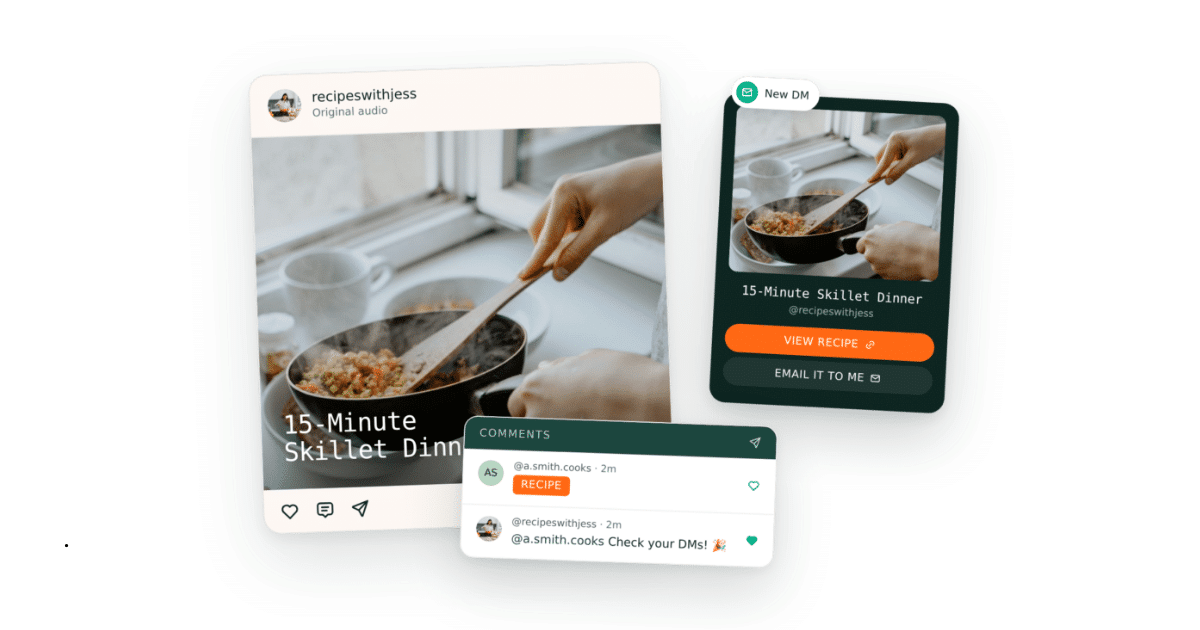
GRO’s core product is keyword-triggered DM automation. A creator sets a keyword inside the platform, mentions it in a post or reel caption, and when a follower comments that word, they automatically receive a direct message with the relevant link. The same logic extends to Story Replies. For platforms where clickable links inside feed posts are unavailable, this is the primary mechanism for moving an audience off-platform and onto creator-owned properties.

Executing this required formal certification from Meta, a process Ben describes as nine months of multiple review rounds. The certification requires demonstrating compliance with Meta’s data privacy standards and rate limits on automated messaging. He shares that GRO now processes more than 10 million messages per month through Meta and has sent more than 100 million in total.
One feature Ben identifies as a key differentiator is the carousel DM: a swipeable direct message containing up to ten visual cards, each linking to a different piece of content or product. Unlike text-based automations, carousel DMs typically generate more than one click per message sent. “It helps creators unlock new content types in their feed that don’t necessarily require creating new reels,” Ben explains.
He cites Prime Day roundups as an example: a single keyword in a carousel feed post triggers a visual DM containing images and affiliate links matched to each product, delivered to every person who comments without any per-post configuration.
Competing With Manychat on Simplicity
GRO openly positions itself as a Manychat alternative, with a dedicated comparison section on its website. Ben is direct about why: many of GRO’s customers arrive after migrating from Manychat, and he argues the competitive distinction matters enough to address without euphemism.
“Manychat is an incredibly powerful platform,” Ben says. “But the majority of the creators we talk to want to send a visual message without a ton of setup time.” The practical friction he describes is specific: a single daily automation in Manychat requires roughly 15 to 20 minutes to configure properly, adding up to more than an hour per week for creators posting five days a week. GRO’s template-based approach is designed to eliminate that overhead by allowing creators to set persistent keyword rules rather than rebuilding automations post by post.

The performance gap, Ben notes, appears most clearly in click-through rates. GRO reports an average of 70% or above across its automations, compared to what he characterizes as 40% to 50% for Manychat, which he attributes to GRO’s visual-first DM design. The platform’s passive email capture feature, a “Save to Email” button embedded in automated DMs, converts an average of 5% of messages sent into email subscribers without any additional configuration.
GRO also offers a migration service for customers transferring from Manychat, either self-serve or managed, rebuilding existing automation libraries on the new platform.
Why Email Outlasts Every Platform Shift
Ben’s five-year view for the Creator Economy is not a bet on a new platform or format. It is a bet that the structural logic of the past two decades holds.
“The website will always be the anchor of your business,” he says. “And email will be your best conduit to driving traffic back to your website. Those have been the case for 20 years. I think even with AI, those will continue to be the case.”
In his framing, AI will not displace this dynamic; it will intensify the pressure on creators who have not built for it. The creators who treated social followings as their primary audience relationship now face the same problem Shopify merchants faced before tools like Privy existed: growth that was real but fragile, dependent on channels they did not control. The underlying need, Ben argues, has not changed. The urgency has.
“GRO’s role in all of that,” he concludes, “is in building tools that either help you drive more traffic or help you better engage traffic on your website.”
Subscribe to Our Newsletter
Check Out Our Podcast