




Agency
Kennedy Meehan On Leading A Talent Agency In A Market That No Longer Rewards One-Off Virality

When influencer marketing first accelerated during the early months of the pandemic, much of the industry was built around fast followings, fast deals, and fast content cycles. Several years later, that model is showing strain. Budgets are tighter, trust is harder to earn, and brands are no longer willing to pay for attention without accountability.
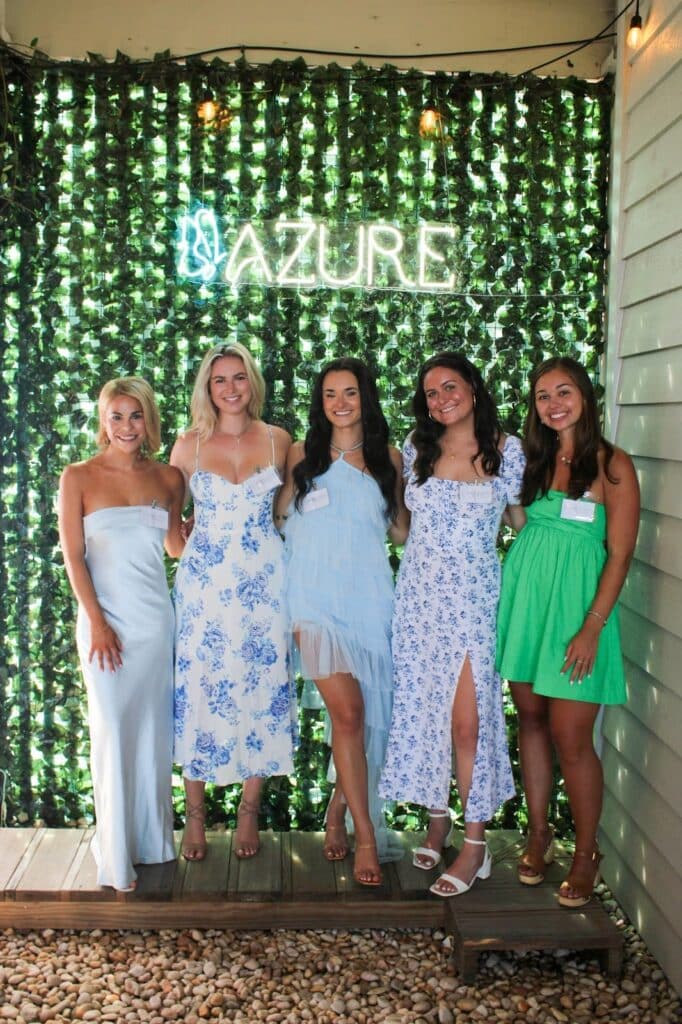
Kennedy Meehan has spent the past five years watching that shift happen in real time. As founder and CEO of The Azure Agency, Kennedy operates across influencer marketing, talent management, and brand strategy, working with creators who rose quickly through reality television, college-era social media, and emerging lifestyle niches, as well as brands entering a more performance-driven creator economy.
Founded in January 2021, The Azure Agency was built in response to a gap Kennedy saw early on: small and mid-sized brands entering influencer marketing without the budgets or infrastructure to compete with larger players, and creators gaining followings without understanding how to turn attention into a durable business.
“I wanted to address the gap in the market for small businesses when it came to social media marketing,” she says.
The Beginnings of an Agency Business
Kennedy graduated from the University of North Carolina at Chapel Hill in 2020 and entered the workforce as COVID-19 shut down hiring across public relations and marketing.
“The PR industry as a whole wasn’t in the best place for new hires,” she says.
Rather than waiting for the market to recover, Kennedy began freelancing, working with podcasts, handling influencer management for a small number of creators, and taking on social media work where demand existed. Within months, the volume became unsustainable for a solo operation.
“After two to three months, I just had such an influx of clientele that I decided to launch The Azure Agency,” she says.
That decision set the foundation for a business that now operates across multiple parts of the creator ecosystem. While Azure continues to work with brands on campaign execution, content creation, and paid advertising, talent management has become the company’s primary revenue driver.
“We started managing talent in about 2022,” Kennedy says. “Now, the talent management side is definitely the main source of our income.”

Reality TV, Fast Growth, and the Monetization Issue
Azure’s talent roster initially grew through reality television alumni, particularly cast members from shows like “Love Island USA” and Netflix franchises.
“We started very much in the reality TV space,” Kennedy explains. “Once we had two to three ‘Love Island’ girls, we very quickly acquired more.”
That vertical revealed a structural issue Kennedy believes still defines large parts of the creator economy: audiences acquired through external platforms don’t come with an understanding of how to serve them. “They were given their following,” she says. “They didn’t necessarily build it.”
According to Kennedy, creators who grow through television exposure often struggle to identify their audience, develop a content strategy, or sustain engagement once a show’s cultural moment fades. “Once that new season airs, all those people who were your audience now have a whole new group of people to focus on,” she says.
The challenge isn’t visibility, but durability.
“It’s a very fine line between finding creators who want to be creators and not just wanting to be on TV,” Kennedy says.
Why One-Off Influencer Campaigns Are Losing Value
As the creator economy matured, Kennedy observed a shift in how brands evaluate partnerships. What once centered on reach and awareness now increasingly comes down to conversion, consistency, and trust.
“There’s so much content being consumed on a day-to-day basis,” she says. “The conversion is not there like it used to be.”
Kennedy points to oversaturation as a key factor. Audiences are exposed to too many creators promoting too many products, often without sustained use or visible alignment.
“On average, an audience member needs to see a product seven times before they even think about purchasing,” she says.
For brands, she adds, that reality has forced a reevaluation of influencer budgets. “It doesn’t make sense to pour thousands of dollars into creators when there is no return,” Kennedy says.
As a result, Azure has seen brands shift toward two dominant models: commission-based ambassador programs and deeper, longer-term partnerships with a smaller number of creators.
“Either it’s strictly commission-based,” she says, “or they’re finding one to two specific creators and making them the face of the brand.”
How Azure Structures Creator Campaigns
Azure’s approach to campaign execution begins with strategy rather than casting.
“Our first thing is a full conversation with the client about goals,” Kennedy explains. “Who is your ideal persona? Where are your sales coming from? What performed in the past?”
From there, the team sources creators based on audience, niche, geography, and historical performance, presenting brands with detailed analytics before final selection.
“We’re looking at their analytics over the last 30 and 60 days,” Kennedy says. “Their ROAS [return on ad spend], their sellability, their engagement.”
Creative direction varies by campaign, but Kennedy consistently pushes brands to relinquish control when content is posted on a creator’s own channel.
“If you want full creative control, it has to be UGC [user-generated content],” she says.
What Brands Still Get Wrong About Influencer Marketing
Despite years of experimentation, Kennedy believes many brands continue to overvalue surface-level metrics.
“Likes have become transactional,” she says. “They’re very empty.”
Instead, she prioritizes qualitative engagement signals. “I look at comments and the value of those comments,” Kennedy explains. “Who’s commenting? Are they asking questions?”
Shares, she argues, are even more telling. “If you’re sending something, it brings that video back into consciousness,” she says. “That’s going to be the most valuable metric.”
Views, by contrast, can be misleading. “Brands need to unlearn that all views are good views,” Kennedy says. “Views are easy to get, but they don’t mean anything.”
Talent Agencies as Strategic Partners
One of Kennedy’s more pointed observations is that talent agencies, when run strategically, can offer brands insights traditional marketing agencies often miss.
“As a talent manager, I know why my clients perform well or don’t perform well,” she says. “I know their audience just as well as they do.”
That knowledge becomes critical as brands demand more accountability from creator partnerships. “I think marketing agencies get very hung up on the creative and not the strategy,” she says. “There’s a disconnect between what works for brands and what works for creators.”
In Kennedy’s view, the most effective programs sit in the middle, balancing brand objectives with creator-specific realities.
What Azure Is Prioritizing in 2026
Kennedy expects further contraction in the creator economy, with fewer creators achieving meaningful growth and more falling off.
“It’s going to become harder to be an influencer than it has been in the past,” she says.
For Azure, adaptability is the priority. “Our biggest goal is adaptability,” Kennedy explains. “TikTok could be gone. Social media is forever changing.”
Longer term, she envisions expanding into physical production, building an in-house content studio and hosting creator-led brand activations.
But the focus remains practical. “I would much rather keep all the clients we have happy than worry too much about the next opportunity,” she says.
After five years operating inside influencer marketing’s shifting center, Kennedy is clear about what endures. “At the end of the day, every metric matters,” she says. “It just depends on what the goal is.”
For brands and creators alike, the path forward isn’t about chasing attention, but about building systems that last.
“As long as we continue educating our clients on the shifts happening in the creator economy,” Kennedy says, “that’s the most valuable thing we can do as a business.”
Photo source: The Azure Agency