





Agency
Inside East Goes Global: Andrew Spalter On Helping Brands & Creators Go Global Without Losing Relevance

What does going global actually mean in the creator economy, and why do so many brands underestimate what it takes to do it well? For Andrew Spalter, the problem isn’t ambition or access. It’s the assumption that global scale is a marketing exercise rather than an operational one. As platforms make distribution frictionless and fandom travels faster than culture, Andrew believes international growth increasingly exposes what brands don’t understand about how audiences behave, how platforms are used, and how value is created beyond their home market.
That conviction led him to found East Goes Global in 2018, initially to tackle China, one of the most complex environments for Western creators and brands.
“The biggest gap I saw was connectivity,” he says. “There were local operators and Western teams with global ambitions, but almost no one who truly understood both sides.”
Today, East Goes Global operates as an integrated international partner for sports, entertainment, creators, and brands, delivering execution across localized content, paid media, partnerships, commerce, and daily channel operations, helping clients turn global demand into sustained audiences and revenue.
Under his leadership, Andrew reports that the company has launched and managed more than 700 international channels, grown over 200 million followers globally, and driven more than $100 million in commercial opportunities.
Early Lessons in Music That Informed Global Expansion
Andrew’s entry point into global audience building predates today’s creator-economy hype cycles. In 2017-2018, while working in music management with artist Jessie J during her rise on a major Chinese television show, he identified a gap that would eventually become the foundation of East Goes Global.
“When I asked her label and agents who handled marketing and partnerships in China for their other clients, the answer was essentially ‘no one,’” Andrew says. “There were teams running basic social channels, but they didn’t touch partnerships. Others focused only on sports, not entertainment.”
At the time, Western platforms were blocked in China, surface-level localization failed, and cross-time-zone, cross-ecosystem collaboration was fragmented. Rather than wait for a solution, Andrew built one, starting with China, widely regarded as the most complex international market to enter.
“I often quote Anthony Bourdain: ‘The one thing I know for sure about China is I will never know China,’” he says. “I’ll never fully understand it either, but I understand parts of it well. The biggest gap I saw was connectivity.”
East Goes Global was designed to sit in the middle layer between Western brands and creators seeking access, and local platforms, partners, and audiences who demanded cultural fluency rather than translated content.
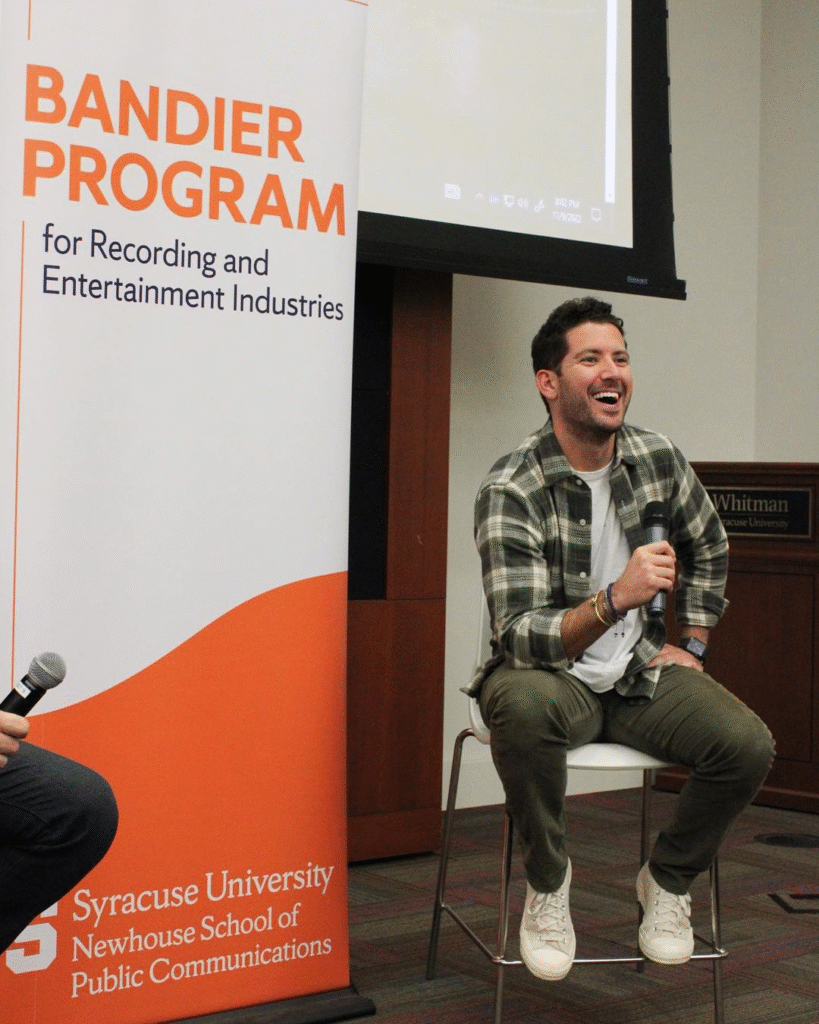
Photo: Andrew Spalter at Syracuse University
Why Localization Alone Doesn’t Work
One of the earliest lessons Andrew carried forward is that translation is not strategy.
“You have to dive headfirst into what works locally,” he says. “Cultural context, platform behavior, and audience expectations matter in every market.”
As East Goes Global expanded beyond China into markets including France, Latin America, MENA (Middle East and North Africa), and India, that principle only became more pronounced. While formats, platforms, and consumption habits differ widely, Andrew notes that the common mistake brands make is assuming global audiences behave like scaled versions of U.S. users.
“What continues to be interesting is how different platforms serve different purposes in different markets,” he says. “Each expansion forces you to relearn how audiences actually use platforms, not how brands assume they do.”
This perspective shapes East Goes Global’s operating model. Rather than running fragmented regional experiments, the company acts as a single international partner, aligning strategy, execution, and measurement across markets.
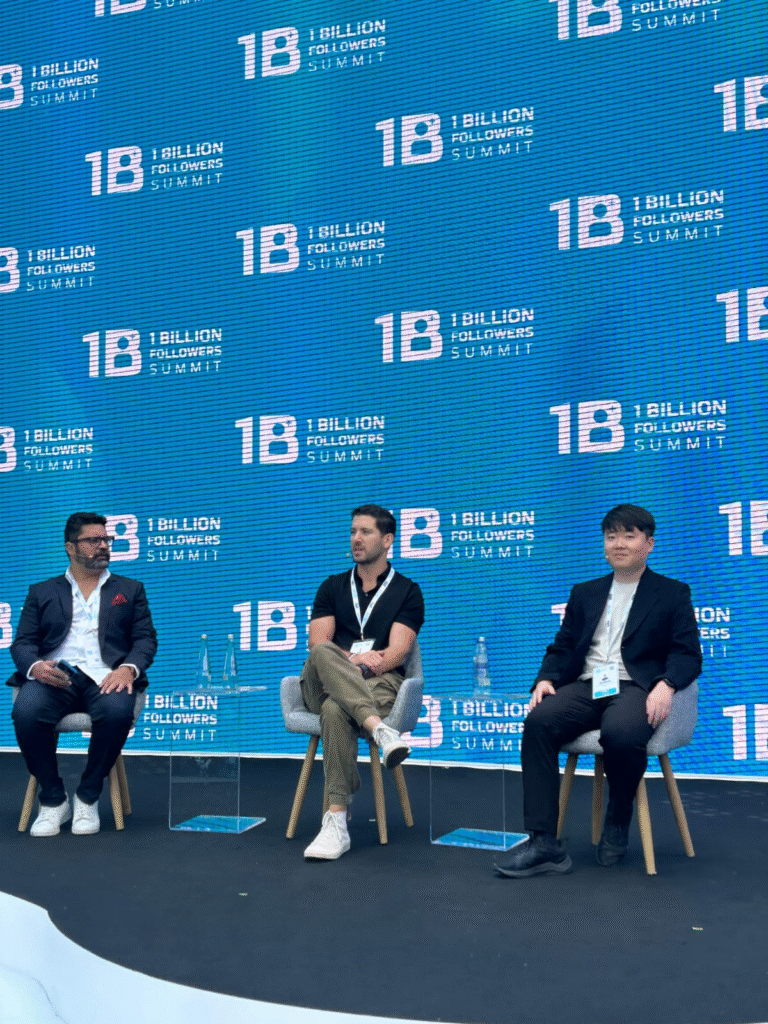
Photo: Andrew Spalter at the 1 Billion Follower Summit
Acting as a ‘Head of International’
For brand leaders unfamiliar with the concept of a global content operating partner, Andrew frames East Goes Global’s role simply.
“Think of us as your ‘Head of International,’” he says. “We operate as an end-to-end international marketing and partnerships team. We handle everything from high-level strategy to on-the-ground execution.”
That includes managing native platform presence, working with local creators and athletes, overseeing paid media, structuring partnerships, and building monetization pathways that account for regional regulations and consumer behavior.
Andrew believes this approach becomes especially critical for highly regulated brands and entertainment properties that cannot post directly in certain markets.
“When brands can’t post, we shift the unit of value from owned channels to the surrounding ecosystem,” he explains. “Partners, platforms, creators, athletes, and commerce channels become the distribution layer.”
In those cases, Andrew adds, success is measured not through vanity metrics but through downstream impact. “Revenue paths are defined before activation,” he says, “and success is measured through conversion, lift, and demand.”

Global Consistency vs. Local Relevance
For Andrew, one of the most persistent tensions in international creator strategy is balancing brand consistency with local relevance. Because of that, he rejects the notion that this is a zero-sum trade-off.
“Consistency lives in what a brand stands for, not how it executes,” he says. “McDonald’s is a great example. The brand promise stays the same, but the products and campaigns adapt locally.”
For East Goes Global, cohesion comes from shared values, centralized accountability, and a unified operating model, while relevance comes from local teams embedded in native platforms and cultural contexts.
“The most common mistake is assuming a campaign that works in one market will work everywhere,” Andrew says. “Local teams matter because they are native to the platforms, behaviors, and nuances of their markets.”
The Infrastructure Gap in Influencer Marketing
Andrew is openly critical of how international creator programs are typically structured. In his view, the industry remains fundamentally fragmented.
“Brands often hire separate teams for each market, creating silos,” he points out. “Regional hacks create duplicated effort, inconsistent reporting, and lost institutional knowledge.”
According to Andrew, this fragmentation becomes especially visible in customer relationship management and measurement. “No system was designed to track creators as both media channels and commercial partners across markets,” he says. “This isn’t a tooling problem. It’s structural.”
He says this structural reality is why East Goes Global operates as a service-first business rather than a standalone software platform. International programs span platforms, currencies, regulations, and cultures – variables that resist one-size-fits-all solutions.
When Not to Go Global
Despite building a company focused on international expansion, Andrew is clear that global growth is not always the right next step.
“You should expand what works,” he says. “If you haven’t proven engagement domestically, international expansion only magnifies the problem.”
This advice runs counter to the prevailing pressure many brands feel to chase global relevance prematurely. For Andrew, the foundations of sustained engagement matter more than geographic reach.
How Culture Actually Travels
Another misconception Andrew challenges is the idea that creator content naturally travels across borders.
“Many creators assume their content will work everywhere,” he says. “In reality, very few formats travel unchanged.”
Cultural translation, he argues, matters just as much as language. What resonates emotionally, humorously, or aspirationally in one market can fall flat (or backfire) in another without proper adaptation.
What Separates Global Winners
As brands shift from one-off campaigns toward deeper engagement, Andrew believes continuity will separate long-term winners from everyone else.
“The most relevant brands and creators invest consistently,” he says. “Deeper engagement comes from sustained presence, not one-off campaigns.”
In 2026, East Goes Global is focused on building what Andrew describes as “a global ecosystem of operators,” i.e., teams capable of executing with consistency across borders as international growth becomes less optional and more existential.
In the near future, Andrew sees the role of global content partners becoming increasingly central as brands seek their next 10 million fans beyond their home markets.
“Creators are not distribution channels you rent,” he says. “They’re infrastructure you build with. Brands that win invest in fewer creators for longer, design programs instead of campaigns, and prioritize cultural fluency over scale.”
Photo source: East Goes Global
Subscribe to Our Newsletter
Check Out Our Podcast