





Influencer
Jane Olivia On Approaching Her Creator Business The Same Way She Cooks: Quietly And With Intention

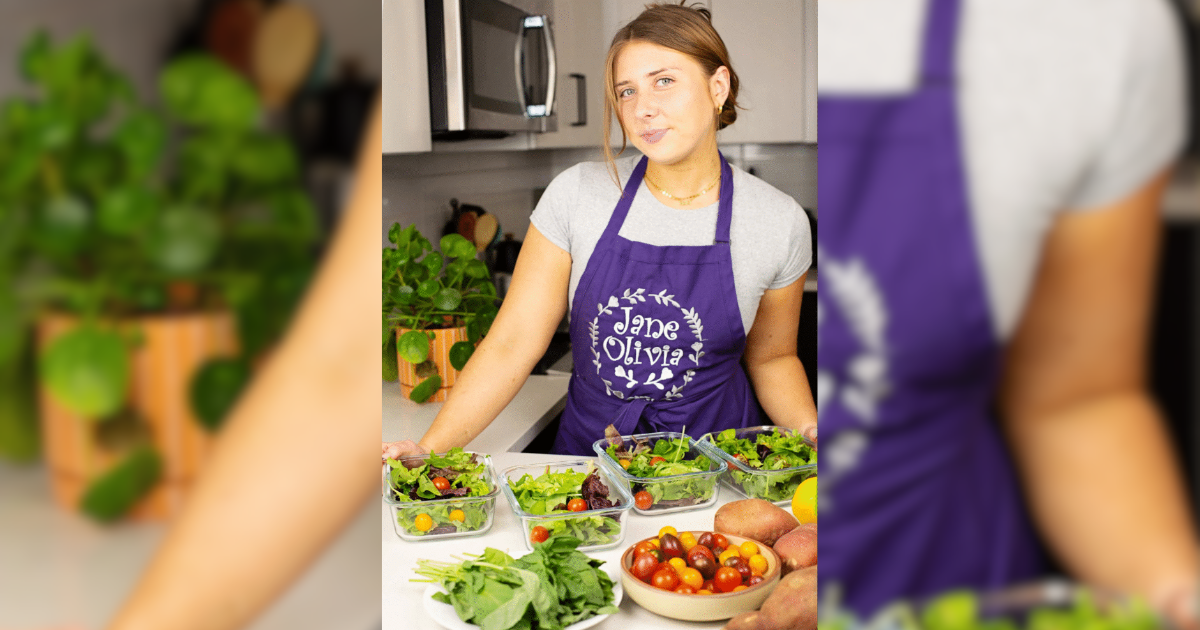
Jane Olivia did not build her creator business by chasing trends or optimizing for virality. Instead, she built it the same way she built her private chef operation: client by client, system by system, with content functioning as documentation, rather than performance. What emerged is a business where social platforms amplify real-world operations, not the other way around.
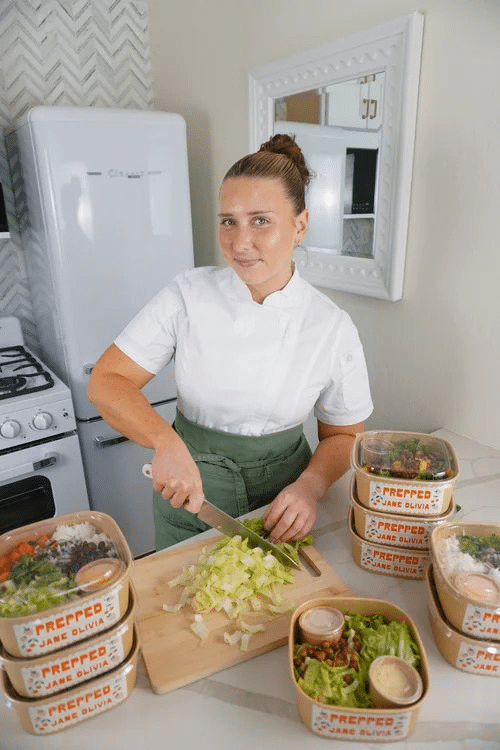
Based in Arizona, Jane operates a private chef business focused primarily on meal prep and in-home cooking for recurring clients. Alongside that work, she publishes daily short-form videos and long-form YouTube content that quietly showcase how that business actually runs. The result is a creator flywheel grounded in service, credibility, and repeat demand.
“I was seeing people reach out, which other people weren’t able to see,” Jane says. “So I felt very confident there was enough of a need, and people wanted this.”
A Service Business Before a Creator Brand
Jane’s relationship with content predates any commercial success. She began making videos in high school after deciding to go plant-based, even though she did not know how to cook. “My family didn’t really know how to cook vegan,” she says. “So I basically had to get in the kitchen and learn how to cook for myself.”
What started as self-education turned into documentation. At 14, she began posting overhead food photos on Instagram under the handle @earthy.jane. “Mind you, no followers,” she says. “I was just doing this to document it.”
Video followed quickly. Jane experimented with early Instagram video formats before committing to YouTube, where she posted two videos a week throughout high school. “I learned how to edit long-form content, talk to the camera, and use Adobe Premiere Pro,” she says. “I loved learning that stuff.”
The key throughline is that content never existed as a shortcut. It was always tied to skill development and real output.
Meal Prep as Market Validation
In college, Jane trained as a personal trainer and studied nutrition, shifting her content toward fitness and high-protein plant-based recipes. Food remained central, but her understanding of it expanded. “I learned more about what other people need and how I can make my diet higher in protein using whole foods,” she says.
That knowledge became marketable when she began meal prepping for clients while still in school. Demand grew through word of mouth rather than promotion. “I already knew how to cook, but being hired to be a chef transformed how I looked at food,” she says.
When people began asking how to hire her, Jane created a simple Google Form to manage inquiries. She did not expect it to work. “I probably had like 5,000 followers on Instagram and less than 10k on TikTok,” she says. “I was like, ‘No one’s going to fill this out.’”
Ten people did.
“I still have that waitlist today,” she says. “It’s the same Google Form.”
That waitlist became the foundation of her business. By graduation, Jane was able to sustain herself using just those initial clients. “I took eight clients in the beginning,” she says. “I was grinding, but it gave me so much content because I would just film everything I did at work.”
The service business came first. Content followed naturally.
Choosing the Risk Others Couldn’t See
Jane’s decision not to pursue a traditional job after graduation surprised most people around her. “Everyone asks, ‘What’s your next step?’” she says. “And I was like, ‘I’m going to be a private chef.’ And everyone was like, ‘What?’”
What others saw as risk, Jane saw as evidence. “It made sense in my head because I was already seeing demand,” she says. “When I said it out loud, I was like, ‘Wait, I’m actually doing this.’”
That conviction allowed her to build without external pressure to scale prematurely or rebrand herself as something she was not.
Content as Proof of Work
Jane’s content strategy mirrors how she works. She films everything on her iPhone while actively cooking for clients. “I prop my phone up, hit record, and forget it’s there,” she says. “I try not to touch my phone at all while I’m working.”
The footage is cut into short-form videos that emphasize process over personality. Editing happens at night, often after long workdays. “Those videos can take me anywhere from 30 minutes to an hour and a half to edit,” she says.
Despite having support for some long-form editing, Jane remains hands-on with her short-form output. “I’m very particular about my quiet ‘come to work with me’ videos,” she says. “It’s hard for me to explain why I do certain things or how to put them in the right order.”
She posts daily and has rarely taken breaks. “I’ve never taken more than two days off posting in the past five years,” she says.
The consistency is operational, not performative. “I don’t want to change why people followed me,” she says. “I loved what I did, and I loved sharing it. I don’t want to stop doing that.”

Scaling the Business, Not Just the Audience
As demand increased, Jane scaled her service business before expanding her creator footprint. Today, she manages a team of ten chefs who work with clients drawn from her waitlist. “They all have their own clients every day,” she says. “And then we come together for bigger events.”
The team is entirely female, a dynamic Jane values deeply. “They all have their own dreams of being private chefs,” she says. “I love that I’m able to provide enough work for them to sustain themselves.”
Operational support extends beyond the kitchen. Jane’s mother manages legal and accounting responsibilities, while an assistant handles inquiries. Despite the infrastructure, Jane remains closely involved. “At the end of the day, it’s my name on everything,” she says. “I feel like I need to have a relationship with all the clients and a presence on social media.”
That direct involvement feeds trust on both sides of the business.
Productizing the Workflow
Jane’s most direct example of turning service into a scalable product is Food Friends, a recipe and meal-planning platform designed to replicate how she works with private clients.
“The main thing I wanted was for people to recreate my recipes the same way I do for my clients,” she says.
Users can select recipes, build meal plans, and automatically generate grocery lists. The emphasis is on practicality. “I feel very strongly about meal prepping,” she says. “Not just for health, but for cost effectiveness.”
Jane uploads every recipe she develops to the platform, treating it as a living archive rather than a lead magnet. “It’s hard for me to separate what would go into a cookbook,” she says. “I truly love every recipe I make.”
Food Friends is not intended to replace her service business but rather to extend it.
Selective Partnerships, Clear Priorities
Despite her growing audience, Jane remains cautious with brand partnerships. “I say no to quite a few opportunities,” she says. Time is the primary constraint. “My in-person clients will always come first.”
When she does partner with brands, she insists on firsthand experience. “If it’s a supplement, I test it for multiple weeks,” she says. “If it’s a product, I need to actually use it.”
She notes that the most successful partnerships are those that integrate naturally into her work. “I did a dog food partnership where I got to be a private chef for my dog,” she says. “That made sense.”
Jane believes brands often misunderstand creators who operate service businesses. “We actually have other jobs,” she says. “We’re not always readily available.”
Measuring Impact Beyond Metrics
Jane evaluates success through qualitative feedback rather than analytics alone. She reveals that parents frequently message her about their children watching her videos. “They’ll say, ‘My daughter asks every day what Jane Olivia cooked today,’” she says.
One message stood out. “A girl did a presentation on me in her home ec class and asked me to sit in and watch it,” she says. “That was so cute.”
For Jane, those moments signal alignment between content and purpose. “If I can influence someone to cook at home or try a vegetable they’ve never tried, that matters,” she says.
Building Forward Without Overexpansion
Jane is intentional about what she does not want. She has little interest in aggressively scaling her private chef business. “It’s more work to manage,” she says. “And I don’t really like managing that much.”
Instead, she is exploring education and mentorship for aspiring private chefs and creators. “I’ve made pretty much every mistake in the book,” she says. “If I could help people avoid certain things, that would be really beneficial.”
She is also considering a cookbook, but cautiously. “The cookbook market is very oversaturated,” she says. “If I do one, I want it to feel authentic and truly valuable.”
For Jane, durability matters more than speed. “I want whatever I put out to feel like the best version of it,” she says. “I want to be really proud of it.”
Photo source: Emily Blair Media
Subscribe to Our Newsletter
Check Out Our Podcast