





Influencer
Violet Witchel And The Business Of Cooking Food People Actually Make

Violet Witchel didn’t enter the internet as a would-be food personality. She arrived as an economics student with a finance-bound future, cooking between classes and lockdown boredom rather than building a brand. TikTok was incidental, not aspirational; a place to post casually while the world stood still.
“I was in college when I started posting, and I was actually getting my economics degree,” Violet says. “I thought I was going to go into finance.”
That casual approach didn’t last long. A simple dorm-room cooking video took off in late 2019, pulling in tens of thousands of followers almost overnight and accelerating from there. At a time when TikTok was still young and growth was fast, momentum compounded quickly. What began as something lighthearted hardened into something viable before she had even graduated.
Violet’s earliest content was unpolished and practical, filmed in a college kitchen during COVID restrictions that kept students confined to campus. She cooked what she knew and leaned into utility rather than performance. At one point, she began selling bagel sandwiches out of her dorm room, documenting the process online. Those videos became some of her first viral hits, and the platform rewarded consistency. Within months, the TikTok Creator Fund was generating steady income, soon followed by brand partnerships that reframed the scale of what content creation could offer.
By her senior year, Violet was earning roughly $80,000 from content alone, enough to make the traditional finance track feel less inevitable, and a creator career suddenly feel very real.
“That’s when I was like, ‘Okay, this is a pretty solid business,’” she says. “It seemed comparable to entry-level finance.”
What Stayed the Same as the Platform Changed
The creator economy has shifted dramatically since those early days. TikTok’s tools, monetization options, and moderation systems now look very different. Violet remembers a time when the app felt more volatile and less regulated.
“There was much less comment censoring,” she says. “People would say the most insane things. There was much more duetting, much more stitching, and things could get very extreme.”
Brand deals were also unpredictable. “Brand deals were literally the Wild West,” she says. “Budgets were all over the place. Affiliate was just getting started. There was no TikTok Shop. In-app editing was basically nonexistent.”
Despite those changes, Violet says the core of her content has remained consistent. “I would say it’s still cooking,” she says. “I’m still making bean salads. I’m still making easy gluten-free meals.”
What has changed is her delivery. Her pacing is slower, her tone more deliberate, and her voice more intentional. She avoids mimicking trending creator styles that do not feel natural to her.
“It’s very easy to go viral if you mimic what’s trending,” she says. “But I don’t find it sincere if that’s not how you speak naturally. If you aren’t authentic to it over time, you won’t have an identifiable brand.”

Turning Content Into a Repeatable System
Today, Violet treats content creation as a process rather than a posting schedule. Her ideas often begin offline.
“I take a lot of inspiration from grocery stores,” she says. “I’ll see what products are being discounted, what’s selling out, and what the butcher tells me has been popular.”
Those signals help guide what she cooks and films. Economic conditions matter. Seasonal availability matters. So does simplicity. “If I have beans, I’m like, ‘What will go well with this? What’s achievable?’”
Before posting, she cooks each recipe at least once, often multiple times. She films first, then writes the recipe to match the visual order. Finished recipes are published on Substack, followed by video distribution and reposting on IG Stories.
Her favorite part of the process surprises many creators. “I like video editing the most,” she says. “Editing is relaxing and fun. Voiceover and captions are a nightmare. Editing is my favorite.”
She is selective about what she posts. Recipes must hold up over time. “It needs to look good to me two days after I’ve edited it,” she says. “If the leftovers aren’t good after two days, I won’t post them.”
Why Dense Bean Salads Took Off
Violet’s dense bean salads became a defining moment in her career and one of the longest-running food trends she has led. She attributes their success to timing, economics, and habit-building.
“Economically, it was the right place, right time,” she says. “There was an era when steak videos were trending, when disposable income was high. As things tightened up, people tightened grocery budgets.”
Beans offered protein, fiber, and affordability at a moment when all three were trending. “Beans are one of the most affordable sources of protein,” she says. “Fiber trended, protein trended, and beans hit both.”
Beyond nutrition, the recipes fit into daily life. “The best recipes are ones people save and make four or five times,” she says. “That’s the most valuable content you can make. Something that becomes part of people’s routine.”
She also frames bean salads as culturally underutilized in the U.S. “Most countries where beans are native will have some variation of a bean salad,” she says. “America’s culinary traditions aren’t as deeply rooted. Beans make sense.”
Success Beyond Virality
Violet does not judge performance primarily by views or likes. Instead, she looks for signals of use.
“I look at how many people are making a recipe and saving it,” she says. “If I’m getting tagged all the time and people are sending messages saying they made it, that matters more.”
She points to a green-chicken lentil chili recipe that has reached about 200,000 views. “It didn’t go mega viral,” she says. “But dozens of people sent me photos and told me how much they loved it. That’s a success.”
Platform behavior also differs. TikTok drives discovery and sharing. Instagram drives conversion. “Instagram users are older and more American,” she says. “They have a higher propensity to purchase. TikTok is where things spread.”

Trust as the Core Currency
For Violet, trust is built through outcomes, not aesthetics. “You have to tell people to do something, and it has to turn out well,” she says. “That’s how trust builds.”
She compares it to recommendations between friends. If the advice works, credibility grows. If it fails, trust erodes. Her goal is to create recipes that consistently deliver.
“People find me through viral recipes, then they make them, and the recipe turns out really good,” she says. “They see a positive impact in their life through health or budget cooking, and then that cycle continues.”
Managing Herself and Owning Relationships
As her business matured, Violet made a decision to manage herself. “I enjoy it,” she says. “I think it’s worth it to own 100% of my relationships.”
She believes creator relationships lose value when they are intermediated. “When someone else manages you, brands don’t have a relationship with you. They have a relationship with the manager.”
There is also a financial calculation. “You pay a percentage whether you’re making $100,000 or a million dollars,” she says. “There’s a point where it makes sense to do it in-house.”
When evaluating partnerships, she considers brand fit, personal values, financial terms, usage rights, and time. “If it’s something I don’t like or don’t want to promote, that’s a no,” she says.
Her dream partnership reflects her brand alignment. “I would love a Sweetgreen partnership,” she says. “To have dense salads at Sweetgreen would be really cool.”
Returning to Culinary School
In 2025, Violet enrolled in culinary school, committing eight to nine hours a day for eight months. She continued creating content alongside it.
“I was very burnt out,” she says. “I wouldn’t say I managed it well.”
Still, the decision reflects a broader shift in food content. “People are gravitating toward people with expertise who consistently create unique, quality content,” she says. “There was an era of performative food. Cheese pulls. Gimmicks. I think people are shifting back toward culinary.”
Building Toward a Product-Led Future
Violet’s long-term goal is to move beyond brand deals. “My dream would not be to promote other brands, but to promote my own brand,” she says.
That shift begins with her cookbook, scheduled for release in the first quarter of 2027 through HarperCollins. She spent the past year writing and creatively directing the book, balancing personal taste with broader appeal.
“I loved writing it,” she says. “Trying to predict what’s going to be trendy two years from now was interesting. I had to think about what everyone eats, not just what I like.”
She worked with an assistant who is both a registered dietitian and a creative writer. “[The assistant] helped provide nutrition insight on every recipe and helped edit for clarity and flow,” Violet says.
With her sights set on the future, she imagines a future built around products, community, and ownership.
“I would hope to have started a company in five years,” Violet concludes, reiterating, “My dream would be to promote my own brand.”
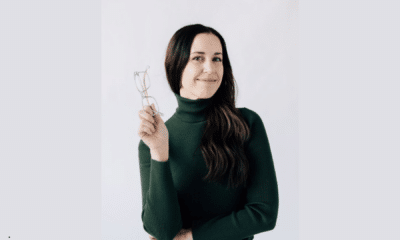
Photo source: Emily Blair Media
Subscribe to Our Newsletter
Check Out Our Podcast