



Influencer
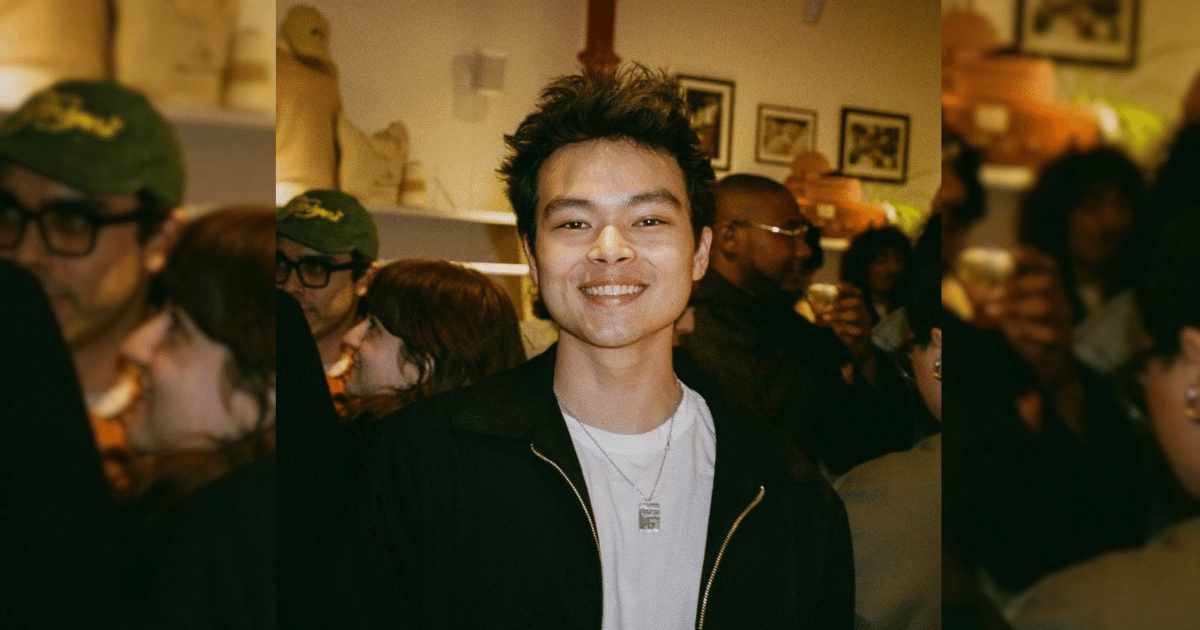
Influencer Wesley Breed Wants To Make Fashion History Feel Like A Story You Can Carry With You

Wesley Breed still remembers the bet that pushed him into posting. In 2020, as his junior year of high school slipped into a hybrid COVID schedule, he and two friends downloaded TikTok at the same time and made a deal: “The first one to get 5,000 views on a video will get free Chick-fil-A from the other two participants.”
Wesley did not win.
One friend posted a clip “about how you can play Wii on the little TV in the back of his minivan,” and it pulled “like, 3 million views.” But the loss clarified something important. Instead of posting “sporadically” and hoping for traction, Wesley began thinking in terms of structure: a lane, a format, and a clear promise to viewers.
Today, the NYC-based creator has built an audience of roughly 683,000 across Instagram, TikTok, and YouTube. His videos focus on fashion education, brand history, and cultural storytelling, increasingly filmed off-studio rather than behind a green screen. At the same time, he is expanding into automotive culture, framed not as a pivot away from fashion but as a second pillar of design storytelling. “I think there’s a white space there,” he says.
Finding a Lane Through Education
Wesley started posting during what he describes as “the peak of COVID,” when school schedules loosened and free time expanded. Early videos were experiments, shaped by the moment: thrift-store runs in Massachusetts and Connecticut, filmed during lockdown, with quick commentary on what he would buy and what he would leave behind.
What kept him posting, though, was not the chance of a viral hit. “I was enamored by the idea of being able to express my own passions and interests to a wider audience,” he says. “I feel like everyone’s always looking for a community online.”
Fashion became his organizing principle because it gave him something to study continuously. “I was actively learning more about it while I was posting content,” he explains. “It served as a reason for me to continue studying and learning about different aspects of fashion so I could teach them back to the people who follow me.”
The thrifting videos built an audience, but they did not fully define his direction. That came with a single, tightly structured educational post that revealed what his viewers actually wanted to save and share.
The Video that Clarified Everything
Wesley traces a turning point to the spring of 2021. At the time, he had around 30,000 followers from thrifting content and decided to create a sit-down video explaining which fashion brands were worth buying secondhand. The goal was utility: “Tightly packed information that can be saved and referred back to later.”
The response was immediate. “That video got nearly 1 million likes,” he recalls, adding that in the end he gained “around 50,000 followers from that one video.” He followed it with sequels, which “performed exceptionally well.”
For Wesley, the takeaway went beyond simple performance. Educational content traveled further because it offered lasting value. “Content that’s adding value” tends to be “received more positively,” he says, particularly when it can be bookmarked and shared. That insight continues to shape his editorial decisions.
Scripted Storytelling and Retention Mechanics
Behind the scenes, Wesley’s process is tightly controlled.
“It’s always scripted,” he reveals, adding that he writes, films, edits, and posts himself. “The creation process is a one-man show.”
One rule is non-negotiable: voice. “I talk in every single video,” he says. “There’s never content where I’m not talking.” For Wesley, narration is not just branding, but structural. “Speaking to the camera helps with retention because once a story begins, you want to finish it.”
His approach to engagement is understated, but intentional. “Usually, within the first sentence or so of my video, I’ll try to allude to something that’s at the end,” he says, careful not to rely on overt prompts like “watch to the end.” The aim is forward momentum, not instruction.
While he experiments with microphones, cameras, and framing, Wesley is clear about priorities. “If the information is good or the story that you’re telling is good, no matter how you tell it, it will still be received well.” Writing, not gear, is the foundation.
Editorial Instincts Applied to Short-Form
Wesley’s comfort with research and structure has helped him move between social platforms and traditional media.
“My type of content and then editorial like traditional media content go very well hand in hand,” he says, pointing to the overlap: “well researched,” “concise,” and “punchy and engaging.”
That alignment became clear during his internship at fashion and media brand Highsnobiety. “I feel like I was already going in there with the training that I needed just to begin banging out pieces,” he says, noting that his video scripts already read “like an editorial blurb.”
That crossover has also shaped inbound opportunities. Publications recognize his work as “very well researched and written,” he notes, and approach him accordingly. At its core, his mission remains consistent: to “democratize information that’s maybe harder to find” and compress it into formats people actually finish.
As his audience and opportunities have grown, Wesley is now managed by G&B Digital Management, which supports his work across brand and media collaborations.
Telling Global Fashion Stories
A defining feature of Wesley’s content is cultural specificity. When selecting topics, he looks for stories that feel “relatively untapped” and rooted in a particular “culture or moment.”
Some of his strongest-performing videos explore fashion outside the U.S. He points to coverage of the Democratic Republic of the Congo, the Philippines, Botswana, Japan, Korea, and Vietnam, focusing on investigating and sharing “what fashion is to them” rather than filtering everything through an American lens.
A video on Congolese fashion pulled “millions of views on Instagram,” with Wesley estimating that “probably 75%” came from users in the Congo. The messages mattered more than the metrics: viewers thanking him for researching their culture carefully.
A similar response followed a Christmas-oriented gift guide centered on Indian fashion and craftsmanship. Unsure whether such a “niched down” concept would resonate, Wesley posted it anyway. “I think that video got nearly a million views,” he says, gaining “like 3,000 followers,” “almost all of them” from Indian or Indian American audiences. Many asked why he knew the space so well, and thanked him for highlighting Indian craftsmanship.
For Wesley, those reactions confirm that education need not feel distant. Respectful research creates an emotional connection.
Shares Above Everything Else
Wesley tracks performance closely, but he is blunt about what drives reach. “Shares are the most important metric on social media for virality,” he says.
Education earns shares because it offers social currency. According to Wesley, a viewer is not just passing along entertainment; they are signaling discovery. That sharing behavior becomes distribution, and distribution becomes growth. It also reinforces why he insists on being a visible narrator.
Compared with anonymous fashion curation accounts, Wesley believes a consistent voice gives continuity. “Giving all these stories a voice” is what makes people “stick around for the next one.”
Expanding the Frame
Over the past year, Wesley has shifted more of his content into physical spaces: stores, shows, and locations tied directly to the stories he tells. Alongside that change is a more significant expansion into automotive culture.
The response, he says, has been “very, very positive,” despite early concerns about alienating fashion-focused followers. “A lot of people who are interested in fashion are also interested in just design in general,” he explains. “Cars fall under that umbrella.”
The move also reflects his personal interests. “I’m far more knowledgeable about cars than I am about clothes,” he admits, occasionally wondering why he did not start there. He is now formalizing the overlap with a new series, “Formula Fashion,” which examines the intersection of motorsport and fashion.
Wesley also reveals that more partnerships now involve in-person activations, such as store visits, fashion shows, and styling content, rather than static deliverables. “Native partnerships usually perform a little bit better,” he notes, while acknowledging a broader reality: “Most brand partnerships don’t perform particularly well.”
His ideal collaboration sits squarely at the intersection he is building. He points to automotive brands operating in the fashion space and cites Porsche Design as a natural fit that would “mesh between my two audiences.”
Balancing Authority with Personal Connection
Wesley is candid about the trade-offs of an education-first approach. “A lot of creators’ content does very well, because the audience feels a super personal connection to them as a person versus what they’re talking about,” he points out.
Because he began as “more of a mouthpiece for a certain topic,” he believes he has had to work harder to build attachment to himself, not just the information. His current challenge is finding the balance: “How can I show more of my personality while keeping the overarching goal of the reason why I started the page, which is to educate?”
That balance also shapes his audience. Wesley says his followers skew older than many fashion creators, clustering around ages 25 to 34 rather than teens. He attributes that partly to tone. His videos aim to feel “authoritative and well produced,” even when they are accessible.
Depth, Credibility, and Off-Screen Work
Wesley graduated in May this year and now creates content full-time. In the long term, he does not see himself on camera indefinitely. “I’m looking to use the platform that I’ve built to launch into something that’s a little bit more behind the scenes,” he says. “I’ll probably move into consulting, either in the fashion or automotive space.”
He is also considering a deeper investment in long-form YouTube. Some stories, he says, lose meaning when compressed into a minute. “I want to move into long form a little bit more,” he explains, pointing toward video essays. The payoff, he believes, is long-term credibility rather than immediate reach.
For 2026, his focus is clear: deepen his presence in automotive culture without abandoning fashion, possibly by taking a part-time role within the automotive industry to gain insider knowledge. The underlying philosophy remains unchanged from the video that defined his direction in 2021: tell the story clearly, respect the audience, and make the information worth carrying forward.
Subscribe to Our Newsletter
Check Out Our Podcast