



Talent Collectives
From Brand Deals To Equity: How Friends In Reality Rethinks Creator Management

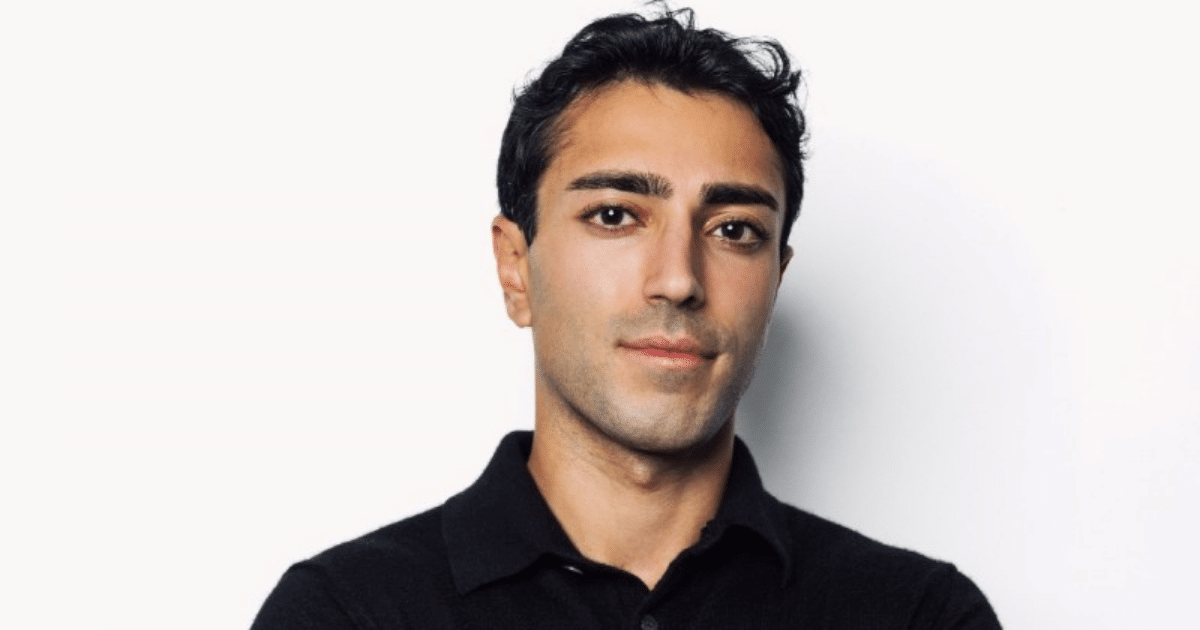
Friends In Reality, a New York-based talent management company founded in 2024 by Devain Doolaramani, operates on the premise that long-term creator success depends on building businesses by extending creators into equity, products, and owned intellectual property, not just securing sponsorships.
Today, Friends In Reality represents a roster spanning early-stage creators abroad with tens of thousands of followers to globally recognized personalities with audiences of up to 70 million.
“I really specialize in helping creators build businesses and look at verticals outside traditional social media,” company CEO Devain says. “That’s what I enjoy the most – building IP (Intellectual Property) and ownership and real products.”
Devain’s approach follows a shift in the creator economy, where algorithm volatility, platform risk, and saturation have pushed creators and managers to rethink how influence translates into long-term value. He positions Friends In Reality as both a management company and an operational partner for creators who want to build companies of their own.
From Early Social Media Experiments to Creator Management
Growing up between New York and Hong Kong, Devain started experimenting with social platforms as a teenager, learning how early Instagram growth mechanics worked by building and scaling quote accounts.
“I got on Instagram super early,” he says. “I was growing accounts, figuring out the algorithm, doing share-for-share. That was how people did it back then.”
That experimentation led to his first internship at 19 with digital entrepreneurs running early influencer and paid media businesses. From there, Devain moved into music marketing, helping labels and artists seed songs through creators on TikTok and other platforms.
“Basically, I was making all these creators money,” he says. “And I realized, ‘Why don’t I start working with them on a management basis?’”
That realization, paired with the rise of TikTok and creator-led distribution, set the foundation for what would later become Friends In Reality. After operating under several structures and partnerships, Devain formally launched the company as a solo venture in 2024.
“I finally wanted to take it solo,” he says. “‘Friends In Reality’ made sense because I’m genuinely friends with my clients. We’re building together.”
A Relationship-First Management Model
Devain built Friends In Reality around close, high-touch relationships, managing a deliberately limited roster, emphasizing communication, trust, and long-term alignment.
“I don’t think anything was broken in management,” he says. “I just don’t think relationships were built. Many people are in it for financial incentives. For me, it’s the friendship first.”
That philosophy shapes how the company evaluates new creators. Friends In Reality typically operates a two-month trial period before formally signing talent. “Communication has to be there,” Devain says. “Consistency and grind have to be there. Both sides need to be working equally if you want to build a business.”
Devain frames that model within a broader recalibration underway across the talent management space, in which managers increasingly act as strategic partners rather than deal brokers. For creators navigating burnout, algorithm changes, and platform fragmentation, he believes that relationship-driven structure can offer stability.
Solving the Creator Monetization Problem
At the core of Friends In Reality’s strategy is a diagnosis of a structural problem Devain identified in the creator economy: brand deals alone rarely produce lasting wealth.
According to him, creators often face a binary choice: accept cash sponsorships that provide immediate income or pursue ownership opportunities that carry risk, but offer long-term upside. Friends In Reality helps creators understand those tradeoffs without dictating outcomes.
“You could take a $100,000 brand deal, or you could take $100,000 worth of equity,” Devain says. “If you’re super bullish on a company, equity can make a lot more sense.”
The company works across traditional revenue streams (brand partnerships, platform monetization, and licensing) while also supporting creators interested in launching products, taking advisory equity, or investing in early-stage startups.
This hybrid approach responds to a reality many creators face: follower count alone does not guarantee commercial success.
“I have creators with smaller followings monetizing better than creators with millions,” Devain says. “It’s about how strong the community is.”

Building Products and IP From the Ground Up
Friends In Reality’s most hands-on work happens when creators decide to build businesses of their own. In these cases, Devain often operates as a co-founder rather than a passive manager.
One upcoming example is a direct-to-consumer beauty brand launching with longtime client and TikToker Brooke Monk. Devain reveals that the project has been in development for nearly two years, with Friends In Reality overseeing operations across the supply chain and compliance.
“We’ve sourced the manufacturing facilities in China and Korea, worked with freight forwarders, handled product labeling, and the overall operational infrastructure,” he says. “We built the entire operational backend.”
In this model, the creator focuses on brand vision and product identity, while Friends In Reality manages execution and infrastructure. The goal is not just a successful launch, but a scalable business capable of sustaining long-term growth.
“There’s so much more that goes into building a brand than people realize,” he says. “Legal, equity structures, inventory planning and forecasting; if you expect to sell tens of thousands of units, you have to be ready.”
Platform Diversification as Risk Management
Platform diversification remains another core pillar of Friends In Reality’s strategy. While TikTok and Instagram still dominate creator discovery, Devain encourages talent to treat distribution as a portfolio rather than a single dependency.
“If you’re already making content, it takes an extra ten minutes to post it on other platforms,” he says. “There’s no reason not to be everywhere.”
For Devain, that includes creator-professional platforms such as LinkedIn and Substack, where creators can reach diverse audiences and unlock new monetization channels. For some clients, diversification also means building owned channels, such as email lists, paid communities, or affiliate programs, to reduce reliance on algorithms.
“Creators fall off when they stop adapting,” Devain says. “The ones who stay relevant are studying trends and platforms constantly.”
Why Smaller Creators Are the Next Opportunity
While Friends In Reality represents major creators, Devain increasingly believes the future of talent management lies with smaller, earlier-stage talent.
“Starting a management company today, you can’t just go after the biggest creators,” he says. “You have to bet on people early.”
The reasoning, he adds, is partly economic (large creators often already have established teams), but also strategic. Smaller creators with engaged communities may be better positioned to build products, test ideas, and grow sustainably.
“Size doesn’t matter as much as community,” Devain says. “Some creators with 200,000 followers can move more product than someone with six million.”
Rethinking the Role of Talent Managers
Devain does not argue that traditional talent agencies are obsolete. Instead, he sees the role moving toward diversification, ownership, and adaptability.
“It’s not about brand deals anymore,” he says. “It’s about platform diversification, equity investing, and building media around IP.”
For Friends In Reality, success is measured less by short-term revenue and more by longevity, keeping creators relevant and financially stable five or ten years into their careers.
“Consistency is everything,” Devain says. “The creators who last are the ones who don’t stop caring.”
As Friends In Reality moves through 2026, Devain remains focused on deepening existing relationships rather than expanding headcount or roster size. The priority is execution: launching creator-led businesses, scaling operations, and exploring exits where appropriate.
“I don’t need to grow internally,” he says. “I want to keep building businesses, scaling them, and exiting.”
As Devain puts it, the future of creator success lies in adaptability.
“A great management company in the next few years is just one that can adapt,” he says. “That’s really it.”
Photo source: Friends in Reality
Subscribe to Our Newsletter
Check Out Our Podcast