





Tech
CreatorOS’s Tim Mitchell: Brands Are Still Spending on Scale When the Hook Decides Performance

In two-thirds of sponsored creator posts, viewers stop watching before the three-second mark. Tim Mitchell has built a dataset of nearly 600,000 such posts to understand why, and what it shows challenges how most brands are spending their creator budgets.
Tim is co-founder and CEO of CreatorOS, the London-based creator marketing platform that powers campaigns for brands including McDonald’s, EE, and Samsung. Earlier this month, the company launched Nutcake, an AI-powered layer that adds competitive intelligence, agentic automation, and brief-writing tools to CreatorOS’s existing campaign infrastructure.
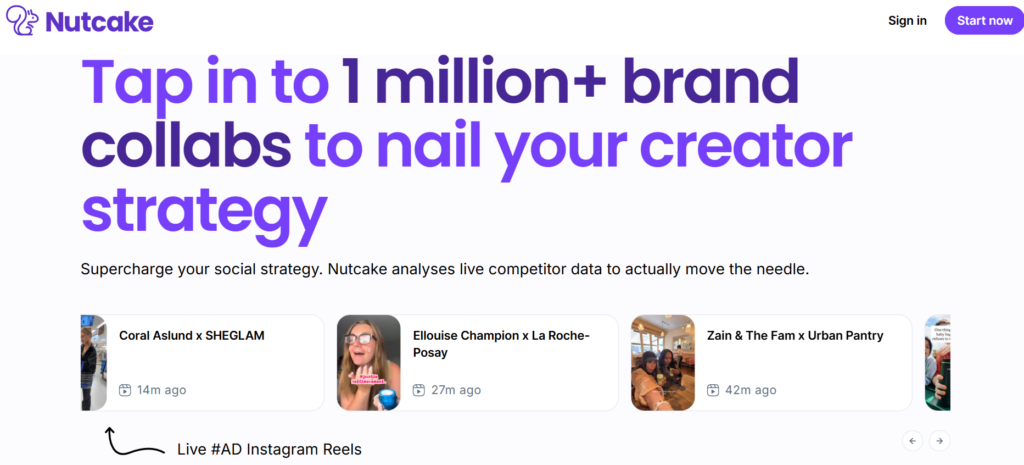
The dataset driving Nutcake stands at 598,000 posts, growing by around 50,000 per week. Its analysis points to a problem Tim has spent five years trying to solve: the systems brands use to run creator campaigns have never been sophisticated enough to capture what is actually working. Without that infrastructure, decisions default to reach and follower count.
“Working with creators is broken, or working with creators has never really been solved,” Tim says.
Discovery Was Never the Hard Problem
Many creator marketing platforms were built around the assumption that finding the right creator is where campaigns succeed or fail. Large databases, search filters, and audience demographic overlays. The workflow ends, roughly, at the introduction.
Tim built CreatorOS in the opposite direction. When he and co-founder Will Cookson launched the platform in 2020, discovery was not on the roadmap. “A lot of creator tech is designed to help you discover creators,” he says. “And it feels like that’s the focus. From there, the functionality can tail off a little bit.”
What they built first was the execution layer: briefs, content delivery, approvals, contracts, and payments. The Google Sheets, email threads, and agent WhatsApp chains that slow every campaign down were the actual problem. Discovery came later.
The sequence took several years to settle. Early versions of the company explored fintech tools, a branded debit card for creators, and Discord-based monetization. None held. “Everything that we came back to was that brands just needed a better way of working with creators,” Tim says. “The solution was kind of in front of us, and maybe simpler than we actually thought.”
The First Three Seconds Decide Every Campaign
The dataset Nutcake analyzes is built from sponsored posts across social platforms, enriched with transcriptions of video content. CreatorOS draws on Instagram’s engaged view metric to separate total views from viewers who stayed past the opening seconds. That split is where the finding lives.
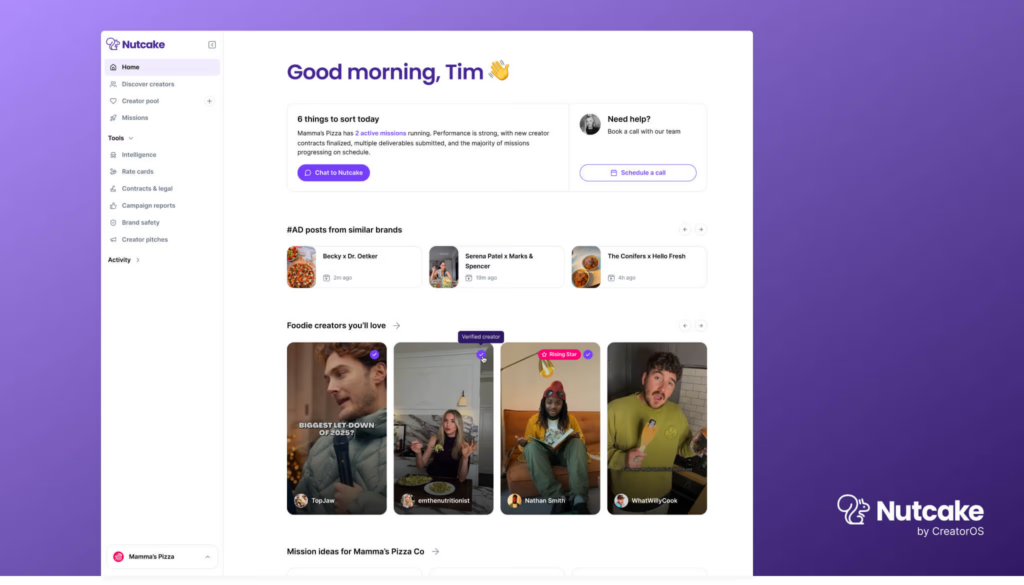
Image: Nutcake brand dashboard
According to Tim, the average engaged viewer rate across the database is roughly 35%. Among the top 2% to 5% of posts by view-through rate, that figure climbs to 60% or above.
The hook is the deciding variable. Its nature varies by category. In fashion, it tends to be visual rather than scripted, a striking opening image rather than a call to action. In cooking content, it often lies in how the recipe is framed in the opening frame. Content that fails to give viewers a reason to stay in the first few seconds rarely recovers.
“Briefs are where a lot of these campaigns fall down,” Tim says. “People spend weeks coming up with the perfect creator to partner with, they’ve got big budgets, they’re ready to spend them, but then they write a subpar brief because they don’t necessarily have the intelligence to go, what hooks people in this market?”
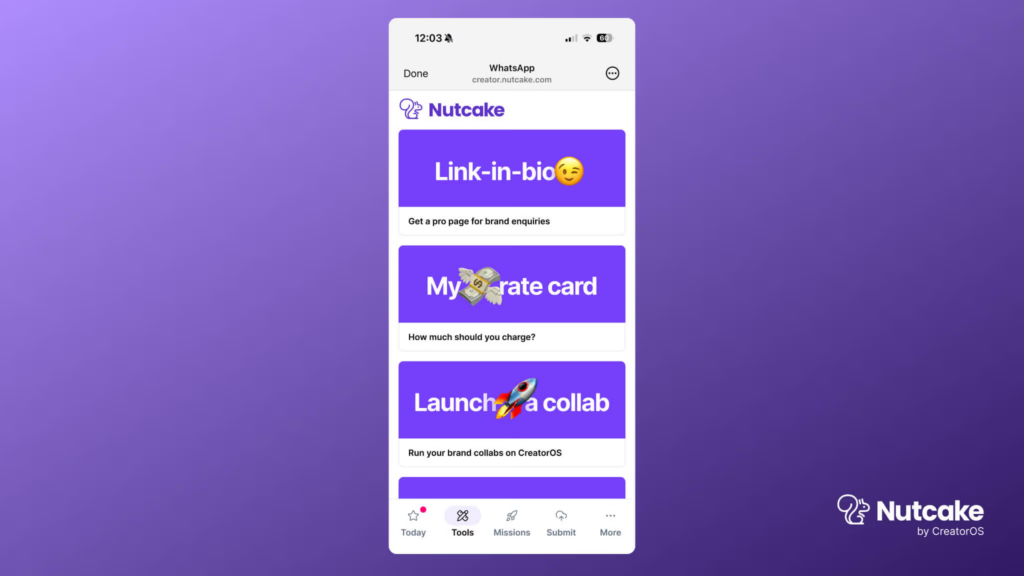
Image: Nutcake creator app built in WhatsApp
Scale Is Not a Performance Signal
The finding with the most direct implications for budget allocation is one Tim describes carefully: nano and mid-tier creators consistently outperform mega creators in relative view rates.
Brands have acknowledged this in principle for several years, but the data suggests behavior has not changed to match. “There’s maybe a belief that bigger creators create better content and smaller nano creators don’t,” Tim says. “And I think maybe two or three years ago that was more true than it is today.”
The mid-tier of the creator market currently represents strong value, in his view. Creators charging between $1,000 and $5,000 per collaboration are producing consistently high-quality work while remaining commercially accessible. The dynamics at higher tiers start working against performance. “There’s almost a poisoned chalice when you get up to a certain size,” Tim says. High fees bring scrutiny, senior client involvement, and the impulse to script the content.
That last factor is decisive. “As soon as a brand or an agency scripts for a creator, I’ve never seen it work,” he says. “You end up with really awful views. It feels inauthentic.” Brands also underestimate what creators already know about their own audiences. “No one obsesses about their videos more than they do,” Tim says.
The approach he advocates is simpler than most campaigns currently allow: take the creator’s best-performing format, and put the brand inside it.
Brand-Creator Relationships Are Still Purely Transactional
The briefing problem is compounded by a structural dynamic Tim describes as almost entirely transactional.
“Brands only reach out to creators when they’ve got money. Creators only reach out to brands when they want to pitch them something,” he says. “There isn’t a lot of networking or relationships happening at all. And then we wonder why there’s a slight lack of creativity.”
The cost of that pattern shows up when briefs arrive on short timelines. Campaigns that turn around in 24 hours, brief to live, are possible, Tim says, but only when the relationship already exists. “We’ve seen brands turn around content from brief to live in 24 hours because the creator’s done work for them before,” he says. “They know the rough brief, they know the brand, and they can say, I’ll film tomorrow, submit by lunch, approved in the afternoon, live in the evening.”
That is possible only when brands invest in creator relationships before the budget cycle opens. CreatorOS has built features specifically for this: tools that let creators submit 30-second video pitches to brands between campaigns, and a link-in-bio tool that routes inbound brand interest without exposing a creator’s email to public inboxes.
Agents That Assist, Not Decide
Nutcake’s launch adds agentic capability to the CreatorOS infrastructure. The agents handle operational tasks: chasing creators who have not responded to briefs, tracking submissions, generating analysis from the dataset, and writing personalized outreach. They do not make decisions that require human judgment.
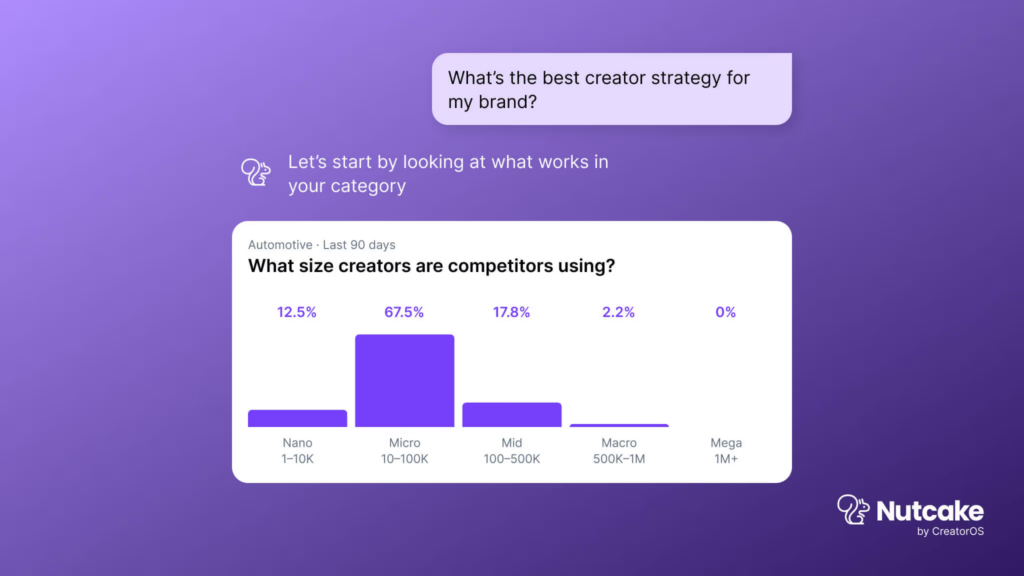
Image: Intelligence agent analyses posts in your category
“We’ve built our agents to be collaborative,” Tim says. “They never make decisions on your behalf, but they take on tasks you don’t want to do.” Content approval, creator sign-off, and budget decisions remain with the brand. The design reflects a clear intent: removing friction from the administrative side should create more time for the relationship work that influences campaign quality.
The platform also extends tools to creators: contract review, WhatsApp-based brief delivery, and live audience data shared directly from Meta and TikTok APIs. Tim’s position is that platforms built only for brands push the operational burden across the marketplace. “You’ve just sent the friction over to the other side of the marketplace,” he explains. “And you wait two weeks for a response. That’s friction.”
Creator Marketing Can’t Scale on Manual Work
Tim’s five-year projection for Nutcake is less about the product interface than about where AI infrastructure ends up inside marketing operations. Voice interfaces will replace typed inputs, he predicts, and tools like Nutcake will be embedded in platforms brands already use rather than accessed as standalone applications.
“There might not be a nutcake.com platform that you log into,” he says. “It will just be part of what springs up on your laptop when you open it in the morning.”
The trajectory he describes requires creator marketing to professionalize in ways it has not yet. Manual processes cannot support the scale the industry is chasing, in his view, and most existing tools are either too expensive or too narrow to manage a full campaign end to end. The data Nutcake has assembled is, in this reading, a record of what happens when the infrastructure is in place.
What that data keeps showing, across sectors and creator sizes, is the same finding. “Organic success comes down to hook almost every single time,” Tim says.
Subscribe to Our Newsletter
Check Out Our Podcast