





Agency
TBAR Partners Built a TikTok Shop Agency Around What Brands Get Wrong About the Channel

If TikTok Shop rarely turns a profit on its own ledger, why are the most competitive D2C brands still building on it? That’s the case Tyler Brechbiel, co-founder of TBAR Partners, is making to CFOs who would rather not hear it.
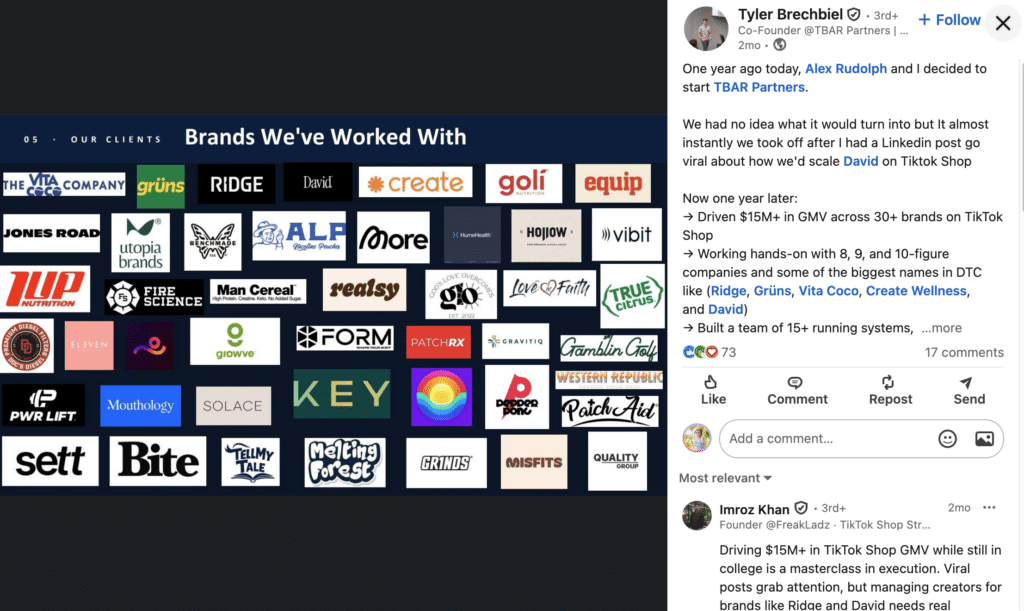
The agency launched in June 2025, when two college baseball teammates at Grace College in Indiana recognized they were each working in ecommerce agency roles and decided to combine their capabilities. Fifteen months in, the Indiana-based firm manages TikTok Shop for companies including Ridge, Grüns, Vita Coco, HexClad, and David Protein, reporting more than $5 million in monthly gross merchandise value across its brand portfolio.
A LinkedIn post Tyler wrote during the agency’s first week, detailing how he would scale David Protein to $1 million in monthly TikTok Shop sales within 90 days, “had our calendars completely booked out.” The traction also surfaced the recurring challenge: persuading brands that the right measure of TikTok Shop’s value starts off the platform.
“TikTok Shop by itself as its own P&L does not look good,” Tyler says. “You’ll be negative, you’ll be break-even, maybe at best a single-digit profit margin.” The agency’s case extends the accounting outward, to Amazon purchase spillover, retail foot traffic effects, and the volume of creator content TikTok Shop generates for Meta campaigns. How brands weigh those factors, Tyler argues, determines whether the channel reads as a costly experiment or a productive marketing investment.
The Off-Platform Return That CFOs Miss
TikTok Shop’s most commercially legible value, Tyler argues, sits off the platform. The first effect is Amazon spillover. Tyler cites data from TikTok’s own account representatives indicating that around three to four TikTok Shop sales generate one additional Amazon purchase. The retail halo for brands with substantial physical distribution is larger still, he says, though harder to attribute precisely. “You can’t put the real numbers behind that because it’s foot traffic,” he notes.
TikTok Shop’s affiliate system produces large volumes of creator-made video. TBAR routes that material into paid Meta campaigns for brands that need creative to sustain growth on that platform. “We have a brand that spends millions of dollars a month on Meta, and right now we’re getting them hundreds of pieces of content,” Tyler says. “It’s taking 20% of their Meta budget, and it’s outperforming their other UGC by over 20%.”
TBAR does not work with startups or brands without an established base in direct-to-consumer, Amazon, or retail, because, as Tyler explains, those companies lack the resources to absorb TikTok Shop’s demands during the ramp period. “You have to change your perspective of TikTok Shop as not just a sales channel,” Tyler says. “The sales are a bonus.”
Cold-Start Brands Can’t Win by Going After the Same Creators
Tyler divides the creator affiliate pool into tiers running from L1 at the lower end to L3 and above, with the top tier generating most of the platform’s sales volume. He notes that every established brand pursues the same L3-plus creators, which leaves cold-start brands competing for affiliates who have little reason to prioritize an unknown shop over a partner with a track record and an audience.
“Why would a creator want to work with you? You really have no good answer,” Tyler says, addressing a brand without platform history. The answer TBAR offers is to build the next tier from scratch. “If you can get L2 creators that are just so bought into what you’re building, your mission, your product, and they’re super excited to wake up and make videos about your brand, those are more valuable than the L3 creators in the beginning,” he says.
The agency sends hundreds of samples per month per client, then concentrates intensive support on the roughly 20 creators who engage with coaching, respond to feedback, and sustain production volume. Over time, Tyler argues, those creators become the most durable part of a brand’s affiliate infrastructure.

A Brief Built for Volume, Not for Guidelines
Top brands on TikTok Shop generate around 50,000 creator videos per month, according to Tyler, and the brief-to-community system TBAR builds for each client is designed to make reaching that output as frictionless as possible for every creator in the program.
Each creator who accepts a sample receives access to a Discord community built specifically for the brand, separate from TikTok’s native messaging infrastructure. The intent is to move communication out of an environment Tyler describes as too crowded by competing brand outreach to maintain a clear signal, and into a single, centralized channel. Inside that community, the brief includes links to top-performing videos alongside written hooks and angles. “Visual hooks, visual angles matter more than what’s actually being said” on TikTok Shop, Tyler says.
TikTok Shop commission rates, which Tyler describes as running 15 to 20% for organic posts and lower for ad-amplified placements according to industry norms, mean that creators and brands are already pointed toward the same commercial outcome. A creator who posts more, and more effectively, earns more. In Tyler’s view, that shared incentive makes most creators receptive to guidance without requiring the agency to enforce compliance.

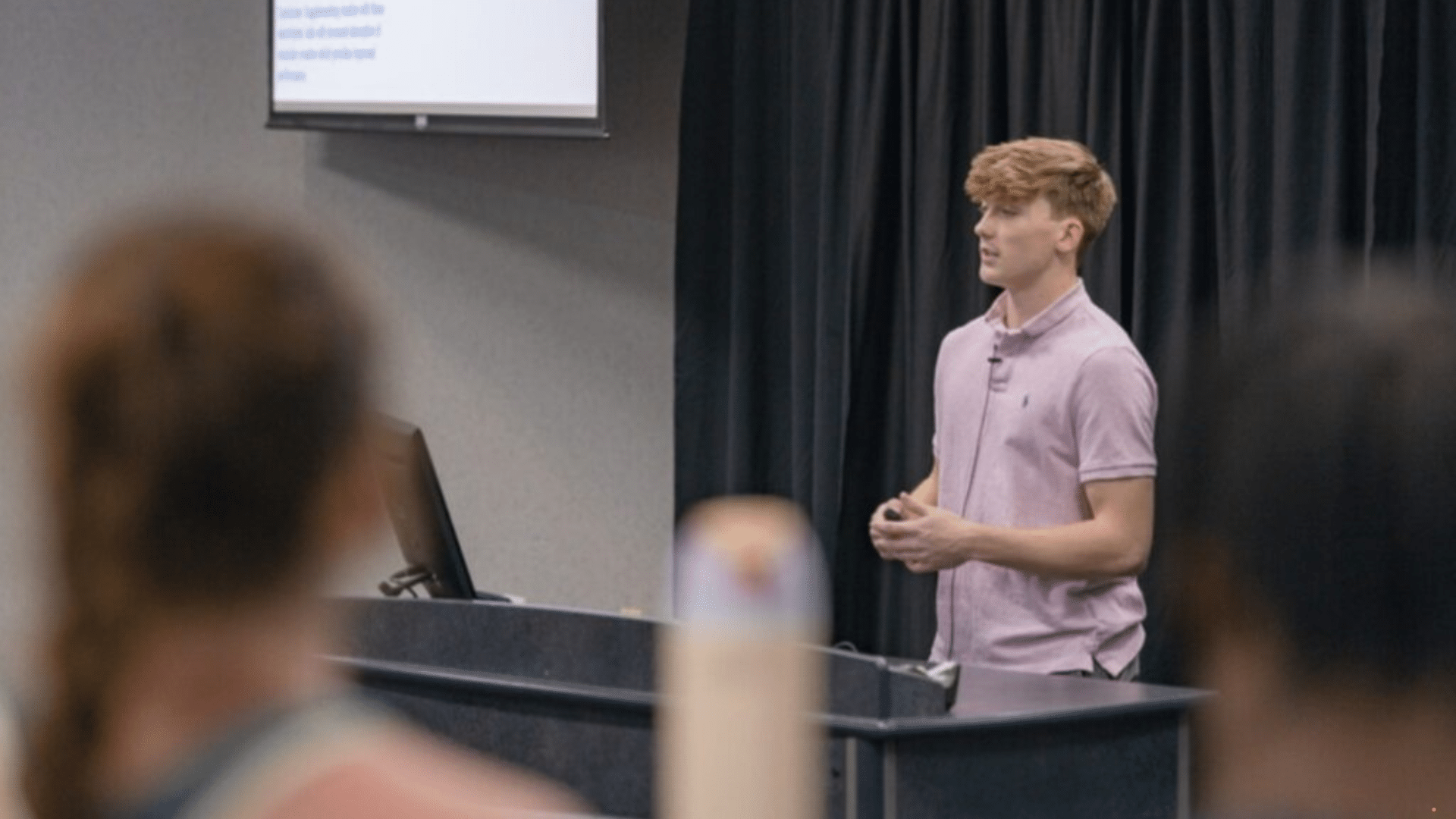
Photo: Tyler Brechbiel & Alex Rudolph
AI Handles the Outreach. Relationships Handle the Rest.
TBAR uses AI-driven systems for mass affiliate outreach, the stage of the funnel before a creator receives a product sample. “Everything before a sample gets sent is AI, everything after is human,” Tyler says.
Some agencies are building AI-first systems intended to automate creator relationships as well, Tyler observes, and he argues that approach will not hold. “I think there will always have to be some human touch as part of this entire funnel,” he says, “because everything is so much relationship-based to the success of each shop.”
Internally, the agency uses AI for analytics, reporting dashboards, and SOP documentation, managed by a dedicated contractor. Tyler is candid that he is not the builder of those systems himself. “I’m not the best with AI. That’s why we hired a contractor,” he says.
The Next Cycle of Social Commerce Will Reward Early Movers
Social commerce’s platform layer is in motion. YouTube Shopping has partnered with Amazon. Instagram Shop remains in development, though Tyler assesses it as still distant from being a functional channel for most brands. TikTok has launched a subscription program for faster shipping that Tyler describes as structurally similar to Amazon Prime, while Amazon has incorporated social video into its own commerce strategy. “Every year, it’s going to be completely different,” he says. “It’s moving so fast.”
TBAR launched around 21 months after TikTok Shop’s U.S. debut, which Tyler frames as a competitive delay against agencies that built early market positioning. The plan for the next cycle is to arrive first. When YouTube Shopping and Instagram Shop reach commercial maturity, he says, TBAR intends to be operating on those platforms from the outset. Live selling is also in development for the agency, though Tyler tempers expectations for its U.S. ceiling, noting that China’s live commerce scale reflects consumer behaviors and economic dynamics he does not expect to transfer directly to the American market.
“Social commerce is expanding really fast, and you do not want to be late,” Tyler says. “The platform’s only getting harder.”
Subscribe to Our Newsletter
Check Out Our Podcast