



Agency
‘Where Creators Become Entrepreneurs’: Patrick Israel Shares Vision For Creator Hub

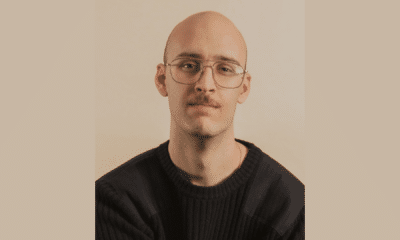
“The creator economy is the economy,” declares Patrick Israel, founder and CEO of Xtend Creators (formerly Stem Group). “Even if you’re B2B or B2C, you need media, you need a domain to connect an audience.”
This insight forms the foundation of Creator Hub, the business-focused conference Patrick’s building to transform how creators think about their careers. After a successful inaugural event in 2024 that drew nearly 750 attendees, Creator Hub returns to the JW Marriott Orlando Bonnet Creek Resort & Spa this August 15-17 with a vision to be the place “where creators become entrepreneurs.”
Patrick, who has spent five years building what he describes as “one of the most exciting management companies in the country,” managing top creators like GroovyGavin, Tyler Blanchard, and Pete Gustin, launched the event in 2024 (originally called Creator Fest).
“We’ve been to every kind of conference in this space,” Patrick explains. “The biggest problem that I think creators have is that they understand the process of building a community and creating content and connecting with people, but they always lack the productization, the business, the monetizing business side.”

Image: CreatorFest 2024
Source: CreatorFest
Bridging Two Worlds
Creator Hub deliberately focuses on bringing together two distinct but increasingly overlapping worlds: creators and entrepreneurs.
“Last year, 55% of our audience attendees were creators. The remaining 45% were between entrepreneurs and agency owners,” Patrick notes. “This was really almost a 50/50 entrepreneur and creator audience. And I think that was the best dynamic we could have ever built because creators are learning from entrepreneurs and entrepreneurs are learning from creators.”
This intentional bridging of communities stems from Patrick’s thesis about the convergence of content creation and business. In his view, successful creators must think like entrepreneurs, and entrepreneurs need creator skills to thrive in the digital marketplace.
“Entrepreneurs focus on the product, but how about the distribution? How about the sales? And the creators face the same challenge. The product for the creators is the content, but how about sales? How about money?” Patrick observes. “It’s like reverse entrepreneurship. Entrepreneurs build products and find an audience, creators build an audience and find products. If there’s a vision for this conference, it’s tying both of these things together.”
The Problem with Creator Economics
Despite the perception of influencers living lavish lifestyles, Patrick highlights a glaring gap between audience size and actual income.
“The biggest shock that I’ve had is how low income most of these creators are,” he reveals. “Hundreds of thousands of followers, and they are making nothing. They can’t even buy a few-hundred-dollar ticket.”
This observation cuts to the heart of why Patrick believes Creator Hub is essential. The industry’s focus on views and follower counts has created a distorted perception of success that doesn’t translate to sustainable businesses.
“Five years ago, if you had a million followers, you were rich because you could just charge anything and people were willing to pay,” Patrick explains. “Today, views and followers don’t really matter. Now it’s all about sales. And if you can’t convert, you’re essentially just not generating revenue.”
Patrick points to Ravi Abuvala as a perfect example of this principle in action—a creator with just 50,000 YouTube subscribers who generated $30 million in revenue last year through effective business strategies rather than massive audience numbers.
From Hobby to Business
Patrick’s diagnosis of the problem is clear: too many creators treat their platforms as hobbies rather than businesses. His presentation at 2024 CreatorFest was titled “The Death of the Creator,” making the provocative case that the term “creator” itself may be holding people back.
“The reason why it’s called ‘The Death of the Creator’ is that the creators are not creators. Forget that. You are an entrepreneur and your business is called a media business,” Patrick insists. “And you’ve got to figure out: are you going to live off of advertisement? Are you going to live off of affiliate? Are you going to live off of what? Do you have a back-end offer?”
This mindset shift—from content creation as a creative pursuit to content creation as a business strategy—forms the core of Creator Hub. Patrick argues that this isn’t unique to the creator economy but reflects a common entrepreneurial challenge.
“This is not a creator economy problem. This is a human nature problem,” he says. “Entrepreneurs have the same problem as creators. Most entrepreneurs are broke. Most never make it.”

Image: Patrick on stage at CreatorFest 2024
Source: CreatorFest
The Conference Experience
Creator Hub isn’t just an event. It’s a designed experience for transformation. From the moment attendees arrive, the focus is on connection, clarity, and business momentum.
“This was built by people who actually live in the space,” Patrick says. “We didn’t raise capital. We didn’t wait for permission. We built it from the ground up to serve the people we work with every day.”
Rather than packing a convention center with distractions, the event is hosted at a five-star resort designed to foster intimacy and high-value collisions. Breakout sessions are structured for tactical learning. Keynotes are focused on business strategy, monetization, and scale. Every moment of the agenda is designed to move creators from inspiration to execution.
“We treat creators like founders,” Patrick explains. “You’re building a media company. We want you to leave with new frameworks, new business relationships, and a roadmap you can act on Monday morning.”
Beyond the programming, the vibe is intentionally curated. As Patrick puts it, “Real conversations. Real business. No green rooms. No VIP ego. Just ambitious creators and entrepreneurs coming together to grow.”
Inside the 2025 Event
The 2025 event features a structured three-day format with specific focus areas each day. Friday, August 15, will feature an AI VIP Mastermind Day exclusively for VIP ticket holders, focusing on leveraging artificial intelligence in the creator economy. The evening will transition to a networking mixer open to all attendees. Saturday and Sunday will comprise the main programming focused on business, monetization, systems, scaling, and administration.
New features include a “Shark Tank”-style pitching competition for creator-led businesses, which Patrick describes as “the first ‘Shark Tank’ for the creator economy” where “creators and creator-first businesses get to pitch on stage, in the main stage, their businesses in front of investors.” There will also be a podcast recording room where attendees can create content on-site for free.
The programming emphasizes practical business strategies over theory. Speakers include notable figures like School of Hard Knocks (which Patrick describes as “the number one business creators in the entire world”), Snapchat’s Head of Partnerships Brooke Barry, Creator Coach Josh Zimmerman, and Scott D. Clary, host of one of the top 10 business podcasts in the country.
What Does Success Look Like?
What would success look like for the 2025 event? For Patrick, short-term success is simple. Break even and build momentum. However, the real vision is much bigger.
“Our goal is to make Creator Hub the leading entrepreneurship conference for the creator economy,” Patrick explains. “This isn’t just another event. It’s the foundation of an ecosystem. A place where creators, founders, investors, and operators come together to build real businesses and shape the future of media.”
That means scaling impact, curating the right audience, and designing an experience where business actually happens. “We’re not putting on a show,” Patrick says. “We’re creating a hub for opportunity. Collisions, connections, deals, and long-term relationships. That’s the future of Creator Hub.”
The Value of In-Person Connection
Despite the rise of digital communication and AI-powered tools, Patrick remains firmly committed to the value of face-to-face interaction, particularly for an industry that primarily exists online.
“Events are the future,” he says. “Business is really done in person. Human-to-human interaction has never been more important. Even with AI, we’re going to have a day just talking about artificial intelligence, but it will be in person. People want to see people in real life.”
This perspective informs every aspect of Creator Hub’s design, from venue selection to programming. While the conference features content on leveraging AI and other technologies, the emphasis remains on human connection and community building.
“The amount of inbounds I get from people selling stuff is ridiculous,” Patrick notes. “However, when you meet a person face to face, you can see what they’re made of by looking into their eyes.”
Patrick sees the creator economy at a critical point, with those who can build sustainable businesses setting themselves apart from those who treat creation as merely a hobby.
“There’s no get-rich-quick,” he advises. “I’m five years in and we’re grinding on the weekends, but that’s part of the process.”
Subscribe to Our Newsletter
Check Out Our Podcast