




Agency
Spark Media’s Charlie Buffin: Creator Marketing Needs Infrastructure, Not Just Influence

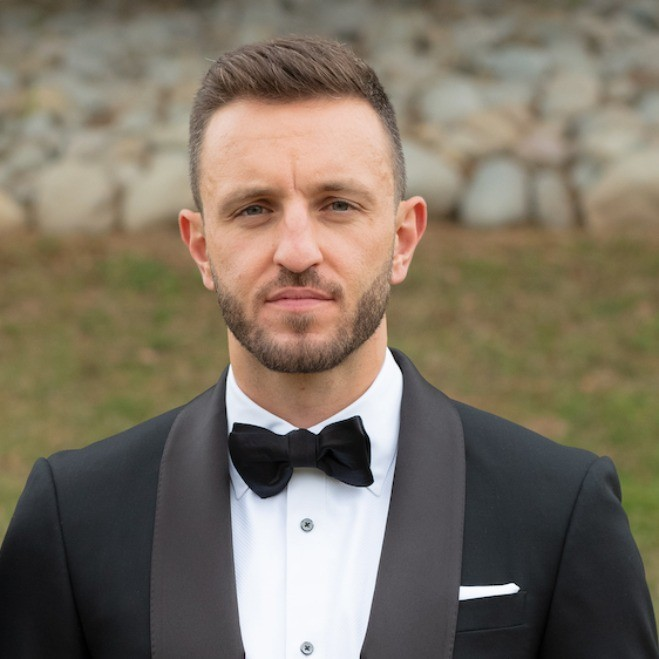
Charlie Buffin has a short diagnosis for why most influencer campaigns underperform: a brand picks a creator, sends a brief, and calls it strategy. As founder of Los Angeles-based Spark Media, he has spent nearly a decade building something different.
Spark operates with a 15-person full-time team organized into three focused pods: Spark Management, Spark Agency, and Spark Studios. The management arm oversees approximately 70 creators exclusively, including Pierson, Daniel Mac, D’Angelo Wallace, Kay Chung, and AreYouKiddingTV. Spark Agency partners with brands and holding companies, most notably Authentic Brands Group (Champion, Reebok, Aéropostale). Spark Studios rounds out the operation with creator-led ventures and original content development.
“I like to build brick by brick,” Charlie says. “We’ve never raised money. It’s been all bootstrapped, and I think that approach has led us to building a really good foundation.”
Charlie entered the Creator Economy in 2012, when he and a college friend began working with early Instagram creators. After co-founding Shimmur, a fan-interaction platform that went through Techstars and later became Community.com, he launched Spark in 2017.
From Platform Arbitrage to Full-Service Operating Model
Spark’s early advantage came from recognizing Musical.ly (now TikTok) before most agencies had heard of it.
When Charlie was still building Shimmur, his team used Musical.ly creators to promote the app and watched downloads surge. “There was kind of an open lane,” he says. “There weren’t a lot of other platforms advertising on Musical.ly, and it was this open world.”
When he left Shimmur in 2017, those same creators were asking for help with brand deals and merchandise. Spark was the answer. The company went deep on Musical.ly and, later, TikTok, accumulating creator relationships and campaign data at a time when relatively few management firms were paying attention to short-form video.
That early positioning has since expanded into a multi-division operation. A separate brand partnerships team, kept siloed from management to avoid conflicts of interest, handles agency-of-record relationships and outbound creator sourcing for brand campaigns. A third, newly formed group called Spark Studios, focuses on content production for companies like Dude Wipes, helping these brands build owned-and-operated content and channels on TikTok, YouTube, and Instagram.
“A lot of companies want to be on these platforms,” Charlie says. “They just need support with concepting, production, thumbnails, and how to properly tap into the algorithms.”

Follower Counts Are Still Misleading Brands
The most persistent mistake Charlie sees brands make is treating follower count as a proxy for campaign performance.
“I think a lot of companies working in this space are looking mostly at follower numbers,” he says. “That’s not necessarily the right way to look at it.”
He points to creators in Spark’s exclusive creator roster who are not necessarily the largest names on any platform but consistently outsell those with bigger audiences. The deciding factors are engagement, community depth, and conversion history. Has the creator sold product before? Do they have their own merchandise business? Does their audience act when they post?
“We understand the market incredibly well, in terms of creator rates from a value standpoint, who has converted for a brand in the past, etc. We apply these learnings across our entire business,” Charlie says.
For brands with smaller budgets, his advice is often to skip the mid-tier entirely and concentrate on micro creators with genuinely engaged audiences. The broader point is that audience size is a starting point, not a selection criterion.
“The biggest misconception is that followers are the biggest indicator of what is going to lead to a successful campaign,” Charlie says. “In reality, it’s typically more about who the audience actually is and how engaged they are to take real action.”

The Brief-and-Hope Model Is Breaking Down
Charlie says a familiar Influencer Marketing model still runs across the industry: a brand picks a creator, sends a brief, receives the content, and treats the exchange as a campaign. He argues that approach often underperforms because it leaves too little room for strategy, data, creator fit, and long-term learning.
“Anyone can open up a laptop and create an email domain and say they manage talent and work with brands,” he says. “But who actually has credibility behind them, who has proper infrastructure, who has the right case studies, the right data, the right learnings to implement?”
For Spark’s brand clients, the process is more involved. Campaigns begin with a KPI mapping exercise that determines whether the objective is conversion-focused, as with direct link clicks and e-commerce retail purchases, or awareness-driven. From there, Spark handles sourcing, contracting, creative briefs, draft approvals, and payouts. The team embeds in client workflows through Slack channels and shared documents, ultimately operating as an extension of their internal team.
“As it pertains to our brand partnerships division, we’re not just your typical turn-and-burn Influencer Marketing agency,” Charlie says. “We take a more hands-on approach from a creative standpoint, from a briefing standpoint, from a sourcing standpoint.”
The first campaign Spark runs with a new brand is treated as a testing phase. Data from that campaign, including which creator profiles converted and which content formats performed, feeds into the strategy for subsequent programs. For brands willing to operate in an agency-of-record capacity over multiple years, that compounding data is where the performance gains accumulate, according to Charlie.
AI Belongs in the Back Office, Not Client Relations
The campaign process Charlie describes is operationally intensive. Sourcing decisions, contract management, brief approvals, and payout tracking still run largely on spreadsheets at most agencies. Spark is building internal tools designed to change that.
“There are a lot of efficiencies you can create in the world of AI, systems, and models that could help optimize that process,” he says.
But Charlie draws a firm line between what should be automated and what should not. Client relationships are off-limits.
“I never want one of our clients, whether it’s a creator or a brand, to feel like they’re not speaking to me or a manager or someone on my team,” he says. “That needs to remain personal.”
Repetitive back-office tasks are a different matter. Sourcing logistics, operational handoffs, and internal reporting are where Spark sees AI reducing friction. With nearly a decade of campaign data in-house, the company is building tools that treat institutional knowledge as training material.
“It’s human-led, but AI and system-assisted,” Charlie says. “A lot of companies are thinking one or the other. We’re trying to lean into both.”
The Next Step: A Brand Incubator Built Around Creator Audiences
The most notable part of Spark’s model is also its newest. Several months ago, the company launched a card game with one of its major YouTube clients. It sold out.
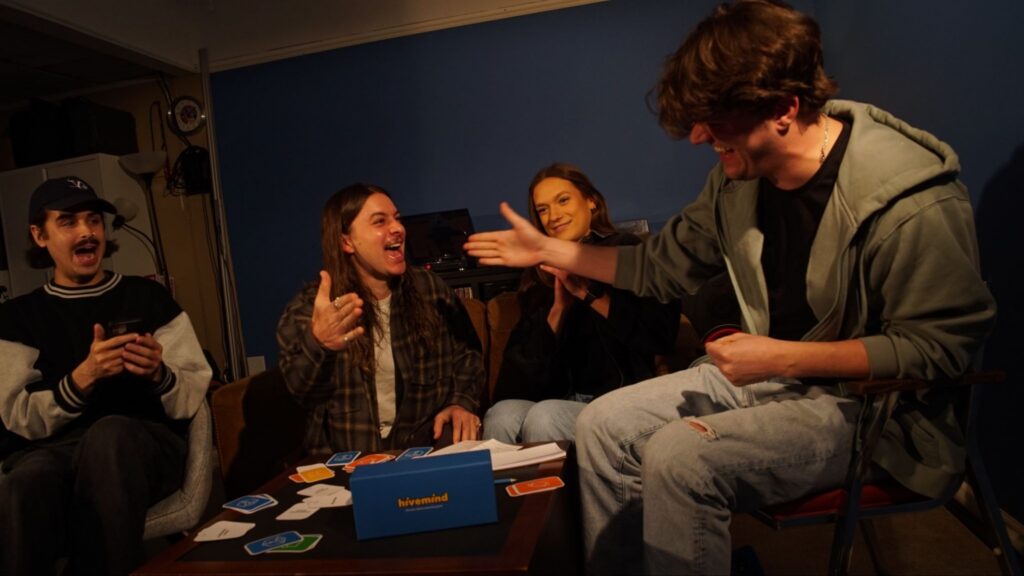
For Charlie, the card game is a proof of concept for something larger: a brand incubator in which Spark helps creators build products and IP they own, rather than licensing their audiences to brands campaign by campaign.
“The goal is to build a self-sustaining brand incubator where we’re working with a handful of our exclusive creators and building brands that we own and operate with our talent,” he says.
This direction reflects how Spark selects its roster. Charlie and his team of managers distinguish between creators who want to maximize brand deals and those who want to build businesses. The second group, which he calls “entrepreneurial creators,” is the one Spark is most motivated to grow alongside.
“Having access to an audience and distribution is so powerful,” he says. “You can build a product, you can build a show, you can build really anything that you launch to your audience, as long as it’s strategic and authentic.”
Spark is also exploring how to work with streaming platforms, like Netflix and Amazon, on creator-led IP development, and plans selective acquisitions of independent managers and other sole operators to scale the business.
Slow and Steady, in a Market Racing to Consolidate
The Creator Economy is consolidating. Traditional companies are acquiring influencer agencies, and larger players are raising capital to scale. Spark has watched that cycle from the outside.
“You’re seeing a lot of consolidation happening,” Charlie says. “More traditional companies are realizing that this movement is happening, and they want to get in.”
Spark’s response has been to stay bootstrapped, boutique, and focused on compounding. The company’s longest-tenured team members have been with Spark for five to eight years. Some creator clients have grown from 50,000 followers to several million on the same management agreement.
For Charlie, that continuity is the proof of concept. Influencer Marketing is no longer a channel brands experiment with. It is the channel. The agencies positioned to benefit are those that built real infrastructure before it became obvious they needed it.
“It’s been a slow and steady build, brick by brick,” he says. “Because we started early, we’re ahead of the curve.”
Subscribe to Our Newsletter
Check Out Our Podcast