







Agency
re:act: Tom Stone’s Social-First Agency Built to Align Creators, Creative, and Paid Media

Tom Stone believes many brands misunderstand how social media actually works.
After years of working in senior marketing roles at global consumer brands, Tom noticed a recurring disconnect. Creative teams were producing social content, media teams were running paid distribution, and influencer partnerships were happening alongside both. But the pieces rarely worked together.
“That disconnect between creative, media, and outcome was a key reason we decided to build something different,” Tom says.
Tom speaks from experience. Before launching his agency, he worked in marketing leadership roles at companies including L’Oréal and Unilever, managing large consumer brand portfolios and overseeing campaigns across global markets.
“My background sits firmly in big brand marketing, which is probably why I ended up building an agency,” Tom says. “Across those roles, what stayed with me was a frustration with how slowly social thinking was moving inside large organisations.”
In 2019, he and his wife, Pamela, founded re:act, a London-based social-first agency designed to integrate organic social, paid media, creator partnerships, and production into a single strategy. The company works with brands to design campaigns tailored to social platforms rather than adapting traditional advertising formats.
The agency is a reflection of Tom’s belief that the Creator Economy has fundamentally changed how brands reach audiences. In his view, social content is no longer just another marketing channel. It increasingly shapes how campaigns are created, distributed, and measured.
Why Social Strategy Often Breaks Down
During his time inside large consumer companies, Tom noticed that many organizations treated social media as a final step in the marketing process. Traditional campaigns were created first. Social content was then adapted from those assets and distributed across platforms.
Tom argues that this sequence misses the point of how social platforms operate.
“We worked with capable agencies, but they weren’t quick enough, and they weren’t tailoring assets properly for the channels they appeared on,” he says. “Social content was treated as an output rather than a starting point.”
Another issue involved media transparency. Paid distribution often ran separately from creative planning, which made it difficult to understand which parts of a campaign were actually generating results.
“I could sense inefficiencies but couldn’t clearly see where value was being lost,” Tom says.
That experience shaped the structure of re:act.
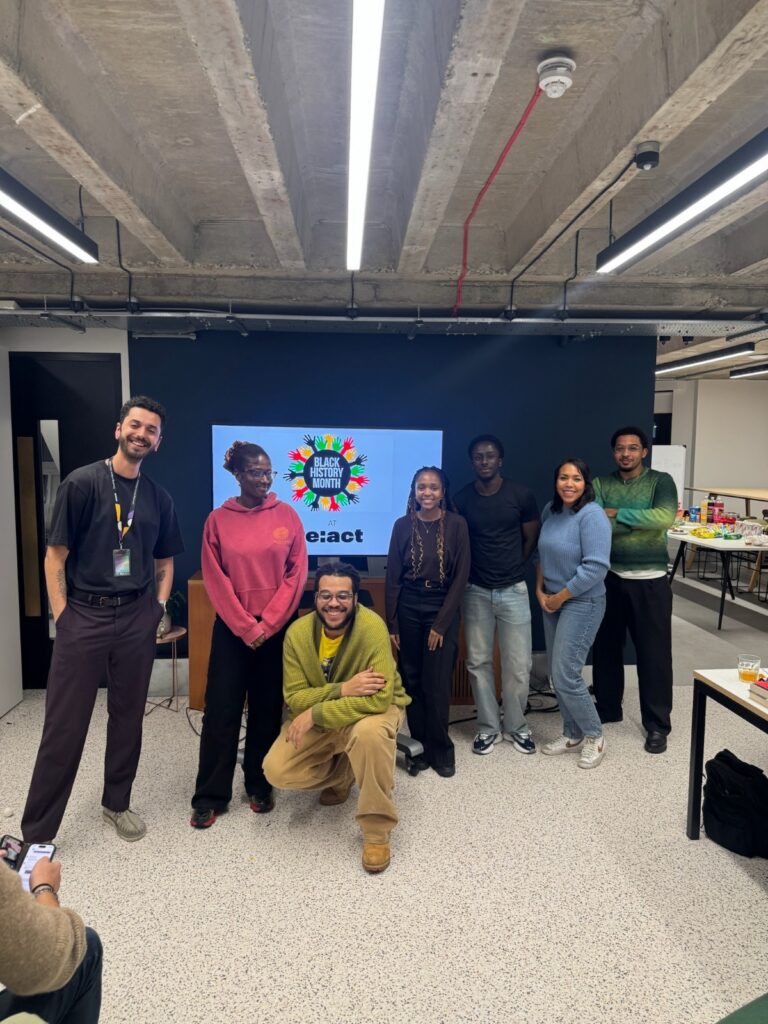
re:act team
Building an Integrated Social-First Model
Tom describes re:act as a social-first agency, meaning that campaigns begin with audience behavior on social platforms rather than traditional brand messaging. The company combines strategy, production, organic social management, paid media buying, and creator partnerships within a single organization.
“What differentiates re:act today is having production, paid media, organic social, creators, and strategy under one roof,” Tom says.
In his view, this structure allows the agency to move insights quickly between creative and distribution teams. Performance data from paid media can influence creative decisions, while the performance of organic content can shape paid campaign strategy.
Tom believes this integration reflects how audiences actually encounter brands online. “Treating organic, paid, and creator activity as separate silos is usually where things break down, because consumers don’t experience them that way,” he says.
Why Audience Behavior Should Guide Social Campaigns
Another theme that frequently appears in Tom’s thinking is the importance of audience behavior. He believes brands often design campaigns around internal preferences rather than how people actually use platforms.
“Every strategy starts with the audience, yet that’s the step brands most often skip,” he says. “Too many plans are built around where teams want to show up, not how people actually behave.”
This gap can lead to inefficient spending. Tom notes that brands may invest heavily in new platform features while ignoring channels that still deliver significant reach.
He points to Facebook as an example. “Facebook is unfashionable, but it remains an effective reach vehicle,” he says.
For Tom, the goal of social strategy is not to chase trends but to build consistent engagement with audiences over time. “A good social strategy looks beyond surface metrics,” he says. “An engaged community is far more likely to convert.”
How Creator Partnerships Are Changing
Tom has also seen a shift in how brands work with creators. In earlier phases of Influencer Marketing, partnerships were often short-term collaborations with little focus on audience alignment.
“Early Influencer Marketing was very short-term,” he says. “Creators were treated like mini celebrities rather than partners.”
Today, Tom believes brands are increasingly working with content creators who produce ongoing streams of material rather than one-off sponsored posts. “The biggest change in the creator economy has been the rise of content creators overtaking traditional influencers,” he says. “Creators bring flexibility, efficiency, and a wider range of voices.”
However, he stresses that creator content alone is not enough to ensure visibility. “If brands could internalise one lesson, it’s that creative excitement needs to be matched with working media,” Tom says. “Without paid support, even strong content struggles to be seen.”
Platform Influence and Media Control
Tom highlights a growing tension between platform incentives and brand interests. According to him, social platforms often encourage marketers to rely on automated distribution systems that optimize campaigns behind the scenes.
While these tools promise efficiency, Tom believes brands should maintain closer control over how their content is distributed. “Platforms often encourage brands to let paid media run freely, promising optimisation in the background,” he says. “In reality, placements often benefit the platform more than the brand.”
His approach is to treat platform recommendations as experiments rather than instructions. “When platforms push new formats or features, we look first at what audiences are genuinely using,” Tom says. “Organic behaviour should always be the signal.”
Expanding the Agency’s Focus
In the near future, Tom expects social-first marketing to spread beyond categories that have historically adopted it early.
Some brands have always invested heavily in social campaigns, but other sectors are now following similar strategies. “Personal care and beauty have long been ahead from a social perspective, but other sectors are now catching up,” Tom says.
At the same time, re:act plans to grow through acquisitions and international expansion. Tom’s long-term goal is to scale the company while maintaining its independence and culture.
“My ambition is for re:act to be the biggest independent social-first agency group in the UK, while staying true to our values,” he says. “We measure success by doing strong work that delivers against client KPIs and builds lasting relationships. That’s what ultimately matters.”
Subscribe to Our Newsletter
Check Out Our Podcast