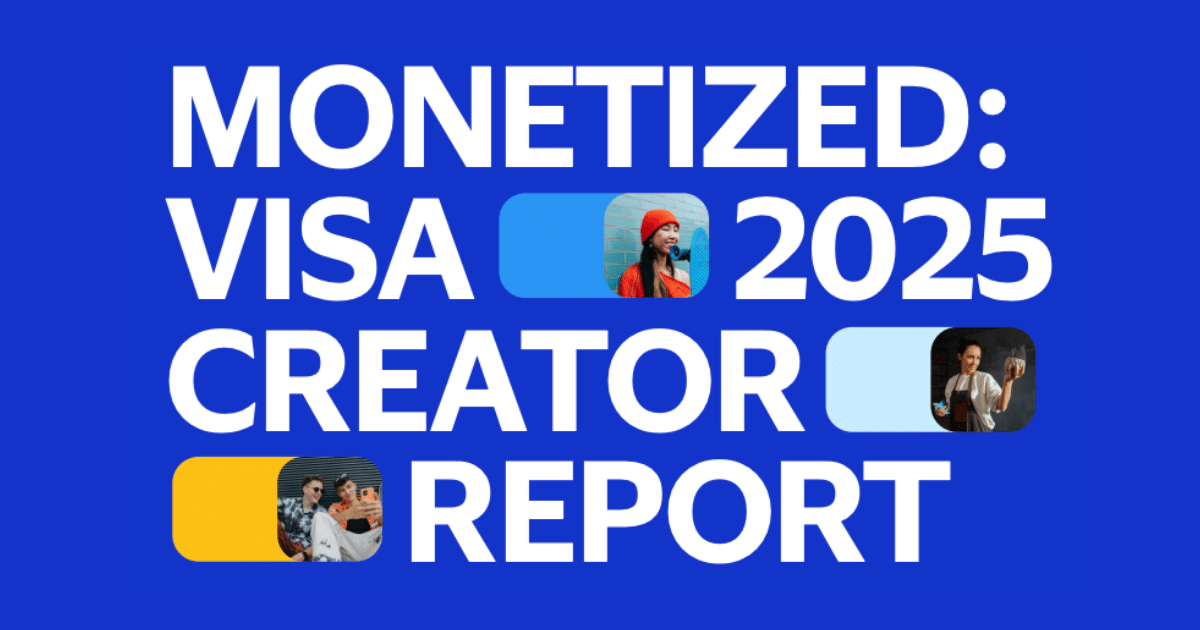
Content creators increasingly view themselves as legitimate business owners while operating with personal financial tools, according to the “Monetized Visa 2025 Creator Report.”
The report’s most revealing insight highlights a stark contradiction: while 68% of creators surveyed identify as small business owners, 86% finance their operations through personal funds, while 62% manage business income through personal bank accounts, and three-quarters rely on personal credit or debit cards. This separation between professional identity and financial behavior exposes a significant challenge in the creator economy.
Only 19% of creators use business credit or debit cards, suggesting that specialized business financial products have not penetrated this growing segment of entrepreneurs.
A Half-Trillion Dollar Industry Running on Personal Credit Cards
The creator economy isn’t a fringe movement. It represents approximately 200 million creators worldwide and is projected to reach a valuation of $500 billion by 2027, according to the report. Yet this economic powerhouse operates largely on personal financial infrastructure.
The research reveals that 75% of creators use personal credit or debit cards for business expenses, while 77% rely on payment processors such as PayPal and Stripe to receive payments. More sophisticated financial tools remain largely unused, with only 20% of companies implementing financial management systems such as Sage and Xero.
This financial behavior persists, despite 88% of surveyed creators expecting their business revenue to grow over the next year, indicating confidence in their business models, but a reluctance or inability to adopt corresponding financial structures.
Skills Gap Compounds Financial Challenges
The financial practices of creators correlate strongly with identified skills gaps. The report finds that 71% of creators describe themselves as self-taught in financial management, with 66% lacking formal training in business strategy.
Creator confidence levels reinforce this disconnect: while 80% express confidence in social media management and 79% in content strategy, only 53% feel equally confident in financial management and just 38% in tax/legal compliance.
These skill deficiencies may help explain why creators continue operating through personal financial channels despite their business identities. Without proper training in financial management, the barrier to adopting business financial tools likely remains too high.
Payment Vulnerabilities Expose Business Risks
The creator economy’s reliance on personal finances creates significant operational vulnerabilities. According to the report, delayed payments negatively impact 37% of creators through mental stress or anxiety, while 26% experience direct production delays due to payment issues.
This exposure to payment disruptions is particularly notable given that 52% of creators receive global payments, introducing currency and cross-border complexities to their financial operations.
Despite these challenges, only 28% of creators access specialized creator funding options such as platform funds or creator loans, leaving most dependent on personal credit or family support (47% receive funds from friends or family).
Platform Diversification Without Financial Diversification
The report demonstrates that creators actively diversify their revenue streams and platforms, with Instagram (62%), YouTube (60%), and TikTok (55%) representing the primary income sources. Most creators post content across multiple platforms with varying frequencies to maximize revenue opportunities.
This sophisticated approach to revenue diversification contrasts sharply with their simplified financial management, suggesting that creators prioritize content and audience strategies over the development of financial infrastructure.
Subscription Models
One notable trend that may drive more formalized financial practices is the growing adoption of subscription models. The report identifies subscriptions as an emerging solution for creators seeking “more predictability and clarity on how much money they have coming in and where it is coming from.”
This shift toward recurring revenue could potentially accelerate the adoption of business financial tools as creators require more sophisticated systems to manage subscription billing, revenue recognition, and tax compliance.
Opportunity for Financial Services Providers
For financial institutions and professional service providers, the report reveals a significant market opportunity. Approximately 30% of creators expressed interest in cards with more flexible payment options and faster access to funds.
The study suggests that creators “do not fit the traditional models that most financial institutions are used to working with and designing products for,” underscoring the need for specialized financial products tailored to the unique business models and challenges of content creators.
Career Legitimacy Without Financial Legitimacy
Perhaps most intriguingly, the report identifies strong social validation for careers in content creation. With 94% of creators feeling supported by friends and 87% by family, content creation has achieved widespread social acceptance as a legitimate profession.
This acceptance stands in contrast to the informal financial practices prevalent in the industry. While 76% of creators feel no pressure to pursue traditional career paths, their financial behavior hasn’t evolved to match this professional confidence.
Professionalization Opportunity
As the creator economy continues its growth trajectory toward half a trillion dollars, the professionalization of financial practices represents a critical step. The report suggests that both creators and financial institutions play a role in elevating business identity and financial behavior.
The disconnect between creators’ business identity and personal financial practices isn’t merely an academic observation. It represents both a vulnerability and an opportunity in an industry reshaping the future of work, entertainment, and digital commerce.
Image credit: Visa The full report is available here
Dragomir is a Serbian freelance blog writer and translator. He is passionate about covering insightful stories and exploring topics such as influencer marketing, the creator economy, technology, business, and cyber fraud.













Content creators increasingly view themselves as legitimate business owners while operating with personal financial tools, according to the “Monetized Visa 2025 Creator Report.”
The report’s most revealing insight highlights a stark contradiction: while 68% of creators surveyed identify as small business owners, 86% finance their operations through personal funds, while 62% manage business income through personal bank accounts, and three-quarters rely on personal credit or debit cards. This separation between professional identity and financial behavior exposes a significant challenge in the creator economy.
Only 19% of creators use business credit or debit cards, suggesting that specialized business financial products have not penetrated this growing segment of entrepreneurs.
A Half-Trillion Dollar Industry Running on Personal Credit Cards
The creator economy isn’t a fringe movement. It represents approximately 200 million creators worldwide and is projected to reach a valuation of $500 billion by 2027, according to the report. Yet this economic powerhouse operates largely on personal financial infrastructure.
The research reveals that 75% of creators use personal credit or debit cards for business expenses, while 77% rely on payment processors such as PayPal and Stripe to receive payments. More sophisticated financial tools remain largely unused, with only 20% of companies implementing financial management systems such as Sage and Xero.
This financial behavior persists, despite 88% of surveyed creators expecting their business revenue to grow over the next year, indicating confidence in their business models, but a reluctance or inability to adopt corresponding financial structures.
Skills Gap Compounds Financial Challenges
The financial practices of creators correlate strongly with identified skills gaps. The report finds that 71% of creators describe themselves as self-taught in financial management, with 66% lacking formal training in business strategy.
Creator confidence levels reinforce this disconnect: while 80% express confidence in social media management and 79% in content strategy, only 53% feel equally confident in financial management and just 38% in tax/legal compliance.
These skill deficiencies may help explain why creators continue operating through personal financial channels despite their business identities. Without proper training in financial management, the barrier to adopting business financial tools likely remains too high.
Payment Vulnerabilities Expose Business Risks
The creator economy’s reliance on personal finances creates significant operational vulnerabilities. According to the report, delayed payments negatively impact 37% of creators through mental stress or anxiety, while 26% experience direct production delays due to payment issues.
This exposure to payment disruptions is particularly notable given that 52% of creators receive global payments, introducing currency and cross-border complexities to their financial operations.
Despite these challenges, only 28% of creators access specialized creator funding options such as platform funds or creator loans, leaving most dependent on personal credit or family support (47% receive funds from friends or family).
Platform Diversification Without Financial Diversification
The report demonstrates that creators actively diversify their revenue streams and platforms, with Instagram (62%), YouTube (60%), and TikTok (55%) representing the primary income sources. Most creators post content across multiple platforms with varying frequencies to maximize revenue opportunities.
This sophisticated approach to revenue diversification contrasts sharply with their simplified financial management, suggesting that creators prioritize content and audience strategies over the development of financial infrastructure.
Subscription Models
One notable trend that may drive more formalized financial practices is the growing adoption of subscription models. The report identifies subscriptions as an emerging solution for creators seeking “more predictability and clarity on how much money they have coming in and where it is coming from.”
This shift toward recurring revenue could potentially accelerate the adoption of business financial tools as creators require more sophisticated systems to manage subscription billing, revenue recognition, and tax compliance.
Opportunity for Financial Services Providers
For financial institutions and professional service providers, the report reveals a significant market opportunity. Approximately 30% of creators expressed interest in cards with more flexible payment options and faster access to funds.
The study suggests that creators “do not fit the traditional models that most financial institutions are used to working with and designing products for,” underscoring the need for specialized financial products tailored to the unique business models and challenges of content creators.
Career Legitimacy Without Financial Legitimacy
Perhaps most intriguingly, the report identifies strong social validation for careers in content creation. With 94% of creators feeling supported by friends and 87% by family, content creation has achieved widespread social acceptance as a legitimate profession.
This acceptance stands in contrast to the informal financial practices prevalent in the industry. While 76% of creators feel no pressure to pursue traditional career paths, their financial behavior hasn’t evolved to match this professional confidence.
Professionalization Opportunity
As the creator economy continues its growth trajectory toward half a trillion dollars, the professionalization of financial practices represents a critical step. The report suggests that both creators and financial institutions play a role in elevating business identity and financial behavior.
The disconnect between creators’ business identity and personal financial practices isn’t merely an academic observation. It represents both a vulnerability and an opportunity in an industry reshaping the future of work, entertainment, and digital commerce.
Image credit: Visa
The full report is available here
Subscribe to Our Newsletter
Check Out Our Podcast