




Technology
Influencer Platform Statusphere Expands Warehouse to Meet Growing Demand for Micro-Influencer Campaigns

Statusphere has moved its influencer product shipping into a 24,000-square-foot Orlando facility, up from 4,000 square feet, ahead of the Black Friday rush.
For founder and CEO Kristen Wiley, the expansion addresses a persistent pain point in micro-influencer campaigns. “Scale always breaks if you can’t get your products to the creators,” she says.
Kristen argues that fulfillment integration is part of what lets Statusphere scale micro-influencer programs where other platforms she has tried cannot. The company, founded in 2018, sells to consumer brands that want thousands of micro-influencers posting from a single campaign.
That focus on shipping traces to her time as a creator and later a brand-side marketer, when she saw just how much damaged or missing products could disrupt collaborations. Statusphere’s first influencer product shipments went out from her apartment, packed by friends and family, who she paid in pizza.
Since those apartment days, Statusphere has facilitated more than a quarter of a million influencer collaborations, according to the company. The Orlando building will add an enterprise warehouse management system to the fulfillment software Statusphere built in-house.
Influencer Shipments Are Too Custom for Third-Party Logistics
Statusphere keeps fulfillment in-house because third-party logistics providers only work when shipments are simple, Kristen says. “When you’re doing Influencer Marketing, things are very custom,” she says. A brand may send creators different product sets or let them choose a scent or foundation shade, and those orders need to run apart from the brand’s e-commerce fulfillment.
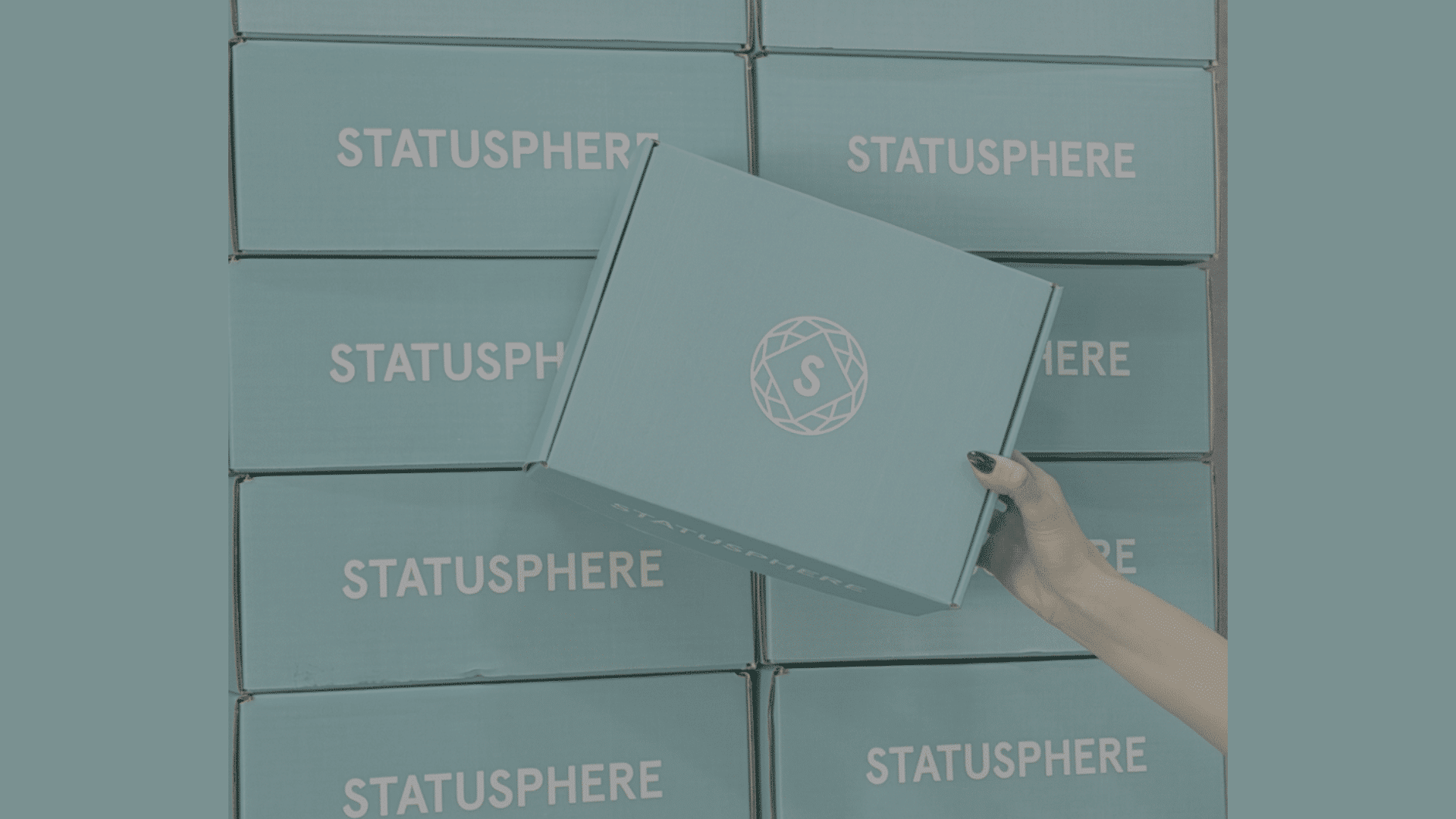
Control over the unboxing is the second reason. “When you use a 3PL, you can’t control what that box looks like when the creator opens it,” Kristen says. Statusphere’s standard kit includes tissue paper, the company’s own box, and a printed creative brief that goes into every shipment. Brands that want more can add custom kitting elements.
The printed brief reflects how creators work. “When you’re shooting content, you’re on your phone, so you can’t actually read a digital brief,” Kristen says. The paper copy works as a checklist creators can use to hit all collaboration requirements. Statusphere also gives creators a tracking code and text updates on each shipment, which she says helps combat theft because creators know to grab a package before it sits on a doorstep.
Opt-In Shipping Holds Creators Accountable
Statusphere’s influencer boxes go only to creators who ask for them. “We don’t ship a product unless the creator raises their hand and says yes,” Kristen says. Many seeding programs send product to creators who never wanted it, which she argues wastes inventory and produces weaker results for brands. Statusphere also combines shipments to reduce waste, something Kristen describes as uncommon among influencer platforms.
Accountability follows the shipment. A creator who dislikes a product can submit a feedback form instead of posting and remain in good standing, and the brand receives that feedback. “If a creator just fully ghosts, then they are removed from our network,” Kristen says.
Volume is why the platform handles this itself, she says. One brand ran more than 30,000 creator activations in the first quarter, and Kristen says the platform’s technology is built to spare a brand from answering every creator issue or dealing with ghosting itself. Statusphere keeps creators with high credibility scores based on past collaborations, which she says lets the company guarantee posting. Statusphere will decline to launch features brands want if they would hurt creators, a rule she says attracts the top creators brands are looking for.
Black Friday Influencer Campaigns
That network is at a peak in late October, Kristen says, about 30 days before the Black Friday rush. Creators need product in hand during that window to try it, film content, and post in time for the holidays. Shipments go out as soon as creators claim product, Kristen says, and Statusphere follows the Amazon model of aiming for two-day delivery.
Kristen puts the starting line at mid-October for brands that are ahead of the season. Early November becomes last minute, she says, and mid-November becomes really last minute. Content also has to go live early enough to be boosted. “You always have to start earlier than you think you do,” she says.
Planning for 2027 has already begun. Kristen says she took about four calls in a single week with brands mapping next year, which she reads as a sign they are starting earlier. Those plans pair an always-on creator program with tentpole moments and product launches. The fastest-growing category at Statusphere, she says, is brands using creators for LLM visibility and generative engine optimization.
AI Search Depends on Creators Who Have Used the Product
That category rests on Kristen’s argument that large language models answer product questions from human-generated content. If a shopper asks an AI assistant to recommend a cleanser for sensitive skin, a product with little supporting content may be at a disadvantage. “When people share their experiences with a product, they give AI more evidence to connect it to a shopper’s needs,” she says. “Without that content, it may be less likely to surface than competing products whose claims are backed by real people’s experiences.”
That content starts by getting products into creators’ hands, Kristen says. Trying a product firsthand gives creators the experience they need to share credible recommendations on TikTok, Instagram, Reddit, or Pinterest. Fulfillment is what makes those experiences and the content that follows possible at scale.
Kristen argues that firsthand experience gives creator content its credibility. “By showing how a product looks, feels, or performs, creators help shoppers evaluate claims beyond what a brand says about itself,” she says. Brands are starting to recognize this, Kristen notes, and are rebuilding what she calls their human-generated content strategy to cover what the models look for.
Tying Every Dollar to a Sale Can Cost Efficiency
Proving that creator content drives sales is where Kristen urges caution. “The Holy Grail is to tie any marketing campaign back to a sale,” she says. Cookies made that possible from roughly 2010 to 2021, she notes, adding that very few marketing initiatives can be tracked directly to a sale now.
Brands that try to connect every dollar end up losing cost efficiencies, in Kristen’s view. She says studies show that adding Influencer Marketing to the mix makes overall return on ad spend more efficient and that turning it off makes it more expensive. The marketers she sees handling this well compare return on ad spend and customer acquisition costs with the micro-influencer channel switched on and off.
The buyer’s journey is less of a straight line than ever, Kristen says, with influencer posts, ads, AI answer engines, retail stores, TV, podcasts and friends all playing a part. “I would always warn brands of getting too obsessed with only seeing the dollars being driven, because you may end up turning off channels that kill your efficiencies,” she says.
Statusphere Aims to Make Micro-Influencers a Scalable Channel
Kristen frames the wider shift as one from an attention economy to a trust economy. She says viewers now ask whether a video is real, something they did not do two years ago. “Making sure you’re building a community of creators that are authentic is more important than ever in this post-attention economy world,” she says.
Looking five years out, Kristen says the warehouse is already paying off, with Statusphere well past the size of its previous space. Her original thesis was that “if we could get all these small micro-influencers posting, it would be like buying a Super Bowl ad,” and she says brands had no way to put their budgets behind it. Today, they’re starting to.
Kristen says fulfillment is central to that vision. “The warehouse and the fulfillment are such a core part of that because we cannot hit that scale without it,” she explains.
Subscribe to Our Newsletter
Check Out Our Podcast