



Technology
Microdrama Platform Canvas Aims to Build a Netflix-Style Brand Around Creator-Led Shows

Canvas, a New York platform that produces microdramas in collaboration with creators, wants to become to short-form shows what Netflix is to longer ones.
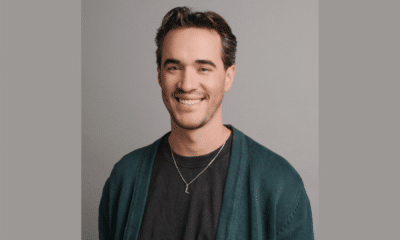
Chief Storyteller Abhinav Singla believes a creator-led approach is the only way to build a brand like that. “We really want those audiences to feel and connect with the person that is part of these shows,” he says.
That creator focus extends to ownership. Canvas pays the full production cost of each show and lets its creator partner own a share of the IP, which the company puts at 30% to 50%. It expects to recover that spend through subscriptions to its app, where episodes run about two minutes. The offer is aimed at creators who film themselves or with a friend or two and have never worked with an editing or VFX team, Abhinav says.
Canvas, which has partnered with creators in New York, Los Angeles and San Francisco, tells them it will act as their production partner. “If they completely rely on Instagram and brand deals, they’re probably going to be making one or two shows a year,” Abhinav says, a number he considers unsuitable for short-form.
Canvas’s output runs well above that pace. The company began building its platform about 12 months ago and has made more than 30 shows in about 10 months, according to Abhinav. A computer engineer by training with at least 50 million views on his own videos, he has worked in content creation and filmmaking for eight to 10 years and ran an agency doing short-form clipping and storytelling for YouTubers and brands. The next release, “Red Flags,” shows how the model works in practice.
Pre-Production Lets Canvas Shoot a Microdrama in Three to Four Days
“Red Flags,” which Abhinav says is nearly through post-production, took about 10 days of script and pre-production work before the shoot began. The show is scheduled to be out next month. “The key to shooting a microdrama in three to four days is very good pre-production,” he says.
That prep runs through “Director,” an AI-assisted dashboard Canvas built in-house to track locations and keep the team in sync. The company has leased the tool to a couple of production houses.
Getting the creator behind the show to commit took some persuasion. Robert Maxwell, who Abhinav says has over one million followers across TikTok and Instagram, met him at a creator event in New York. About a week later, Abhinav recalls, Robert said he had not followed up because he assumed Canvas was bluffing. Abhinav pointed him to the company’s earlier shows, and the script team began working with Robert on the story.
Creators approach the shoot differently once they are working on their own IP, Abhinav says. “The creator is working on this IP as a mission. They are not working as a brand deal,” he says.
A Hybrid Workflow Is How Canvas Plans to Reach 50 Shows a Month
Canvas wants those workflows to carry it to higher volume. The company now makes 10 shows a month and is aiming for 25 to 50. “We don’t need as large teams as much as we needed back then,” Abhinav says.
He says AI-assisted workflows in pre-production and post-production make that target achievable, and that production houses in Los Angeles are adopting similar hybrid workflows.
He adds that more companies are handing microdrama production to AI entirely. Canvas shoots its creators in person and uses AI for effects such as background swapping, lighting, and audio cleaning.
Canvas Launches Each Show as a Branded Series
Volume is where Abhinav sees Canvas differing from the Chinese microdrama apps. A typical one releases about 100 microdramas a day, he says, and regular users get confused when he asks them to name a single show. “They’re not actually trying to build a brand out of these shows,” he says.
Canvas gives each series trailers, posters, and promotions, and Abhinav says each show is released like a Netflix series, only with a shorter runtime. “A brand is built slowly and steadily,” he says.
Creator audiences supply the first viewers. Creators post trailers and promos to their own followers, and Canvas publishes behind-the-scenes content on its own pages, Abhinav says. Active subscription marketing began about three or four months ago. When Canvas selects projects, “following does not matter as much as the story for us,” he says.
Ownership pays off later in a show’s life, Abhinav says. If a second season attracts a brand, Netflix or YouTube wants to acquire a series, or another country wants it dubbed, Canvas would share that revenue with the creator according to each show’s ownership structure. Robert, he says, would earn a substantial portion of that revenue from “Red Flags.”
Nonfiction Formats Let Creators Who Do Not Act Own a Show
Canvas recently built a documentary-style show about finance with a creator, and Abhinav says the format made that possible. “I cannot expect a finance creator to be really good at acting. So there is no way we can make a fictional show with them,” he says.
Abhinav wants Canvas to go big on documentary. He used to skip feature-length documentaries because of the time they demand, and he expects the same stories to work in short episodes on a phone.
He expects genres built for longer formats, including wildlife, cooking and reality television, to be reimagined in short form. “We personally feel nobody has that kind of time anymore,” he says of food shows that fit five dishes into 90 minutes.
The format has one stated limit. Stories that need large budgets, such as a space film, fit poorly, and a project with a feature-film budget should go that route, he says. Episode counts are flexible, and he says a two-hour story on a tight budget could run 60 or 70.
Brands Should Settle the Story Before They Hire Production
Brands are also looking closely at episodic storytelling. “I think people are done with ads. Ads are getting harder and harder to be creative about because of AI,” Abhinav says.
How much say a brand takes in a show varies, he says. Some brand teams are hands-on, some micromanage, and others leave the creative to the creators.
His advice is to put a lot of thought into hiring a storytelling team and to settle the story for eight to 10 episodes before anything else. “They think hiring the best video editor or hiring the best Higgsfield expert is going to get them what they need, but it usually does not work that way,” he says.
Distribution needs the same early attention, he says, since many people make shows without deciding where they will land. “You need to really know what the story is. You need to know what your distribution is going to be,” Abhinav says. He compares it with building a website or app using AI, where the build takes a day or two once the idea and go-to-market plan are set.
Canvas Has to Fund the Infrastructure Behind Its Goal
“We want to imagine a future wherein a few creators could come together and build a movie like ‘Harry Potter’ for under $500,000 one day,” Abhinav says. Getting there starts with fundraising. “We need to be able to raise a certain amount of funds to spend on AI research so that our infrastructure can improve,” he says. More subscriptions are the other route to those funds.
Canvas then has to teach creators what the infrastructure can do and build samples that show them the possibilities. Abhinav points to Higgsfield, which launched as a tool and built a community whose output shows others what the software can make. He does not expect creators to master such tools on their own, since they change quickly and cost money to learn by trial and error.
Beyond New York, Los Angeles and San Francisco, Canvas wants to work with creators in the Middle East, Canada and Europe, where Abhinav says the microdrama space has yet to take off. Dubbing is one route to cross-border audiences. “Somebody sitting in India could be watching a show that’s very popular in Europe,” he says.
Subscribe to Our Newsletter
Check Out Our Podcast