


Tech
Statusphere’s Kristen Wiley on Why Investors Are Betting on Micro-Influencer Infrastructure


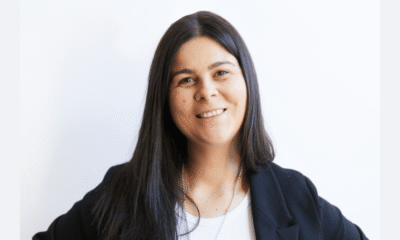
When Statusphere announced its $18 million Series A in January, the headline wasn’t just about capital. For founder and CEO Kristen Wiley, it marked a shift in how enterprise brands – and investors – view Influencer Marketing.
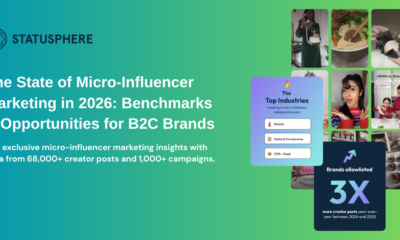
The Florida-based company, founded in 2018, has positioned itself as infrastructure for scaled micro-Influencer Marketing. The latest round, led by Volition Capital, brings Statusphere’s total funding to $27 million. The platform reports powering more than 50,000 creator collaborations and generating over half a billion engagements and video views over the past year.
With new funding in place, Kristen isn’t focused on incremental efficiency. She’s focused on trust, search behavior, and how AI is reshaping the buyer’s journey and why scaled human content is becoming strategic infrastructure for modern brands.
From Campaign Channel to Core Infrastructure
Kristen has worked in Influencer Marketing long enough to see its evolution: blogger networks, celebrity endorsements, CRM tools, agency execution, and now automation.
“I’ve been in Influencer Marketing my entire career, but I accidentally got into it,” she says. “Brands started reaching out for collaborations. That was my first taste of this new marketing channel.”
By 2012, she was managing blogger networks at a PR agency. Over time, she noticed a pattern: brands could generate strong results with influencers, but scaling beyond one-off activations proved difficult.
“I felt there was a gap in the market for a platform that actually helped the end user running Influencer Marketing,” she says.
At the time, brands leaned heavily into macro creators. Kristen believed micro-influencers delivered stronger ROI, but were operationally impossible to scale.
“I’d tell clients, ‘I’ll give your money back. Just try the micros,’” she recalls. “They’d see results and want to scale, but there was no way to do it.”
Statusphere was built to solve that bottleneck by treating micro-Influencer Marketing as a repeatable channel rather than a manual campaign process.
“What if you could go from 20 creators posting to over a thousand and spend the same amount of time setting it up?”

The Enterprise Shift: Micro as a Strategic Layer
If 2018 was a bet, 2026 looks like validation.
“I think we’re there,” Kristen says of Influencer Marketing’s maturity. “Some enterprises have influencer budgets in the hundreds of millions. That’s dedicated spend.”
In her view, Influencer Marketing now operates in structured layers:
- Macro creators drive awareness.
- Mid-tier creators support partnerships.
- Micro creators drive distributed word-of-mouth and search visibility.
“Macros still have a place,” she says. “They provide a different value.”
Micro, however, often influences the final purchase decision. “The buyer’s journey isn’t you see it and buy it,” Kristen says. “You see it multiple times in multiple places.”
She offers a recent example while shopping for blush: “I bought Rare Beauty, but I never saw Selena Gomez once. What pushed me over the edge was seeing a woman who looked like me talk about it.”
In that moment, distributed validation, not celebrity awareness, closed the sale.
AI Is Raising the Value of Human Content
While much of the industry debates AI’s impact on creators, Kristen sees it reframing the value of human-generated content.
“AI content is a commodity,” she says. “Brands that want to build trust need third-party humans vouching for them.”
Then she adds a line that captures her broader thesis: “Do you really want to take skincare advice from someone who doesn’t have skin?”
As AI-driven search expands, from Google’s AI overviews to ChatGPT queries, Kristen argues brands must ensure authentic human content exists across platforms. Those signals feed discovery engines and influence recommendation systems.
That’s where Statusphere’s focus on social SEO and generative engine optimization (GEO) comes in. Kristen says the Series A funding will support expanded capabilities in this area.
“We’re investing in social SEO and showing brands how it impacts search lift and LLM (Large Language Model) visibility,” she says.

Why Automation Matters Now
Despite Influencer Marketing’s budget growth, Kristen believes scale is often misunderstood.
“Some brands treat scale as blasting content without strategy,” she says.
Instead, she advocates structured experimentation. “Don’t scale for the sake of scale. Use scale with data,” she says. “Have a thousand people posting. Analyze what top performers have in common. Apply those learnings to the next campaign.”
Automation makes that feedback loop possible. Statusphere handles creator sourcing, fulfillment logistics, compliance review, and rights management; in other words, processes that traditionally required large internal teams or agencies.
“We automated each part of the process,” she says.
Without that operational layer, she argues, micro cannot function at enterprise scale.

What’s Still Broken
Even as budgets mature, Kristen sees unresolved friction across the ecosystem.
One example: affiliate infrastructure. “Affiliate platforms were built for publishers,” she says. “We’ve layered creators on top, and it doesn’t fully work.”
She also believes the term “influencer” itself has obscured the channel’s core value. “Anyone who can influence a buying decision is an influencer,” she says. “It’s word-of-mouth marketing.”
Internally, Statusphere’s biggest challenge isn’t product capability. It’s awareness.
“Our biggest pain point right now is brand awareness,” Kristen says. “Brands ask, ‘How do I not know about you?’”
What the Funding Signals
For Kristen, the Series A represents more than growth capital. It reflects investors’ belief that micro-Influencer Marketing is shifting from a tactical experiment to an operational infrastructure.
“In three years, I want to be the go-to micro Influencer Marketing platform,” she says. “The infrastructure to power it and the community behind it.”
As AI reshapes discovery and enterprise budgets formalize creator strategies, Kristen believes the brands that win will treat micro-Influencer Marketing as measurable, scalable, and always-on.
And in her view, that transition is already underway.
Subscribe to Our Newsletter
Check Out Our Podcast