





Influencer
Why Tyler Speegle Treats His Creator Business Like a Marketer Would

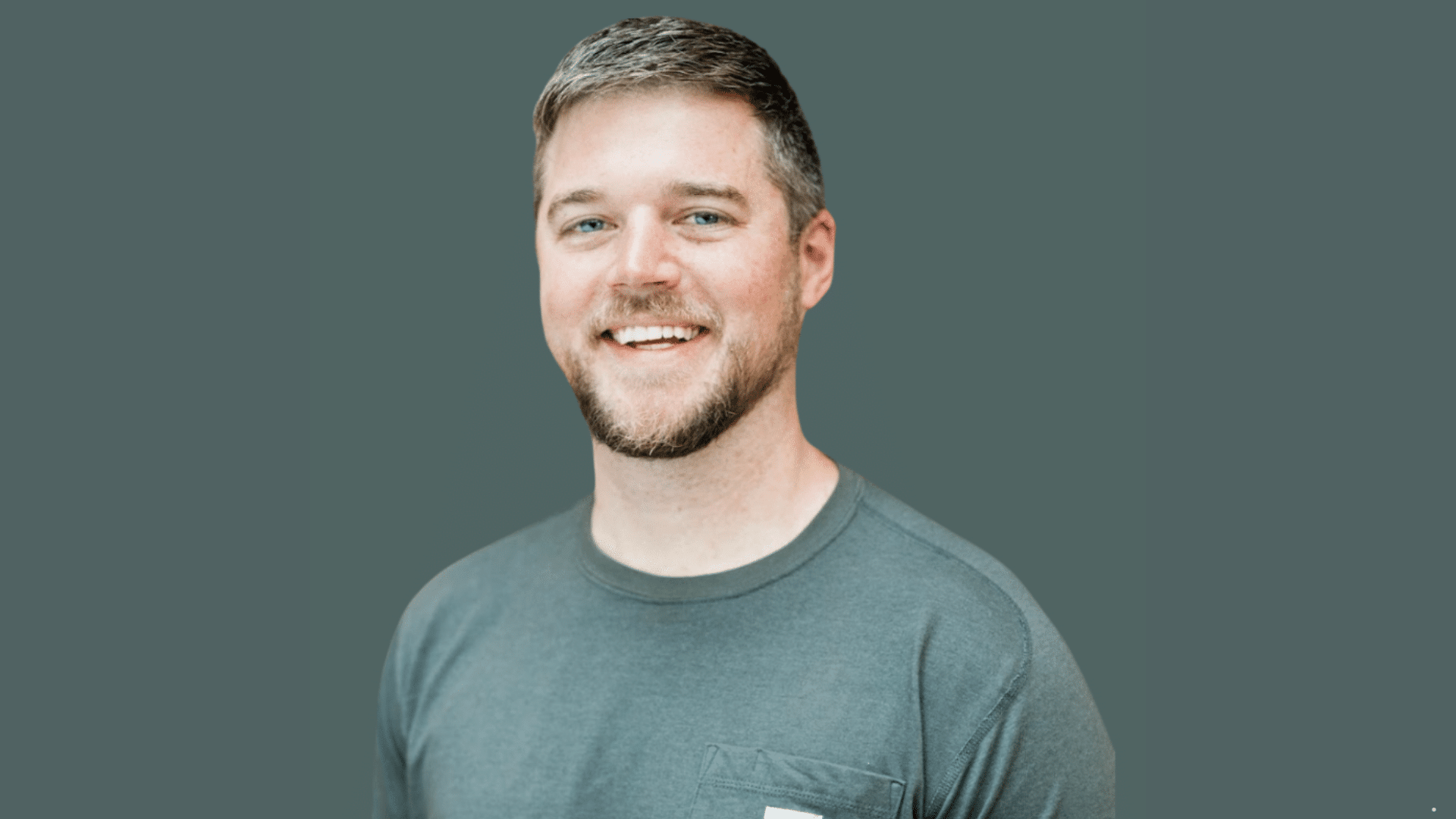
Tyler Speegle is a marketer by training and a lifestyle creator by practice. Based in Birmingham, Alabama, he launched Tyler Growth Life as a cooking and family content brand for the parent who dreads the question of what to make for dinner. His content does not feature elaborate plating or competitive technique. It features meals, kids in the background, and the argument that ordinary weeknight rituals are worth paying attention to.
Tyler Growth Life spans TikTok, Instagram, and YouTube, where he repurposes footage across all three. In December 2025, he extended the brand into a product line, launching three seasonings: Cast Iron Coffee, Southwest Smoke, and Golden Hour Garlic. A cowboy butter blend followed for Father’s Day 2026. He has since signed with a book agent and is developing a cookbook proposal.
The philosophy underlying all of it is less about cooking than about pace. “To me, it’s more than just the food,” Tyler says. “It’s like the whole experience of enjoying the moment.”
The Marketing Test That Built a Cooking Channel
Tyler spent just over a decade in marketing before his brand existed. He started with part-time blogging, moved into copywriting at a nonprofit where he was later promoted to digital marketing director, and most recently served as a growth marketer at a B2B venture studio. The discipline across those years was the same: understand what draws people in and why.
That reflex applied directly to content. When his lifestyle and cooking videos began generating views in the hundreds of thousands consistently, rather than the few hundred he had seen from earlier experiments, he analyzed the shift the same way he would have analyzed a digital ad campaign. “When you see something that worked, analyze what about that worked,” Tyler says.
He describes the method in A/B testing terms: “You have something that worked. That’s your control. Now I’m going to basically do a test of, if I do that same thing, change a variable here or there, whether it’s what I’m cooking or the environment or the pacing.”
He built this way without paid advertising, noting that the marketing instinct let him identify what was resonating and iterate faster than trial and error alone would have allowed.
Before signing with Currents Management, Tyler had reached out to brands directly, searching LinkedIn for contacts and pitching his view counts. The outreach rarely converted. With management, alignment came faster. His first major deal landed with Benchmade, a knife company he had already used and followed. He added affiliate income through Amazon and LTK after noticing his audience was asking about the tools and products visible in his videos.
When the Comments Became a Product Order
The seasoning business was built from questions Tyler was already fielding in his comments. For years, he had been mixing his own blends at home rather than buying commercial seasonings, which he found too sweet, too full of fillers, or too spicy for his kids. He cooked with those blends on camera, and the audience noticed.
“I kept having people ask me, ‘What are you putting in that?'” Tyler recalls. The volume of those questions, combined with a discomfort about recommending other companies’ products as if they were his own, pushed him toward manufacturing. “I don’t have control over their flavor profile,” he says. “And I don’t have control over the customer service.”
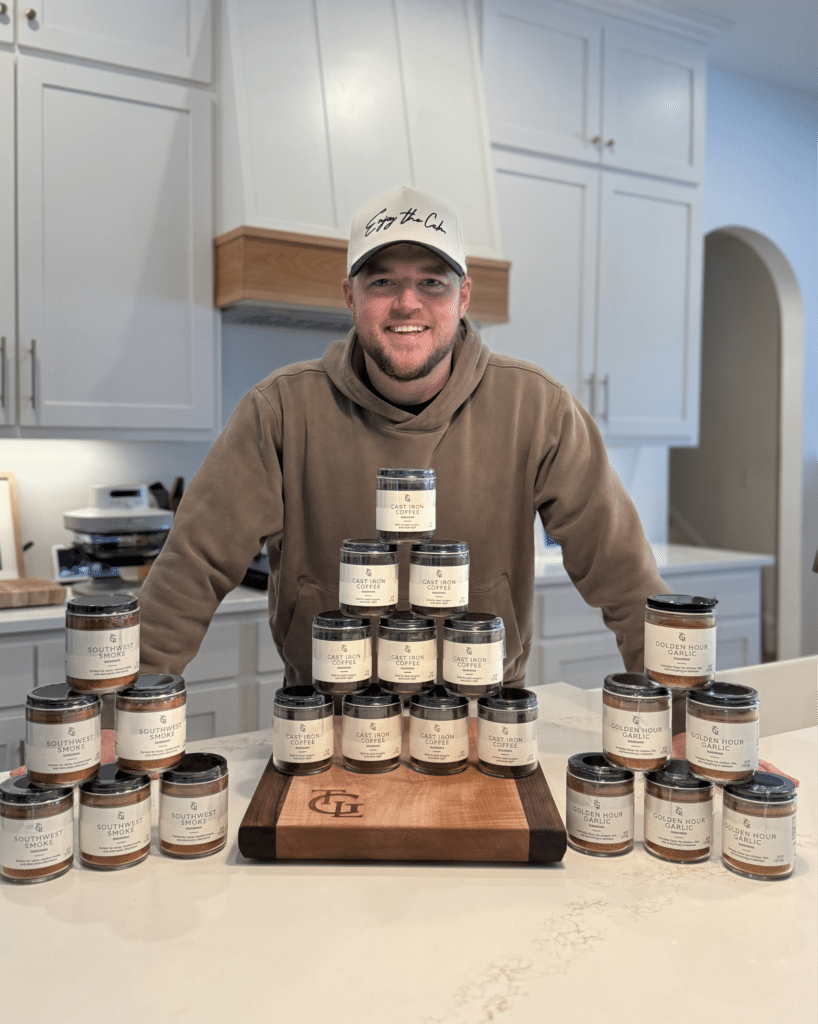
Product development proved less straightforward than the concept. Getting Golden Hour Garlic right took five iterations with his manufacturer: too much paprika made the blend bitter, salt ratios needed adjustment, and different smoked paprika varieties produced different colors and textures. “Launching three at one time was a big undertaking,” Tyler says.
The cowboy butter blend, launched for Father’s Day 2026, took fewer iterations because Tyler had learned from the first round. The product compresses a recipe that typically requires fresh garlic, Dijon mustard, parsley, and lemon into a single powder. “You just take the powder, mix it with some butter, and you have cowboy butter almost instantly,” he says.
Owning the Product Means Turning Down Certain Deals
Building a seasoning brand created a category conflict Tyler had not fully anticipated. Brands that might once have been natural sponsorship partners became complicated to work with. “It can be kind of complicated to promote someone else’s seasoning,” Tyler says. “I’ve stepped away from those kinds of brand partnerships.”
For all other food and drink collaborations, his filter is brand alignment over revenue. He uses the product, believes in what the company stands for, and can speak to it genuinely. “People can tell if you don’t use this product,” he says. “I don’t want to promote brands that I don’t really know much about.”
The decision to exit a sponsorship category comes with a cost Tyler does not minimize. “The return on having a seasoning brand has definitely been worth it in the long run,” he says.
Physical product also introduced operational challenges. Storage, logistics, and customer service at scale do not work the way digital content does. “I did not realize just how not easy it is to sell a physical product,” Tyler says. He hired his cousin early as a part-time customer service assistant. “There’s no way I would have had the time or the capacity to truly treat every customer the way I want them to be treated,” he says.
His next marketing step, he notes, is scaling distribution beyond himself, seeding the product with other creators.
The Case for Giving Audiences Something to Hold
Tyler’s push to make something tangible is a reaction to the rise of AI-generated cooking content. “There are AI content creators where everything is completely AI, the person, the food,” he says. “It’s not awesome now, but it will only get better and more real.”
Against that trajectory, he notes that a physical product does something a video cannot. “I think the real personal connection that you can kind of double down on by giving something to somebody that they can hold in their hands is going to matter even more and more as AI becomes more and more real,” he says.
Tyler’s argument extends to search, where AI tools are becoming, in his view, “the new way people Google.” When a viewer later searches for something they saw in one of his videos, an AI search tool needs somewhere to send them. “Search is very different than it used to be,” he says. “I think by having an actual website where a product is located, where people can check out, that’s definitely something people have to think about.”
The Next Product Is the Long Game
Tyler’s plans for the rest of 2026 follow the same logic he applies to content: time the release to something people already care about. A fall seasoning launch is designed around football season and outdoor cooking. A holiday launch follows, aimed at baking and festive meals. He calls both themed launches, a structure that makes the product and the content part of the same moment rather than separate campaigns.
He is also working with a book agent on a cookbook proposal, a project his audience requested for around two years before he started the process. “I’m really excited again to get something tangible in people’s hands that takes the content beyond just the screen,” he says.
The two tracks reflect a consistent position: brand partnerships produce immediate returns, and the product businesses are a longer investment in an audience that knows him primarily through a screen.
“I hope that when people start following me, watching my content, that it leaves them with a positive feeling of, ‘Oh, I can actually enjoy the life I have,’” he says. “We all move really fast. We’re all really distracted. We all have a lot going on and, if you’re not careful, you’ll miss the beauty of everyday life.”
Subscribe to Our Newsletter
Check Out Our Podcast