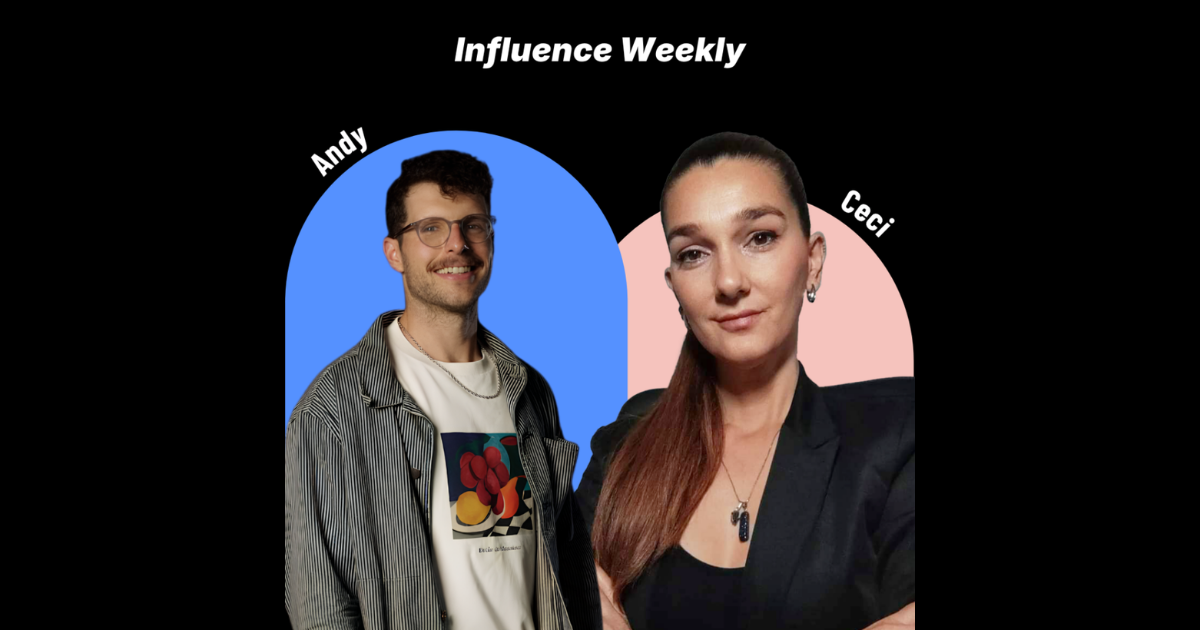
The brands winning at creator marketing aren’t running campaigns. According to Andy Cloyd, co-founder and CEO of Superfiliate, they’re building programs, treating creators as an asset class, and quietly reallocating budgets that used to fund traditional ad shoots.
Andy sat down with Net Influencer Senior Editor Ceci Carloni to discuss what separates the brands building durable creator channels from the ones still running one-off campaigns. Superfiliate is a creator partnership platform serving over 1,000 brands across Shopify, Meta, and TikTok Shop. Andy co-founded the company in 2021 after a career in venture capital and brings a platform-level view across hundreds of millions in tracked ad spend.
The conversation covered budget migration, operational breakdowns, AI’s actual role in creator programs, and what Andy would change first if he were a CMO today.
1. Creators Have Become the New Creative Production House
The most notable shift Andy is tracking has nothing to do with follower counts or engagement rates. It’s about where paid media budgets are going.
“The paid media budget is the largest part of most marketing budgets, and we are just watching budget move towards creator-led content,” Andy said.
Brands that used to do one large quarterly shoot are now working with a thousand creators, testing content at volume, and putting serious media spend behind what performs. The logic, as Andy describes it: “You kiss a lot of frogs to find the prince. And the prince is now a piece of content that you put $100,000 of paid media budget behind.”
Platform changes are accelerating this. Meta’s Andromeda system and TikTok’s Spark Ads infrastructure are rewarding volume and variety of creative testing. Brands are responding by treating creators as a distributed content operation, not a communications channel.
2. Creator-Led Growth Is the New Framework, Not a Tactic
Superfiliate’s internal thesis, refined when Andy hired the company’s first head of marketing earlier this year, is direct: “Creators are the backbone of the growth engine for any brand or advertiser across all pieces of their funnel.”
That means top-of-funnel awareness, mid-funnel creative for paid media, and bottom-of-funnel affiliate conversions. It means product launches, audience testing, and generating sales. Andy calls it creator-led growth, with sub-categories like creator-led advertising and creator-led selling.
Brands that still treat creator partnerships as a line item in the social budget are running the wrong playbook. The question is whether their marketing teams are organized to act on that.
3. The Difference Between a Campaign and a Program Is Creator Autonomy
Andy draws a hard line between brands running campaigns and brands building programs. The distinction comes down to control.
Campaign-mode brands say, “We need 40 people saying these words.” Program-mode brands say, “We have 40 people we believe are on-brand advocates, and we’re going to let them inject us into their content strategy over time.”
The data supports the more flexible approach. Andy was at the Meta Creator Connect conference the day before the podcast, where four creators on stage gave the same advice to brands: “Let us do our thing. There are a million people who have clicked that button that say they like the way I do things.”
Brands building programs also think about value beyond the last-click conversion. A post that underperforms on direct sales might be perfect creative for a paid ad campaign. The distinction between program-builders and campaign-runners is whether the team has the systems and mindset to capture that.
4. Scaling Always Breaks at the Operational Layer, Not the Creator Layer
The failure mode Andy sees most often is not a shortage of good creator partners. It’s an execution breakdown.
“There is a plethora of creators that I think can be a brand fit out there. I think where we see things break is in the operational side of things,” Andy said.
He believes that the sequence is predictable. A brand tests four creators, one piece of content performs, and the paid media team asks for ten next month. Then the chaos starts: sourcing, briefing, editing, contracts, payment, usage rights, revision requests, and performance tracking all collide. An influencer marketer opens their inbox to over 100 messages and stops being able to prioritize what matters.
A concrete example Andy keeps seeing: influencer marketers securing paid usage rights for content that the paid media team never learns about, never tests, and lets expire. “That is just money that evaporates,” he said. “It’s not intentional negligence. Those dots just never connected.”
5. AI Is Real for Operations, but Automating Outreach Is Already Backfiring
Andy’s take on AI in creator marketing separates two distinct use cases: back-of-house automation and creator outreach. One is working. The other is creating noise.
On the operational side, Andy sees AI unlocking “extreme synthesis of content at scale,” letting brands find the right creator partners embedded in the right content for the right audiences in ways that used to require intensive manual research.
On the outreach side, he draws a parallel to what happened to cold email. A technique that worked when a few sophisticated operators used it well became worthless when everyone had access to the same automation tools. “All of a sudden, cold outbound almost became an ineffective channel entirely because everyone caught on.”
Creator inboxes are heading the same direction. Everyone has the same APIs, the same email addresses, the same templated offers. “The only way that doing what everybody else is doing will work is if you’re the highest bidder.” Standing out now sometimes means doing the opposite of automation, like inviting a creator to an event in Austin instead of sending another partnership email.
6. Authentic Human Content Will Become More Valuable, Not Less, in an AI World
Andy makes a nuanced case about AI-generated content that pushes back on both the hype and the panic.
In algorithmic feeds optimized for entertainment, AI content will proliferate and probably perform well. Audiences there are chasing dopamine, not authenticity. Whether a video is AI-generated is largely irrelevant if it lands.
But when someone wants to make a purchase decision, “I want to see that person that I know just ran the Boston Marathon and PR’d and actually loves their shoes.” That trust is what a known creator provides. That trust is what AI cannot replicate.
Andy’s prediction: “Extremely, undeniably human, even flawed” content will become a premium signal. Imperfect will become the thing. Brands that build genuine, ongoing creator relationships now are building an asset that gets harder to replicate as AI-generated content floods every feed.
7. What Andy Would Do First If He Were a CMO Today
If Andy were to step into a CMO’s chair today, his first move would not be platform selection or budget allocation. It was about internal alignment. “The first thing that I would do is have every single person in my department talk about how they think creators impact their remit.”
The media team, the influencer partnerships team, and the social team will give completely different answers. That gap is the problem. Brands that treat creators as a siloed function inside Influencer Marketing miss all the adjacencies: paid creative, product launches, community building, and audience testing.
Once the org understands how creators touch every part of the funnel, budget allocation and performance measurement follow. Without that shared understanding, creator programs stay tactical instead of becoming structural.
The throughline across Andy’s argument is that the brands now building category-defining businesses are thinking about creators before they even launch, not as a marketing lever they’ll pull later. The infrastructure, the platforms, and the creator class are all more mature than the strategies most marketing teams are running against them.
“If creators are not at least one of the first two or three bullet points on your 2027 planning,” Andy said, “certainly revisit that.”
Listen to the full conversation on “The Big Three” podcast.
Jonathan is a South African content creator, photographer and videographer with 25 years of experience in journalism and print media design. He is interested in new developments in AI content creation and covers a broad spectrum of topics within the creator economy.










The brands winning at creator marketing aren’t running campaigns. According to Andy Cloyd, co-founder and CEO of Superfiliate, they’re building programs, treating creators as an asset class, and quietly reallocating budgets that used to fund traditional ad shoots.
Andy sat down with Net Influencer Senior Editor Ceci Carloni to discuss what separates the brands building durable creator channels from the ones still running one-off campaigns. Superfiliate is a creator partnership platform serving over 1,000 brands across Shopify, Meta, and TikTok Shop. Andy co-founded the company in 2021 after a career in venture capital and brings a platform-level view across hundreds of millions in tracked ad spend.
The conversation covered budget migration, operational breakdowns, AI’s actual role in creator programs, and what Andy would change first if he were a CMO today.
1. Creators Have Become the New Creative Production House
The most notable shift Andy is tracking has nothing to do with follower counts or engagement rates. It’s about where paid media budgets are going.
“The paid media budget is the largest part of most marketing budgets, and we are just watching budget move towards creator-led content,” Andy said.
Brands that used to do one large quarterly shoot are now working with a thousand creators, testing content at volume, and putting serious media spend behind what performs. The logic, as Andy describes it: “You kiss a lot of frogs to find the prince. And the prince is now a piece of content that you put $100,000 of paid media budget behind.”
Platform changes are accelerating this. Meta’s Andromeda system and TikTok’s Spark Ads infrastructure are rewarding volume and variety of creative testing. Brands are responding by treating creators as a distributed content operation, not a communications channel.
2. Creator-Led Growth Is the New Framework, Not a Tactic
Superfiliate’s internal thesis, refined when Andy hired the company’s first head of marketing earlier this year, is direct: “Creators are the backbone of the growth engine for any brand or advertiser across all pieces of their funnel.”
That means top-of-funnel awareness, mid-funnel creative for paid media, and bottom-of-funnel affiliate conversions. It means product launches, audience testing, and generating sales. Andy calls it creator-led growth, with sub-categories like creator-led advertising and creator-led selling.
Brands that still treat creator partnerships as a line item in the social budget are running the wrong playbook. The question is whether their marketing teams are organized to act on that.
3. The Difference Between a Campaign and a Program Is Creator Autonomy
Andy draws a hard line between brands running campaigns and brands building programs. The distinction comes down to control.
Campaign-mode brands say, “We need 40 people saying these words.” Program-mode brands say, “We have 40 people we believe are on-brand advocates, and we’re going to let them inject us into their content strategy over time.”
The data supports the more flexible approach. Andy was at the Meta Creator Connect conference the day before the podcast, where four creators on stage gave the same advice to brands: “Let us do our thing. There are a million people who have clicked that button that say they like the way I do things.”
Brands building programs also think about value beyond the last-click conversion. A post that underperforms on direct sales might be perfect creative for a paid ad campaign. The distinction between program-builders and campaign-runners is whether the team has the systems and mindset to capture that.
4. Scaling Always Breaks at the Operational Layer, Not the Creator Layer
The failure mode Andy sees most often is not a shortage of good creator partners. It’s an execution breakdown.
“There is a plethora of creators that I think can be a brand fit out there. I think where we see things break is in the operational side of things,” Andy said.
He believes that the sequence is predictable. A brand tests four creators, one piece of content performs, and the paid media team asks for ten next month. Then the chaos starts: sourcing, briefing, editing, contracts, payment, usage rights, revision requests, and performance tracking all collide. An influencer marketer opens their inbox to over 100 messages and stops being able to prioritize what matters.
A concrete example Andy keeps seeing: influencer marketers securing paid usage rights for content that the paid media team never learns about, never tests, and lets expire. “That is just money that evaporates,” he said. “It’s not intentional negligence. Those dots just never connected.”
5. AI Is Real for Operations, but Automating Outreach Is Already Backfiring
Andy’s take on AI in creator marketing separates two distinct use cases: back-of-house automation and creator outreach. One is working. The other is creating noise.
On the operational side, Andy sees AI unlocking “extreme synthesis of content at scale,” letting brands find the right creator partners embedded in the right content for the right audiences in ways that used to require intensive manual research.
On the outreach side, he draws a parallel to what happened to cold email. A technique that worked when a few sophisticated operators used it well became worthless when everyone had access to the same automation tools. “All of a sudden, cold outbound almost became an ineffective channel entirely because everyone caught on.”
Creator inboxes are heading the same direction. Everyone has the same APIs, the same email addresses, the same templated offers. “The only way that doing what everybody else is doing will work is if you’re the highest bidder.” Standing out now sometimes means doing the opposite of automation, like inviting a creator to an event in Austin instead of sending another partnership email.
6. Authentic Human Content Will Become More Valuable, Not Less, in an AI World
Andy makes a nuanced case about AI-generated content that pushes back on both the hype and the panic.
In algorithmic feeds optimized for entertainment, AI content will proliferate and probably perform well. Audiences there are chasing dopamine, not authenticity. Whether a video is AI-generated is largely irrelevant if it lands.
But when someone wants to make a purchase decision, “I want to see that person that I know just ran the Boston Marathon and PR’d and actually loves their shoes.” That trust is what a known creator provides. That trust is what AI cannot replicate.
Andy’s prediction: “Extremely, undeniably human, even flawed” content will become a premium signal. Imperfect will become the thing. Brands that build genuine, ongoing creator relationships now are building an asset that gets harder to replicate as AI-generated content floods every feed.
7. What Andy Would Do First If He Were a CMO Today
If Andy were to step into a CMO’s chair today, his first move would not be platform selection or budget allocation. It was about internal alignment. “The first thing that I would do is have every single person in my department talk about how they think creators impact their remit.”
The media team, the influencer partnerships team, and the social team will give completely different answers. That gap is the problem. Brands that treat creators as a siloed function inside Influencer Marketing miss all the adjacencies: paid creative, product launches, community building, and audience testing.
Once the org understands how creators touch every part of the funnel, budget allocation and performance measurement follow. Without that shared understanding, creator programs stay tactical instead of becoming structural.
The throughline across Andy’s argument is that the brands now building category-defining businesses are thinking about creators before they even launch, not as a marketing lever they’ll pull later. The infrastructure, the platforms, and the creator class are all more mature than the strategies most marketing teams are running against them.
“If creators are not at least one of the first two or three bullet points on your 2027 planning,” Andy said, “certainly revisit that.”
Listen to the full conversation on “The Big Three” podcast.
Subscribe to Our Newsletter
Check Out Our Podcast