






Platform
CapCut Sees Surge In Everyday Creator Use In 2025 As AI Tools Drive Editing Adoption

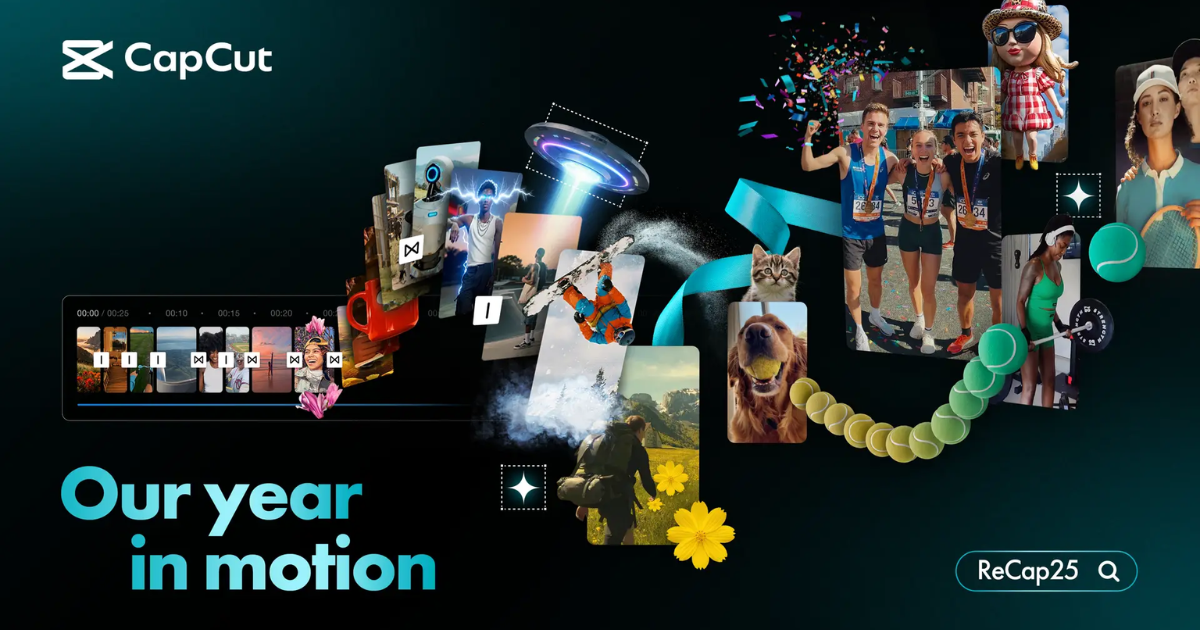
CapCut users created billions of projects in 2025 as the video editing platform expanded its artificial intelligence features to support what it describes as a shift from technical editing toward everyday expression, according to a year-end report released by the ByteDance-owned company.
While CapCut did not disclose monthly active users, the company said usage spanned short-form social video, presentations, and templated designs, reflecting its growing role in creator workflows.
The platform launched AI Lab during the year to consolidate advanced generative features in one location, while also expanding AI-powered efficiency tools across video and design capabilities. CapCut framed the expansion as part of a broader move to make editing more accessible to non-technical users, allowing creators to focus less on mechanics and more on storytelling.
Growth came amid regulatory uncertainty in the United States. CapCut experienced a brief shutdown in January before resuming operations under a compliance extension ordered by President Donald Trump. The interruption temporarily disrupted creators who rely on the platform as a primary editing tool. Mae Karwowski, founder of influencer marketing agency Obviously, told The New York Times that “people just find it to be the easiest, most straightforward way to edit videos on the fly.”
Core Features Shape Usage Patterns
Text-based tools emerged as central to creation on the platform in 2025. Auto captions ranked among CapCut’s most-used AI features, alongside AutoCut, Voice filter, and Text-to-speech. The company said captions increasingly functioned as both an accessibility feature and a storytelling layer, allowing videos to work with or without sound across platforms.
AutoCut, which automatically assembles clips into edited sequences, saw widespread adoption alongside core tools such as Effects, Overlay, and Extract audio. CapCut said these features lowered the barrier to entry for new users while giving experienced creators faster ways to execute ideas, making editing “more approachable and flexible” and allowing people to create on their own terms.
Voice-based features also gained traction. Creators used Voice filter to add audio effects and Text-to-speech for narration, particularly in tutorials, explainers, POV videos, and character-driven content. CapCut attributed the trend to creators using audio to add clarity and personality while speeding up production.
Platform Recognition and Community Signals
TikTok highlighted CapCut’s growing creator community by introducing a “CapCut Creator of the Year” category at its inaugural U.S. Awards ceremony in December. The platform named Recider as the winner, with nominees including chloeshih, liahyoo, moniqueyvonne, and paigepiskin.
CapCut also launched a Trust Center in 2025, outlining how the platform operates and what users can expect around content and data practices. The move came as scrutiny of ByteDance-owned apps intensified in the U.S., with the company positioning transparency as part of its long-term approach to supporting creators.
Competition Intensifies in Editing Apps
The broader short-form editing market became more competitive during the year. Meta launched its standalone video-editing app, Edits, globally in April, offering creators a consolidated production workflow tied directly to Instagram accounts. The free app includes background replacement, automatic captioning, AI-powered animation tools, and watermark-free exports.
Instagram head Adam Mosseri addressed the timing of the launch in a January video, saying, “There’s a lot going on in the world right now and no matter what happens, we think it’s our job to create the most compelling creative tools for those of you who make videos for not just Instagram but for platforms out there.”
Unlike Edits, which is closely integrated with Instagram’s publishing ecosystem, CapCut has positioned itself as a platform-agnostic editing tool used across multiple social and professional contexts.
As AI-assisted creation becomes more embedded in how people learn, work, and communicate, CapCut said it plans to continue prioritizing intuitive tools designed for everyday use.
Checkout Our Latest Podcast