Global cultural goods trade hits $254 billion, but a regulatory vacuum around generative AI leaves music and audio-visual creators exposed
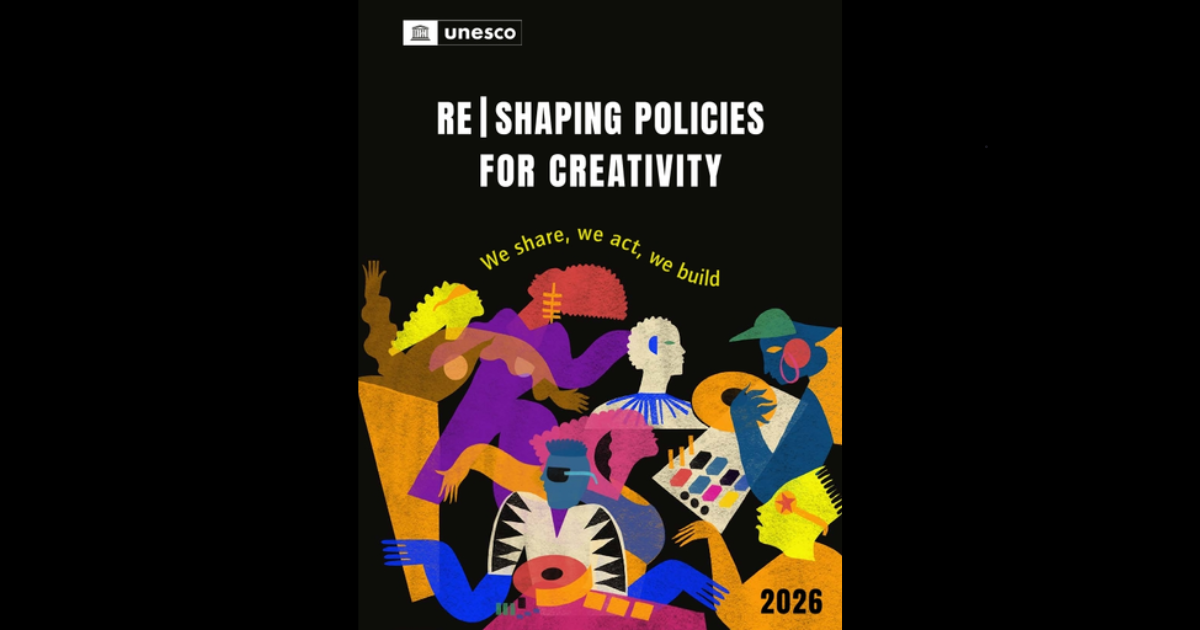
A sweeping new UNESCO report tracking cultural policy across more than 130 countries finds that digital services have become the dominant source of income for creators worldwide, even as artificial intelligence poses a growing economic threat to the same professionals who are now dependent on those platforms. The fourth edition of “Re|Shaping Policies for Creativity,” published in 2026 and drawing on nearly 4,000 policies and measures implemented between 2021 and 2024, documents the expanding scale of the global creative economy alongside widening disparities in who benefits from it.
Digital Revenue Surpasses All Other Income Streams
Digital services now account for 35% of creators’ total income globally, up from 17% in 2018, according to rights remuneration data from the International Confederation of Societies of Authors and Composers (CISAC). The report notes that digital surpassed all other income sources for creators in music, audio-visual, visual arts, literature, and drama beginning in 2022.
Global music streaming subscribers surpassed 700 million in 2023, an increase of 90 million from the prior year. The broader global trade in cultural goods reached $254.28 billion in 2023, nearly double its value in 2005. Developing countries recorded an average growth of 8.5% in cultural goods exports and now account for 20% of global trade in cultural services.
Despite the sector’s scale, public funding has not kept pace. The global average of direct government expenditure on culture remains below 0.6% of GDP, and development aid directed to culture accounts for just 0.15% of total Country Programmable Aid.
AI Viewed as Threat by Nearly Four in Five Creators
While creators increasingly depend on digital platforms for income, the emergence of generative AI (GenAI) has introduced new financial risks. Seventy-nine percent of cultural professionals surveyed for the report’s MONDIACULT survey described AI as a threat to art workers.
Economic projections from CISAC and PMP Strategy estimate that market penetration by GenAI outputs could put 24% of music creators’ revenues at risk by 2028 – equivalent to approximately €4 billion in annual losses. Audio-visual creators face projected revenue losses of 21%, or roughly €4.5 billion annually by the same date.
The report identifies two primary concerns driving these projections: the unlicensed use of copyrighted material to train GenAI systems, and AI’s capacity to automate tasks traditionally performed by writers, illustrators, literary translators, voice-over actors, and photographers.
A study by Deezer, a digital music streaming platform cited in the report, found that more than 50,000 bot-generated tracks are being uploaded to streaming services daily, and that the vast majority of listeners cannot distinguish between AI-generated and human-produced music. A separate study by Ditto, a global music distribution company, found that the share of independent artists using AI in music projects fell from 60% in 2023 to 48% in 2025, with the primary reason cited being the absence of personal creativity in AI-generated output.
A Single AI Law Addresses Culture Globally
Despite the documented economic risks, AI governance has largely bypassed the cultural sector. Of 148 AI-related bills adopted across 128 countries between 2016 and 2023, only one identified culture as its primary subject matter. The report describes this as a “regulatory vacuum” around generative AI, noting that 85% of countries have implemented digital cultural strategies, but only 48% have developed statistics or research on access to digital media content.
The report further notes that limited transparency from major streaming platforms, including reluctance to share user data, constrains policymakers’ ability to assess the impact of AI on creators and cultural diversity.
Platform Concentration Limits Discoverability
The report documents growing structural imbalances in digital cultural markets. A small number of global platforms dominate streaming and content distribution across regions, reinforced by what the report describes as “cross-side network effects”: the more viewers a platform attracts, the more creators join, and vice versa. The report identifies this dynamic as creating “winner-takes-all” conditions that make it difficult for smaller platforms to compete.
Within these platforms, revenue distribution is similarly uneven. A small number of popular artists capture an outsized share of revenues and visibility, leaving the majority of lesser-known creators with limited exposure. The report connects this concentration to data opacity: platform algorithms that determine content discovery operate with little external oversight.
Only 24% of countries have established content quotas for subscription video-on-demand services, compared to 47% for free-to-air television. The gap is sharper in developing nations, where only 5% have subscription video-on-demand content regulations, compared with 62% in developed countries.
Digital Skills Gap Deepens Global Divide
The ability of creators to navigate the digital environment varies sharply by geography. In developed countries, 67% of individuals hold basic information and communications technology skills; in developing countries, the figure is 28%. At the intermediate skills level, the disparity widens further: 45% in developed countries versus 16% in developing countries.
Gender disparities compound these inequalities. The report finds that women creators are concentrated in lower-income brackets across the digital cultural sector and occupy fewer senior positions. Eighty percent of countries with domestic content policies enhance the discoverability of local cultural content, but the report notes that policies to address fair remuneration in the digital environment remain limited.
Digital literacy programs focused on creation and experimentation have expanded, with the share of countries offering such programs rising from 49% to 63% between reporting cycles. Technical and vocational education programs in the cultural sector have also grown, from 76% to 93% of reporting countries, with the sharpest growth in cinema, audio-visual arts, and design.
IP Protections Remain Uneven
Collective management organizations (CMOs), i.e., the bodies responsible for collecting and redistributing royalties on behalf of creators, exist for music in just over two-thirds of reporting countries, but coverage is far weaker outside music. Only 23-24% of developing countries have CMOs covering the fields of audio-visual, literary, visual arts, photography, or graphic design.
The report identifies the absence of effective CMOs as a structural vulnerability that limits creators’ ability to monetize their work, particularly in regions where formal IP enforcement is limited. Eighty-five percent of Parties now report some form of job creation measures for the cultural sector, up from 68% in the previous reporting cycle, but the sector remains characterized by high rates of non-standard employment, including self-employment and intermittent work with limited access to social protections such as pensions and sick leave.
Streaming’s Environmental Footprint Draws Limited Policy Response
The report raises a data point relevant to brand marketers assessing media sustainability commitments. One hour of media streaming generates approximately 55 grams of CO2 equivalent, with most emissions attributed to end-user devices, according to the Carbon Trust. Despite streaming’s growing scale and its intersection with corporate sustainability disclosures, the report finds that few governments have introduced measures to address the environmental impact of music and video streaming or other forms of digital content distribution.
The “Re|Shaping Policies for Creativity” report is published by UNESCO under the monitoring framework of the 2005 Convention on the Protection and Promotion of the Diversity of Cultural Expressions. The fourth edition draws on 133 periodic reports submitted by member states covering the period 2021-2024.
Image source: UNESCO The full report is available here
David Adler is an entrepreneur and freelance blog post writer who enjoys writing about business, entrepreneurship, travel and the influencer marketing space.









Global cultural goods trade hits $254 billion, but a regulatory vacuum around generative AI leaves music and audio-visual creators exposed
A sweeping new UNESCO report tracking cultural policy across more than 130 countries finds that digital services have become the dominant source of income for creators worldwide, even as artificial intelligence poses a growing economic threat to the same professionals who are now dependent on those platforms. The fourth edition of “Re|Shaping Policies for Creativity,” published in 2026 and drawing on nearly 4,000 policies and measures implemented between 2021 and 2024, documents the expanding scale of the global creative economy alongside widening disparities in who benefits from it.
Digital Revenue Surpasses All Other Income Streams
Digital services now account for 35% of creators’ total income globally, up from 17% in 2018, according to rights remuneration data from the International Confederation of Societies of Authors and Composers (CISAC). The report notes that digital surpassed all other income sources for creators in music, audio-visual, visual arts, literature, and drama beginning in 2022.
Global music streaming subscribers surpassed 700 million in 2023, an increase of 90 million from the prior year. The broader global trade in cultural goods reached $254.28 billion in 2023, nearly double its value in 2005. Developing countries recorded an average growth of 8.5% in cultural goods exports and now account for 20% of global trade in cultural services.
Despite the sector’s scale, public funding has not kept pace. The global average of direct government expenditure on culture remains below 0.6% of GDP, and development aid directed to culture accounts for just 0.15% of total Country Programmable Aid.
AI Viewed as Threat by Nearly Four in Five Creators
While creators increasingly depend on digital platforms for income, the emergence of generative AI (GenAI) has introduced new financial risks. Seventy-nine percent of cultural professionals surveyed for the report’s MONDIACULT survey described AI as a threat to art workers.
Economic projections from CISAC and PMP Strategy estimate that market penetration by GenAI outputs could put 24% of music creators’ revenues at risk by 2028 – equivalent to approximately €4 billion in annual losses. Audio-visual creators face projected revenue losses of 21%, or roughly €4.5 billion annually by the same date.
The report identifies two primary concerns driving these projections: the unlicensed use of copyrighted material to train GenAI systems, and AI’s capacity to automate tasks traditionally performed by writers, illustrators, literary translators, voice-over actors, and photographers.
A study by Deezer, a digital music streaming platform cited in the report, found that more than 50,000 bot-generated tracks are being uploaded to streaming services daily, and that the vast majority of listeners cannot distinguish between AI-generated and human-produced music. A separate study by Ditto, a global music distribution company, found that the share of independent artists using AI in music projects fell from 60% in 2023 to 48% in 2025, with the primary reason cited being the absence of personal creativity in AI-generated output.
A Single AI Law Addresses Culture Globally
Despite the documented economic risks, AI governance has largely bypassed the cultural sector. Of 148 AI-related bills adopted across 128 countries between 2016 and 2023, only one identified culture as its primary subject matter. The report describes this as a “regulatory vacuum” around generative AI, noting that 85% of countries have implemented digital cultural strategies, but only 48% have developed statistics or research on access to digital media content.
The report further notes that limited transparency from major streaming platforms, including reluctance to share user data, constrains policymakers’ ability to assess the impact of AI on creators and cultural diversity.
Platform Concentration Limits Discoverability
The report documents growing structural imbalances in digital cultural markets. A small number of global platforms dominate streaming and content distribution across regions, reinforced by what the report describes as “cross-side network effects”: the more viewers a platform attracts, the more creators join, and vice versa. The report identifies this dynamic as creating “winner-takes-all” conditions that make it difficult for smaller platforms to compete.
Within these platforms, revenue distribution is similarly uneven. A small number of popular artists capture an outsized share of revenues and visibility, leaving the majority of lesser-known creators with limited exposure. The report connects this concentration to data opacity: platform algorithms that determine content discovery operate with little external oversight.
Only 24% of countries have established content quotas for subscription video-on-demand services, compared to 47% for free-to-air television. The gap is sharper in developing nations, where only 5% have subscription video-on-demand content regulations, compared with 62% in developed countries.
Digital Skills Gap Deepens Global Divide
The ability of creators to navigate the digital environment varies sharply by geography. In developed countries, 67% of individuals hold basic information and communications technology skills; in developing countries, the figure is 28%. At the intermediate skills level, the disparity widens further: 45% in developed countries versus 16% in developing countries.
Gender disparities compound these inequalities. The report finds that women creators are concentrated in lower-income brackets across the digital cultural sector and occupy fewer senior positions. Eighty percent of countries with domestic content policies enhance the discoverability of local cultural content, but the report notes that policies to address fair remuneration in the digital environment remain limited.
Digital literacy programs focused on creation and experimentation have expanded, with the share of countries offering such programs rising from 49% to 63% between reporting cycles. Technical and vocational education programs in the cultural sector have also grown, from 76% to 93% of reporting countries, with the sharpest growth in cinema, audio-visual arts, and design.
IP Protections Remain Uneven
Collective management organizations (CMOs), i.e., the bodies responsible for collecting and redistributing royalties on behalf of creators, exist for music in just over two-thirds of reporting countries, but coverage is far weaker outside music. Only 23-24% of developing countries have CMOs covering the fields of audio-visual, literary, visual arts, photography, or graphic design.
The report identifies the absence of effective CMOs as a structural vulnerability that limits creators’ ability to monetize their work, particularly in regions where formal IP enforcement is limited. Eighty-five percent of Parties now report some form of job creation measures for the cultural sector, up from 68% in the previous reporting cycle, but the sector remains characterized by high rates of non-standard employment, including self-employment and intermittent work with limited access to social protections such as pensions and sick leave.
Streaming’s Environmental Footprint Draws Limited Policy Response
The report raises a data point relevant to brand marketers assessing media sustainability commitments. One hour of media streaming generates approximately 55 grams of CO2 equivalent, with most emissions attributed to end-user devices, according to the Carbon Trust. Despite streaming’s growing scale and its intersection with corporate sustainability disclosures, the report finds that few governments have introduced measures to address the environmental impact of music and video streaming or other forms of digital content distribution.
The “Re|Shaping Policies for Creativity” report is published by UNESCO under the monitoring framework of the 2005 Convention on the Protection and Promotion of the Diversity of Cultural Expressions. The fourth edition draws on 133 periodic reports submitted by member states covering the period 2021-2024.
Image source: UNESCO
The full report is available here
Subscribe to Our Newsletter
Check Out Our Podcast