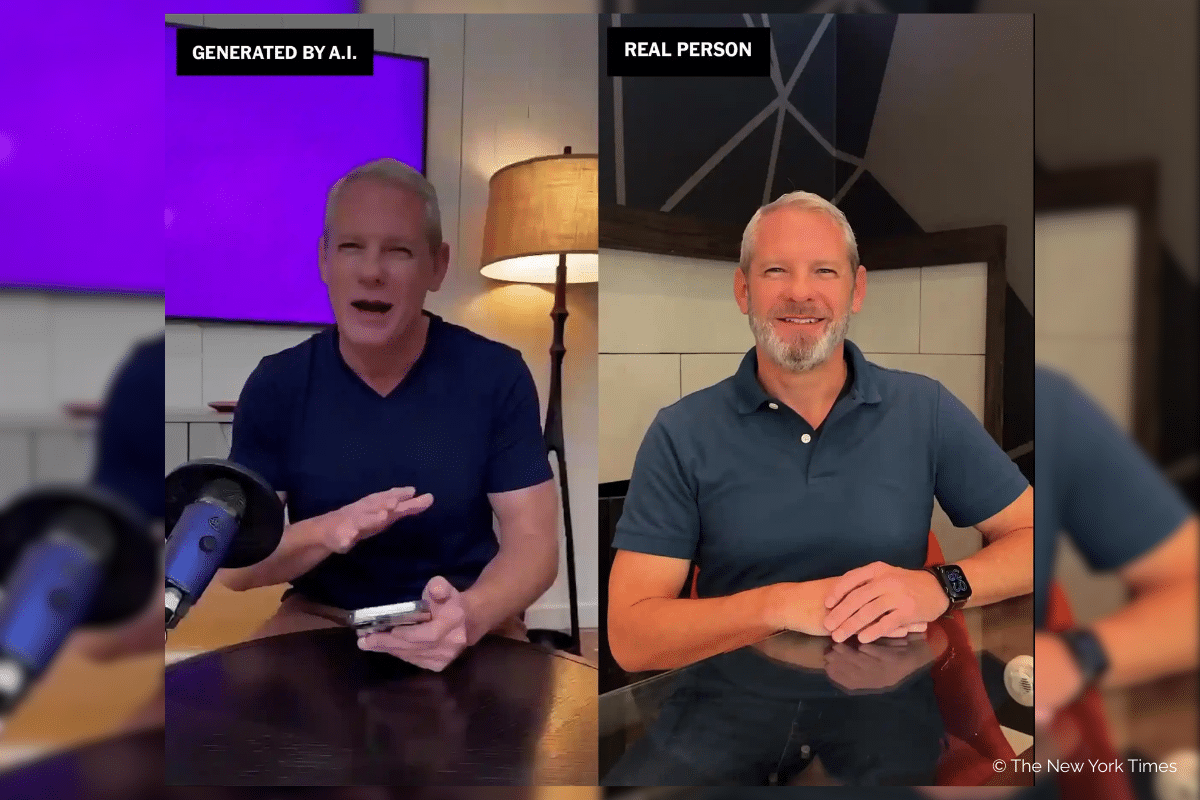
TikTok’s AI avatar advertising tool places actors in unfamiliar territory as their digital doubles promote products without their ongoing involvement or compensation. The platform offers advertisers access to more than a dozen AI-generated presenters based on real performers.
According to The New York Times, Scott Jacqmein, a 52-year-old Dallas actor, licensed his likeness to TikTok for $750 plus travel expenses. His digital replica now appears in advertisements for insurance marketplaces, horoscope apps, and puzzle applications—sometimes speaking Spanish, a language Jacqmein doesn’t know.
“I’m definitely not anti-A.I., and I’m not anti-TikTok,” Jacqmein stated, noting he hoped the opportunity would advance his career. “You really don’t know the ramifications of this.”
Fixed Payments vs. Traditional Compensation
Performers receive one-time payments without royalties when businesses use their avatars, with payments ranging from $500 to under $1,000 for the licensing rights. Tracy Fetter, a Bay Area artist who received less than $1,000, says she participated knowing technology companies would eventually use AI to replicate human images.
“My thought was, ‘Well, gosh, I’ve been on social media for so long, and images of me and my artwork are out there—I might as well get paid for it before they decide not to pay anyone for it,'” Fetter explained.
These rates fall significantly below industry standards. Rafael Villegas from the Kim Dawson Agency noted non-represented actors typically earn $300-$1,000 for commercials, while represented actors on non-union jobs can command $2,500 or more.
Unexpected Usage Creates Concerns
Several performers report discovering their avatars in contexts they hadn’t anticipated. The contracts allow usage across ByteDance properties beyond TikTok, including the video-editing app CapCut. Some advertisers also circumvent platform restrictions by downloading avatar videos and posting them on other platforms without AI disclosure labels.
Jacqmein found his likeness promoting a “male performance” supplement on YouTube, violating TikTok’s terms. The platform says its guidelines prohibit sexual services, profanity, hate speech, and violence in avatar advertisements.
An unnamed actor revealed to The New York Times that his avatar appeared in what he considered embarrassing advertisements. This anonymous performer’s likeness was used to promote a fiber supplement targeted to homosexual men, in which his avatar stated specific sexual preferences.
Jacqmein discovered his digital double in advertisements on Facebook, Instagram, and YouTube—platforms not specified in his understanding of the contract. He successfully had a YouTube video removed after complaining about his avatar promoting a “male performance” supplement that violated TikTok’s terms.
Fetter has seen her avatar (named “Lucy” on TikTok’s platform) promoting unexpected services while scrolling through TikTok. “It’s kind of creepy to see myself talking about a tree-cutting service,” she said.
Meanwhile, TikTok executives highlighted the tools at a June advertising conference in Cannes, positioning them as particularly beneficial for small businesses lacking resources for professional actors.
Yaniv Moore, CEO of advertising technology company Tarzo, confirmed the efficiency: “You can A/B-test scripts, you can A/B-test presenters, and you can do that en masse and very quickly. [One avatar] can speak all the languages in the world.”
David Adler is an entrepreneur and freelance blog post writer who enjoys writing about business, entrepreneurship, travel and the influencer marketing space.






















TikTok’s AI avatar advertising tool places actors in unfamiliar territory as their digital doubles promote products without their ongoing involvement or compensation. The platform offers advertisers access to more than a dozen AI-generated presenters based on real performers.
According to The New York Times, Scott Jacqmein, a 52-year-old Dallas actor, licensed his likeness to TikTok for $750 plus travel expenses. His digital replica now appears in advertisements for insurance marketplaces, horoscope apps, and puzzle applications—sometimes speaking Spanish, a language Jacqmein doesn’t know.
“I’m definitely not anti-A.I., and I’m not anti-TikTok,” Jacqmein stated, noting he hoped the opportunity would advance his career. “You really don’t know the ramifications of this.”
Fixed Payments vs. Traditional Compensation
Performers receive one-time payments without royalties when businesses use their avatars, with payments ranging from $500 to under $1,000 for the licensing rights. Tracy Fetter, a Bay Area artist who received less than $1,000, says she participated knowing technology companies would eventually use AI to replicate human images.
“My thought was, ‘Well, gosh, I’ve been on social media for so long, and images of me and my artwork are out there—I might as well get paid for it before they decide not to pay anyone for it,'” Fetter explained.
These rates fall significantly below industry standards. Rafael Villegas from the Kim Dawson Agency noted non-represented actors typically earn $300-$1,000 for commercials, while represented actors on non-union jobs can command $2,500 or more.
Unexpected Usage Creates Concerns
Several performers report discovering their avatars in contexts they hadn’t anticipated. The contracts allow usage across ByteDance properties beyond TikTok, including the video-editing app CapCut. Some advertisers also circumvent platform restrictions by downloading avatar videos and posting them on other platforms without AI disclosure labels.
Jacqmein found his likeness promoting a “male performance” supplement on YouTube, violating TikTok’s terms. The platform says its guidelines prohibit sexual services, profanity, hate speech, and violence in avatar advertisements.
An unnamed actor revealed to The New York Times that his avatar appeared in what he considered embarrassing advertisements. This anonymous performer’s likeness was used to promote a fiber supplement targeted to homosexual men, in which his avatar stated specific sexual preferences.
Jacqmein discovered his digital double in advertisements on Facebook, Instagram, and YouTube—platforms not specified in his understanding of the contract. He successfully had a YouTube video removed after complaining about his avatar promoting a “male performance” supplement that violated TikTok’s terms.
Fetter has seen her avatar (named “Lucy” on TikTok’s platform) promoting unexpected services while scrolling through TikTok. “It’s kind of creepy to see myself talking about a tree-cutting service,” she said.
Meanwhile, TikTok executives highlighted the tools at a June advertising conference in Cannes, positioning them as particularly beneficial for small businesses lacking resources for professional actors.
Yaniv Moore, CEO of advertising technology company Tarzo, confirmed the efficiency: “You can A/B-test scripts, you can A/B-test presenters, and you can do that en masse and very quickly. [One avatar] can speak all the languages in the world.”