




Talent Collectives
Zack Honarvar On Shaping The Good Internet For Creators Who Want To Own What They’re Building

Zack Honarvar has spent more than a decade working alongside some of the internet’s most influential creators, but his current focus is less on chasing virality and more on building the businesses behind it. As founder and CEO of The Good Internet, Zack is assembling a holding company of creator-focused services designed to help creators professionalize their operations, launch new revenue streams, and ultimately operate like founders rather than talent.
At its core, The Good Internet functions as a network of specialized, creator-first businesses that creators can engage with individually or over time as their needs evolve. Some creators enter through foundational services like accounting and business formation. Others come in looking to launch merchandise, structure brand partnerships, or incubate entirely new businesses. The common thread is that creators are treated as operators building long-term enterprises, not as talent managed around short-term deals.
The premise is straightforward, but the implications are significant. In Zack’s view, the creator economy has inherited too much of its structure from Hollywood, where creators are treated primarily as talent represented by agents and managers who negotiate deals, rather than as business owners building durable companies.
“The creator economy needs agencies that service creators like small businesses,” he says. “Not like talent.”
Founded conceptually in 2017 and formally organized as a holding company more recently, The Good Internet brings together several businesses that address the most common operational gaps creators face as they scale. These include Good Story Studio, which works with creators on YouTube brand partnerships; Fan of a Fan, a full-service merchandising company; Boring Stuff, which handles accounting, payroll, taxes, and business formation; Building Thingz, a startup incubator; and Good Creator Speakers, which represents creators for corporate speaking engagements.
Together, these companies form what Zack describes as the “picks and shovels” of the creator economy: the infrastructure creators need to move beyond monetizing attention and toward owning real, sustainable businesses.

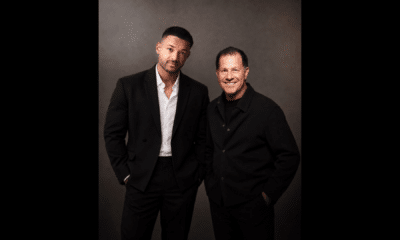
Photo credit: Garrett Lobaugh
Infrastructure for Creator Businesses
Zack introduces himself today as an entrepreneur and business partner to top creators, a description shaped by both his background and his operating thesis. Before launching The Good Internet, he co-founded and scaled several creator-first ventures, including Creator Now, an education platform acquired by vidIQ in 2024.
Earlier in his career, he was among the first enterprise sales hires at Shopify, where he helped onboard high-growth fashion and streetwear brands and secured more than $2 million in ACV (annual contract value).
That mix of creator-side experience and traditional business exposure informs his view of the current ecosystem’s shortcomings.
“Small businesses have accounting agencies, marketing agencies, design agencies, sales agencies,” Zack explains. “Creators don’t really have that. Everything is treated like talent in the traditional Hollywood sense.”
In practice, this leaves creators with limited options: remain inside a large talent agency where they are one of hundreds of clients, or attempt to build an internal team from scratch, often without the experience to do so efficiently.
“You’re either part of this massive agency where you’re one of a thousand, or you have your own CEO that you need to pay $400,000 to,” Zack says. “There’s nothing in between.”
The Good Internet is designed to sit in that middle ground, offering creators modular, service-based support that evolves alongside their businesses, without locking them into long-term dependency.
From Talent Representation to Founder Mentality
One of the clearest expressions of this model is Boring Stuff, a business Zack co-founded to address what he sees as a fundamental mismatch between how creators are charged for financial services and how traditional businesses operate. In Hollywood, business managers often take a percentage of revenue.
“No small business would ever pay an accountant a percentage of their company’s revenue,” he says. “But for some reason, athletes and artists and some creators do.”
Boring Stuff instead operates on a fixed-fee model, providing creators with bookkeeping, payroll, tax support, and business formation services. The emphasis is not only on compliance, but also on helping creators understand their financials.
“We’ll start an intro call and say, ‘We’re going to create you a monthly P&L (profits and losses),’ and they go, ‘What’s a P&L?’” Zack recalls. “A year later, they’re reading financial reports properly.”
That focus on education extends across The Good Internet’s portfolio. Rather than positioning expertise as something creators can never fully grasp, Zack wants them to develop internal literacy and, eventually, internal teams.
“A lot of businesses in the creator economy don’t try to educate,” he says. “They tell creators, ‘You’re creative, you’ll never get this,’ and that’s how people get taken advantage of.”
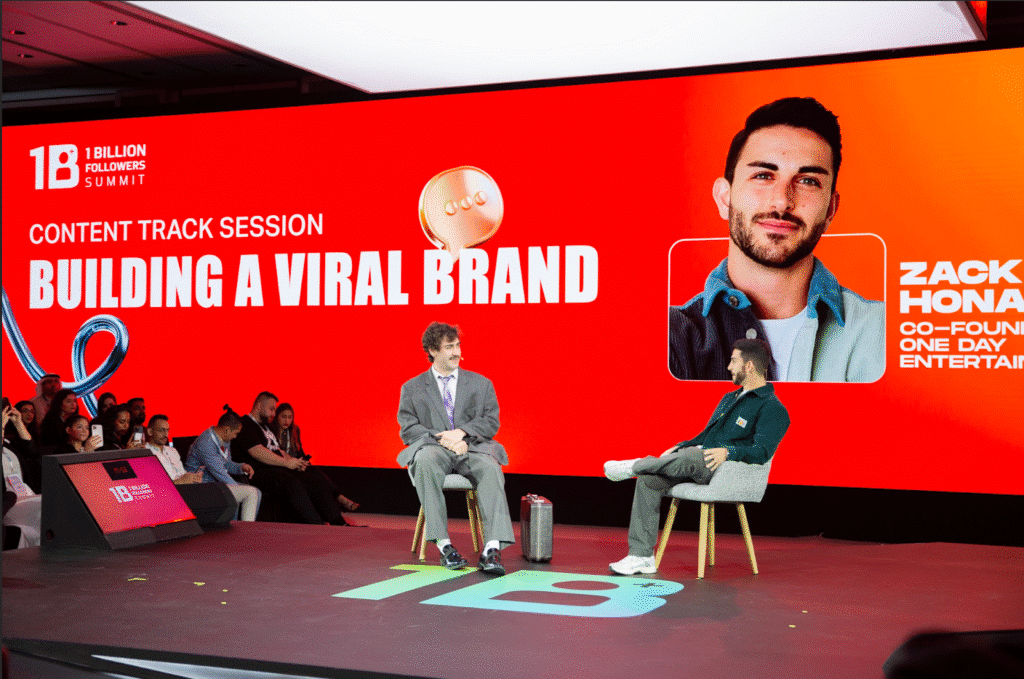
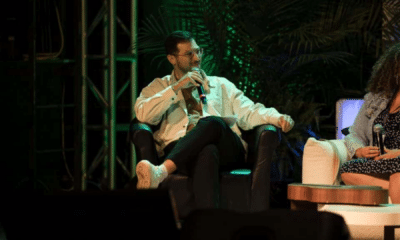
Photo: Zack Honarvar speaking at the 1 Billion Followers Summit
Choosing Partners, Not Just Clients
Unlike traditional agencies that prioritize scale, Zack is explicit that The Good Internet is selective about who it works with. Growth potential and revenue matter, but they are not the primary criteria.
“Do I want to talk to this person every single day?” he asks. “And can I get aligned with the vision and the mission that they are on?”
That values-first approach also influences which creators and businesses The Good Internet supports. Zack is candid about the moral tension he sees in an algorithm-driven ecosystem that often rewards outrage or spectacle.
“Content that is positive and wholesome and educational is sometimes suppressed because it’s not visually stimulating enough,” he says. “We try to take a lot of pride in who we work with and who we choose not to work with.”
He argues that this selectivity has strengthened, rather than limited, the business by attracting aligned partners, employees, and collaborators.
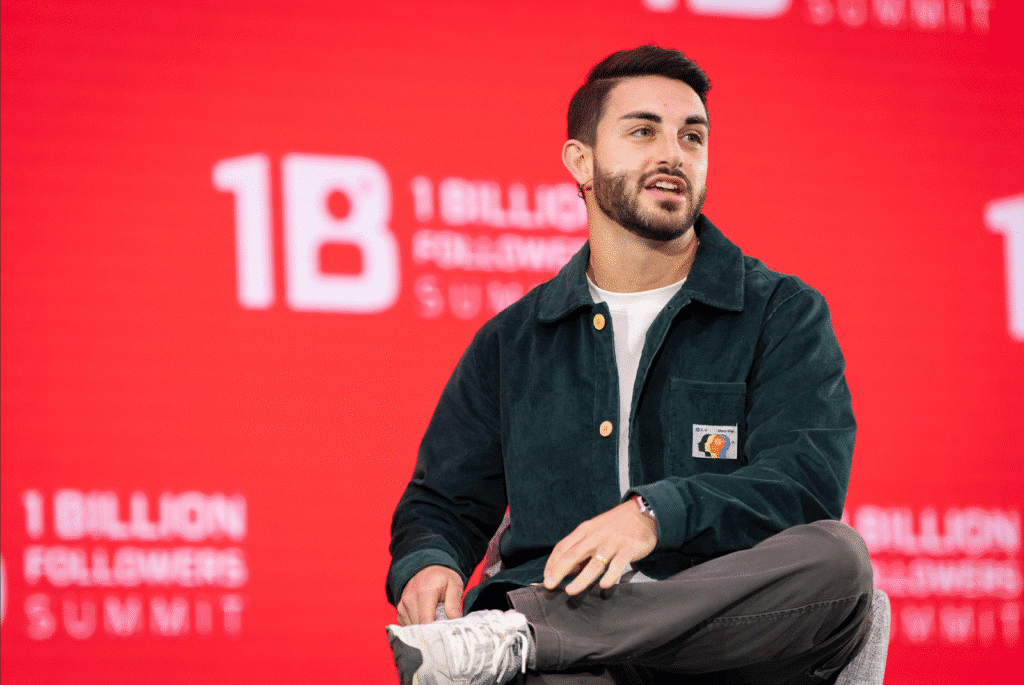
Photo: Zack Honarvar at the 1 Billion Followers Summit
Common Creator Pain Points
Across conversations with creators at different stages, Zack sees consistent patterns. Early on, many are focused on basic professionalization.
“We just got off a call with a creator making about $100,000 a year who doesn’t have an LLC (Limited Liability Company) set up,” he says. “They’re worried about separating personal and business expenses.”
As creators grow, those concerns shift toward hiring, team structure, and sustainability. Who should they hire first? Can they afford it? How do they expand without burning out?
“Creators get stuck on the hamster wheel of making videos for one channel,” Zack explains. “They know they need to build something else, but they can’t take their eye off the main channel.”
When growth is mismanaged, internal strain often follows. Employee churn, unclear career paths, and default hiring from friends or family can erode stability.
“If you’re really thinking about it like a business,” he says, “sourcing and curating talent is important.”
A Holding Company Model for the Creator Economy
Structurally, The Good Internet borrows from holding company models used in other media. Zack points to Berkshire Hathaway and Tiny Capital as inspirations, organizations that create value by assembling complementary businesses under a shared mission.
“The value of these agencies when put together is exponentially larger than the sum of the parts individually,” he says.
Looking ahead, The Good Internet plans to acquire and incubate additional creator-economy businesses, while offering a platform for founder-led agencies that want to scale without losing autonomy.
For Zack, the goal is not to make creators dependent on The Good Internet, but to give them leverage and control.
“Entrepreneurship was a tool to have independence,” he reflects. “The most empowering mission I could ever go on in my life is to give that to other people.”
Cover photo credit: Garrett Lobaugh
Subscribe to Our Newsletter
Check Out Our Podcast