





Brand
While Brands Chased Celebrities, Trusted Media Brands Bet on the People Next Door

Trust is shifting toward peers and community, recent Edelman research shows. Brands are reallocating spend accordingly. For Trusted Media Brands (TMB), that shift validates a model the company has been running for decades.
“Customers are done watching,” says Michael Boccacino, TMB’s Vice President of Ad Sales Marketing. “They want to do instead.”
TMB is the home of Reader’s Digest, Taste of Home, and Family Handyman, alongside digital-first properties including FailArmy, The Pet Collective, and People Are Awesome, acquired through Jukin Media in 2021. The company distributes across social, streaming, digital, and print, with a content library built largely from community submissions: readers contributing recipes to Taste of Home for generations, families uploading viral home videos for licensing, and hobbyists sharing DIY tips with Family Handyman.
Michael joined TMB in early 2024. With more than 15 years of experience working at companies including BuzzFeed, TheSoul Publishing, and Disney, he saw most media companies treat creators as a marketing layer on top of existing editorial.
TMB’s structure, Michael argues, is different: creators are embedded in how content is produced, licensed, and distributed from the start. The media veteran calls such creators “the kings and queens of the cul-de-sac”: the people neighbors turn to for a reliable recipe, a contractor recommendation, or a parenting tip.
“While other publishers are chasing the runways,” Michael says, “we’re chasing the driveways.”
A Four-Pronged Creator Engine
TMB operates with what Michael describes as a four-layer approach to creator content, one that most publishers haven’t attempted at scale.
The first layer is its licensing engine: a library of over 300,000 viral videos sourced from everyday people who share home movies, funny pet clips, and moments of human connection. These creators may never appear on camera for TMB directly, but their content forms the raw material for FailArmy, The Pet Collective, and similar brands.
The second layer consists of external creators brought in for specific campaigns or initiatives, often because they fill a gap in perspective or expertise that internal teams don’t cover. A coastal baker, a creator with a specialized dietary niche, or a personality that resonates with a specific advertiser’s audience might enter the ecosystem through a campaign and stay through a longer-term relationship.
The third layer is TMB’s own internal talent. Taste of Home’s Milwaukee test kitchen has been producing food videos for years. The company is now, in Michael’s phrase, “tilting the camera up,” giving those in-house experts on-camera platforms to build their own followings.
The fourth layer is the community sharer: the person who doesn’t create content in any traditional sense but distributes TMB’s work through their own networks, amplifying reach in ways analytics platforms rarely capture.
“We have a really holistic approach to how we view a creator,” Michael says. “They all feed together around the same themes and messages, but they create in different ways.”
Creator Content Outperforming Traditional Production
The shift from what TMB calls “hands and pans” videos, the traditional top-down recipe format on Taste of Home, to on-camera creator-led content has produced measurable results. Michael points to the brand’s YouTube performance: a 24% year-over-year subscriber growth, average view durations that doubled, and a Digiday award nomination for best use of YouTube.
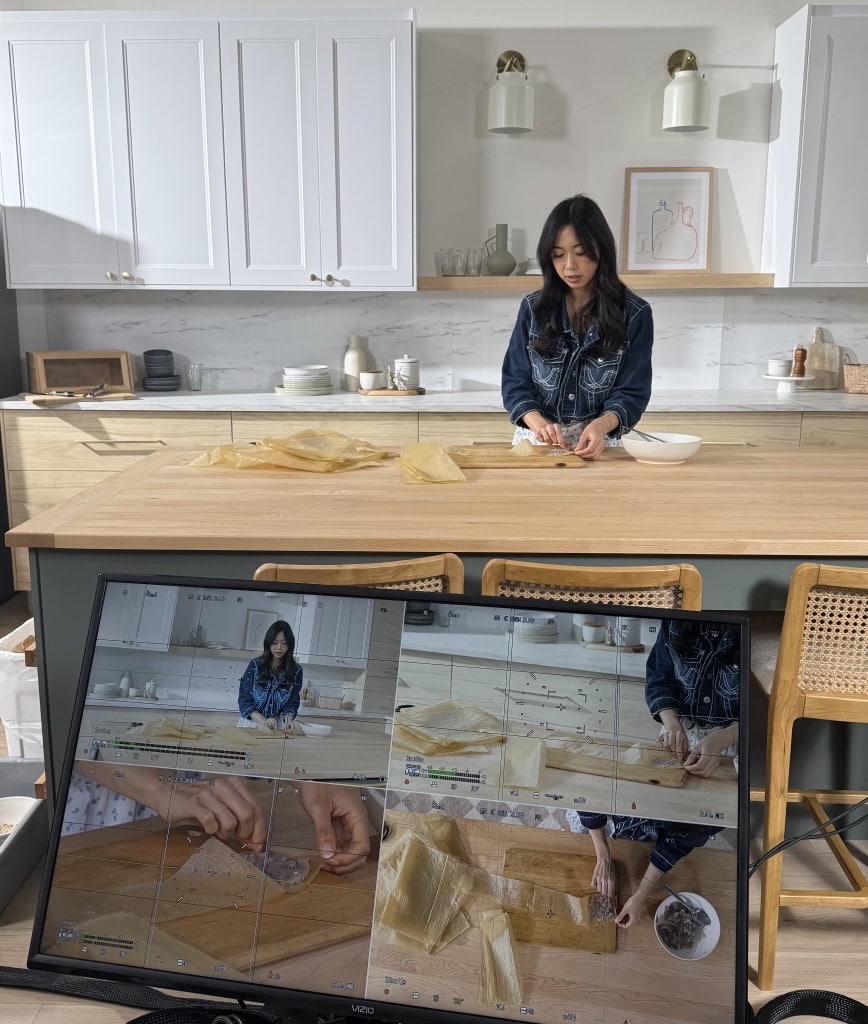
“When you have someone talking you through a recipe and telling you the story behind it,” he says, “it builds a deeper level of engagement.”
One example is Tyler Smith, a pitmaster and DIY creator from Virginia Beach who was initially brought on to produce videos for Taste of Home. His performance with the audience was strong enough that TMB is now building a streaming show around him, set to launch in June on the company’s “At Home with Family Handyman” channel. It’s a pipeline that Michael sees as central to the strategy: find who resonates, deepen the relationship, then expand the platform.
“We kind of think about it as an opportunity to platform people who our audience really connects with,” he says.
How Brands Enter the Ecosystem
When a brand brings a campaign to TMB, the process starts with who’s already in the company’s network. If the right creator is available internally, the process moves quickly. If the brief calls for something outside that roster, TMB runs outreach to find a match.
Michael cites a Toyota campaign to illustrate this dynamic. One of TMB’s established Taste of Home creators developed a program around celebrating friendship and a picnic setting. A second creator, new to TMB but a strong fit for what Toyota was looking for, was brought in specifically for that campaign.
What makes the publisher-in-the-middle structure valuable, Michael argues, is leverage. TMB can advocate for creator integrity when brands push in ways that would undermine the content’s organic feel.
“You don’t want it to feel too white-label or too branded,” he says. “And I think most advertisers are savvy enough to understand that. But when they’re not, someone like TMB can step in and guide the conversation.”
One proprietary format TMB has developed is what Michael calls a “branded content break”: a 15-second UGC (user-generated content) clip, thematically aligned with a 15-second paid spot, running back-to-back. A campaign promoting a family-focused property might pair with a UGC clip of real parent-child moments. The format generates roughly ten times more engagement than a standard ad unit. Michael uses that figure to bring skeptical advertisers into the model.
“When you have the data to back it up,” he says, “they really lean in and listen.”
The Measurement Problem
Michael is direct about one structural challenge the entire cross-platform media industry faces, and that TMB is not exempt from: measurement fragmentation.
As a company distributing across social, streaming, digital, print, and newsletters, TMB’s full footprint doesn’t map onto any single analytics platform. Streaming environments remain walled gardens.
“We’re more than a Comscore number, we’re more than a Roku stat,” Michael says. “We have so much going on, and there’s no single good way to get that across.”
He’s still waiting for a company to emerge with a cross-platform measurement solution that can tell a comprehensive reach story. The limitation shapes how advertisers value scale, and by extension, how companies like TMB can price it.
The issue extends beyond TMB’s particular situation, according to Michael. For any brand trying to justify creator-driven media spend, the absence of unified measurement makes the ROI conversation harder than it needs to be. Michael sees it as the industry’s most consequential unsolved infrastructure problem.
Building Toward the Next Chapter
After spending 2025 building out creator strategies for Taste of Home and Family Handyman, TMB is now applying the same playbook to Reader’s Digest and FailArmy. A new editor-in-chief is in place at Reader’s Digest, accompanied by what Michael describes as a “bold new content plan.”
“Last year was a building year,” he says. “This year we’re really focused on hitting the ground running and producing some new shows and formats that people might not expect from us.”
Michael sees the publisher-creator relationship as structurally symbiotic in a way that won’t change as the Creator Economy scales. Creators need platforms and infrastructure. Publishers need the kind of community-connected content that keeps audiences coming back. Neither side has a monopoly on what makes content work.
“Creators can do a lot of things,” Michael says, “but they’re also stretched and don’t have as many resources as they might need. So there’s going to be that dynamic between publishers and creators. It’s not going away anytime soon.”
Subscribe to Our Newsletter
Check Out Our Podcast