




Strategy
‘Not Just Another Day’: How SuperHeroes Produced a 100-Million-View Skate Film With AI

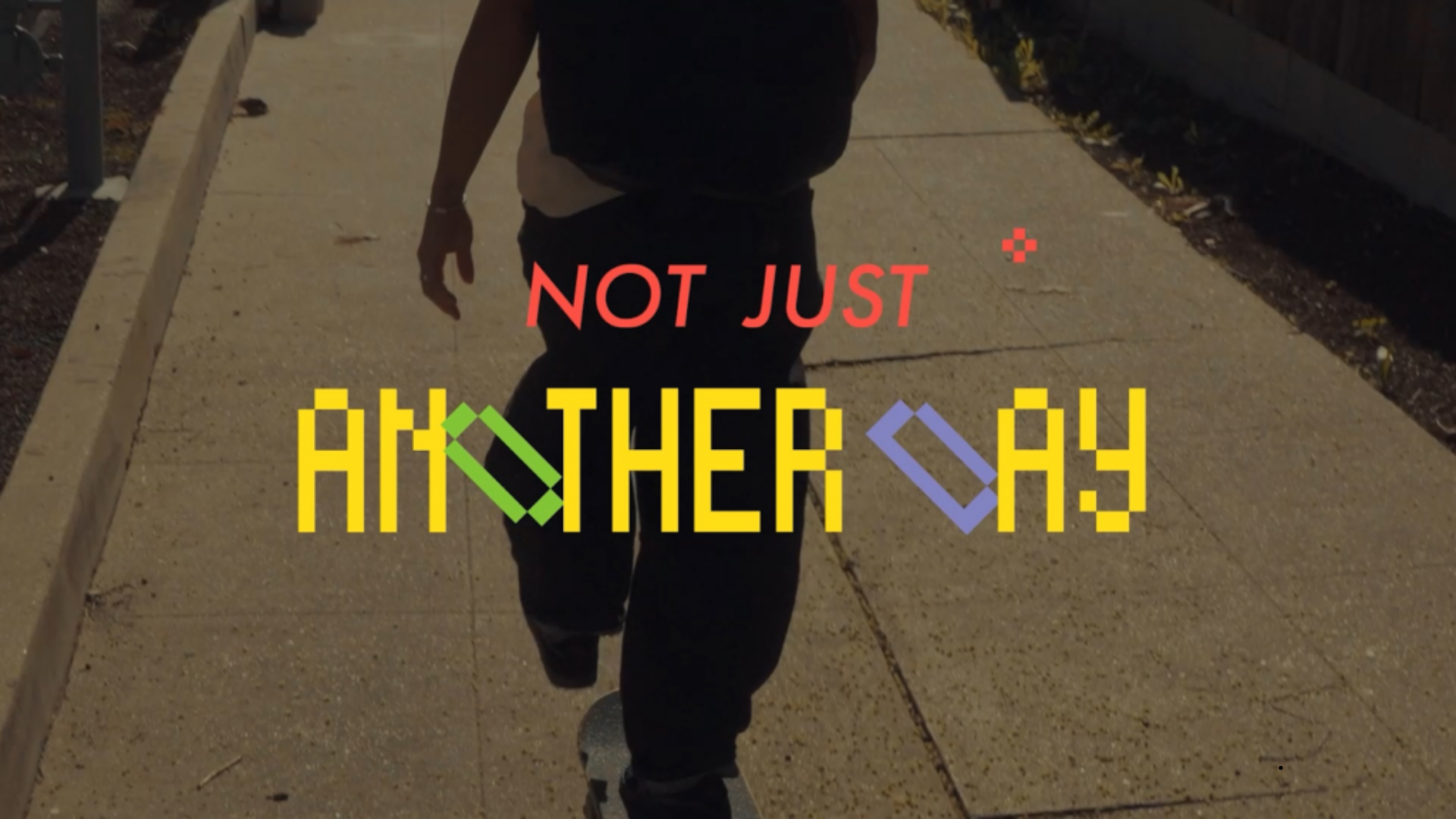
“Not Just Another Day” is a skateboarding film where everything the skaters do is real. The world around them is a different story.
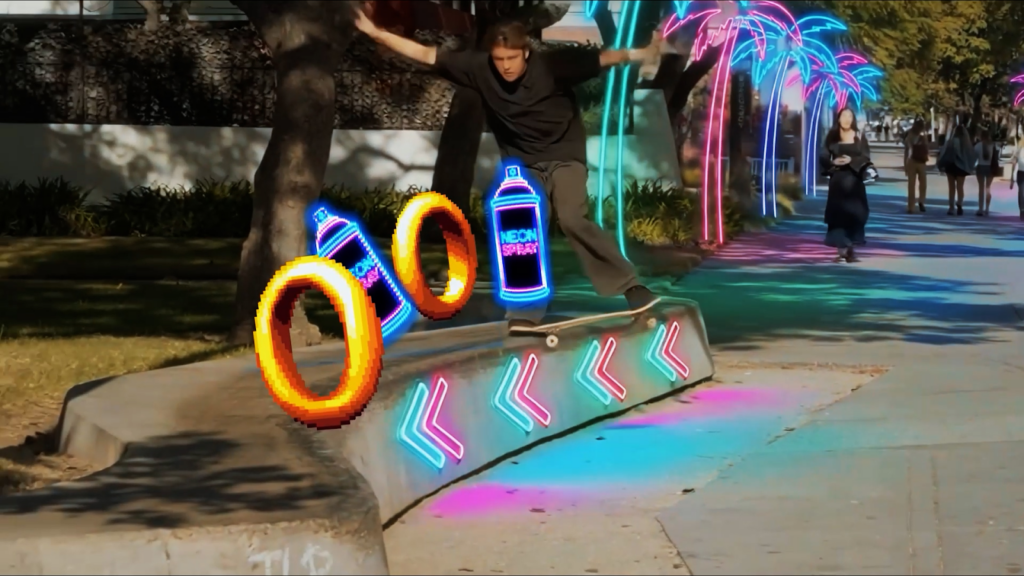
Three pro skaters spent two days filming across Los Angeles for Lenovo Yoga and AMD. Three AI artists then rebuilt the world behind them: surreal environments, floating game collectibles, and small animated characters trailing alongside the tricks. The film has been watched nearly 100 million times on Instagram in its first five weeks, generating almost no backlash from a community that tends to reject anything that feels manufactured.
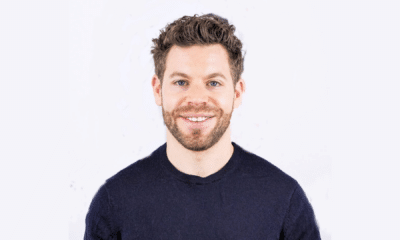
That last part is what interests Rogier Vijverberg. As Chief Creative Hero and co-founder of SuperHeroes, a Brooklyn-based independent agency, Rogier has spent the past year treating generative AI as a storytelling medium rather than a production shortcut. The campaign is part of SuperHeroes’ ongoing “Made with Lenovo Yoga” platform, but this iteration pushed the model into territory no one involved had fully tested before.
“We weren’t really sure what the outcome was going to be,” Rogier says. “There was an idea, and there was trust that we could pull it off. But it needed to actually come together and work.”
Why Skateboarding
SuperHeroes cycles through cultural territories for Lenovo’s creative briefs roughly every six weeks. Previous iterations explored the “Gen Z stare,” Sunday scaries, and a collaboration with Meet Cute NYC, which captured love stories through street interviews. Each brief connects to the behaviors and tensions of a young, digitally native audience.
Skateboarding offered a specific alignment. The culture carries its own visual grammar, its own standards of authenticity, and a community that tends to distrust anything that feels manufactured. Rogier saw that tension as an opportunity rather than a risk.
“Skateboarding has always had this element of creativity and freedom of expression,” he says. “It’s street, and it’s super interesting. But it had never done anything like this yet.”
The concept was to introduce generative AI into that culture, not as a novelty, but as something embedded in footage the community already recognizes as real. The AI layer would be added to tricks that actually happened, on locations the skaters actually use, with a crew that knew the culture from the inside.
The Follower-Count Problem
AI-led branded creative campaigns face a structural mismatch most brands don’t discuss openly: the artists who can actually execute the work tend to have modest social followings. The technical sophistication required to manipulate live-action footage with generative tools is not correlated with audience size.
Rogier is direct about the constraint. “Most brands focus on follower numbers,” he says. “However, most of the artists that we work with have modest followings.”
SuperHeroes built a two-part solution into the campaign model. The pro skaters Monica Torres, Yuri Facchini, and Gabe Boyle each had organic followings ranging from roughly 90,000 to 200,000. Their involvement enabled collaborative posting, extending the film’s reach to skate-adjacent audiences.
The second part was paid. Media budget was committed from the start to boost the post globally and reach audiences beyond the organic skate community. “We didn’t just go for organic reach in this one,” Rogier says. “We knew we were going to boost the post, which would enable us to go bigger, go global.”
Building the Work in Real Time
Holden Boyles, an award-winning AI filmmaker, creative director, and artist in the digital art collective JIMMY, was one of three artists recruited for the project. Rogier found him through a Runway competition, partly because earlier work Holden had done manipulating childhood home video with AI suggested he could handle both the technical difficulty and the visual sensibility the campaign needed.
The production workflow was deliberately staggered. SuperHeroes shot the skate footage over two days across Los Angeles, from schoolyards and parking lots to Venice Beach. A skate editor cut the footage. The three artists then reviewed the edit together, claimed scenes based on instinct, and worked independently before comparing approaches.
Holden gravitated toward scenes that gave him room to insert characters. “I like to create little characters and put them into the footage,” he says. “It allows for control. You can create characters, animate them, then use traditional means to put them in and create this collage of real footage and AI pieced together.” The floating tacos and hamburgers visible in the film are his work. So are the green monster and the small birds skating alongside Monica Torres in the opening.
The primary AI tools were Luma, Kling, Veo, and Runway, supplemented by After Effects and Photoshop for manual correction. None were fully mature for the task. Maintaining the skaters’ fidelity, particularly the motion of their tricks and boards, required sustained manual intervention to correct artifacts introduced by the AI pipeline.
“At this time, AI has a problem keeping the quality and fidelity of the people,” Holden says. “Things change. There are a few artifacts and weird things. We had to make sure the skateboards and the tricks and the actual skaters and their skills came through.”
Navigating AI Sentiment
AI content on social platforms generates hostility almost by default. Artists releasing generative work regularly face accusations of inauthenticity, copyright concerns, and rejection from communities that treat craft-based standards as non-negotiable. The skate community, with its own deep norms around authenticity, represented a specific risk.
The film drew almost no negative response, according to Rogier. He attributes that to a transparency strategy built into the campaign’s structure from the start. The “How I Made It” videos, where each artist documents their tools, challenges, and creative decisions, served as a preemptive disclosure of the entire process.
“We answer that by being honest and transparent,” Rogier says. “We used real people to shoot this. These are pro skaters. We had actual music makers who did the soundtrack. Everything is real, and then we add the AI layer to it.”
The three “How I Made It” videos generated 16 million views on their own, a figure suggesting process transparency is functioning as independent content rather than merely as brand-safety infrastructure.
What the Numbers Show
View counts at scale rarely translate directly to brand value, and Rogier is careful to separate the headline performance from the underlying metrics Lenovo actually tracks.
The film has attracted roughly 150,000 engagement interactions, with comment sentiment running strongly positive, while the “How I Made It” videos added further reach. But the more consequential metrics operate at the brand tracker level: awareness, consideration, search volume, website conversion, and competitive positioning within the AI-powered laptop category.
“If you look at AI-powered laptops, where does Lenovo Yoga stand in the market? It’s leading in that respect,” Rogier says. He frames the layered content model, main film, process documentation, and short paid-media reformats as the mechanism that sustains those numbers over time rather than spiking once and fading.
The argument underneath challenges a standard assumption about high-production branded content. A single expensive hero film exhausts its audience quickly in a high-scroll environment. In Rogier’s view, brands willing to generate multiple content touchpoints from the same production can extract compounding value without proportional increases in budget.
“There’s no need to do only one main film that you spend five or ten million dollars on per year,” he says. “Once people have seen it, they don’t want to see it a second or third time. People get bored.”
What Brands Get Wrong About AI
As the tools continue to improve, the conversation around AI in branded creative tends to bifurcate. One side leads with efficiency. The other resists on grounds of authenticity. Rogier argues that both positions miss the actual opportunity.
“Very often people talk about AI in terms of cost-cutting or efficiency,” he says. “But it should not be about that. The way that we look at it is: how can it support and enhance our creativity? How can it create solutions to problems we couldn’t solve before? That’s when AI is really delivering on a different level.”
Holden, whose filmmaking career spans both traditional live-action and AI-native production, shares the same view from an artistic perspective. “There’s always been fear around this medium replacing filmmaking,” he says. “That’s not the goal at all. It’s about doing something you couldn’t do before.”
Both note that the tools now available would have made the campaign easier and more precise than what the team managed a few months ago. They also emphasize that the pace of improvement means SuperHeroes, Lenovo, and the artists are each accumulating knowledge that will compound into the next project faster than any single competitive advantage can hold.
“What we try to put in every project,” Rogier says, “is the intent to hopefully inspire people to go and play and experiment with the technology. Because ultimately that’s what will push all of us, as creatives, as artists, and as brands, forward.”
Photo source: SuperHeroes
Subscribe to Our Newsletter
Check Out Our Podcast