




Platform
Twitch’s Mary Kish on Why Community (Not the Algorithm) Drives Creator Success on the Service

For Mary Kish, Twitch is not simply a live-streaming service. It is a network of interconnected communities that shape the product in real time.
As the company’s Head of Community, Mary leads the teams responsible for creator communications, community programming, and initiatives that help streamers find each other and help viewers find their next favorite broadcaster. After nine years at Twitch, she now oversees community strategy, a time when the company reported that 9 million new streamers joined in 2025 alone.
In a market often defined by short-form feeds and algorithmic distribution, Mary’s mandate is different: deepen connection, prioritize interaction, and make live chat as central as the creator.
“I like to say that the purpose of the community team is for streamers to find other like-minded streamers that help and inspire them to grow, network, and become better creators, and also for the community to find their next favorite streamer,” Mary says. “Ultimately, we do what we do so that the community finds wonderful streamers to hang out with and for streamers to find other people.”
Her thesis? Twitch’s competitive advantage is not distribution. It is participation.
From Game Trailers to Community Infrastructure
Mary’s path into Twitch began long before her leadership role in the live creator ecosystem. A lifelong gamer, she studied video production and live event engineering before producing game trailers and later reviewing games professionally.
While working in games media, she began streaming on Twitch independently. “I wanted something that had my name on it,” she explains. “I spent a lot of time in games, and I wanted something that reflected me.”
That personal experimentation became foundational. Mary saw firsthand what she believes differentiated Twitch from other content platforms: time spent and depth of interaction.
“When somebody is pulling up to watch one of our streamers, they’re usually watching for an hour minimum,” she says. “You’re not casually watching someone for 16 seconds, you’re watching them for over an hour.”
That extended session time reshapes how community operates. It also informs how Twitch builds product.
Community as Product Strategy
On many platforms and services, “community” serves as a marketing function or a post-launch support layer. At Twitch, Mary describes it as embedded within product development itself.
“When you’re making a site that is user-generated content [UGC], every product we make is for creators and aims to help them,” she says.
Because Twitch is live and interactive, community features must facilitate connection in real time. One example is badges: small visual markers that appear beside usernames in chat.
“When you are at a streamer’s channel, for example, and you’re a subscriber, you get a badge that says, ‘I support this creator,’” Mary explains. “You actually get badges based on how long you’ve been a subscriber. There’s a five-year badge.”
These markers serve a purpose beyond decorative value. According to Mary, they create social signaling in chat, reinforcing a sense of belonging and loyalty. Seasonal or event-based badges further build shared moments, as Mary describes, a “you had to be there” dynamic.
“You can never recapture the magic of what chat was like when it was live,” she says.
In Mary’s framing, Twitch is not a one-to-many broadcast. It is a triangle: creator, content, and chat.
“We don’t look at Twitch as one person going live to an audience,” she says. “We look at it as a person who went live, something that they’re doing, and chat reacting to it. Chat is as important to what’s going on live as the creator.”
Scaling Community with New Streamers
In 2025, Twitch welcomed 9 million new streamers, according to company data. That scale presents a structural challenge: how to maintain intimacy while onboarding millions?
Mary’s team focuses on tools and education that help creators get started without overwhelming them. Programs like “Creator Camp” provide onboarding resources and tracking progress through interactive modules.
“It can be intimidating to go live for the first time,” she says. “People wonder, ‘What camera do I need? What setup?’ And we have a lot of free resources available.”
But hardware, she insists, is not the primary barrier. “The hardest step is hitting live the first time and just testing it out,” Mary says. “You don’t need any of those bells and whistles.”
More important is understanding Twitch’s differentiation: interaction.
“Getting chat to participate is the key differentiator,” she says. “Don’t passively go live. Go live and enjoy it.”

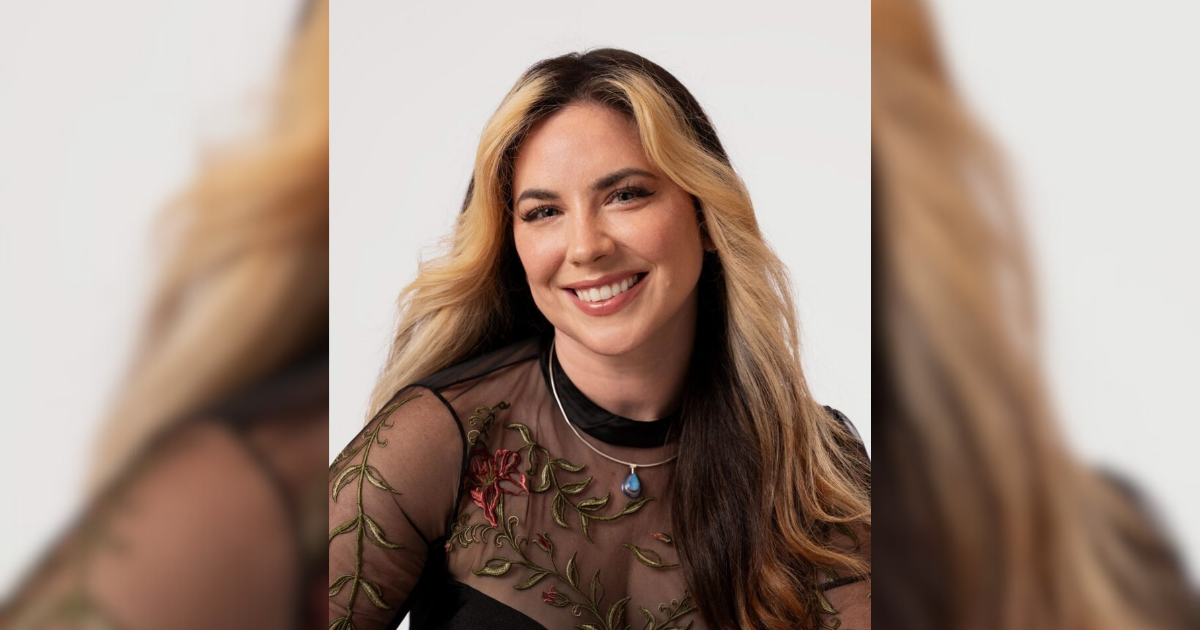
Photo: Mary Kish at Cannes
Source: Twitch
Moderation, Safety, and Trust at Scale
As communities grow, so do risks. Mary is candid about the fact that safety is foundational to Twitch’s ecosystem.
“If you didn’t have moderation, it would be the ‘Wild West’ out there, and you can’t go live if you don’t feel safe,” she says.
Mary highlights Twitch’s investments in moderation infrastructure over the past five years. One example she cites is “Shield Mode,” a one-click feature that allows creators to temporarily lock down chat if things escalate. “It’s just a simple way of saying, ‘I don’t like what’s happening in my space.’”
Importantly, she adds, Twitch’s moderation tools are customizable. Creators can calibrate chat standards while maintaining service-wide minimum safety requirements.
“When you have so many streamers going live, you need to be able to customize each space,” Mary says. “We will always maintain minimum safety standards.”
Defining Success Beyond Growth
In a Creator Economy obsessed with follower counts and monetization milestones, Mary takes a broader view of success.
“Some people are like, ‘Success is quitting my job and being a full-time streamer,’” she says. “But I actually think a lot of times the most beautiful streamer is the hobbyist streamer.”
Her argument is that satisfaction and belonging matter more than scale. “It’s not really growth that’s important,” she says. “It’s satisfaction in sharing your passion with the world.”
She references a puzzle-focused creator who streams exclusively while assembling puzzles. “‘Ultimately, I was doing this anyway,’” the creator told her. “‘But Twitch gave me a purpose to share my passion with the world.’”
For Mary, the dynamic of unlocking shared interest groups is central to Twitch’s value proposition.
“That’s actually, like, the best thing you can accomplish on Twitch … finding your people.”
Collaboration as Growth Strategy
Mary also points to collaboration as a durable growth lever unique to Twitch’s structure. Tools like “raiding,” where one streamer sends their audience to another at the end of a broadcast, facilitate audience sharing.
“When I’m done streaming, I send my audience to [another stream],” Mary explains of a fellow creator she collaborates with. “When she’s done streaming, she sends her audience to me. And so our audiences are really used to seeing each other.”
She notes that this ecosystem-level sharing creates network effects. Multiplayer games and co-streaming further amplify this. “You actually have a huge opportunity when you stream on Twitch to elevate other creators and be elevated by other creators,” she says.
In Mary’s analysis, creators who thrive tend to lean into authenticity rather than chase trends.
“If you’re, like, ‘I just want to grow, and I’m going to play Fortnite because it’s a really popular game,’ and you don’t like Fortnite – that’s a bad recipe,” she says. “Successful content creators are true to who they are.”
The Rise of IRL and Live Experiences
Looking ahead, Mary is watching the expansion of IRL (In Real Life) streaming.
“We had a 186% increase in hours watched year-over-year of IRL,” she shares.
Advancements in connectivity have unlocked new formats, from global travel streams to live broadcasts from unexpected locations. For Mary, this highlights a broader cultural shift toward raw, unscripted experiences.
“I think audiences are getting a little tired of manufactured cut content,” she says. “I’m seeing more raw conversation and talk.”
She believes Twitch’s positioning around live interaction gives it structural resilience in that environment.
“We know that viewers go specifically to usually watch one streamer,” she says. “You want to watch a person and interact with that person and see who they are.”
‘Together for Whatever’
Mary repeatedly returns to one idea: togetherness.
“It’s together for whatever,” she says. “It’s together for this hobby, it’s together for this game, it’s together for this charity event.”
At scale, she adds, that philosophy becomes infrastructure: guilds for women creators, moderator communities, collaborative events, and live conversations between executives and users.
Ultimately, Mary measures success not just in hours watched but in belonging.
“Recognize that there are lots of ways to find success on Twitch,” she says. “It can be that you’ve established a strong community that likes you and you’ve just unlocked a world of people that care about you and care about your space.”
And for a service built on live connection, that may be the most durable metric of all.
“You get to actually choose what’s important to you,” Mary says. “You get to hang out with a person and have real experiences that you can only have if you were there live.”
Subscribe to Our Newsletter
Check Out Our Podcast