





Platform
Spotify Rolls Out Creator Analytics Suite, Adopts 30-Second Play Standard Aligned With AMP Framework

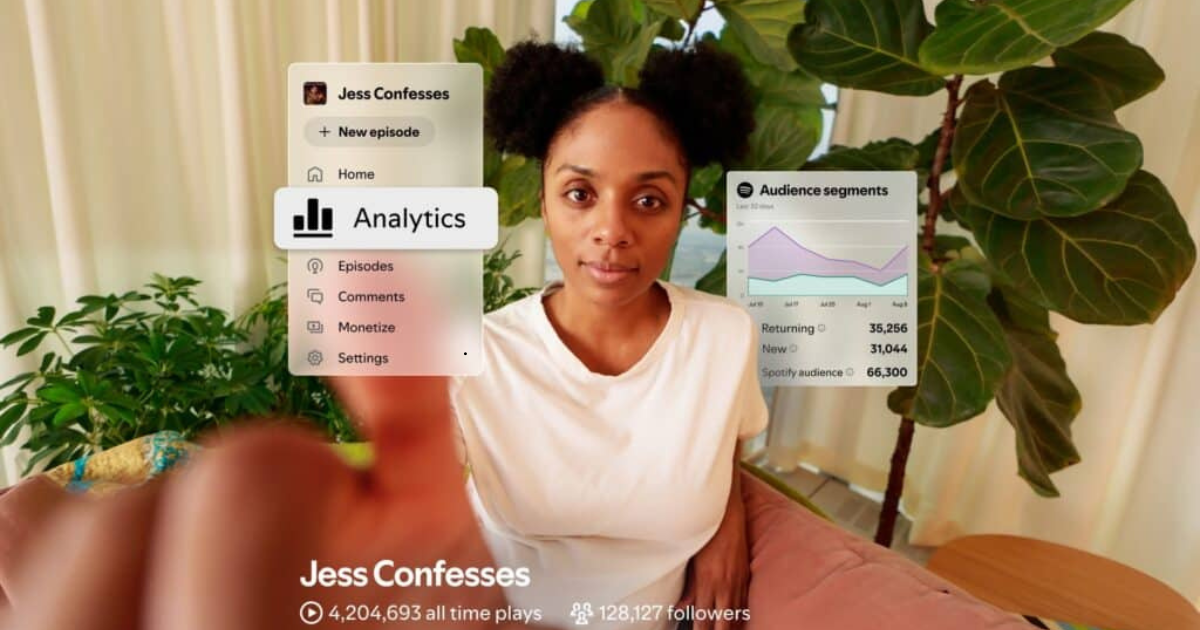
Spotify has launched a set of new analytics tools for podcast and video creators, pairing the update with a revised play count definition that aligns with a cross-platform measurement standard released last week by the Alliance for Measurement in Podcasting (AMP).
New Analytics Features
The update to Spotify for Creators adds five new tools:
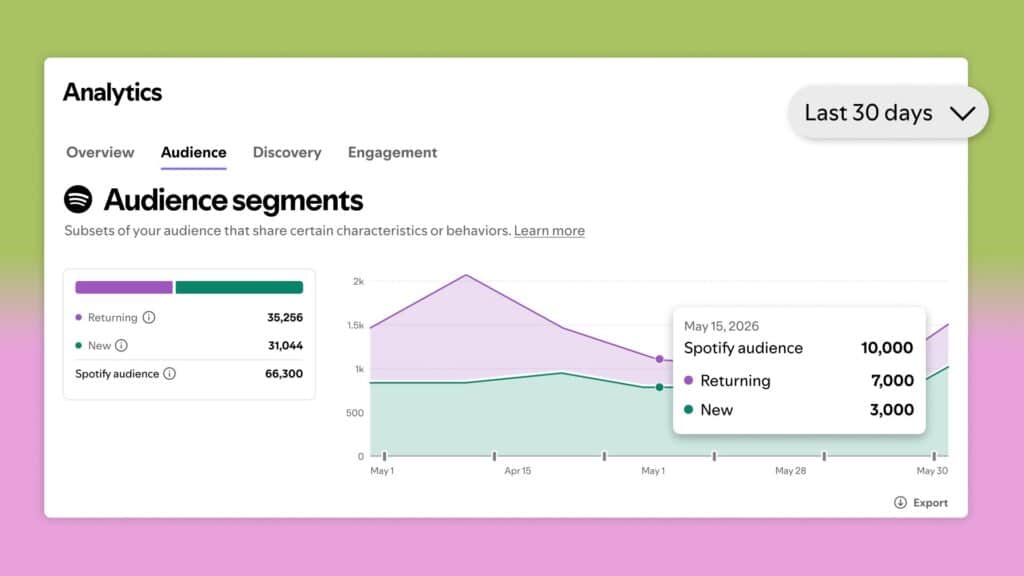
- Audience Segments – distinguishes new from returning listeners and viewers over time
- Episode Trends – a benchmarking feature comparing individual episode performance against a creator’s catalog average

- Long-Term Engagement – reporting for tracking audience retention
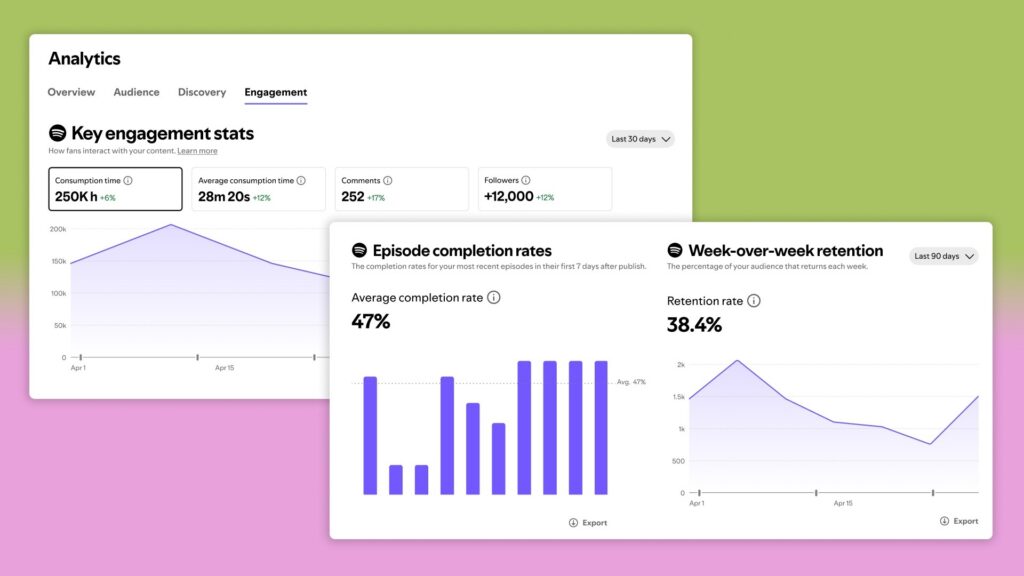
- Discovery Journey – a redesigned flow mapping the path from impressions to completions
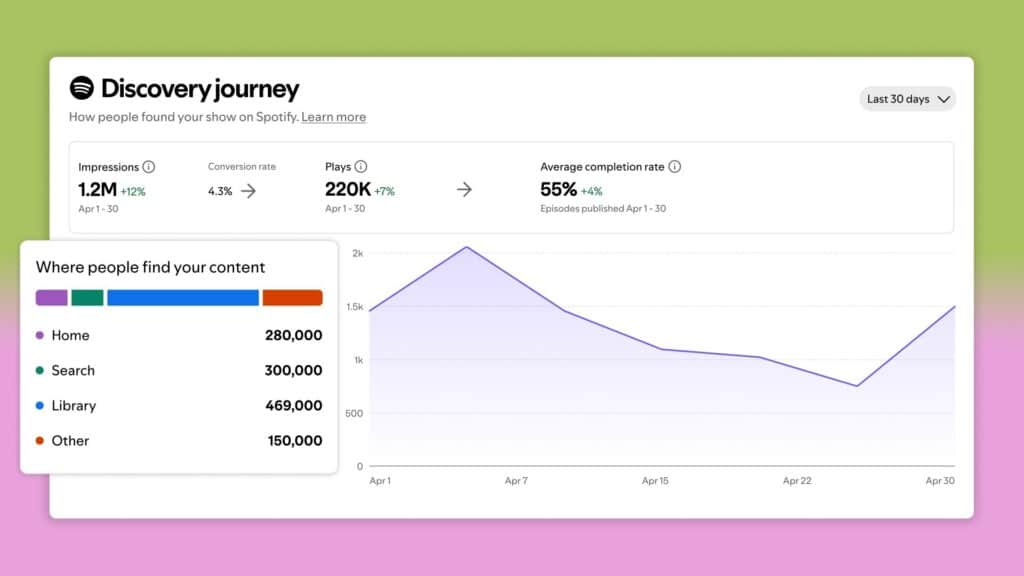
- Historical Performance Data – full access dating back to a creator’s first day on the platform

30-Second Play Standard
Spotify has also updated its play count definition. Plays now reflect the number of times an episode is watched or listened to for at least 30 seconds, a threshold the company says its audience behavior data identifies as a reliable indicator of intentional consumption.
Streams, defined at 60 seconds of engagement, remain unchanged. Spotify said streams will continue to determine Spotify Partner Program eligibility and payouts.
That distinction keeps Spotify’s monetization metric separate from its broader audience measurement metric. Spotify reduced Partner Program eligibility requirements in January to 1,000 engaged audience members, 2,000 hours consumed over the past 30 days, and three published episodes, while adding video sponsorship management tools for creators.
The new play definition also follows an earlier debate over how Spotify displays podcast performance. In May 2025, Spotify revised its public podcast play count feature after creators raised concerns that displaying low episode counts could discourage potential listeners.
AMP Framework
Spotify’s 30-second threshold matches AMP’s Podcast Play definition, which the organization ratified without dissenting votes on June 4. Spotify said its data helped inform the standard.
The two organizations share membership. Spotify is represented on the AMP task force by Anna Hartman, Head of Podcast Agency and Show Specialist Sales, and Jordan Newman, Head of Content Partnerships.
AMP’s framework establishes four exposure definitions across audio and video podcasting: Podcast Play, Podcast Audience, Ad Impression, and Ad Audience. The initiative is designed to allow advertisers to compare podcast inventory across Spotify, Apple Podcasts, YouTube, and other platforms on a consistent basis.
The challenge has become more visible as podcast consumption spreads across audio and video platforms with different measurement systems. In May, Net Influencer reported on Podstock benchmarking data showing that a single Spotify stream generated, on average, 1.5 times more consumption time than a YouTube view of the same podcast episode.
“For years, the buy side and the sell side have argued about whether a ‘download’ equals a ‘listen,’ and how YouTube ‘views’ should be counted alongside podcast downloads,” said Pete Birsinger, CEO and founder of measurement firm Podscribe and an AMP task force member. “The AMP exposure framework finally gives the industry the answer it has needed: a single, consumption-based metric that can work across Spotify, Apple Podcasts, YouTube, and everywhere else.”
AMP plans to release a full implementation guide at Oxford Road’s CAO Summit on July 23, 2026.
Image source: Spotify
Subscribe to Our Newsletter
Check Out Our Podcast