Social media platforms now capture more consumer attention than television as short-form video dominates content consumption, according to the latest “Digital 2025 July Global Statshot Report” published by We Are Social and Meltwater.
Internet users now spend an average of 13 hours and 48 minutes weekly scrolling feeds on platforms like Facebook and consuming short videos on TikTok, compared to 10 hours and 15 minutes watching television, including streaming. This represents a 35% advantage for social media in the battle for audience attention.
This attention shift is most pronounced among younger demographics, with women aged 16-24 spending 2.6 times longer using platforms like Instagram and TikTok (19 hours and 46 minutes) than watching any type of TV content (7 hours and 14 minutes). Only audiences aged 55 and above now spend more time watching TV than scrolling social feeds.
“People now spend more time watching online video content than they spend watching TV, even when that TV figure includes streaming,” notes the report, highlighting the profound change in media consumption habits.
Short-Form Video Leads Content Consumption
The report reveals that short-form videos, such as TikToks, now account for more viewing time (6 hours and 42 minutes weekly) than longer online videos (4 hours and 57 minutes). This preference for bite-sized content has major implications for creators and marketers alike.
Online video now surpasses television viewing overall, with users spending an average of 11 hours and 39 minutes weekly consuming online video content compared to 10 hours and 15 minutes watching television, including streaming services.
Adding to this trend, streaming platforms now account for 50.1% of all the time that online adults spend watching television, with nearly one in three connected adults paying for a streaming subscription. However, the share of TV time spent on streaming varies widely by country, ranging from nearly two-thirds in New Zealand to less than one-fifth in Japan.
Platform Competition Intensifies
No single platform clearly dominates global social media usage, creating a competitive environment for creators. Facebook leads in self-declared usage with 56.6% of online adults using it monthly, followed by YouTube (55.3%) and Instagram (54.5%). WhatsApp is the only other platform used by more than half of the world’s online adults (54%).
When measuring actual mobile app usage, however, YouTube leads with 14% more monthly active users than second-place WhatsApp. For website traffic, YouTube again leads with 1.75 billion unique visitors in May 2025, followed by Facebook (1.03 billion) and Instagram (just over 1 billion).
These overlapping usage patterns show the complex media environment creators must navigate. The report notes, “Marketers have a wide variety of large and compelling platforms to choose from, and our industry’s obsession with ‘rankings’ may actually be detrimental to better planning.”
Creator Discovery Patterns Shift
While search engines remain the primary channel for brand discovery, with more than one in three online adults discovering new brands through search, this pattern is changing among younger users. GWI’s data shows younger internet users increasingly favor social networks when researching potential purchases, especially across South-Eastern Asia.
This shift occurs despite search advertising commanding 40% of global digital ad spend in 2024, totaling more than $316 billion. The changing discovery patterns are particularly important for creators, as social platforms increasingly function as search engines for specific topics, especially those with visual or lifestyle components.
AI Platforms Enter the Creator Economy
As creators build their strategies, AI platforms present both challenges and opportunities. ChatGPT exemplifies this trend, attracting more than 5 billion visits per month during Q2 2025 and ranking fifth in global web traffic.
GWI’s research reveals that 22.3% of online adults across 54 economies have used ChatGPT within the past month, with usage rates exceeding 40% in Kenya, the UAE, and Israel. This adoption is skewed towards males (25% more likely than women) and younger users (37% of users aged 16-24 compared to just 5.3% of users aged 65+).
Nearly half (48.5%) of global internet users express enthusiasm for AI technology, up from 46.9% the previous year. This enthusiasm varies by geography, with Turkey leading at 74.4% of online adults excited about AI, while New Zealand trails at less than 30%.
Publisher Challenges in the Content Economy
Content creators and publishers face growing challenges from AI and platform changes. Google’s share of referrals to third-party websites has fallen by approximately 3.8 percentage points since February 2023, with analysis suggesting Google now refers hundreds of millions fewer visitors each month to external web properties than it did three years ago.
The decline in referral traffic stems primarily from Google’s AI Overviews and other “zero-click” search offerings that provide answers directly in search results without requiring users to click through to external sites.
“The current AI model is unsustainable,” the report states. “AI Overviews and summaries are starving publishers of the financial resources they need to produce the very content upon which AI platforms rely.”
Digital Access Expands Creator Reach
The potential audience for creators continues to grow. The global online population reaches 5.65 billion people as of July 2025, representing 68.7% of the world’s 8.23 billion inhabitants, with internet user numbers increasing by 146 million (+2.7%) over the past year.
Social media user identities continue to grow, now standing at 5.41 billion (65.7% of the global population), up 4.7% since July 2024. Mobile adoption remains strong, with 5.76 billion unique mobile users worldwide (approximately 70.0% of the global population), while smartphones now account for around 87% of all mobile handsets in use.
Connection speeds continue to improve, with the median fixed internet connection now delivering bandwidth of more than 100 Mbps (102.48 Mbps in May 2025), representing a nearly 10% year-over-year increase. Mobile internet speeds continue to increase, reaching 92.82 Mbps —a 68.6% rise over the past year —enabling more advanced mobile content experiences.
The “Digital 2025 July Global Statshot Report” is based on data from partners including GWI, Statista, GSMA Intelligence, Similarweb, Semrush, and Ookl. Find the full report here.
Dragomir is a Serbian freelance blog writer and translator. He is passionate about covering insightful stories and exploring topics such as influencer marketing, the creator economy, technology, business, and cyber fraud.




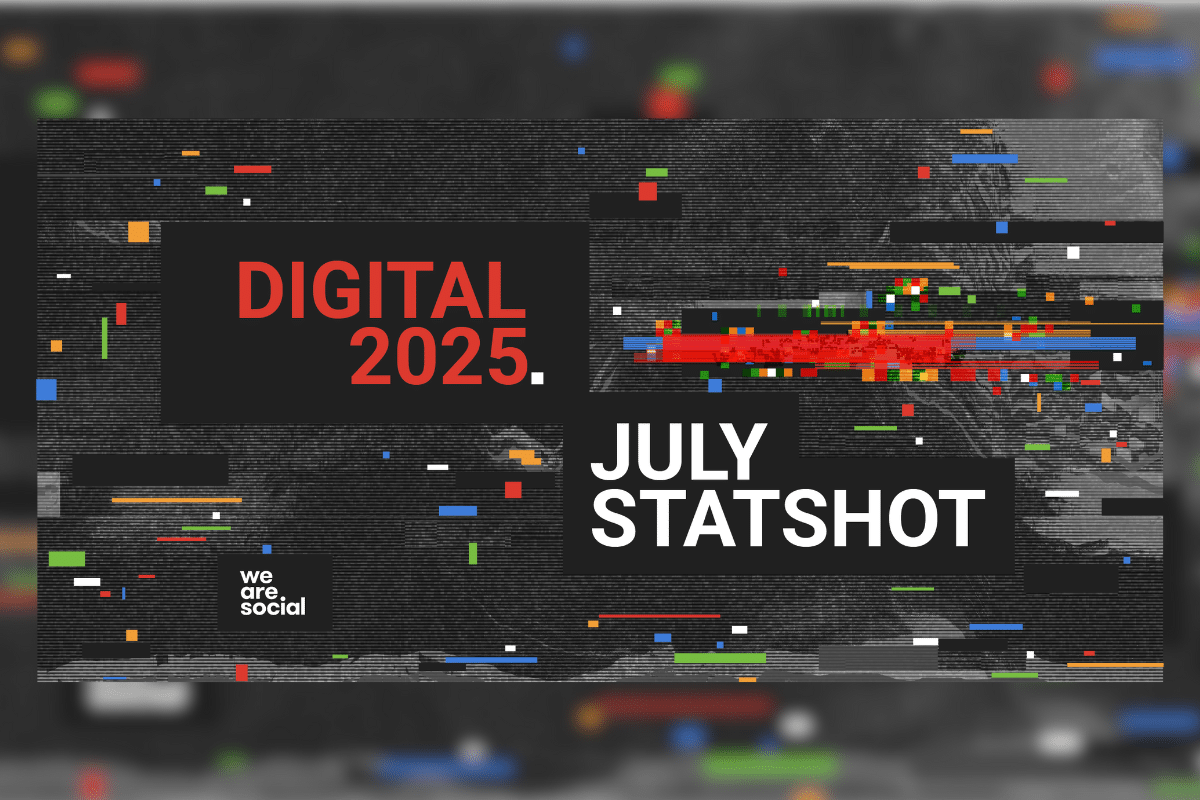












Social media platforms now capture more consumer attention than television as short-form video dominates content consumption, according to the latest “Digital 2025 July Global Statshot Report” published by We Are Social and Meltwater.
Internet users now spend an average of 13 hours and 48 minutes weekly scrolling feeds on platforms like Facebook and consuming short videos on TikTok, compared to 10 hours and 15 minutes watching television, including streaming. This represents a 35% advantage for social media in the battle for audience attention.
This attention shift is most pronounced among younger demographics, with women aged 16-24 spending 2.6 times longer using platforms like Instagram and TikTok (19 hours and 46 minutes) than watching any type of TV content (7 hours and 14 minutes). Only audiences aged 55 and above now spend more time watching TV than scrolling social feeds.
“People now spend more time watching online video content than they spend watching TV, even when that TV figure includes streaming,” notes the report, highlighting the profound change in media consumption habits.
Short-Form Video Leads Content Consumption
The report reveals that short-form videos, such as TikToks, now account for more viewing time (6 hours and 42 minutes weekly) than longer online videos (4 hours and 57 minutes). This preference for bite-sized content has major implications for creators and marketers alike.
Online video now surpasses television viewing overall, with users spending an average of 11 hours and 39 minutes weekly consuming online video content compared to 10 hours and 15 minutes watching television, including streaming services.
Adding to this trend, streaming platforms now account for 50.1% of all the time that online adults spend watching television, with nearly one in three connected adults paying for a streaming subscription. However, the share of TV time spent on streaming varies widely by country, ranging from nearly two-thirds in New Zealand to less than one-fifth in Japan.
Platform Competition Intensifies
No single platform clearly dominates global social media usage, creating a competitive environment for creators. Facebook leads in self-declared usage with 56.6% of online adults using it monthly, followed by YouTube (55.3%) and Instagram (54.5%). WhatsApp is the only other platform used by more than half of the world’s online adults (54%).
When measuring actual mobile app usage, however, YouTube leads with 14% more monthly active users than second-place WhatsApp. For website traffic, YouTube again leads with 1.75 billion unique visitors in May 2025, followed by Facebook (1.03 billion) and Instagram (just over 1 billion).
These overlapping usage patterns show the complex media environment creators must navigate. The report notes, “Marketers have a wide variety of large and compelling platforms to choose from, and our industry’s obsession with ‘rankings’ may actually be detrimental to better planning.”
Creator Discovery Patterns Shift
While search engines remain the primary channel for brand discovery, with more than one in three online adults discovering new brands through search, this pattern is changing among younger users. GWI’s data shows younger internet users increasingly favor social networks when researching potential purchases, especially across South-Eastern Asia.
This shift occurs despite search advertising commanding 40% of global digital ad spend in 2024, totaling more than $316 billion. The changing discovery patterns are particularly important for creators, as social platforms increasingly function as search engines for specific topics, especially those with visual or lifestyle components.
AI Platforms Enter the Creator Economy
As creators build their strategies, AI platforms present both challenges and opportunities. ChatGPT exemplifies this trend, attracting more than 5 billion visits per month during Q2 2025 and ranking fifth in global web traffic.
GWI’s research reveals that 22.3% of online adults across 54 economies have used ChatGPT within the past month, with usage rates exceeding 40% in Kenya, the UAE, and Israel. This adoption is skewed towards males (25% more likely than women) and younger users (37% of users aged 16-24 compared to just 5.3% of users aged 65+).
Nearly half (48.5%) of global internet users express enthusiasm for AI technology, up from 46.9% the previous year. This enthusiasm varies by geography, with Turkey leading at 74.4% of online adults excited about AI, while New Zealand trails at less than 30%.
Publisher Challenges in the Content Economy
Content creators and publishers face growing challenges from AI and platform changes. Google’s share of referrals to third-party websites has fallen by approximately 3.8 percentage points since February 2023, with analysis suggesting Google now refers hundreds of millions fewer visitors each month to external web properties than it did three years ago.
The decline in referral traffic stems primarily from Google’s AI Overviews and other “zero-click” search offerings that provide answers directly in search results without requiring users to click through to external sites.
“The current AI model is unsustainable,” the report states. “AI Overviews and summaries are starving publishers of the financial resources they need to produce the very content upon which AI platforms rely.”
Digital Access Expands Creator Reach
The potential audience for creators continues to grow. The global online population reaches 5.65 billion people as of July 2025, representing 68.7% of the world’s 8.23 billion inhabitants, with internet user numbers increasing by 146 million (+2.7%) over the past year.
Social media user identities continue to grow, now standing at 5.41 billion (65.7% of the global population), up 4.7% since July 2024. Mobile adoption remains strong, with 5.76 billion unique mobile users worldwide (approximately 70.0% of the global population), while smartphones now account for around 87% of all mobile handsets in use.
Connection speeds continue to improve, with the median fixed internet connection now delivering bandwidth of more than 100 Mbps (102.48 Mbps in May 2025), representing a nearly 10% year-over-year increase. Mobile internet speeds continue to increase, reaching 92.82 Mbps —a 68.6% rise over the past year —enabling more advanced mobile content experiences.
The “Digital 2025 July Global Statshot Report” is based on data from partners including GWI, Statista, GSMA Intelligence, Similarweb, Semrush, and Ookl. Find the full report here.
All images are credited to We Are Social.
Subscribe to Our Newsletter
Check Out Our Podcast