






Agency
Residence CFO Wade Milne on Building a Creative Network and Why Social Is the Industry’s Fastest-Growing Sector

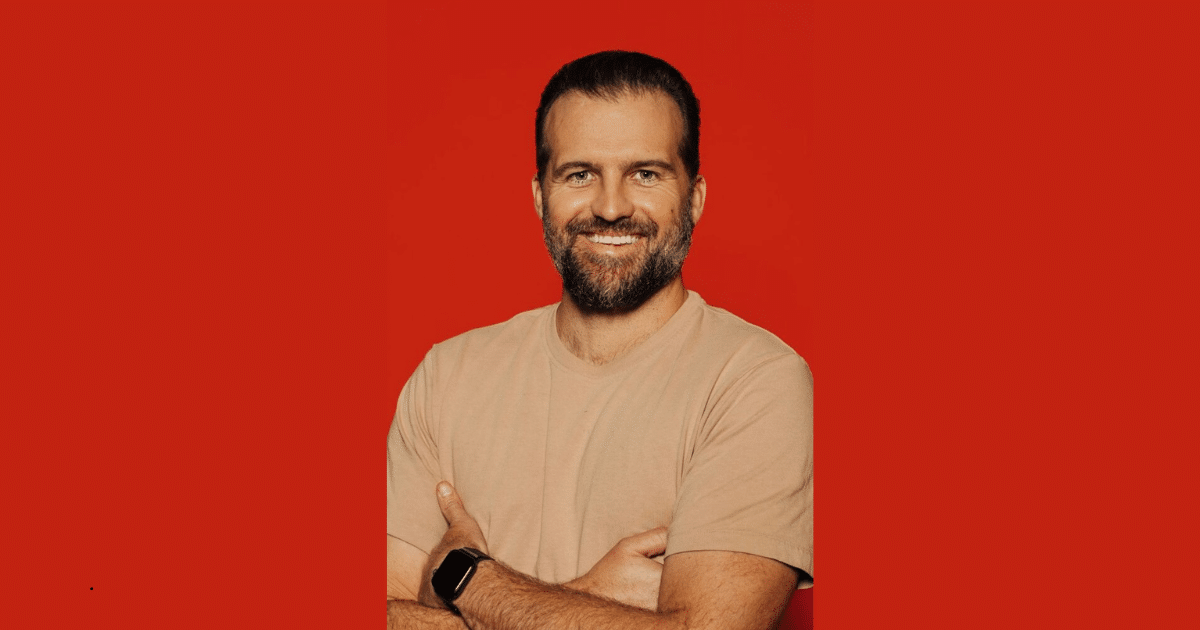
For Wade Milne, the rise of the Creator Economy and the shift toward social-first marketing represent more than a cultural change. They signal a structural transformation in how creative services businesses are built.
As Chief Financial Officer of Residence, a global network of independent creative companies, Wade helps guide a model designed to give creative businesses scale without sacrificing independence. Founded in 2022 and now spanning more than 700 employees across cities including Los Angeles, London, New York, Sydney, Vancouver, Vienna, and Amsterdam, Residence connects specialist creative firms while centralizing shared operational support.
The network recently expanded its social capabilities with the acquisition of social-first agency OK COOL, a move that reflects a broader shift Wade sees across the marketing industry.
“The social sector is probably the highest, maybe the only growth sector in marketing services,” Wade says. “I’ve been desperate to get into this sector.”
From his vantage point overseeing finance, mergers and acquisitions, and long-term strategy across the network, Wade sees increasing capital flowing toward independent creative businesses and toward social platforms and creators who sit at the center of today’s marketing ecosystem.
Building a Creative Network Around Independence
Wade’s path to the Creator Economy began in finance rather than marketing.
An accountant by training and a Certified Practicing Accountant (CPA), he began his career in tax before moving into commercial finance roles and eventually joining the advertising industry. Over nearly two decades, he worked across agency networks and creative businesses before joining the motion design and production company Buck in 2019.
Buck’s growth trajectory soon sparked a broader idea. Residence emerged in 2021 as a network model designed to connect independent creative companies without absorbing their brands or identities.
Wade describes the structure as a response to the limitations of traditional agency holding companies. “It’s an independent creative network of the future,” he says. “We’re made up of makers, doers; people who are closest to the work.”
Rather than integrating acquired companies into a single brand, Residence allows them to maintain their independence while benefiting from centralized services, including finance, HR, and operational support.
“You join Residence to remain independent, with brand name, brand equity, and culture intact, but united with all the other companies,” Wade explains.
That backend infrastructure, he adds, helps founders focus on creative work rather than operational complexity. “We take away a lot of your distractions,” he says. “Payroll, HR, things that get in the way of the original reason and vision why you started the company.”
The approach is designed to attract founder-led companies whose creative culture is difficult to replicate through traditional hiring.
“You can’t hire a founder,” Wade says. “You have to buy them.”

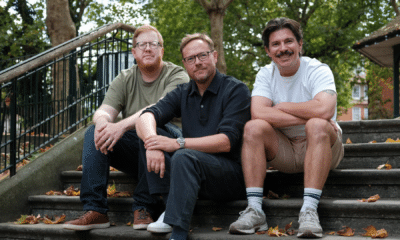
OK COOL Team
A Market Shaped by In-Housing and Social
The emergence of Residence also reflects structural changes Wade observed earlier in his career.
Around the early 2010s, large technology companies began building internal creative and marketing teams, a shift often referred to as “in-housing.” That trend reduced reliance on traditional agencies while creating new opportunities for specialized production companies.
“The biggest change was in-housing agencies,” Wade says. “Companies in the tech sector started setting up internal agencies.”
Rather than competing directly with those teams, some creative firms began partnering with them. Wade notes that production companies such as Buck adapted particularly well to this shift because their skill sets aligned with the execution needs of in-house teams.
“Buck was made up of thinkers and doers and makers,” he says. “As clients set up in-house teams, Buck pursued the in-house team and was poised to win more work directly with clients.”
The same structural change now intersects with the Creator Economy, where social platforms increasingly drive brand storytelling.
“Brands have to tell their story, and how they tell their story today is not a traditional media outlet,” Wade says. “It’s becoming more social platforms.”
Creators as Marketing Tastemakers
Wade views creators not simply as marketing channels, but as creative decision-makers shaping brand narratives.
“The creators are single-handedly at the center point,” he says.
He draws a distinction between creators and influencers, arguing that the two play different roles in marketing ecosystems.
“In my eyes, the creator is creating the creative and the brand story,” Wade explains. “It’s more niche and nuanced. It’s their interpretation of what the brand means to them and how to make the brand famous.”
Influencers, by contrast, often function within performance-driven marketing strategies focused on reach and measurable return. “Influencer work is more about reach,” Wade says. “There’s more visibility, more connection to measuring performance.”
Both approaches can coexist, but Wade believes creator-led storytelling plays a unique role in shaping cultural relevance.
“I think they can be the true tastemakers of the future of marketing services,” he says.
Why Residence Acquired OK COOL
Residence’s acquisition of OK COOL reflects Wade’s perspective.
The London-founded agency specializes in social-native storytelling and creator partnerships, helping brands connect with audiences on platforms such as TikTok, Instagram, and YouTube. The firm has worked with brands including Spotify, Nike, Lululemon, Puma, and TikTok Shop.
For Wade, the move represents a strategic step toward expanding Residence’s social expertise. “We have been on a pursuit for acquiring and merging with a social business for years,” he says.
Despite the growth of social media marketing, Wade notes that finding the right partner took time. According to him, many agencies in the space lacked the scale, financial stability, or creative standards Residence requires.
“Social work is not always premium,” he says. “Trying to bridge the gap between our work with the world’s biggest brands and social in the creator economy took time. Residence had to understand what premium social work meant for itself.”
Wade shares that OK COOL ultimately met several criteria the network had been seeking: strong creative output, financial maturity, and founders aligned with Residence’s long-term vision.
“Trying to bridge the gap between work taste levels, financial position, and founders who were truly entrepreneurs. That was the challenge,” Wade says.
Capital Is Flowing Into Creative Services Again
The acquisition also comes at a time when investment in creative services businesses is accelerating. Wade believes the industry is experiencing a level of capital interest not seen in decades.
“I haven’t seen the amount of capital flowing into creative services like this since the early 2000s,” he says.
He believes several factors are driving investor attention.
One is the restructuring of traditional agency holding companies, many of which are consolidating or scaling back operations. “On the back of them consolidating and declining, there’s opportunity for independence,” Wade says.
Another factor is artificial intelligence, which investors see as both a disruption and an opportunity for new creative workflows. “Disruption creates opportunity, and investors are placing their bets around that disruption,” Wade says.
For independent creative networks like Residence, this results in a favorable environment for expansion, according to Wade.
The Pricing Question in Creator Marketing
As creator marketing grows, Wade believes pricing structures across the industry remain inconsistent.
He describes the system as still maturing, particularly when agencies collaborate with creators. “It’s a bit Wild West,” he says.
Because creators negotiate directly with brands, agencies, or both, pricing can vary widely depending on the context.
Hence, Residence has begun developing internal systems to better understand how creators price their work. “We’re capturing our own internal infrastructure system to understand how much creators are charging,” Wade says.
Over time, he expects more standardized pricing frameworks to emerge as data improves and both agencies and creators become more experienced. “Pricing regularity and pricing rates are kind of inconsistent and irregular right now,” he says.
Better transparency, he argues, benefits the entire ecosystem.
“If a creator just outprices themselves, that’s not good for the agency, not good for the client,” Wade explains. “It knocks on the ecosystem.”
Scaling the Network
Wade’s responsibilities as CFO extend beyond finance. His role includes overseeing financial planning, managing shared services teams, and leading corporate development initiatives, including mergers and acquisitions.
The work involves constant evaluation of Residence’s growth strategy. “We’re always looking at the business on a past 12 months and future 12 months basis,” Wade says.
Wade reveals that the network’s long-term expansion will likely include additional founder-led companies across disciplines such as production, social strategy, and creator collaboration. But the guiding principle remains consistent: preserving independence while strengthening collective capabilities.
Each acquisition, Wade says, should elevate the network’s creative reputation.
“We operate on a model where every merger increases the cache of the existing companies,” he says.
Ultimately, Wade sees Residence as a structure designed to support the creative leaders shaping the future of marketing. For him, the creators, founders, and creative teams inside the Residence network share a common role.
“Tastemakers,” he says.
Subscribe to Our Newsletter
Check Out Our Podcast