





Technology
Open Creator Rates, Conversion Data Will Make Influencer Programs Run Like Paid Ads, per Iconically’s Founders

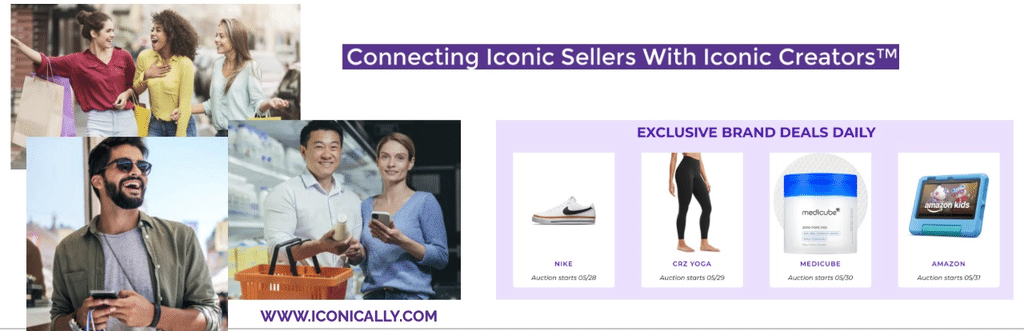
Iconically runs creator deals as auctions. Brands post a brief, creators bid to promote it, and both sides can see what rates have been requested and paid before, plus data on which creators actually sell. Co-founder and CEO Donald Doane argues that combination will make launching a creator program as easy and profitable as running a paid ad on Meta or Google.
Donald returns to paid ads more than once. Many brands selling on Amazon still run pay-per-click campaigns despite weak returns, he says, because they are reliable and scalable. Creator programs, in his account, carry a rate problem and a risk problem. Brands and creators struggle to agree on price, and brands with budget hold back because they cannot predict an influencer’s return.
Donald and co-founder Grant Warner, who previously built ConnectYard, a social engagement platform for the education industry and one of the first companies to leverage student influencers, encountered the rate problem while operating Iconically as an agency. Influencers did not know what peers charged or what to charge themselves, so the founders looked at how other markets price one-off work. “Whenever you have an asset, especially a unique work product, the best way to value it is to let the market price it,” Donald says.
The auction platform that grew out of that agency work serves e-commerce brands, mostly Amazon sellers in fashion, beauty and home, the categories where Donald says it has found its strongest conversions. Iconically, founded in 2022 and based in the New York area, is built to drive sales, he explains, which is why B2B brands are not the best fit.
To reach more sellers, Iconically partnered with PartnerBoost, which works with thousands of brands in those categories, leaving the founders to focus on what Grant calls “building intelligence around campaigns.”
Open Rates Pull Both Sides Toward a Price
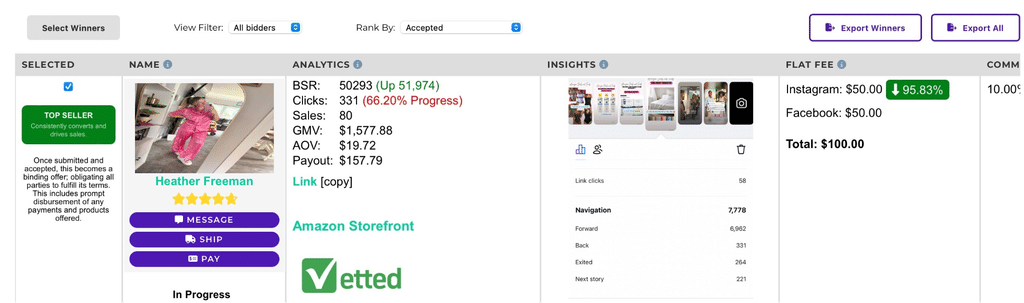
That intelligence starts with pricing history. Creators bidding on a brief can see what other creators are asking and what the brand has paid before, and the brand can see what other brands have paid each creator.
“You often hear, ‘Where there’s mystery, there’s margin.’ I think the converse is true in this case. Where there’s clarity, there’s confidence, and that applies to both sides,” Grant says.
For a brand, the history is a benchmark. Knowing that 20 other brands with a similar brief paid an influencer around the same amount tells a brand what it should probably pay, Donald argues. Without that, a brand that quoted a price is left asking, “Is this a fair price, or am I overpaying?”
Creators use the same data to price for demand. “Your static rate card might have been great for June, but in November, you should probably be charging more,” Donald says, pointing to Black Friday and Cyber Monday. He says 92% of auction campaigns complete on time, which he credits to agreement on price and to brand reviews that cut a creator’s star rating for a late or missed deliverable.
A fair rate still leaves a brand’s larger question open. “The brand has the money, but the brand also is looking for a real return,” Donald says.
Conversion Data Picks the Auction Winners
Return is where Grant rejects the usual reading of an auction. “When you hear auction, people think race to the bottom in some way. From our standpoint, what we’re talking about is how do you optimize value,” he says. Brands select winners against their KPI, awareness or sales, and Iconically evaluates each bidder on conversion in the brand’s product category and at its price point.
Audience purchasing power drives the price match. “One influencer might be great for the $20 product, but may not be a great fit for the $75 product,” Donald says. The platform also sets the brief, telling a brand whether a product converts better with three Instagram stories or two YouTube posts. “We’ve run thousands of these auctions, and we know what converts, where it converts and what influencers are able to convert for those brands,” he adds.
That data cuts against follower count. “We have data on influencers where there are some nano and micro influencers that make as many conversions as a macro influencer,” Donald says. Some macro creators post content he calls “not great,” yet they convert well “because they’ve curated the right audience.”
Creators get projected sales before picking a product and click and sales goals once they join, which Donald says they use to rework calls to action. The promise of lower risk, though, depends on brands acting on the data, something they do not always do.
Underperforming Campaigns Usually Overrode the Data
Donald says underperforming campaigns were largely ones where the brand passed over Iconically’s recommended winners. “There are times when the brand will totally ignore the data,” he says, describing brands that choose a creator because they like how a reel looks.
The second failure is the wrong ask. “What we found for Instagram is that stories by far convert a lot better,” Donald says, because a viewer can tap a link straight into shopping, while a reel asks a scrolling viewer to open the profile, then the link in bio, then a link tree. Reels also take longer to make. “I think brands don’t often understand that creators are trading their time for money,” he says. For a sales KPI, that makes reels the more expensive and less effective ask, in his view.
Usage rights follow the same logic. Creators now charge more for paid or indefinite usage, Donald notes, with their name, image, and likeness on their minds as AI spreads. “If you’re going to do that, what is your plan with that content? How do you plan to make it convert?” he asks.
His rule for boosting is to post organically first and put paid spend behind what performs.
Hybrid Pay Keeps Amazon Creators Posting
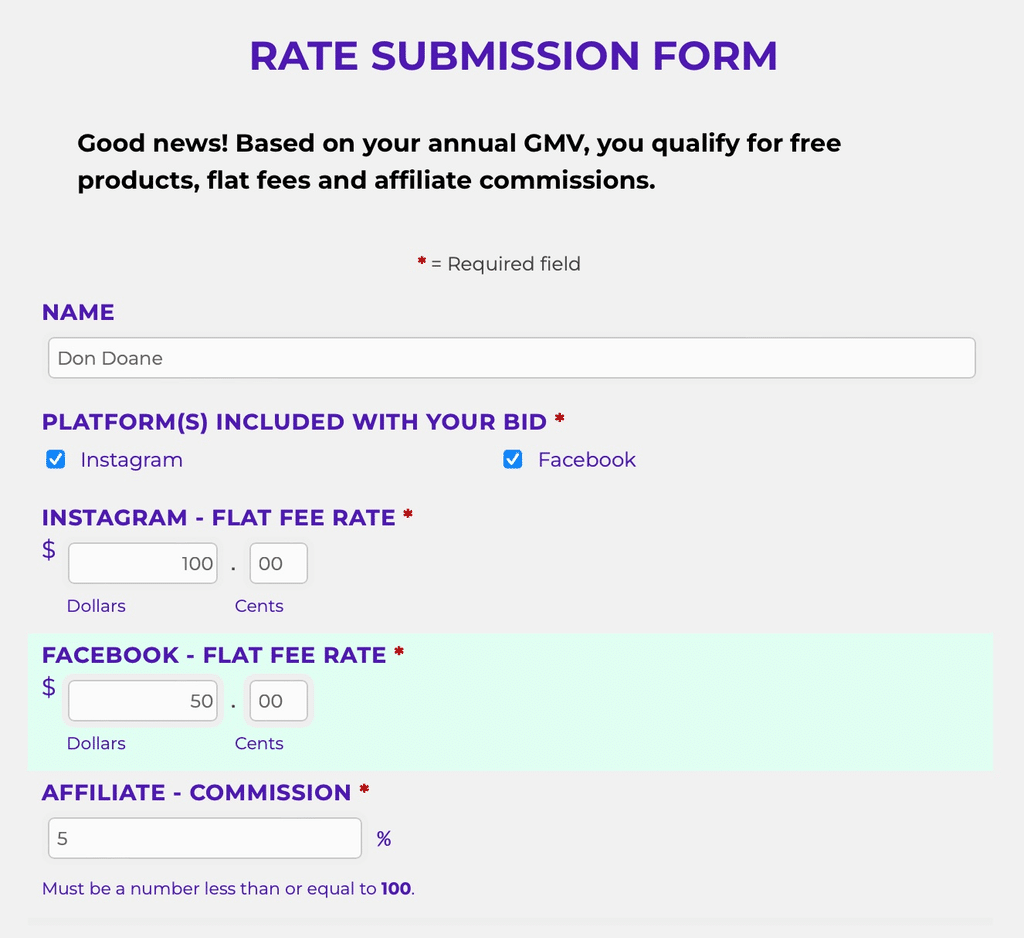
The right ask still has to be repeated. For Amazon sellers, Donald recommends a flat fee plus commission. “As a brand, you need creators that do this consistently for you, not once or twice,” he says. Commission alone will not secure that, particularly with top Amazon creators, some of whom Donald says generate more than $1 million in monthly GMV and can promote anything they like.
Timing is the second reason. “If it’s only commission, maybe they post two weeks after Black Friday [and] Cyber Monday,” Donald says. The seasonal demand creators price into their bids cuts the other way here, and a flat fee or other incentive is how a brand secures content when it matters.
Off-site traffic also feeds Amazon search. Donald says creators who send shoppers from Facebook or Instagram to a brand’s Amazon page can improve its organic ranking, with the benefits potentially continuing after a 30-day campaign ends. “Amazon loves this,” he says.
Scale Depends on Creator Rates Going Public
Paying dozens of creators that way requires skipping most negotiations. Donald says about 98% of creators who take part in an auction accept the rate they bid with no negotiation. “If you have a creator campaign with a hundred creators, you may have to negotiate with two people,” he says. Reverse the figure and a brand faces 98 negotiations.
Donald expects creator rates across the industry to become public. “I think they have to,” he says, adding that brand payouts need to be open as well as creator asking prices.
Agencies resist most, in his view. “I think it’s in the best interest of agencies not to disclose pricing information, particularly to their brand clients,” Donald says, calling it part of their business model. The point mirrors Grant’s line about mystery and margin. Donald’s view is that the industry cannot scale without open pricing.
Creator Budgets Wait on Reliability
Scale is also how Donald frames Iconically’s long-term aim, alongside access. Growth in the Creator Economy has concentrated among the same creators landing brand deals, he says, and he expects return-focused brands to make room for newcomers who can show they convert.
That scale question extends to brand budgets. Donald says AI and zero-click search results are draining traffic from publishers that once took large brand budgets, while consumers spend more time on TikTok and Instagram. The risk and cost of creator programs still keep brands from moving that money, in his view. Iconically’s bid histories, conversion data, and star ratings are its attempt to lower both.
“Once creator becomes reliable and scalable, it’s going to take over those budgets,” Donald says.
Subscribe to Our Newsletter
Check Out Our Podcast