



Strategy
Instagram Growth Coach Brock Johnson On Turning Followers Into Customers

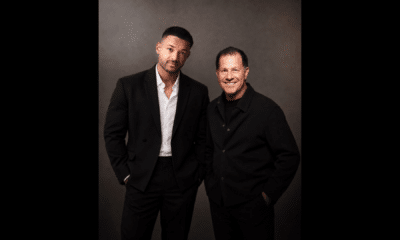
When Instagram views began to drop across the board in early 2025, creator growth coach Brock Johnson saw an opportunity to reframe what growth really means. As co-owner of InstaClubHub and CEO of Brock11Johnson LLC, he has built a business helping creators and small business owners not just gain visibility, but convert that visibility into paying customers.
“I help brands and creators grow their business on Instagram, not just get more views or followers, but actually turn those followers into paying customers,” Brock says. That simple premise has guided his career from college athlete to full-time educator and strategist for tens of thousands of entrepreneurs worldwide.
This conversation was conducted ahead of the “Instagram Summit by Manychat 2025,” held virtually on October 22-23. During the event, Brock returned as a featured speaker, continuing his multi-year collaboration with the messaging-automation platform.
His focus this year: helping creators adapt to Instagram’s changing algorithms by pairing authentic content with automated engagement tools.
From the Field to the Feed
Before entering the creator economy, Brock’s focus was on football. A college athlete in the United States, he had never worked a conventional job. “I started this business while I was in college as a way to make money for myself and provide for myself while I was still going to school and playing football full time,” he recalls.
Entrepreneurship was already part of his DNA. Both of his parents had built and sold multiple companies, giving him an early understanding of how marketing and customer relationships work. His first venture, however, didn’t involve Instagram at all.
“I got my start actually with Snapchat,” he says. “My original business was helping moms keep their teens safe on Snapchat.” That focus gradually shifted toward social marketing, first through Snapchat Stories, then to Instagram Stories when they launched. Over time, he matured from storyteller to strategist, building an education business rooted in repeatable systems and metrics.
Discovering Manychat
Brock’s relationship with Manychat, the Meta-approved automation tool for direct messages, began around 2020. Initially skeptical, he assumed it might be another fleeting growth hack. “At first I was like, this has got to be a scam,” he admits. “It sounded too good to be true.”
But after a meeting with Manychat’s CEO, his perception changed. The company was an official Meta partner, which meant automation could be integrated directly into Instagram’s messaging system. “I think it was maybe early 2021 that I started using Manychat,” he says. “Now I don’t think there’s a day that goes by that I don’t go to Manychat’s website or open the app on my phone.”
His turning point came about a year later. After running simple side-by-side tests of posts using Manychat versus those without, he noticed what he called “a night and day” difference. “The number of conversions, engagement, views, all of that was just going through the roof when I was using Manychat,” he says.
Fixing a Universal Pain Point
For Brock, the biggest problem facing creators and small businesses is that sales posts often underperform. “Those are usually your worst-performing posts,” he says. “It’s not because the algorithms don’t like the phrase ‘link in bio,’ it’s just human nature.”
Traditional calls-to-action ask people to leave the app, which lowers engagement. “When you say, ‘click the link in my bio,’ you’re telling engaged viewers to abandon the post,” he explains. Manychat changes that flow: rather than sending users away, creators can ask followers to comment a keyword or emoji and receive a direct message with the relevant link.
“It’s a positive feedback loop,” Brock says. “Your typical worst-performing posts, your advertisements, can suddenly become your best-performing posts.”
Building Simplicity Into Automation
Despite Manychat’s wide range of capabilities, Brock keeps his own systems simple. “Most of my flows are very basic,” he says. “If they comment a keyword, they get the response, and oftentimes it just ends there.”
He occasionally brings in freelancers for more complex projects, but prefers to build most flows himself. His reasoning: creators don’t need an intricate setup to see results. “There might be a few percentage points we’re leaving on the table,” he says, “but even with simple one-step flows we’re seeing amazing results.”
Brock uses transparency to make his automations feel more human. “I’ve named my responses the ‘Brock Bot,’” he says. “It’ll say, ‘Hey, Brockbot here – automated message.’ People appreciate honesty about automation.”
A small design tweak has also proven unexpectedly effective, according to Brock. “We add a green emoji, either a circle or a check mark, to the button text,” he says. “When we add that emoji versus when we don’t, we see a spike in click-through rates.”
Converting Skeptics
Automation has long carried a stigma of being impersonal or spammy, a concern Brock once shared. “That was exactly what I was worried about,” he says. But the selective keyword triggers changed his mind. “If you make the keyword ‘pineapple,’ the only way someone experiences that bot is when you’ve told them to comment ‘pineapple,’” he explains.
He draws a distinction between intentional automation and blanket auto-replies. “When you call customer service, it’s almost shocking when a human being picks up,” he says. “But if every single message is automated, that’s annoying. Using these specific keyword triggers allows me to serve my audience better.”
That balance of efficiency without losing personal connection has become core to his teaching. “DM automation is a really powerful tool,” he says. “But that human-to-human connection is still really important. Having both in combination is the secret sauce.”
Speaking to the Small Business Audience
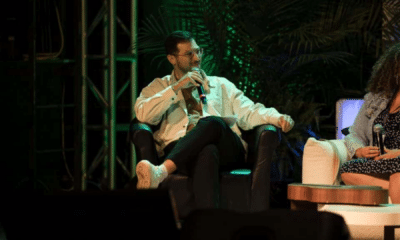
At this year’s Instagram Summit by Manychat, Brock moderated an in-person creator panel and delivered his own virtual session. His audience remains consistent: creators and entrepreneurs who treat Instagram as a business tool rather than a hobby.
“They’re the group of people who are really the lifeblood of Instagram,” he says. “They’re the ones who are running the economy on Instagram.”
He sees Manychat as a way to give that group leverage. “If you’re a small business owner and you’re using Manychat, you’re getting far better results than someone who isn’t.”
Measuring What Works
Brock monitors one main signal of success: click-through rate. “If I have 100 people send the keyword, but only 13 actually click the link, something’s going wrong,” he says. Copy, button text, or design can all affect conversion.
He frequently runs split tests within Manychat, comparing multiple message variations and turning off those that underperform. “After a couple of hours, we can check and see, ‘Okay, responses A, B, and C all have 35% click-through, but D only has 17%. Let’s remove D,’” he says.
For Brock, data doesn’t replace intuition. It refines it. “Ninety-nine times out of 100, it’s human error,” he says. “Maybe I pasted the wrong link or forgot to turn on a trigger.”
Algorithm Shifts and the New KPI
In his Summit presentation, Brock focused on one question many creators have been asking: What happened to Instagram’s reach? “Views are down for almost everyone,” he says. “The algorithms are vastly different in the way they operate today than how they have for the last ten years.”
He first noticed the change in early 2025. “It was almost like coinciding perfectly with the calendar change into a new year,” he says. “It’s not going anywhere; people are feeling it more heavily today than they even were a month ago.”
His solution is to adapt rather than resist. “Views are the new KPI (Key Performance Indicator),” he says. “It doesn’t really matter how many followers you have. It matters how much engagement you’re able to receive and how many views you’re getting.”
AI Agents and Implementation
Brock is enthusiastic about Manychat’s roadmap, particularly its push into AI-powered agents. The company, which has raised over $140 million to expand its social chat capabilities, previewed new features at its in-person summit earlier this year.
“Just knowing how powerful Manychat has been for the last five years, and then adding AI agents on top, I’m so flipping excited,” he says. He expects these tools to make personalization easier: “I can use AI to help predict what the frequently asked questions are and write responses in my own language based on my past messages.”
Yet his closing advice to creators remains decidedly low-tech: start simple and implement. “Automations, DM automations, Manychat – it all sounds scary, but it’s surprisingly simple,” he says.
After events like the Summit, he knows attendees often leave with pages of notes and ideas. “You’re going to feel really inspired and probably a little overwhelmed,” he says. “Just take a deep breath, pick one thing to move forward with. Those little baby steps are going to make a world of difference within the next year.”
Subscribe to Our Newsletter
Check Out Our Podcast