




Technology
How VwD’s AI Platform Makes Creator Partnerships Safe For Brands


VwD has built an AI platform that makes creator vetting faster, more thorough, and more reliable. The company’s technology examines every piece of content creators have ever posted—scanning videos frame by frame, analyzing spoken words, and monitoring web mentions—to identify potential brand safety issues before they become costly problems.
“The creator ecosystem mirrored the early days of cryptocurrency, which was known as both unregulated and a modern-day Wild West,” explains Mark Mamone, CEO and co-founder of VwD (pronounced “viewed”) and former member of TikTok’s sales division. “If you look at crypto in the early days, people were using it on a transactional basis. And now, all of a sudden, you have companies like J.P. Morgan and Morgan Stanley leaning in headfirst. Why? Because they’re following the money.”
The same pattern is emerging in creator marketing. What was once considered experimental is becoming an essential channel—but only for organizations that can effectively manage the associated risks. Eric Hadley, Chief Business Officer at VwD, who previously worked at Microsoft and Pinterest, explains: “There are many brands using influencer marketing today, but there are even more who aren’t fully embracing it due to the risks and the time-intensive process of vetting.”
This dynamic creates two distinct client segments for VwD: proactive and reactive. “The reactive is when a word surfaces, they have an issue, they’re panicked, they come to us in terror and fear. They have deadlines, and they have to fix a reputational issue,” Mark says. These contrast with proactive clients “coming into us because they have a use case for an upcoming launch and they want to protect their brand at scale preemptively.”
The company serves brands, agencies, technology platforms, and talent agencies—all of whom face increasing pressure to thoroughly vet creators before partnering with them. “We set out with one mission,” says Mark, “To make the creator ecosystem safer for everyone.”
The AI Solution to Creator Vetting
The challenge VwD solves is easily explained but technically complex: how do you analyze thousands of hours of creator content across multiple platforms and years of history to identify potential brand risks, and do it in hours instead of weeks?
“Picture yourself. You’re a campaign manager. You have five campaigns coming up. Your client calls you and says, ‘Hey, we need to launch 50 creators in five days,'” illustrates Mark. “You have no time. You have a bunch of tabs open, and you have quick deadlines. This is the reality.”
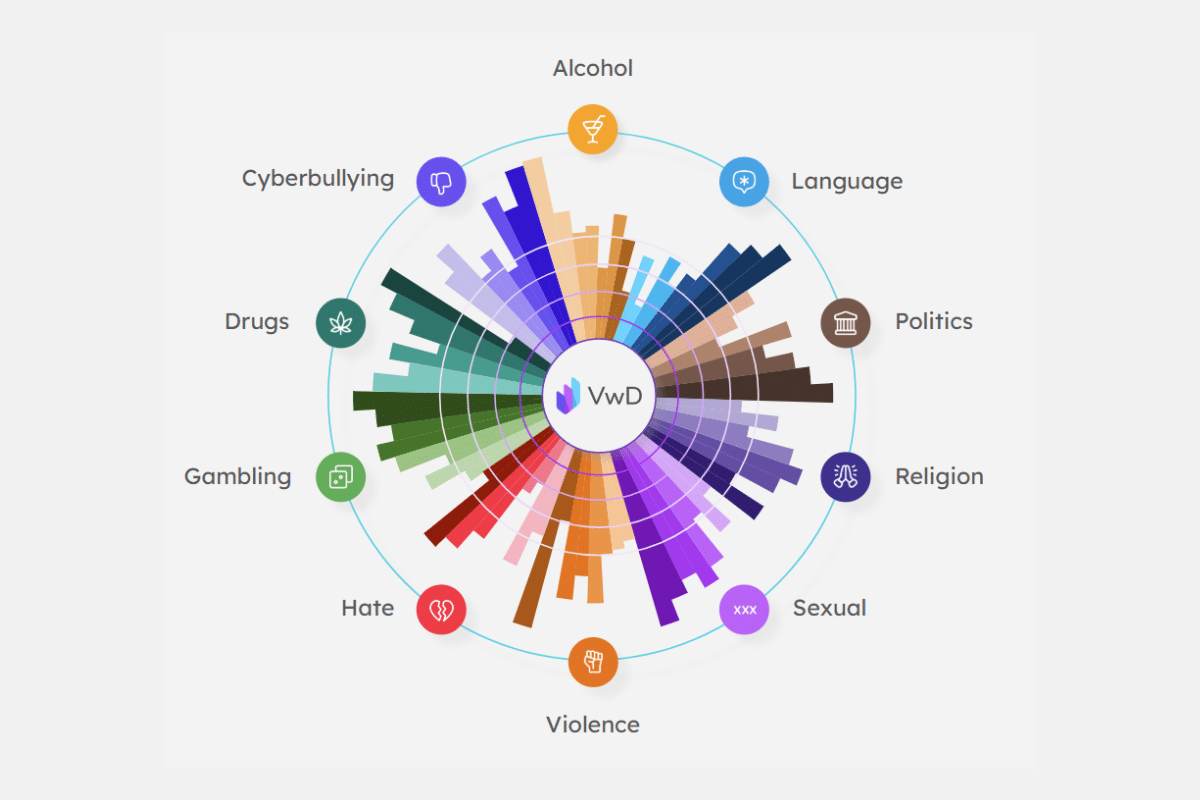
VwD’s solution transforms this process through its AI. The platform “leverages proprietary AI models and analytical algorithms to individually analyze every phrase written or said, every frame of every video, every lyric of every background song of every video.” It scans for over 80 different content alignment and compliance categories, including FTC, FDA, FINRA, and HIPAA regulations.
This approach provides what Eric describes as a “Carfax for Creators”—a complete report that gives brands the information they need to make informed decisions quickly. “We’re not telling you whether you should work with a creator or you shouldn’t,” explains Eric. “We’re just saying, here’s everything about them that you should know to make a smart decision.”

How the Platform Works and Why Context Matters
The VwD platform offers a workflow designed for speed and clarity in decision-making. Users can add creators individually or upload lists at scale, with API integration available for connecting with existing systems. “We also have an API so you can connect directly to the pipes. You have actionable clean data to ingest into your system,” explains Mark.
The platform’s strength is its focus on context and nuance. It doesn’t simply flag keywords or images—it understands their meaning in context. “The word ‘shoot’ could mean shooting a gun. Could also mean shooting a basketball,” explains Mark. “Where does that classify without context? It could be deemed as violent.”
Similarly, Mark notes that understanding context is critical for accurate assessment: “A video that might appear violent and showing punches being thrown: Is it an unprovoked street assault on Fifth Avenue in Manhattan, or are two professional athletes fighting in a sanctioned boxing match?”

Results are presented through a clean interface with visualization features, such as heat maps, that show potential issues at a glance across multiple creators and categories. “Our clients love this because it’s a very clean UI. It’s very actionable,” says Mark. “We’re saving you hundreds of hours to quickly look at a large group of creators at scale.”
A search function enables users to view how creators have previously mentioned specific brands or topics. “For an airline client, we looked up a brand for a potential partnership, and it came up all about the plane crash when the door fell off,” recalls Eric. “They wanted to find out if people are talking about them in a positive or negative way before they did a partnership with them.”

The Real Cost of Getting It Wrong
The time savings VwD provides are useful, but the real value comes from the risks it helps brands avoid. Recent examples illustrate the stakes: fashion companies ALO Yoga faces a $150 million class-action lawsuit over undisclosed influencer endorsements, and Revolve was named in a $50 million lawsuit for similar undisclosed influencer deals.
“Brand safety is the lagging indicator,” explains Mark. “People spend all the money, they have these creators, and then afterwards the word ‘resurface’ comes up. That’s the enemy of brands and agencies—resurfacing.”
This resurfacing occurs when creators may have posted problematic content years ago that remains discoverable, or when creators violate regulations such as the FTC’s disclosure requirements, FDA’s health claims restrictions, or FINRA’s financial advertising rules.
The team at VwD has firsthand experience with these risks. Eric recounts his experience at Microsoft: “We paid Ryan Seacrest to tweet out three times a week. The FTC came to us and said, ‘Hey, you’re paying Ryan to promote your product and you’re not disclosing that.'” That experience led to Eric’s involvement in developing the hashtag ad model that now governs influencer marketing for the FTC.
“The reputational risk is very important, but you don’t want to do a $10,000 influencer deal and have them not follow the FTC or the FINRA rules and get you a $100,000 or million-dollar fine,” he explains. “That’s just a terrible ROI, and it will crush influencer marketing before it starts to really get going.”
Building an Industry Standard
Instead of trying to do everything—from discovery to analytics to payments—VwD has chosen to focus exclusively on safety, suitability, and compliance.
“There are so many platforms out there. We want to recognize that we do safety, suitability, and compliance, and that’s it,” explains Eric. “We wanted to be able to integrate into other platforms and just have that be the layer. Nobody’s doing it very well. So we wanted to do that. And we didn’t want to compete with the platforms, we wanted to partner with.”
This focus has positioned VwD as a potential industry standard. “Focus wins championships,” notes Mark. “We’re hyper-focused on doing one thing really well, as opposed to doing a little bit of everything.”
VwD’s platform has grown since its launch, expanding from six content categories to more than 80 today. “We have a very user-centric product team that both proactively introduces capabilities we think people will love and reacts to real users’ feedback,” explains Eric. “For example, we didn’t have ‘religion’ detection, and a client wanted to see that data, so the team quickly added this.”
The Team and Vision for the Future
VwD’s approach reflects its founders’ experience in media, technology, and marketing. “We all came from careers in media, tech, and marketing and saw the changes in digital advertising,” explains Eric. “Today, Influencer and creator-driven inventory—the new UGC that works—has replaced the traditional banners, buttons, and links, but the level of safety and assurance wasn’t matched.”
Theo Ruzhynsky, co-founder, adds that what makes the creator economy interesting is its focus on people: “The key word here is people. People in this space are people-centered. They work for people, about the people, and around the people. And that’s what makes it the most exciting, that it’s people-generated content.”
In a growing industry, VwD sees itself becoming the safety infrastructure for the industry. “We see VwD as the leader and gold standard in Influencer brand safety, suitability, and compliance,” says Eric. “We will be working with the top brands, agencies, and integrated into other platforms in the Influencer eco-system.”
Theo envisions VwD as “the quiet force behind better decisions in the creator economy. A company that empowers brands to move fast without breaking trust.”
The team compares the adoption of their platform to a technology upgrade that’s hard to reverse. “Would you go back to a flip phone without Internet on your phone?” asks Mark. “That’s what people are doing. They’re saying, ‘I can’t go back to the old way, this is the new way.'”
“VwD is very hard to unuse,” concludes Mark.
All images are taken from VwD’s website.
Subscribe to Our Newsletter
Check Out Our Podcast