








Brand
How EssentiallySports Built A $25M Sports Media Brand From A College Dorm Room


EssentiallySports began as a college project with $100 and a shared obsession for sports. Today, it’s one of the top-ten U.S. sports publishers (per Comscore), drawing 30 million monthly readers, one million newsletter subscribers, and $25 million in bootstrapped revenue – all without outside investment.
The platform was founded in 2014 by Suryansh Tibarewal, Harit Pathak, and Jaskirat Arora, three students in India who wanted to bring fan-first storytelling to a space dominated by traditional media.
“We are a media platform that gives equal voices to every fan, and it thrives on a strong editorial newsroom with the fans’ perspective,” says Suryansh, who now leads growth from Amsterdam.
The mission to serve the “underserved fans” has carried EssentiallySports from a dorm-room idea to a sports media brand spanning the U.S. and India. While legacy outlets chase the biggest leagues and headlines, the company built a business around niche communities and inclusive coverage, combining data-driven journalism with creator-led storytelling.

Suryansh Tibarewal
A Dorm-Room Passion Turned Global Platform
The story began not in Silicon Valley, but across Indian university dorms. “It was one of those passion projects that became bigger than planned,” Suryansh recalls. In 2014, Pathak purchased the domain essentiallysports.com, and the trio began posting sports stories with the help of hundreds of volunteer writers from around the world.
For four years, the site operated on enthusiasm alone. By 2018, after graduating and moving to different countries, the founders regrouped to transform their hobby into a business. They narrowed their focus to tennis and Formula One, adopting the tagline The Fan’s Perspective – a blend of professional editorial standards and the emotion that fuels fandom.
Then came 2020 and COVID. When live sports shut down and traditional outlets scaled back, the EssentiallySports team made the opposite bet. “Most of our competitors started firing people,” Suryansh says. “We doubled down on hiring, scaling up, going deeper into every sport.”
Traffic surged from one million to 60 million monthly page views in three months. “That was when our philosophy really got tested. Fans were online more than ever, and we gave them somewhere to go.”
Bootstrapping as a Philosophy
Building a sports-media company without investors is rare, but for Suryansh, independence was the point. “We just felt that we wanted to do the right things for the fans, and not being obliged to an investment group allows us to make decisions driven purely by fandom,” he explains.
The choice delivered two advantages: creative freedom and resilience. “Media by nature is volatile. Algorithms change, seasons fluctuate. Being bootstrapped gives us flexibility to ride out those waves.” It also cultivated what he says his mentor called “sweat equity”: years spent earning credibility before profits followed.
Still, independence comes at a cost. “The grind is extremely long in the start,” Suryansh admits. “And when you’re investing in original IP (Intellectual Property) – video production, athlete collaborations – you have to get innovative with your business model to do it bootstrapped.” But that constraint has become a creative engine. “It keeps us close to our audience,” he adds.

ES Network of Newsletter
From Scale to Engagement
Between 2020 and 2023, EssentiallySports’ growth resembled a startup curve. “We were almost doubling every month,” Suryansh says. “If NASCAR.com did seven articles a day, we did 20.” That sheer volume, spanning the Women’s National Basketball Association (WNBA) to golf to Olympic sports, built scale but also revealed limits.
By 2023, Suryansh wanted more than reach; he wanted retention. A chance meeting with Dave Nemetz, founder of Bleacher Report, helped reframe his thinking: move from scale to engagement.
The pivot centered on first-party data. “We knew which fans read 70 articles, who read 120, who overlapped between golf and combat sports,” he says. That intelligence fueled the launch of sport-specific newsletters, the company’s most successful experiment yet. “Our power users got a niche experience, and it reduced our dependence on platforms like Google and Facebook.”
Today, newsletters account for roughly 20% of EssentiallySports’ total traffic, with eight titles covering NASCAR, WNBA, track and field, golf, and other sports. The combined subscriber base tops one million, a figure Suryansh aims to double by 2027. “Users are literally waiting for us to launch in their sport,” he says.
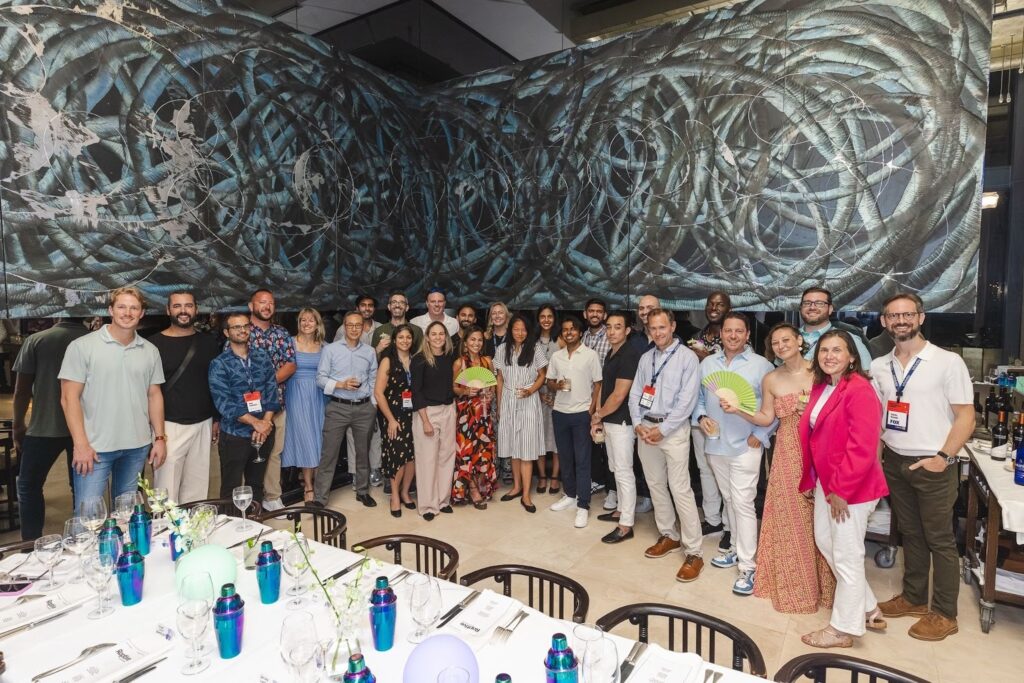
EssentiallySports at the Digiday Publishing Summit VIP Dinner Miami 2025
Championing Underserved Fans
EssentiallySports’ editorial identity was forged by its focus on what Suryansh calls “the unloved corners of sports media.” While legacy outlets chase the NBA, NFL, and soccer, his team goes deep on disciplines that struggle for consistent coverage.
“If I’m a WNBA or Olympics fan, I’m not getting much good, deep editorial content,” he says. “That’s where we found our product-market fit.”
The company launched its first newsletter not for football, but for NASCAR, followed by WNBA and track and field. Data confirmed the bet: NASCAR readers spent 40% more time on the page, while combat-sports fans had the highest repeat-visit rate, according to Suryansh.
“Simone Biles was one of our most-read athletes in 2022,” he adds. “People wanted to read about her mental-health journey. That kind of coverage didn’t exist outside the Olympics.”
By elevating niche communities, EssentiallySports turned depth into differentiation.

Building With Creators and Fans
As media shifts toward personality-driven storytelling, Suryansh sees creators and athletes as central collaborators. “Editorial newsrooms and creators have been two different worlds,” he says. “I expect them to start merging.”
EssentiallySports now works with a growing roster of creators and athlete-contributors. During the 2025 U.S. Open, the company tapped tennis creator Nathan “NotYourCountryClub” Walroth (20k followers) to cover the event as a journalist, producing short-form video across Instagram and newsletters. Three-time WNBA champion Natasha Howard became an athlete correspondent, conducting interviews and off-field features.
Fans themselves are part of the ecosystem. The company runs polls and surveys that shape editorial decisions, from trade debates to platform preferences and even on-site experiences. “At the Pocono Raceway, we selected one fan to join us in an RV to the pit, livestreaming on Instagram,” he says. “It was a really fun way to bring the community closer.”
That participatory model extends to brands. “Creators need scale and support,” Suryansh notes. “Working with us gives them access to our audience and sales infrastructure. It creates a multi-system dynamic that brings value to everyone from fans, athletes, leagues, and brands.”
Rethinking Sports Media
Thinking forward, Suryansh envisions consolidation after years of fragmentation. “Every fan wants a voice they resonate with, but platforms have become too top-centered,” he says. “Now, it’s hard for fans to find what they want.” He believes the industry’s next phase will bring those voices back under one roof.
“Sports fans are fluid; you don’t follow just one sport,” he adds. “You care about this creator, but you also want the news. The representation of a fan who follows multiple sports is the future. EssentiallySports aims to be that home.”
The company is already preparing for the future. A Florida-based women’s-sports podcast, co-hosted by a major athlete, begins recording this month, marking the brand’s first proprietary audio IP. EssentiallySports also plans to rebrand its platform early next year, integrating creators directly into its newsroom workflow.
Even amid a turbulent year for publishers, Suryansh is optimistic. “Creators and newsrooms working together is the way forward,” he says. “As platforms get more complicated, owning your audience becomes crucial.”
For Suryansh, who earned his first online dollar at 14 and still calls himself “a builder,” the lesson from EssentiallySports’ $100 origins is simple. “Listen to the fans. You’re building for them,” he says. “Stick to that, and they’ll reward you over time.”
Subscribe to Our Newsletter
Check Out Our Podcast