



Technology
How Can Creators Protect Their Rights In The ‘Ownership Economy’?


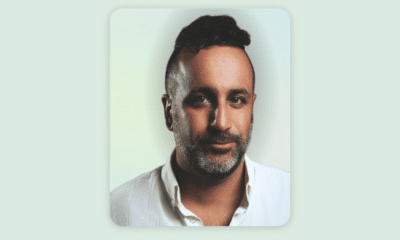
For Benjamin Woollams, founder and CEO of TrueRights, a company that provides digital rights management technology for talent agencies, brands, and media companies, the creator economy has undergone various transformative phases.
“First came the creative economy, where the production of original content was the primary focus. It then evolved into the attention economy, where success was measured by views, engagement, and audience size,” Benjamin explains.”Now, it’s becoming the ownership economy, where the ability to control, license, and monetize one’s intellectual property becomes the definitive measure of value.”
Benjamin believes “it’s all about owning what you create,” stressing that many creators are unaware that six out of ten digital campaigns breach talent usage rights, leaving them uncompensated for their work.
His experience as commercial director for the EMEA region at Influencer.com opened his eyes to how the creator economy undervalues intellectual property. During his tenure as Platform Partnerships Director, he collaborated with social giants such as TikTok, Meta, Snap, and YouTube to develop creator communities and monetization opportunities.
“I noticed that all these deals I was doing with social platforms were different in terms of how they were buying the rights for content,” Benjamin recalls. “Someone said in perpetuity because of indemnity and liability risk. Some wanted three months, some wanted it on other platforms. It was just all over the place.”
This inconsistency results in significant financial losses for creators. According to TrueRights’ research, creators lose approximately £10,000 per year per 100,000 followers due to unauthorized content usage. The problem extends beyond simple misuse into core pricing flaws that separate compensation from performance.
“I might ask you to license your content for a thousand pounds for this month, but I might then put £500,000 behind it. And so it might go to 100 million people, and you’ve been paid a thousand pounds. That doesn’t make any sense,” Benjamin points out.
He advocates for a system similar to music royalties, where creators get paid based on content exposure rather than through flat-rate licensing deals. “If my content is exposed, I get paid for that exposure. I think we should look at models that allow us to do the same thing in the influencer space,” he says.
His solution? TrueRights, founded in September 2024. “We want to be the centralized source of truth for talent that ensures that they have control, they have ownership, and they get compensated fairly,” says Benjamin.
How TrueRights Enables the Ownership Economy
To address these challenges, TrueRights has developed a licensing framework with several interconnected components that give creators control over their intellectual property.

At the core of the platform is the soon-to-be-launched Usage Rights Calculator, which standardizes the pricing and licensing of content rights. “This is something that’s never been able to be done before in this market,” Benjamin notes. Rather than arbitrary pricing or overly broad terms like “global digital use,” the calculator allows for specific parameters and allows users to calculate the purchase of usage rights on a performance basis: “You can use it on TikTok in the UK for 30 days on the brand channel with a media cap of this. No editing rights.”
This detailed approach to rights management addresses a common problem Benjamin observed in his previous role: “I worked with Unilever, we sold 300 assets, we bought the rights for all those assets, and only used 10 of them. And so as a brand, I’ve paid for 290 assets I’ve never used.”
Beyond the calculator, TrueRights offers a Digital Wallet where creators can store their intellectual property assets, including name, image, likeness, and identifying characteristics. “How do we create a representation of you from an IP perspective that is all owned by you, copyright approved, not infringing the IP?” Benjamin explains.
The TrueRights Stamp, the company’s proprietary tracking solution, addresses provenance and content tracking. “How do we take this licensing information, embed it into content, use industry standards like C2PA, content credentials that have a manifest that we can embed content in that allows us to assign it to a content piece?” This technology fosters transparency and accountability in the use of creator content across platforms.
Unlocking New Value Through IP Longevity
One of the most notable aspects of TrueRights’ approach is what Benjamin calls “IP longevity,” or the ability to create different versions of intellectual property targeted to different audiences and contexts.
“My mum loves Tom Cruise and the original ‘Top Gun’ [1986]. My little sister loves Tom Cruise and ‘Top Gun: Maverick,’ [2022]” he explains. “If we had his IP structured in a way that could create two ads or two entertaining films with two different Tom Cruises that were relevant for two different audiences, that’s really powerful.”
The AI integration framework makes this possible by allowing creators to safely license their likeness for AI-generated content. When Benjamin has demonstrated these capabilities to celebrities and influencers, the response has been enthusiastic: “When we’ve done some tests and we’ve shown some of the celebrities and the influencers what we’ve done with their image safely with a brand. They were like, ‘This is crazy. This looks like me.’”
This capacity for AI-assisted content creation also enables scale. “If you have one content piece and then you use AI to create more versions of that, well, now we don’t just sell one asset to a brand, we’re selling 25 assets to a brand,” Benjamin explains. Combined with performance-based compensation, this approach ensures that creators benefit financially from successful content while providing brands with more options.
A Business Model Built for Fair Compensation
TrueRights’ business model is designed to align with its mission of fair compensation for creators. Currently, the company operates on a subscription model, targeting talent agencies, brands, and media agencies, with a focus on education at the budget-holder level before expanding directly to individual creators.
“At the moment we are looking at subscription services and we are working with talent agencies, brands, agencies in general, because we think that’s a bigger way of catching all,” Benjamin explains. “Because there needs to be education at that level, budget level, as opposed to talent level.”
The long-term vision, however, is even more creator-friendly: “Later down the line, we will probably look at taking a very, very small percentage of every licensing deal as a software fee. Super transparent.” Benjamin emphasizes that this fee would be “under a percentage,” considerably less than current industry practices.
This differs from the current ecosystem where, as Benjamin notes, “There are like 10 people in the middle that all take a fee, but the talent should be compensated. We aim to give them the tools to get closer to the budget holders.”

Moving Toward Ownership
Despite the clear need for this solution, Benjamin acknowledges that the market is still in the early stages of understanding the importance of IP rights. “We created the solution that allowed us to license IP into generative AI workflows and protect it, but the market isn’t ready for that yet because we’re very early still,” he explains.
To address this education gap, TrueRights has adapted: “We’ve had to actually strip down our licensing platform into individual features to go and educate the market.”
The company is also launching a Creative Council, which will bring together talent, musicians, and entertainers to help shape the product. “We’ve got about 8 to 10 currently being formed, which I can share more on when they’ve signed, for a Creative Council,” Benjamin shares.
Benjamin recognizes that achieving TrueRights’ ambitious vision will require broader industry support. “I think these are massively ambitious goals that we’re trying to achieve for the industry, and we have to do that. We can’t do that at discredit. And that means we’re probably going to need some backing,” he says, indicating plans for an investment raise.
The Stakes for Creators and the Future of IP
The implications of this shift to an ownership economy are important for creators. As Benjamin points out, in an industry where AI can generate content at an unprecedented scale, control of one’s digital identity becomes essential for long-term success.
“If we don’t do this, it could end up with brands just going and buying AI content without any influencer in it. It’s cheaper, and they have the rights. I don’t have to spend X amount on talent,” Benjamin warns. “And that would be a really big issue for this whole space.”
Instead, by establishing clear frameworks for licensing and compensation, TrueRights aims to ensure that AI becomes a tool that enhances creator value rather than diminishes it. “This should be a harmonious, exciting opportunity for creatives and creators because we can now do things that we were never able to do before,” Benjamin emphasizes.
The immediate focus is on education and rolling out core features, such as the Usage Rights Calculator, with more advanced AI-focused tools to follow in the coming months. “The calculator is going to help people understand value. And then there’ll be some stuff about IP and AI going out in the next eight weeks,” Benjamin reveals.
His advice to creators is straightforward: “Own what you create. And it sounds obvious, but it’s not.” This principle lies at the heart of the ownership economy—understanding the value of intellectual property and ensuring proper compensation for its use.
“We want to be the home of IP and rights for talent,” Benjamin concludes. “Consent, control, compensation for talent, allowing them to safely work with AI tools moving forward, this should be a harmonious, exciting opportunity for creatives and creators.”
Subscribe to Our Newsletter
Check Out Our Podcast