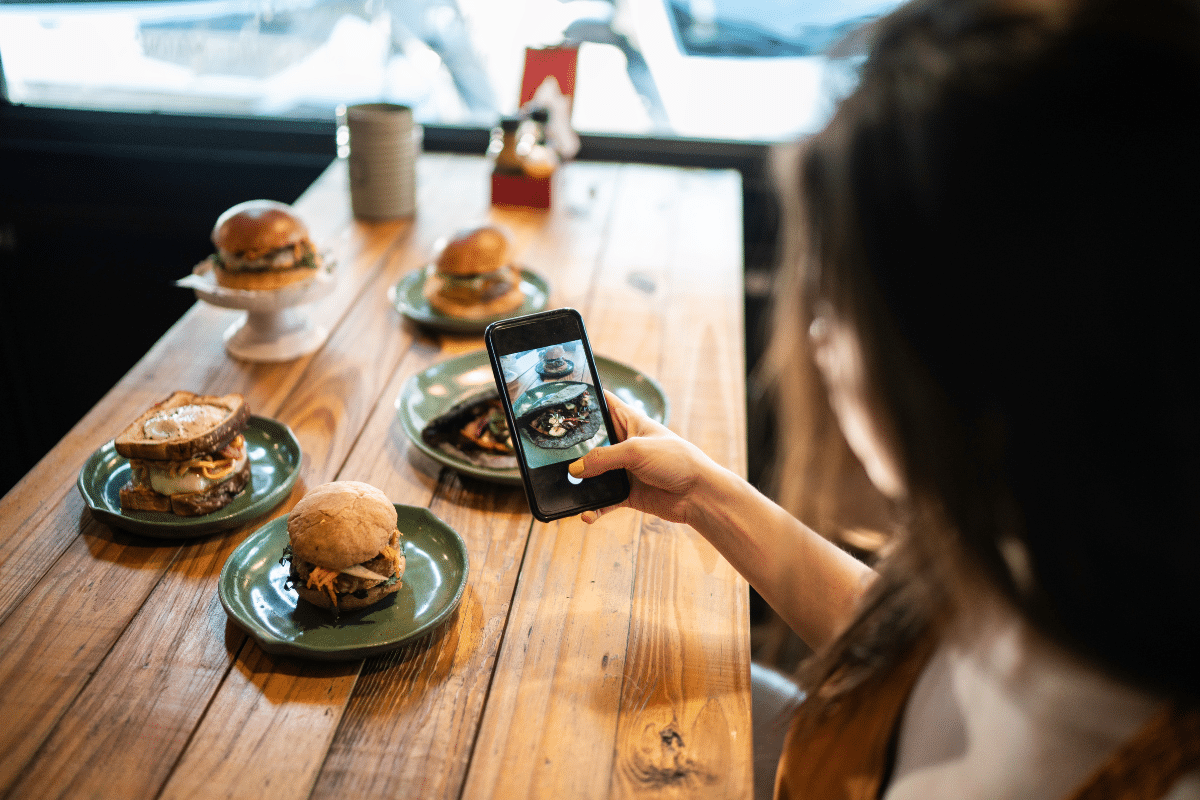
Food and beverage content on YouTube generated 457 billion views in Q1 2025 alone, representing year-over-year growth of 32.04%, according to a new insights study from tech company Pixability. With 6.74 million food and beverage channels currently on the platform, the category’s all-time views have reached 5.9 trillion, securing its position as the fourth largest content category behind only Hobbies & Interests (45T views), Music & Audio (26T views), and Video Gaming (7.5T views).
The “CPG Food and Beverage Strategies for YouTube” study reveals an imbalance in the food and beverage space that creates both challenges and opportunities for industry professionals. Of the top 4,000 food and beverage channels based on views, 99% are creator-driven, with only 1% consisting of brands and publishers.
The top YouTube food and beverage creator by subscriber count is @ZachChoi with 32.7 million subscribers, known for “ASMR/Mukbang videos of unusual food combinations & unique dishes eaten on camera.” Following closely are @NickDiGiovanni (26.6M) with “creative food hacks, culinary experiments, & frequent collabs with chefs & other celebs” and @Albert_cancook (26.4M) featuring “fast food remixes & dishes inspired by TV & movies, usually in humorous, skit-like styles.”
For brand channels, the list is led by @redbull with 23.2 million subscribers, followed by @Coca-Cola (4.6M) and @CadburyDairyMilkSilk (1.12M), showing that even the most successful brand channels struggle to match creator subscriber counts.
Content Format Trends and Engagement Drivers
All of the top 10 food and beverage videos by views in Q1 2025 were Shorts format, signaling a shift in audience consumption patterns. The report notes, “This trend makes it clear that Shorts are quickly becoming king on YouTube, and are now viewers’ choice for consuming quick, snappy video formats one after the next.”
The top-performing video, “Rose Makes Brownies,” garnered 277 million views, while “Kind girl eating strawberry ice cream” and “2 Year Old Makes Breakfast” followed with 198 million and 135 million views, respectively.
The report identifies three key content elements driving engagement:
Short-form video: Creators and brands should develop vertical, mobile-first content with 6-15-second formats, strong opening hooks, and clear calls to action.
Humor integration: Top-performing videos consistently incorporate humor, suggesting brands should target or partner with channels featuring humorous content or adopt trending humorous formats like POV skits and “if brands were people” memes.
Unexpected elements: The most successful videos feature creators doing unexpected, unique, or unconventional things with food, providing opportunities for brands to feature their products in unusual challenges or cooking hacks.
Cross-Category Advertising Strategy
The Pixability research challenges the notion that food and beverage advertisers should focus primarily on food-related content. When compared to all other content categories, food CPG ads performed best on educational content, with click-through rates (CTR) 99% above average and video completion rates (VCR) 1.26 times the average.
Other strong-performing categories for food and beverage advertisers included Family and Relationships (+38% CTR), News and Politics (+37% CTR), Business and Finance (+14% CTR), and Music and Audio (+13% CTR).
Conversely, several categories yielded below-average performance: Healthy Living (-72% CTR), Sports (-51% CTR), Style and Fashion (-38% CTR), and Movies (-37% CTR).
This data suggests that food and beverage industry professionals should expand targeting beyond category-specific content to reach audiences more effectively.
Platform Optimization: Devices and Ad Formats
The study provides detailed performance metrics across devices and ad formats that offer actionable insights for marketers and creators:
Mobile devices captured 55% of food and beverage CPG impressions in Q1 2025, followed by TV screens (34%), tablets (7%), and desktops (4%). Each device showed distinct performance strengths:
Mobile led in both click-through rate (0.20%) and conversion rate (11.71%).
Desktop achieved the highest video completion rate (67.10%).
For ad formats, different campaign objectives required specific approaches:
InStream ads performed best for video completion rates.
Demand Gen campaigns (formerly VAC format) delivered the highest click-through rates.
Video Reach Campaigns (VRC) yielded the best conversion rates.
The report recommends tailoring device and format strategies to campaign goals rather than using a one-size-fits-all approach.
High-Growth Strategies and Success Patterns
The fastest-growing food and beverage CPG channel on YouTube was @dietcoke with a remarkable 459,217% year-over-year view growth, followed by @v8 (+137,917%) and @tysonbrand (+103,052%). The research identifies three distinct approaches driving this exceptional growth:
Practical Usefulness: Brands like Philadelphia Cream Cheese (@LoveMyPhilly, +36,393% growth) and Tyson prioritize utility-first content, including creative recipes, kitchen hacks, and convenience-focused videos. This content capitalizes on evergreen search intent, helping brands rank for high-traffic queries while building product familiarity.
Shared Cultural Moments: Tostitos (+48,851% growth) and Minute Maid (+30,874% growth) successfully leverage occasion-based content tied to seasonal and social events like the Super Bowl, back-to-school season, and summer BBQs. The report notes this approach “creates built-in emotional context, leading to more shares and stronger brand recall during the moments that matter most.”
Thought Leadership & Education: V8 and Mars Inc. (+19,508% growth) position themselves as category authorities by educating viewers on product benefits and aligning with lifestyle values. This content “breeds trust in viewers, and speaks to the brand’s ability to situate itself as a value-add in a tangible and meaningful way.”
Organic vs. Paid Growth Strategies
The study draws an important distinction between organic and paid approaches to content promotion. Red Bull’s sports-focused content generated significant organic views with minimal paid support, while brands like Sprite, Doritos, and Cheez-It relied heavily on paid promotion to boost viewership.
“Outside of Red Bull and their unique ability to drive organic support with extreme sports sponsorships, most brands have seen the best success driving views when they use paid ad support,” the report explains.
A particularly valuable insight for content strategy emerges regarding video visibility: “Advertisers shouldn’t default to classifying ads as ‘Unlisted’, as this data proves that when advertisers mark their ads as public, viewership skyrockets. In other words, don’t be shy about sharing ads on your channel just because they feel like ads – they’ll drive channel growth!”
The Rising Impact of AI-Driven Search
The Pixability study highlights a transformative trend in audience discovery: the growing importance of AI-driven search for YouTube content. According to eMarketer data cited in the report, YouTube now dominates as the top recipient of AI chatbot referral traffic worldwide, receiving 37.9 million referrals in May 2025, significantly outpacing Facebook (10.9 million), Wikipedia (10.1 million), and other platforms.
“Organic strategies are more important than ever now that AI search is driving more traffic to YouTube than any other platform,” the report states, citing eMarketer’s recommendation that “marketers should prioritize YouTube SEO and video content strategy to capture AI-driven traffic.”
Key Recommendations for Industry Professionals
The Pixability study concludes with six actionable takeaways for food and beverage industry professionals:
Recognize the food and beverage space’s significant size and continued growth on YouTube.
Leverage top creators in the category for both advertising and creator-partnership strategies.
Expand advertising beyond food and beverage content to reach audiences across other categories.
Adopt creator-inspired content practices, including short-form video styles and authentic storytelling.
Work with partners offering AI-driven curation and expertise on ad formats and device targeting.
Own cultural moments by partnering with YouTube insight providers to educate audiences.
The comprehensive analysis presented in the report positions YouTube as an essential platform for food and beverage CPG brands and creators looking to maximize their digital marketing impact in 2025 and beyond.
All images are credited to Pixability. The full study is available here.
Dragomir is a Serbian freelance blog writer and translator. He is passionate about covering insightful stories and exploring topics such as influencer marketing, the creator economy, technology, business, and cyber fraud.















Food and beverage content on YouTube generated 457 billion views in Q1 2025 alone, representing year-over-year growth of 32.04%, according to a new insights study from tech company Pixability. With 6.74 million food and beverage channels currently on the platform, the category’s all-time views have reached 5.9 trillion, securing its position as the fourth largest content category behind only Hobbies & Interests (45T views), Music & Audio (26T views), and Video Gaming (7.5T views).
The “CPG Food and Beverage Strategies for YouTube” study reveals an imbalance in the food and beverage space that creates both challenges and opportunities for industry professionals. Of the top 4,000 food and beverage channels based on views, 99% are creator-driven, with only 1% consisting of brands and publishers.
The top YouTube food and beverage creator by subscriber count is @ZachChoi with 32.7 million subscribers, known for “ASMR/Mukbang videos of unusual food combinations & unique dishes eaten on camera.” Following closely are @NickDiGiovanni (26.6M) with “creative food hacks, culinary experiments, & frequent collabs with chefs & other celebs” and @Albert_cancook (26.4M) featuring “fast food remixes & dishes inspired by TV & movies, usually in humorous, skit-like styles.”
For brand channels, the list is led by @redbull with 23.2 million subscribers, followed by @Coca-Cola (4.6M) and @CadburyDairyMilkSilk (1.12M), showing that even the most successful brand channels struggle to match creator subscriber counts.
Content Format Trends and Engagement Drivers
All of the top 10 food and beverage videos by views in Q1 2025 were Shorts format, signaling a shift in audience consumption patterns. The report notes, “This trend makes it clear that Shorts are quickly becoming king on YouTube, and are now viewers’ choice for consuming quick, snappy video formats one after the next.”
The top-performing video, “Rose Makes Brownies,” garnered 277 million views, while “Kind girl eating strawberry ice cream” and “2 Year Old Makes Breakfast” followed with 198 million and 135 million views, respectively.
The report identifies three key content elements driving engagement:
Cross-Category Advertising Strategy
The Pixability research challenges the notion that food and beverage advertisers should focus primarily on food-related content. When compared to all other content categories, food CPG ads performed best on educational content, with click-through rates (CTR) 99% above average and video completion rates (VCR) 1.26 times the average.
Other strong-performing categories for food and beverage advertisers included Family and Relationships (+38% CTR), News and Politics (+37% CTR), Business and Finance (+14% CTR), and Music and Audio (+13% CTR).
Conversely, several categories yielded below-average performance: Healthy Living (-72% CTR), Sports (-51% CTR), Style and Fashion (-38% CTR), and Movies (-37% CTR).
This data suggests that food and beverage industry professionals should expand targeting beyond category-specific content to reach audiences more effectively.
Platform Optimization: Devices and Ad Formats
The study provides detailed performance metrics across devices and ad formats that offer actionable insights for marketers and creators:
Mobile devices captured 55% of food and beverage CPG impressions in Q1 2025, followed by TV screens (34%), tablets (7%), and desktops (4%). Each device showed distinct performance strengths:
For ad formats, different campaign objectives required specific approaches:
The report recommends tailoring device and format strategies to campaign goals rather than using a one-size-fits-all approach.
High-Growth Strategies and Success Patterns
The fastest-growing food and beverage CPG channel on YouTube was @dietcoke with a remarkable 459,217% year-over-year view growth, followed by @v8 (+137,917%) and @tysonbrand (+103,052%). The research identifies three distinct approaches driving this exceptional growth:
Organic vs. Paid Growth Strategies
The study draws an important distinction between organic and paid approaches to content promotion. Red Bull’s sports-focused content generated significant organic views with minimal paid support, while brands like Sprite, Doritos, and Cheez-It relied heavily on paid promotion to boost viewership.
“Outside of Red Bull and their unique ability to drive organic support with extreme sports sponsorships, most brands have seen the best success driving views when they use paid ad support,” the report explains.
A particularly valuable insight for content strategy emerges regarding video visibility: “Advertisers shouldn’t default to classifying ads as ‘Unlisted’, as this data proves that when advertisers mark their ads as public, viewership skyrockets. In other words, don’t be shy about sharing ads on your channel just because they feel like ads – they’ll drive channel growth!”
The Rising Impact of AI-Driven Search
The Pixability study highlights a transformative trend in audience discovery: the growing importance of AI-driven search for YouTube content. According to eMarketer data cited in the report, YouTube now dominates as the top recipient of AI chatbot referral traffic worldwide, receiving 37.9 million referrals in May 2025, significantly outpacing Facebook (10.9 million), Wikipedia (10.1 million), and other platforms.
“Organic strategies are more important than ever now that AI search is driving more traffic to YouTube than any other platform,” the report states, citing eMarketer’s recommendation that “marketers should prioritize YouTube SEO and video content strategy to capture AI-driven traffic.”
Key Recommendations for Industry Professionals
The Pixability study concludes with six actionable takeaways for food and beverage industry professionals:
The comprehensive analysis presented in the report positions YouTube as an essential platform for food and beverage CPG brands and creators looking to maximize their digital marketing impact in 2025 and beyond.
All images are credited to Pixability.
The full study is available here.
Subscribe to Our Newsletter
Check Out Our Podcast