





Agency
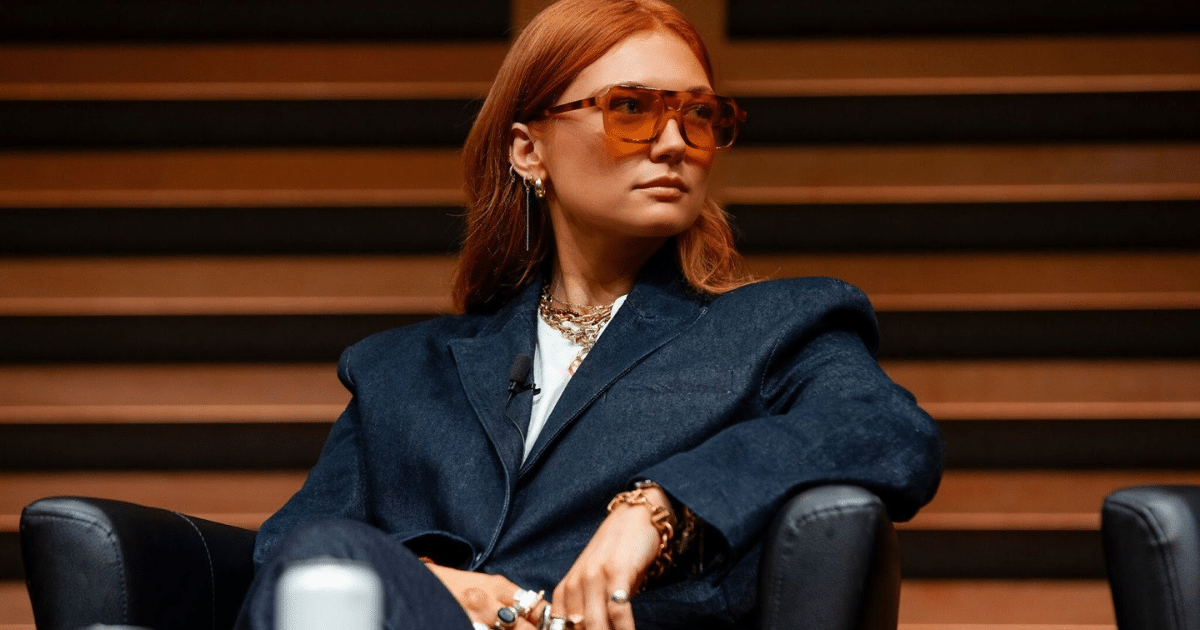
Ellie Hooper On How The Goat Agency Turned Influencer Marketing Into A Measurable Media Strategy

Ten years after influencer marketing emerged as an experimental line item in media plans, the discipline has become a core growth lever for global brands. Few agencies have had a front-row seat to that development like The Goat Agency, and few executives have grown alongside it as closely as Ellie Hooper, now Global Vice President of Growth.
Ellie joined Goat five and a half years ago as an account manager, when the UK-headquartered agency employed roughly 100 people. Today, Goat operates across 42 markets with a team of around 700, advising brands on how creator-led media can deliver measurable performance at scale. Her remit spans global client retention, innovation, and growth strategy.
“I’ve been on a real journey with Goat,” Ellie says. “As the influencer industry has matured, so has my role.”
Founded in 2015, Goat has positioned itself not as a creator talent shop or a social add-on, but as a performance-driven media agency built around creators. That distinction, along with the proprietary technology behind it, has shaped how the agency approaches influencer marketing today.
From a ‘Mistake’ to a Media Model
Goat’s origin story is often cited internally as an example of how early assumptions about influence broke down under scrutiny.
The agency’s founders, Harry Hugo, Nick Cooke, and Arron Shepherd, were developing a sports social platform called Sportlobster and believed a celebrity endorsement would drive mass adoption of the app. Instead, the results were unexpectedly modest.
“They contracted [Cristiano] Ronaldo to speak about their app, and he drove around two and a half thousand downloads,” Ellie recalls. “You think, you’ve got millions of followers here, how has this not worked?”
Facing a depleted marketing budget, the team ran a small experiment: a sports creator on Twitter with roughly 100,000 engaged followers posted about the app for £50 – and delivered the same number of downloads.
“That was the moment our founders realized there was something really big here,” Ellie says. “It didn’t make sense unless you looked at the data.”
That realization led to the creation of IBEX, Goat’s proprietary influencer intelligence and forecasting system, which remains central to its value proposition today. The premise was simple, but underdeveloped at the time: not all influence is equal, and effectiveness depends on who speaks, to whom, and for what outcome.
“We will never put forward a Ronaldo for a conversion campaign,” Ellie says. “Now we know who works and why.”

Photo: (Unilever Homecare) Molly Mae x Comfort Heaven Scent (BTS)
Source: The Goat Agency
What Goat Believes Influencer Marketing Actually Is
From its earliest days, Goat resisted framing influencer marketing as a branding-only channel. Ellie, who came from a paid media background, says that orientation was deliberate.
“There was this huge misconception that influencer wasn’t trackable; that it was just a bit of fun, all upper funnel,” she says. “But our data showed the channel was also driving significant lower funnel performance.”
Instead, the agency built its operating model around full-funnel performance, aligning influencer output with metrics typically associated with paid media: impressions, clicks, customer acquisition cost, and conversion.
“We’ve always hung our hat on performance,” Ellie says. “Even six or seven years ago, we were looking at CAC (Customer Acquisition Cost) numbers, first-time depositors, and lower-funnel metrics through influencers.”
That focus has become more relevant as brands reassess where their media spend delivers return. Research from the UK Institute of Practitioners in Advertising (IPA), published in October 2025, supports the argument that influencer marketing now delivers comparable short-term return on investment (ROI) to linear TV and outperforms paid social over the long term.
For Goat, those findings validate a model the agency has been refining for years.
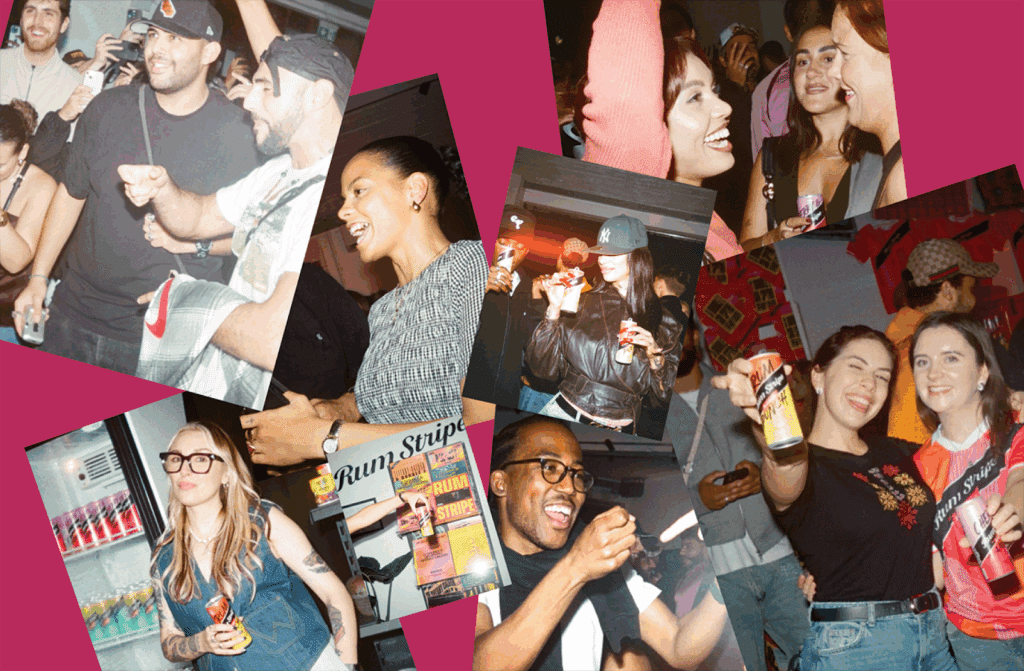
Photo: (Heineken) The Rum Stripe Corner Shop featuring performances by D Double E, Sir Spyro, and Tiffany Calver, and attended by over 100 creators, artists, journalists, and creatives
Source: The Goat Agency
IBEX: Building Measurement Where None Existed
IBEX was developed to solve a problem Ellie says off-the-shelf tools couldn’t address: unreliable data and limited predictive insight.
“With platforms anyone can access, there’s an element of algorithms that make the data unreliable,” she explains. “Our process at the beginning was very manual. We had eyes on demographics and inputted verified data ourselves.”
That foundation has since scaled. Today, IBEX incorporates direct platform integrations, AI-assisted modeling, and, according to Ellie, more than three million performance benchmarks, enabling Goat to forecast not just reach or engagement but also likely commercial outcomes.
“We wanted to know whether someone could sell a hairbrush, or whether they would just get great engagement talking about it,” she says.
IBEX also plays a role in pricing and industry standardization. Rather than negotiating solely on creator rates, Goat benchmarks creators against expected performance.
“We’ve always bought from a performance perspective,” Ellie says. “That allowed us to mature the industry around influencer rates and understand what’s fair, for clients and for creators as small businesses.”
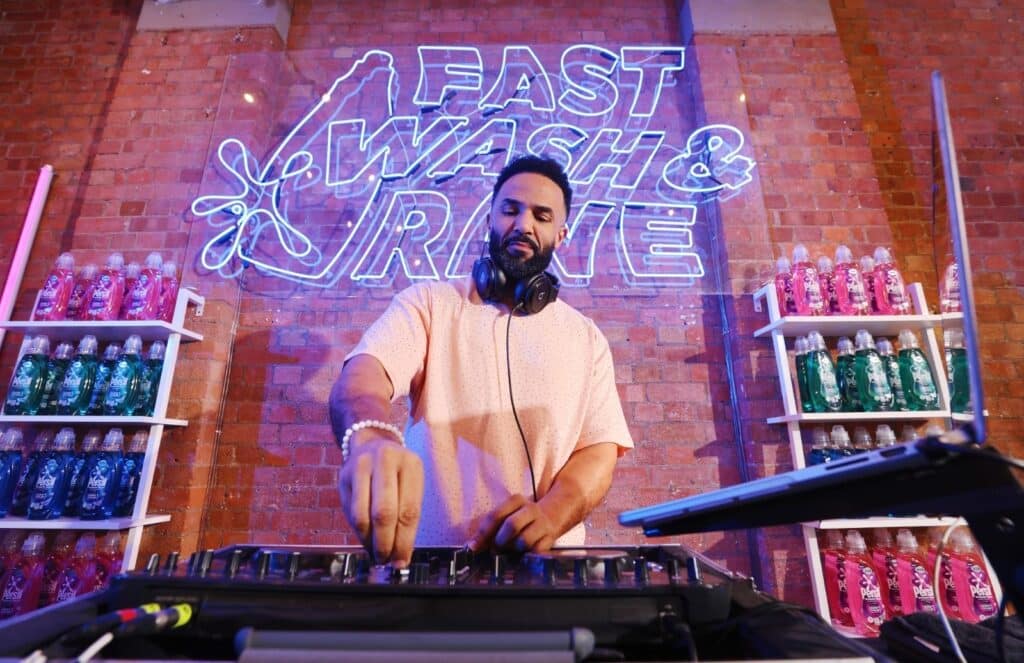
Photo:(Unilever Homecare) Persil Wonder Wash “Fast Wash and Rave” featuring ambassador Craig David
Source: The Goat Agency
From ‘Nice to Have’ to Core Media Channel
When Goat launched, influencer marketing was often the first line cut when budgets tightened. Ellie believes that perception has shifted, but only recently. “Five years ago, influencer was a nice-to-have,” she says. “Now it’s an integral part of the media plan.”
She argues that brands entering the channel today face a steeper learning curve than early adopters, not because it’s too late, but because the discipline has professionalized.
“You can’t just onboard loads of creators and hope something sticks anymore,” she says. “There needs to be intention, strategy, and relationship-building.”
That includes relinquishing creative control, a challenge for brands accustomed to tightly managed brand assets. “The biggest mindset shift is creative freedom,” Ellie says. “If creators are genuine advocates, they will produce content that delivers what you need, better than anything over-engineered.”
A ‘Human-First’ Content Framework
Goat’s current strategic framework centers on what it calls “human-first content,” i.e., creator-led assets designed not just for social platforms, but for distribution across the wider media ecosystem.
“In its simplest form, human-first content is creator content,” Ellie says. “The future lies in taking that content and sharing it across other media platforms.” Internal IBEX data show an average 21% reduction in Cost Per Mille when creator content is used across digital placements, according to Ellie.
That logic has led Goat to deploy creator assets across paid social, programmatic, connected TV, video-on-demand, Amazon DSP, and digital out-of-home.
“Influencer is no longer one line in a media plan,” Ellie says. “It’s minimum five.”
Niche, at Scale
One of Ellie’s recurring themes is that influencer marketing works best when it remains precise, even as it scales.
“The power of influencer is niche content to niche audiences, at scale,” she says. “That hasn’t changed in ten years.”
She points to a recent campaign for a highly specialized industrial brand – so niche that creators were selected based on specific individual traits and technical expertise – that became the brand’s strongest ROI channel.
“That’s the power of influencer and niche communities,” Ellie says. “Finding them, then scaling them responsibly.”
AI’s Role: Process, Not Replacement
Despite widespread speculation about AI-generated influencers, Ellie is skeptical that synthetic creators can replace traditional influence.
“Influencer marketing is built on trust,” she says. “People follow creators because they resonate with their interests and experiences.”
Instead, she sees AI’s value in process optimization, localization, and operational efficiency, not creative substitution. “I don’t think AI will replace human creativity,” she says. “But it can help us reach global audiences, adapt language, and streamline how we work.”
Influence Everywhere
Looking a decade ahead, Ellie avoids prediction but doubles down on distribution. “I really believe ‘influence everywhere’ is the next stage of advertising,” she says. “Taking effective creator content and putting it in the right places. We need to start thinking outside the box with our media spend and content production. We can create exceptional assets that are human-first and put them in places we wouldn’t expect to see. The power in influencer content comes in scale, as we look to the future.”
For Goat, that vision reflects continuity rather than reinvention.
“Our ethos hasn’t changed,” Ellie concludes. “Our methods have.”
Checkout Our Latest Podcast