




Agency
Defining Kobe Global’s ‘Hyper-Relevance’ Concept In Influencer Marketing

Kobe Global Technologies matches brands with “hyper-relevant” influencers using patented AI technology that analyzes 26 data points across 14 million creators. The Singapore-based influencer marketing agency serves more than 500 brands worldwide through a methodology focused on audience alignment rather than follower counts.
Founded in 2016 by Evangeline Leong, Kobe, which stands for “word of mouth” in Chinese, emerged from a key question about the effectiveness of advertising. “The problem I was trying to solve was picking relevant over popular influencers,” explains Evangeline. This insight came after years in performance marketing, where she questioned the value of traditional digital ads that “everybody likes to skip.”
“The best way of marketing isn’t what you say about yourself, but rather what others say about you,” Evangeline says. This philosophy forms the foundation of Kobe’s modus operandi, which serves brands across Asia, as well as the U.S., UK, and UAE. Kobe works with clients such as McDonald’s, CASETiFY, and Prime Video, which require precision-targeted influencer campaigns that prioritize genuine connections over celebrity status.
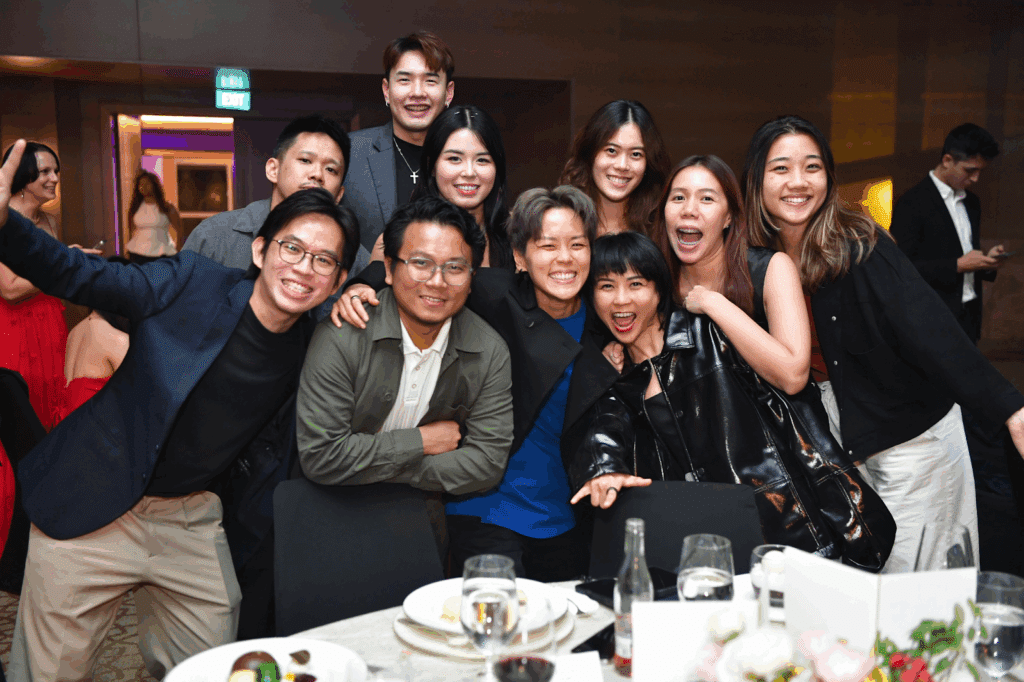
Kobe team
The AUDI Process
To put their theory into practice, Kobe developed a campaign framework called AUDI, which stands for audience-first. The process begins with “A” for Appeal – developing a storyline or concept that resonates with both the brand and the creators’ followers. “For example, I decide we want to create an influencer-led cooking show for a brand that’s into food products. This is the appeal, the concept,” Evangeline explains.
Only after establishing this creative direction does Kobe move to “U” for Uncover, i.e., the selection of influencers based on their proprietary 26-point evaluation system. “Most influencer agencies jump into this stage right from the get-go whenever the brand wants influencers. But we make sure that we complete the first stage, appeal, first,” says Evangeline.
The 26 data points fall under three main categories. Content and Persona Fit: “I’m looking for a mom who is a Gen Z mom. That’s a Persona fit. However, the content also needs to fit well. You can be a Gen Z mum, but maybe your content is all about your pet or your flowers,” Evangeline says. They analyze content recency, post activity, language style, and brand safety.
Audience Fit assesses whether the influencer’s followers align with the target demographic. “Even if this is a perfect influencer, what if all the followers are actually just kids? Then it really defeats the purpose,” Evangeline points out.
Performance Fit evaluates past metrics, including link clicks, direct messages, engagement, and work ethic, based on client ratings and adherence to deadlines.
After influencer selection comes “D” for Direct, ensuring balance between brand requirements and creator freedom through a multi-stage approval process. “We do it in a multi-stage process where the brand is first. After they have selected the right creator, the creator will also submit a storyboard to the brand for the brand to look at before they even go for shooting,” Evangeline says.
The final step, “I” for Iterate, closes the loop by analyzing performance data to optimize future campaigns. “When we study the data, we can optimize based on how the performance works,” Evangeline explains.
AI Technology: The Foundation of Hyper-Relevance
For Evangeline, incorporating AI into Kobe’s platform wasn’t about following industry trends; it was an operational necessity for achieving their mission of hyper-relevance.
“If we wanted to solve the problem of relevance over popularity, I would literally have to act like a private investigator or detective,” Evangeline explains. “I need to find the one-in-a-million who is the most relevant. Imagine I need to find a person who is into fintech in Saudi Arabia.”
Kobe’s initial attempts to profile influencers through self-reported Google Forms quickly revealed limitations. “It ended up with everyone just checking all the check boxes. They are into travel, fashion, food, lifestyle, and everything else just so that they can get jobs,” Evangeline recalls. This led to the development of their AI-powered platform that could objectively analyze influencer profiles without relying on self-reporting.
Kobe’s technology offers integration throughout its entire workflow. “Every client engages with their influencers on our platform. All our creators also use the platform to upload their stats, their content drafts, seek approvals, and their content after going live,” Evangeline explains. “Few tools out there can claim that 100% of the company’s campaigns are on the tool.”
This complete integration has created a valuable information resource. “For these nine years, we’ve got everything on our platform, and our clients turn to us for benchmarks,” says Evangeline. “We use this information to power a lot of how we choose influencers, why we decide on creative concepts, how we decide on benchmarks, and how we’re doing in terms of each industry.”
This advantage was a key factor in their acquisition by We Are Social in 2022.

Kobe-organized conference with international content creators
The Kobe Relevance Concept®
At the heart of Kobe’s philosophy is what Evangeline calls the Kobe Relevance Concept®: an approach inspired by her personal yoga practice. During a challenging balancing pose, Evangeline’s yoga instructor offered advice that became a metaphor for her business: “If you’re trying to strike a balance, focus on one point and you will get the balance.”
This insight helped Evangeline address the conflict between brand requirements and the creator’s creative freedom. “We always have to choose a site, and choosing a site means someone’s gotta lose,” she explains. “And I believe at the end of the commercial pressures, we would have to listen to what a brand needs because the brand just says, ‘But I’m paying.'”
By identifying the audience as the focal point, Evangeline found a solution that satisfied both parties. “The creator will want to do anything to make the followers happy, and the brands will want to make whatever makes their potential customers happy,” Evangeline explains. “By following what the audience is interested in, conversations with brands become so much easier. Conversations with creators also become so much easier.”
The Yo-Chi Launch Case Study
When Australian frozen yogurt brand Yo-Chi was preparing to enter the Singaporean market, it employed Kobe for the launch campaign. The campaign faced several challenges: the brand was unknown in Singapore, the food and beverage market was highly competitive, and social media was saturated with similar content.
“We launched it with such success that there were queues. The shop is supposed to open at 11 a.m., but the queue started at 3 a.m.,” Evangeline says. “The media was all over it, and it was fun for us.”
Kobe implemented a dual strategy. First, they employed a “flood the feed” concept, an uncurated approach where numerous creators familiar with Australia or the Yo-Chi brand were invited to create content without requiring brand approval. “We actually found people who had previous mentions of Australia or Yo-Chi, and those people turned out to be raving advocates of the brand,” Evangeline says.
Simultaneously, Kobe executed a more curated “storytelling” approach. One particularly successful execution involved an influencer pretending to “break into” the Yo-Chi store before launch.
“After she talks about breaking into the back end of the kitchen, she then creates another video saying, ‘Did you see that girl who tried to break in? It was so inappropriate,'” Evangeline explains. “So it then created another round of people thinking it’s quite funny, she’s poking laughter at herself. The comments were like, ‘Wow, marketing, well done.’ And it just got shared a lot.”

Kobe Team at Yo-Chi Launch
Live Streaming and Global Expansion
As Kobe continues to grow, Evangeline is positioning the company to capitalize on emerging trends in influencer marketing, particularly live streaming. “Live streaming has become quite a popular channel for influencer marketing,” she says. “Live streaming has been very popular in China and Southeast Asia, especially Indonesia, Thailand, and the Philippines.”
This observation is guiding Kobe’s geographic expansion strategy. “We wanted to be strategic, not just with regards to the geographic expansion, but the tool that is important for the future,” Evangeline says.
Regarding virtual influencers, Evangeline has a reserved view based on Kobe’s own experience creating a virtual influencer for a retail conglomerate. “We quickly realized that people follow virtual creators for a very different reason. They follow them for entertainment, for novelty, and to look for trends,” she explains. “But when it comes to, say, skincare recommendations, I’m going to do a better job even if I’m nobody, because there’s genuineness.”
Following their acquisition by We Are Social, Kobe is positioned for further global expansion. “They have given us a lot of opportunities when it comes to the global markets,” Evangeline says. “In the next five years, I foresee us expanding into whichever markets they’re currently in.”
Throughout this growth, Kobe remains anchored in its founding philosophy. “However, the trends change, the platforms change, I think what remains very core to our belief is genuineness,” Evangeline says. “And that can only happen when the creator is hyper-relevant.”