







Strategy
Creator Marketing Strategist Ryan To to Brands: Stop Briefing Creators Like Ad Agencies

Most brands entering the Creator Economy arrive with the same instinct: find the biggest influencer, hand them a brief, and measure the results in conversions. Ryan To, founder of Creatorverse and creator marketing strategist, thinks that instinct is exactly why most campaigns fail.
“The biggest mistake I see brands make is they have a product, they provide education on that exact product, they give it to the influencer with very specific requirements,” Ryan says. “But the challenge is you have to lean into what their strengths are and reverse engineer from there.”
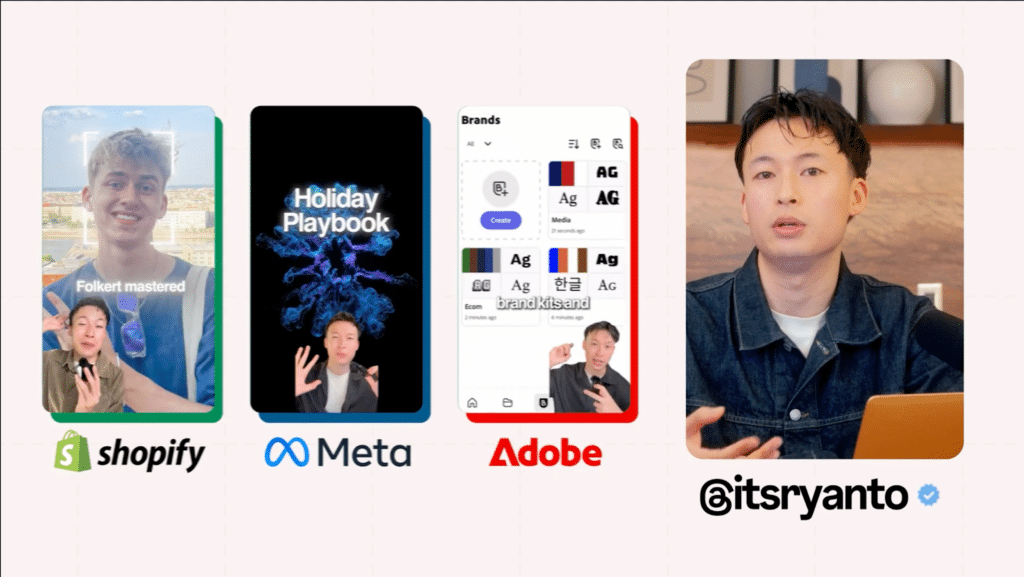
Ryan, 24, launched Creatorverse in early 2024 after stints in tech sales at Okta and e-commerce growth at Skio, a subscription software startup trusted by Liquid I.V. and Barstool Sports.
The San Francisco-based company operates as a media platform: a weekly newsletter reaching 20,000 subscribers and a freely available Creator Brand Playbook that has attracted tens of thousands of downloads. His client roster included Stan Store, a creator economy SaaS company with $30 million in annual recurring revenue; creators like JustMaiko, with 50 million followers, and Zac Alsop, with 2 million.
Ryan is now building Jomu, a software company that helps consumer brands produce better ads, through the Founders Inc. incubator, whose partners include the former CTO of AppLovin.
The Shift That Most Marketing Teams Missed
Ryan traces the current dysfunction in brand creator marketing to a transition that outpaced most teams’ ability to adapt. Consumer brands built their marketing infrastructure around studio shoots, HD lifestyle imagery, and controlled brand messaging. Then audiences stopped responding.
“People were craving more raw, more uncut content. Things that felt more relatable,” he says. “The old marketing was static images of their products, professional shoots in professional environments. That’s completely changed.”
The shift exposed a deeper gap: brands still approach content as a bottom-of-funnel problem, pushing content that comes across too “salesly” rather than as an attention problem to earn it. Ryan argues that social media was never built to be a promotional channel. “You have to entertain, you have to educate, you have to connect,” he says. “A lot of brands are constantly just trying to find ways to promote. Social media doesn’t exist as a platform to constantly sell.”
Curation Is Now the Only Metric That Matters
With Influencer Marketing increasingly defined by scale, Ryan pushes back on the idea that reach is a reliable input. The agencies and brands winning right now, he argues, are those who have developed what he calls taste: an instinct for which creators actually move their audiences, not just accumulate them.
“It’s not about having access to a lot of influencers who have X amount of followers,” he says. “It’s actually understanding who are the movers and shakers in your respective niche that would create a movement or impact consumers in a way that’s not just strictly attention.”
His practical test is the comment section. Fire emojis signal passive entertainment. Multi-sentence paragraph responses signal genuine community investment. “Comments are always the source of truth,” Ryan says. “If someone’s willing to invest their time to write two sentences, it means something to them.”
He points to Anthropic’s Claude as a notable example of brand-side curation done well. Rather than routing exclusively to AI or tech-focused creators, Claude partnered with cinematic storytellers who documented personal, human experiences with the product. “They leaned into creators telling very unique stories about how they’re using Claude from a very human and raw level,” Ryan notes. “And it’s maintained a very similar brand identity across everything, whether Influencer Marketing or their San Francisco billboards.”
Why UGC Is Outperforming Traditional Influencer Deals
One of the more counterintuitive trends Ryan tracks is the rise of UGC (user-generated content), created not by existing influencers but by new accounts that grew from zero. The economics are changing fast.
“Instead of paying an influencer four figures for one video, you’re paying someone to create a completely new account and grow it from zero,” Ryan explains. “The algorithm has completely changed. We’re living in something called interest media, where if you make content about a specific thing and it reaches that niche audience, you will grow a lot faster than ‘going broad.’”
The implication for brands is significant. Starting from zero, Ryan argues, is now more effective than buying into established audiences, because the algorithm no longer depends on follower count. Brooklyn Coffee Shop is a brand he repeatedly cites as an example of this model’s scaling. Founder-led content remains durable, but Ryan observes that the most sophisticated brands are supplementing it with in-house creators as founders’ bandwidth tightens.
Three Steps Before the First Creator Brief
When brands ask where to start, Ryan consistently redirects them away from creator selection and toward internal alignment. Strategy precedes outreach.
The first step is assessing what the brand can actually execute. “The mistake a lot of brands make is they have really big, ambitious ideas that they can’t actually execute on,” he says. Brands with strong production capacity should lean into that. Brands with a founder who is a genuine domain expert should lean into that. The format follows the asset, not the other way around.
The second step is becoming a consumer first. “You can’t create without also consuming,” Ryan says. “If you try to make content in the world but you don’t know what your consumers are already looking at, it’s like not doing competitive research before building a business.”
The third, and most overlooked, is investing in the creator relationship before the brief. Ryan cites Neurogum as a model: the brand conducts a three-hour onboarding call with every creator before any content is produced, covering the founder story, product mission, and brand values. “Instead of sending a one-paragraph PDF brief, have them actually understand,” he says. “That will lead to videos that actually show that they understand.”

Measuring What Actually Changes
Ryan is skeptical of the industry’s reliance on impressions as the benchmark for evaluating a “successful” creator campaign. The metrics, he argues, systematically undervalue the role of organic content in the broader funnel.
“Organic campaigns have a direct impact on how well your paid campaigns do,” he says. “You’re getting more touchpoints, more eyeballs, more awareness, where that might have led to the conversion when the paid ad came.” He points to Meta’s own research suggesting a measurable correlation between organic content volume and paid ad performance, though he acknowledges the data is not widely cited in campaign planning conversations.
His recommended frame is longitudinal, not at the campaign level. “Track your business’s outcomes at a larger scale,” he says. “Over the past year of running influencer marketing compared to last year, how has your business transformed?”
What Comes Next
Ryan is now channeling his creator economy knowledge into Jomu, his software company, targeting the one layer of content production that automation has not yet solved: strategy and packaging. As AI tools reduce the cost and complexity of scripting, editing, and even video production itself, Ryan believes the decision layer, what to make and how to frame it, becomes more valuable, not less.
“AI is attempting to automate scripting, video production, and creator outreach,” he says. “What that means to me is that it’s never been easier to create any type of content. So the one thing that decides all of that is the strategy and packaging of the videos.”
He frames his own trajectory as the model he now advocates for creators and brand founders alike: use the first act to build audience and credibility, then leverage both to build a larger business.
“Every creator should have an act two,” Ryan says. “The ones who’ve grown and developed further were the ones who used that to then do the big thing they were really hoping to do.”
Subscribe to Our Newsletter
Check Out Our Podcast