Creator and influencer partnerships have emerged as the top advertising priority for 2026, as brands recalibrate media strategies around retention, profitability, and performance measurement, according to new research from the Interactive Advertising Bureau (IAB).
Fifty-seven percent of brand and agency buyers identified creator partnerships as their top-ranked ad type for the year ahead, the highest ranking of any ad format surveyed. The finding is based on a study of 205 U.S. advertising decision-makers conducted between November 2025 and January 2026.
The share marks a notable increase from 48% in 2025 and coincides with separate IAB research showing 18% year-over-year growth in creator economy ad spending. The report attributes the rising prioritization to brands seeking “trusted, human storytelling that rises above the flood of AI content,” as artificial intelligence reshapes media production, distribution, and discovery.
Social Media Leads Channel Growth
Social media advertising, where most creator partnerships are activated, is projected to be the fastest-growing major channel in 2026. Spending is expected to rise 14.6%, up from 11.4% growth in 2025, outpacing connected television (13.8%), commerce media (12.1%), and digital video excluding CTV (9.6%).
Overall U.S. advertising spending is projected to grow 9.5% in 2026, accelerating from 5.7% growth in 2025. The IAB estimates that excluding spending tied to major cyclical events (including the midterm elections, the Winter Olympics, and the FIFA World Cup) would reduce expected growth to 7.1%-7.8%.
The research suggests brands are concentrating investment in formats that combine performance accountability with audience engagement. Shoppable ads ranked fourth among ad type priorities at 45%, up from 38% in 2025, while ads within live programming reached 39%.
Shift From Acquisition Toward Retention
While customer acquisition remains the top media investment objective, its dominance has declined. Fifty-four percent of respondents cited acquisition as their primary goal for 2026, down from 64% in 2025.
At the same time, driving repeat purchases rose sharply. Twenty-five percent of buyers identified repeat purchasing as a key objective, nearly doubling from 13% in 2024. Other leading goals included increasing brand equity (37%), improving media efficiency (33%), and optimizing reach and frequency (30%).
The report describes the shift as “a rebalancing to counter rising acquisition costs while coinciding with a focus on performance-driven campaigns and channels with stronger measurement as buyers face pressure to deliver profitable growth.”
Within that context, creator partnerships are increasingly being positioned as tools not only for reach, but also for sustaining customer relationships and supporting loyalty-focused campaigns.
AI Becomes Central to Media Strategy
Artificial intelligence features prominently in brands’ strategic priorities for 2026. Five of the six top buyer focus areas identified in the study relate to AI, reflecting its growing role in planning, execution, and measurement.
Nearly all respondents (96%) reported awareness of agentic AI for advertising buying and campaign execution, with 66% planning to increase focus on it in 2026. Agentic AI refers to systems that autonomously execute tasks and make decisions across advertising workflows.
Use of generative AI in media campaigns ranked as the top focus area at 78%, up from 62% in 2025. Optimizing content for AI-generated answers followed at 73%, a category not measured in prior years. Cross-platform measurement reached 72%, while agentic AI ad buying ranked at 66%.
The report states that AI is increasingly positioned to coordinate planning, activation, and optimization across media transactions.
How Brands Plan to Use Agentic AI
Among respondents familiar with agentic AI, interest is strongest in analytical and optimization-related tasks. Performance analysis and outcome insights ranked highest at 93%, followed by creative testing, selection, or optimization at 91%.
Media planning and buying recommendations reached 84%, while media pre-planning stood at 82%. Budget allocation, pacing, and optimization also reached 82%.
Interest was lower for tasks involving negotiation and deal execution. Programmatic deal execution and negotiations accounted for 57%, while direct insertion order negotiations accounted for 45%.
The data indicates that brands expect AI to handle analytical and operational decision-making while retaining human oversight for relationship-driven activities, including negotiations and partnerships.
Cost Pressures and Measurement Challenges
Rising media costs remain a key concern. Media inflation ranked among the top five challenges for brands, cited by 34% of respondents, up from 30% in 2025. Concerns about having sufficient budget to expand CTV spending rose to 29% from 20%.
These pressures appear to be driving greater emphasis on formats that offer clearer measurement and return on investment. Working with publishers that have first-party data remained steady, with 55% of respondents planning to increase focus.
Cohort-based advertising rose to 35% from 23% as brands adapt to signal loss by using privacy-safe, AI-driven audience groupings rather than individual-level tracking.
Commerce Media and Experiential Growth
Commerce media advertising, which includes retail media networks and shoppable formats, where creator partnerships are increasingly playing a role, is projected to grow 12.1% in 2026. The IAB estimates this represents growth nearly 30% faster than the overall advertising market.
The report cites optimism around off-site and in-store opportunities, as well as potential ad formats tied to agentic AI shopping assistants, despite continued concerns around fragmentation and measurement consistency.
In-person and experiential marketing ranked at 41% among ad type priorities, underscoring continued interest in formats that create direct consumer connections alongside digital creator partnerships.
Outlook for 2026
The findings suggest that creator partnerships are entering 2026 as a core component of brand marketing strategies rather than an experimental channel. The combination of social media growth, increased emphasis on retention, and expanding use of AI-driven measurement indicates sustained investment in creator collaborations.
The IAB noted that a potential U.S. recession (estimated at a one-in-three probability) could disrupt current projections, but the data shows brands entering the year with a clear focus on performance, efficiency, and long-term customer value.
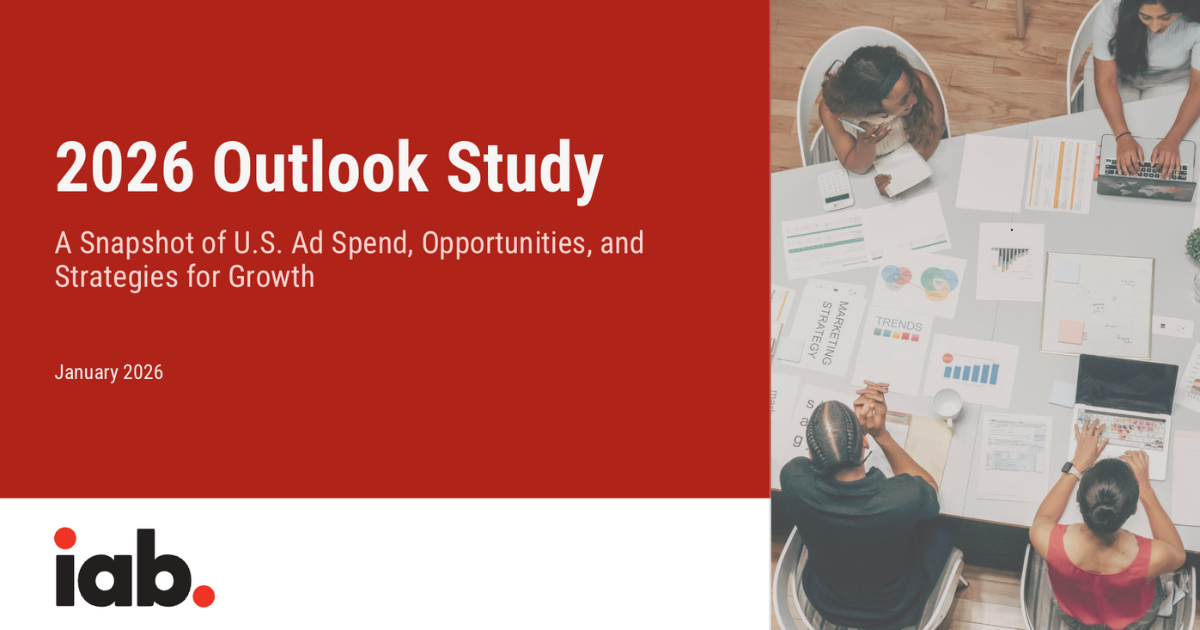
Image source: IAB The full report is available here
Nii A. Ahene is the founder and managing director of Net Influencer, a website dedicated to offering insights into the influencer marketing industry. Together with its newsletter, Influencer Weekly, Net Influencer provides news, commentary, and analysis of the events shaping the creator and influencer marketing space. Through interviews with startups, influencers, brands, and platforms, Nii and his team explore how influencer marketing is being effectively used to benefit businesses and personal brands alike.











Creator and influencer partnerships have emerged as the top advertising priority for 2026, as brands recalibrate media strategies around retention, profitability, and performance measurement, according to new research from the Interactive Advertising Bureau (IAB).
Fifty-seven percent of brand and agency buyers identified creator partnerships as their top-ranked ad type for the year ahead, the highest ranking of any ad format surveyed. The finding is based on a study of 205 U.S. advertising decision-makers conducted between November 2025 and January 2026.
The share marks a notable increase from 48% in 2025 and coincides with separate IAB research showing 18% year-over-year growth in creator economy ad spending. The report attributes the rising prioritization to brands seeking “trusted, human storytelling that rises above the flood of AI content,” as artificial intelligence reshapes media production, distribution, and discovery.
Social Media Leads Channel Growth
Social media advertising, where most creator partnerships are activated, is projected to be the fastest-growing major channel in 2026. Spending is expected to rise 14.6%, up from 11.4% growth in 2025, outpacing connected television (13.8%), commerce media (12.1%), and digital video excluding CTV (9.6%).
Overall U.S. advertising spending is projected to grow 9.5% in 2026, accelerating from 5.7% growth in 2025. The IAB estimates that excluding spending tied to major cyclical events (including the midterm elections, the Winter Olympics, and the FIFA World Cup) would reduce expected growth to 7.1%-7.8%.
The research suggests brands are concentrating investment in formats that combine performance accountability with audience engagement. Shoppable ads ranked fourth among ad type priorities at 45%, up from 38% in 2025, while ads within live programming reached 39%.
Shift From Acquisition Toward Retention
While customer acquisition remains the top media investment objective, its dominance has declined. Fifty-four percent of respondents cited acquisition as their primary goal for 2026, down from 64% in 2025.
At the same time, driving repeat purchases rose sharply. Twenty-five percent of buyers identified repeat purchasing as a key objective, nearly doubling from 13% in 2024. Other leading goals included increasing brand equity (37%), improving media efficiency (33%), and optimizing reach and frequency (30%).
The report describes the shift as “a rebalancing to counter rising acquisition costs while coinciding with a focus on performance-driven campaigns and channels with stronger measurement as buyers face pressure to deliver profitable growth.”
Within that context, creator partnerships are increasingly being positioned as tools not only for reach, but also for sustaining customer relationships and supporting loyalty-focused campaigns.
AI Becomes Central to Media Strategy
Artificial intelligence features prominently in brands’ strategic priorities for 2026. Five of the six top buyer focus areas identified in the study relate to AI, reflecting its growing role in planning, execution, and measurement.
Nearly all respondents (96%) reported awareness of agentic AI for advertising buying and campaign execution, with 66% planning to increase focus on it in 2026. Agentic AI refers to systems that autonomously execute tasks and make decisions across advertising workflows.
Use of generative AI in media campaigns ranked as the top focus area at 78%, up from 62% in 2025. Optimizing content for AI-generated answers followed at 73%, a category not measured in prior years. Cross-platform measurement reached 72%, while agentic AI ad buying ranked at 66%.
The report states that AI is increasingly positioned to coordinate planning, activation, and optimization across media transactions.
How Brands Plan to Use Agentic AI
Among respondents familiar with agentic AI, interest is strongest in analytical and optimization-related tasks. Performance analysis and outcome insights ranked highest at 93%, followed by creative testing, selection, or optimization at 91%.
Media planning and buying recommendations reached 84%, while media pre-planning stood at 82%. Budget allocation, pacing, and optimization also reached 82%.
Interest was lower for tasks involving negotiation and deal execution. Programmatic deal execution and negotiations accounted for 57%, while direct insertion order negotiations accounted for 45%.
The data indicates that brands expect AI to handle analytical and operational decision-making while retaining human oversight for relationship-driven activities, including negotiations and partnerships.
Cost Pressures and Measurement Challenges
Rising media costs remain a key concern. Media inflation ranked among the top five challenges for brands, cited by 34% of respondents, up from 30% in 2025. Concerns about having sufficient budget to expand CTV spending rose to 29% from 20%.
These pressures appear to be driving greater emphasis on formats that offer clearer measurement and return on investment. Working with publishers that have first-party data remained steady, with 55% of respondents planning to increase focus.
Cohort-based advertising rose to 35% from 23% as brands adapt to signal loss by using privacy-safe, AI-driven audience groupings rather than individual-level tracking.
Commerce Media and Experiential Growth
Commerce media advertising, which includes retail media networks and shoppable formats, where creator partnerships are increasingly playing a role, is projected to grow 12.1% in 2026. The IAB estimates this represents growth nearly 30% faster than the overall advertising market.
The report cites optimism around off-site and in-store opportunities, as well as potential ad formats tied to agentic AI shopping assistants, despite continued concerns around fragmentation and measurement consistency.
In-person and experiential marketing ranked at 41% among ad type priorities, underscoring continued interest in formats that create direct consumer connections alongside digital creator partnerships.
Outlook for 2026
The findings suggest that creator partnerships are entering 2026 as a core component of brand marketing strategies rather than an experimental channel. The combination of social media growth, increased emphasis on retention, and expanding use of AI-driven measurement indicates sustained investment in creator collaborations.
The IAB noted that a potential U.S. recession (estimated at a one-in-three probability) could disrupt current projections, but the data shows brands entering the year with a clear focus on performance, efficiency, and long-term customer value.
Image source: IAB
The full report is available here
Checkout Our Latest Podcast