For years, the creator economy has been defined by explosive growth metrics: rising budgets, expanding platforms, and a widening pool of creators producing content at an industrial scale. What has lagged behind, according to CreatorIQ’s Chief Marketing Officer Brit Starr and Research & Insights Manager Cherline Bazile, is a shared understanding of how value is actually distributed inside that growth.
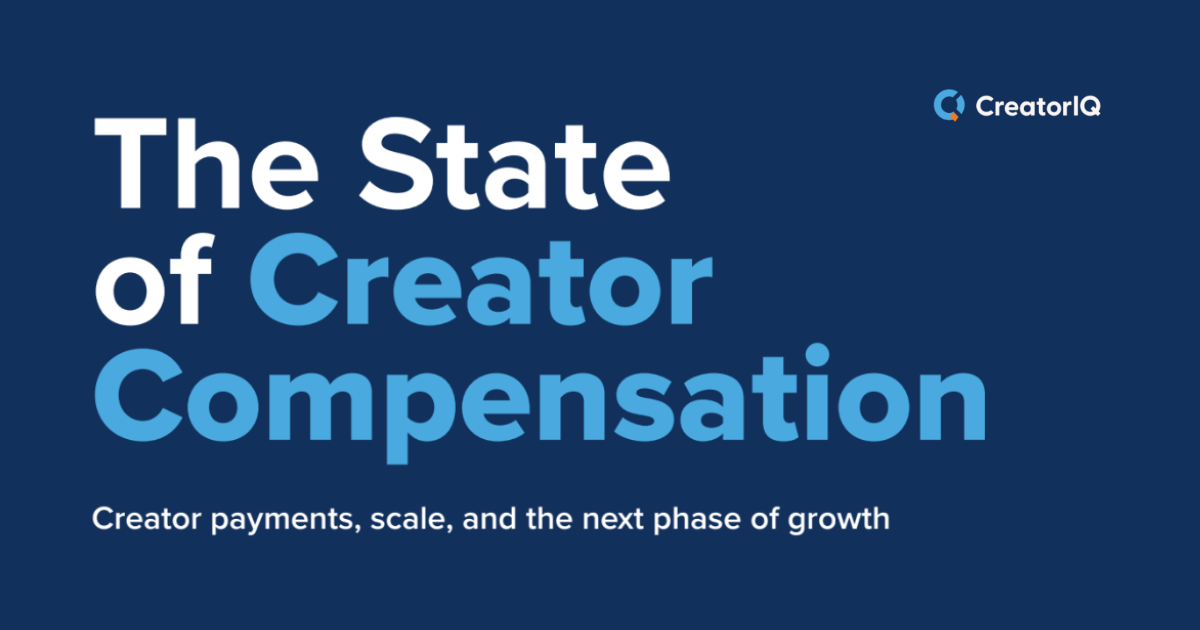
That gap is the central focus of CreatorIQ’s “State of Creator Compensation” report, a data-driven examination of how creator pay, participation, and stability are changing as influencer marketing becomes a core line item for global brands. Based on surveys of 300 creators and payment data from more than 14,000 creators paid through the CreatorIQ platform, the report aims to replace anecdote with evidence and, in doing so, reframe compensation as a business-critical issue rather than a moral sidebar.
“We talk about the creator economy like it’s a category,” Brit says. “But it’s an economy. And the people inside it are trying to build real businesses.”
A Market Growing Faster Than Its Safety Nets
At the headline level, the creator economy appears healthy. Influencer marketing reached an estimated $32.55 billion globally in 2025, with brand and agency spend increasing 171% year over year, surpassing the growth rate seen across the prior four years. Yet those gains have not translated evenly into individual creators’ earnings.
According to CreatorIQ’s data, the average creator earned $44,293 over the past year, but the median earnings from paid brand campaigns tell a starker story: roughly $3,000. Only 11% of creators reported earning six figures annually, while the top 10% of creators captured 62% of total creator payment volume on the platform.
“That distribution was really shocking for me to see,” Cherline says. “I expected it to be more even throughout. Instead, you see just how lopsided it is.”
Brit echoes that reaction, particularly given how frequently brands talk about investing in long-term relationships. “We talk about building a healthy middle class in the creator economy,” she says. “But when you see the data, it’s clear we’re not there yet.”
Professionalization Without Stability
One of the report’s core findings is what Cherline describes as a structural mismatch: creators are increasingly expected to operate like professional publishers, but without the predictability that typically supports sustainable businesses. A total of 88% of creators surveyed reported facing barriers to growth, with platform volatility, lack of consistent brand deals, and low or inconsistent pay topping the list.
For Cherline, the data confirms what many creators already intuit. “They’re building businesses on platforms that change constantly,” she says. “That makes the whole thing precarious.”
The challenge is not limited to creators.
Brands, Brit notes, are under growing pressure to justify every marketing dollar, often across fragmented teams and regions. “It’s hard for creators,” she says. “It’s also really hard for brands. Everyone is being asked to measure impact more rigorously, but they’re often not speaking the same language.”
The Retention Gap Brands Don’t Expect
One of the most surprising findings for both Brit and Cherline was how few creators are engaged in recurring campaigns. Only about 40% of creators who paid through CreatorIQ in 2025 participated in repeat partnerships – a figure that fell short of the duo’s expectations.
“We talk constantly about retention, lifetime value, long-term partnerships,” Brit says. “So to see that number under 50% was genuinely shocking.”
Cherline frames the issue as a maturity gap. Some brands may be highly sophisticated in other areas of marketing while running relatively ad hoc creator programs. Creators, too, may appear mature from the outside but lack the tools or frameworks to operate as scalable businesses.
“The industry is growing so fast that stabilization just hasn’t caught up yet,” she says.
Why Compensation Is a Brand Problem
A recurring question Cherline anticipated from brand leaders while writing the report was deceptively simple: Why should I care? If some creators earn more than others, why does that matter to brands?
Her answer centers on opportunity cost. “If people aren’t being paid fairly, they leave the industry,” she says. “And then you don’t have enough creators who can do this work sustainably.”
Brit takes the argument a step further, linking compensation directly to performance. Brands that treat creators as interchangeable vendors, she argues, end up “filling a leaky bucket,” constantly onboarding new partners without compounding value over time.
“The data shows year on year that if you invest in retaining your relationships and increasing their value, your program grows,” Brit says. “That’s a leading indicator of business growth.”
Creators as Partners, Not Placements
Beyond pay, the report surfaces a deeper shift in how creators want to be perceived. When asked which perceptions they most want to change, creators ranked “being seen as more than my niche” at the top, above even compensation concerns.
“That surprised me,” Cherline admits. “It aligns with wanting to be seen as business partners, not just content categories.”
This desire for expanded roles coincides with how brands are using creator content. An analysis of Fortune 100 brands across TikTok, Instagram, and YouTube shows creators producing 33 times more content than brands’ owned channels, delivering 11 times the impressions and 14 times the engagements.
“Consumers are far more likely to hear about a brand from a creator than from the brand itself,” Cherline says. “That should change how brands think about partnership quality.”
From Insight to Action
The most immediate opportunity for brands, both Brit and Cherline argue, starts with visibility. They share that many CreatorIQ customers begin transformation efforts with internal audits to map where creators are used, how they’re paid, and the expected outcomes.
“Do you even know what you’re paying for and why?” Brit asks. “Establishing that baseline alone often reveals inefficiencies and missed opportunities.”
Cherline suggests analyzing creator impact by cohort rather than focusing exclusively on celebrity-level partners. “Look at micro, macro, and powerhouse creators side by side,” she says. “See whether the investment actually matches the impact.”
Both note that creator content increasingly flows across organizations, from marketing to e-commerce to community, making centralized visibility more critical than ever.
What Comes Next for Creator Compensation
Neither Brit nor Cherline expects compensation models to radically change overnight. Economic volatility and competing priorities make rapid reform unlikely. Still, Cherline sees pressure building from creators themselves as data transparency improves.
“If creators understand what fair pay looks like and recognize the impact they drive, that pressure grows,” she says.
Looking forward, Cherline hopes to see the gap between top earners and the broader creator base narrow, which would mean a reversal of a trend that has intensified over the past three years. While total dollars paid to creators rose 59% year over year, the concentration of that growth remains an unresolved tension.
“There are real positives,” she says. “Pay is increasing overall. We just want it flowing to more people.”
A Long Game for Brands and Creators
As creator marketing becomes inseparable from brand growth strategies, Brit argues that compensation can no longer be treated as a tactical concern. It’s a signal of how brands value relationships, risk, and long-term performance.
“This isn’t a sprint,” Cherline says. “It’s a marathon.”
For brands willing to rethink creators as partners rather than placements, the data offers both a warning and an opportunity. As Cherline puts it in closing: “Creators are catalysts. They’re your partners, not just your vendors.”
Dragomir is a Serbian freelance blog writer and translator. He is passionate about covering insightful stories and exploring topics such as influencer marketing, the creator economy, technology, business, and cyber fraud.













For years, the creator economy has been defined by explosive growth metrics: rising budgets, expanding platforms, and a widening pool of creators producing content at an industrial scale. What has lagged behind, according to CreatorIQ’s Chief Marketing Officer Brit Starr and Research & Insights Manager Cherline Bazile, is a shared understanding of how value is actually distributed inside that growth.
That gap is the central focus of CreatorIQ’s “State of Creator Compensation” report, a data-driven examination of how creator pay, participation, and stability are changing as influencer marketing becomes a core line item for global brands. Based on surveys of 300 creators and payment data from more than 14,000 creators paid through the CreatorIQ platform, the report aims to replace anecdote with evidence and, in doing so, reframe compensation as a business-critical issue rather than a moral sidebar.
“We talk about the creator economy like it’s a category,” Brit says. “But it’s an economy. And the people inside it are trying to build real businesses.”
A Market Growing Faster Than Its Safety Nets
At the headline level, the creator economy appears healthy. Influencer marketing reached an estimated $32.55 billion globally in 2025, with brand and agency spend increasing 171% year over year, surpassing the growth rate seen across the prior four years. Yet those gains have not translated evenly into individual creators’ earnings.
According to CreatorIQ’s data, the average creator earned $44,293 over the past year, but the median earnings from paid brand campaigns tell a starker story: roughly $3,000. Only 11% of creators reported earning six figures annually, while the top 10% of creators captured 62% of total creator payment volume on the platform.
“That distribution was really shocking for me to see,” Cherline says. “I expected it to be more even throughout. Instead, you see just how lopsided it is.”
Brit echoes that reaction, particularly given how frequently brands talk about investing in long-term relationships. “We talk about building a healthy middle class in the creator economy,” she says. “But when you see the data, it’s clear we’re not there yet.”
Professionalization Without Stability
One of the report’s core findings is what Cherline describes as a structural mismatch: creators are increasingly expected to operate like professional publishers, but without the predictability that typically supports sustainable businesses. A total of 88% of creators surveyed reported facing barriers to growth, with platform volatility, lack of consistent brand deals, and low or inconsistent pay topping the list.
For Cherline, the data confirms what many creators already intuit. “They’re building businesses on platforms that change constantly,” she says. “That makes the whole thing precarious.”
The challenge is not limited to creators.
Brands, Brit notes, are under growing pressure to justify every marketing dollar, often across fragmented teams and regions. “It’s hard for creators,” she says. “It’s also really hard for brands. Everyone is being asked to measure impact more rigorously, but they’re often not speaking the same language.”
The Retention Gap Brands Don’t Expect
One of the most surprising findings for both Brit and Cherline was how few creators are engaged in recurring campaigns. Only about 40% of creators who paid through CreatorIQ in 2025 participated in repeat partnerships – a figure that fell short of the duo’s expectations.
“We talk constantly about retention, lifetime value, long-term partnerships,” Brit says. “So to see that number under 50% was genuinely shocking.”
Cherline frames the issue as a maturity gap. Some brands may be highly sophisticated in other areas of marketing while running relatively ad hoc creator programs. Creators, too, may appear mature from the outside but lack the tools or frameworks to operate as scalable businesses.
“The industry is growing so fast that stabilization just hasn’t caught up yet,” she says.
Why Compensation Is a Brand Problem
A recurring question Cherline anticipated from brand leaders while writing the report was deceptively simple: Why should I care? If some creators earn more than others, why does that matter to brands?
Her answer centers on opportunity cost. “If people aren’t being paid fairly, they leave the industry,” she says. “And then you don’t have enough creators who can do this work sustainably.”
Brit takes the argument a step further, linking compensation directly to performance. Brands that treat creators as interchangeable vendors, she argues, end up “filling a leaky bucket,” constantly onboarding new partners without compounding value over time.
“The data shows year on year that if you invest in retaining your relationships and increasing their value, your program grows,” Brit says. “That’s a leading indicator of business growth.”
Creators as Partners, Not Placements
Beyond pay, the report surfaces a deeper shift in how creators want to be perceived. When asked which perceptions they most want to change, creators ranked “being seen as more than my niche” at the top, above even compensation concerns.
“That surprised me,” Cherline admits. “It aligns with wanting to be seen as business partners, not just content categories.”
This desire for expanded roles coincides with how brands are using creator content. An analysis of Fortune 100 brands across TikTok, Instagram, and YouTube shows creators producing 33 times more content than brands’ owned channels, delivering 11 times the impressions and 14 times the engagements.
“Consumers are far more likely to hear about a brand from a creator than from the brand itself,” Cherline says. “That should change how brands think about partnership quality.”
From Insight to Action
The most immediate opportunity for brands, both Brit and Cherline argue, starts with visibility. They share that many CreatorIQ customers begin transformation efforts with internal audits to map where creators are used, how they’re paid, and the expected outcomes.
“Do you even know what you’re paying for and why?” Brit asks. “Establishing that baseline alone often reveals inefficiencies and missed opportunities.”
Cherline suggests analyzing creator impact by cohort rather than focusing exclusively on celebrity-level partners. “Look at micro, macro, and powerhouse creators side by side,” she says. “See whether the investment actually matches the impact.”
Both note that creator content increasingly flows across organizations, from marketing to e-commerce to community, making centralized visibility more critical than ever.
What Comes Next for Creator Compensation
Neither Brit nor Cherline expects compensation models to radically change overnight. Economic volatility and competing priorities make rapid reform unlikely. Still, Cherline sees pressure building from creators themselves as data transparency improves.
“If creators understand what fair pay looks like and recognize the impact they drive, that pressure grows,” she says.
Looking forward, Cherline hopes to see the gap between top earners and the broader creator base narrow, which would mean a reversal of a trend that has intensified over the past three years. While total dollars paid to creators rose 59% year over year, the concentration of that growth remains an unresolved tension.
“There are real positives,” she says. “Pay is increasing overall. We just want it flowing to more people.”
A Long Game for Brands and Creators
As creator marketing becomes inseparable from brand growth strategies, Brit argues that compensation can no longer be treated as a tactical concern. It’s a signal of how brands value relationships, risk, and long-term performance.
“This isn’t a sprint,” Cherline says. “It’s a marathon.”
For brands willing to rethink creators as partners rather than placements, the data offers both a warning and an opportunity. As Cherline puts it in closing: “Creators are catalysts. They’re your partners, not just your vendors.”
Subscribe to Our Newsletter
Check Out Our Podcast