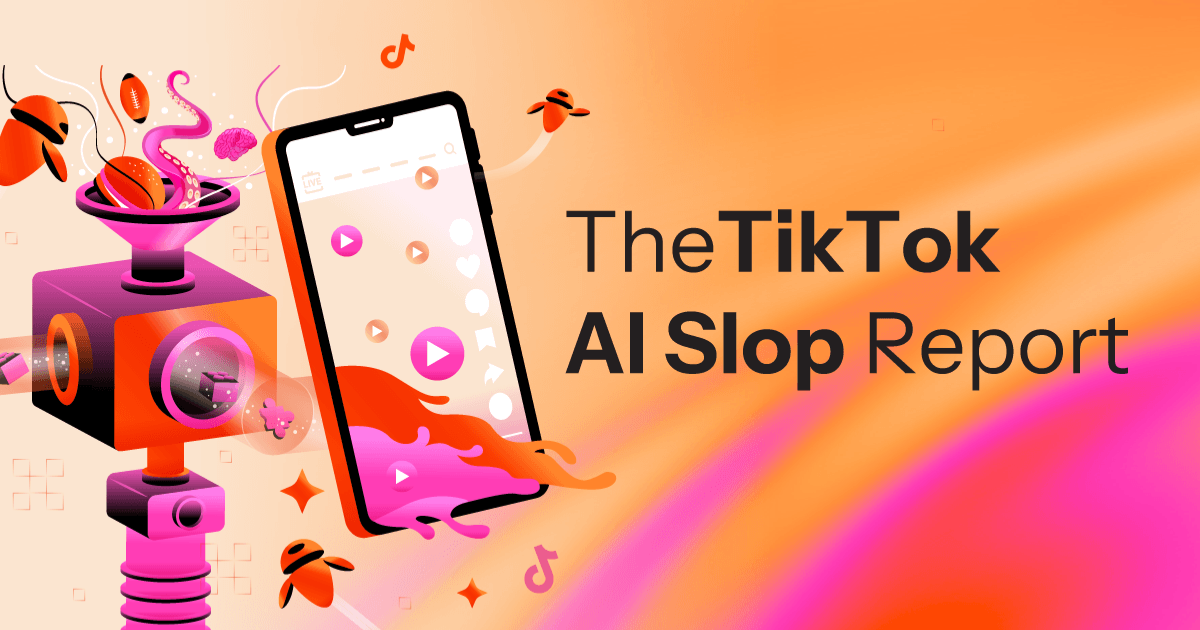
Kapwing’s latest research found that AI-generated, low-quality videos account for 59% of the first TikToks served to a new account, pointing to the extent to which synthetic content now appears in the platform’s default user experience.
The video-editing company analyzed 10,742 TikTok videos across 20 popular categories, as well as the first 500 videos shown to a newly created account’s For You feed. Kapwing defined “AI slop” as content with obvious AI-generated visuals, as well as low-quality clip or compilation videos using clearly AI-generated scripts and voiceovers.
The company said 294 of the first 500 videos shown to its new TikTok account qualified as AI slop. Kapwing compared that result with a similar test it previously ran on YouTube Shorts, where 104 of the first 500 videos, or 21%, were classified as AI “brainrot.”
TikTok has previously introduced tools intended to give users more control over AI-generated content. Kapwing’s report cites the company as saying in 2025 that “many people enjoy content made with AI tools, from digital art to science explainers, and we want to give people the power to see more or less of that.”
Children’s Content Had the Highest Concentration
Kapwing found the highest concentration of AI slop in TikTok’s Kids category. Of the 2,000 featured videos it analyzed there, 1,147, or 57.4%, were classified as AI slop.
The highest-rate tag in the study was #cartoonkids, where 97 of the 100 videos analyzed were AI slop. Kapwing said most of the other kids-related tags it reviewed contained AI slop in at least one-third of featured videos. Even #babytok, which had a lower rate than other kids tags, showed AI slop in one out of every 10 videos on the tag page.
The report highlighted one #preschoollearning video that used Sesame Street characters in a counting lesson where the numbers did not match the cookies shown. Kapwing also noted that the video’s comments included short, nonsensical letter strings, which the report said could help boost visibility.
Kapwing cited Dr. Dana Suskind, a professor of pediatrics at the University of Chicago, who told Mother Jones, “I think of this as toddler AI misinformation at an industrial scale. It’s very risky for the developing brain.” She added, “Every experience is building a million new neural connections. You will be unintentionally wiring the brain in incorrect ways.”
The report also referenced external data showing that only 51% of parents use parental controls on tablets and 47% use them on smartphones, based on a Family Online Safety Institute survey. It also cited the UK’s 1001 Critical Days Foundation, which reported that more than 70% of babies and children under two use screens, and one in 10 babies regularly falls asleep with a screen.
Education, Health, and History Also Ranked High
Outside children’s content, Kapwing found the highest AI slop rates in Science and Education at 35.0%, Health at 33.8%, and History at 33.5%. In the top nine categories analyzed, more than one in 10 videos were AI slop.
The report’s page 4 infographic also highlighted #healthtips, where 74% of videos analyzed were AI slop.
Kapwing said educational topics can lend themselves to AI-assisted visual formats because scientific facts and concepts can be illustrated through animation. However, the report also noted risks when educational videos use fast-paced, AI-generated scripts and visuals with errors, misspellings, or distorted lettering.
The report cited the example of Chloe VS History, a channel using an ultra-realistic AI presenter named Chloe. Kapwing said the presenter can be mistaken for a real person because of “human emotion and non-verbal cues” enabled by newer video models. The report also noted that the scripts are AI-generated and that viewers have criticized the channel for historical inaccuracies.
Brendan Gillis, Director of Teaching and Learning at the American Historical Association, warned in the report that AI-generated history depends on the quality of its source material. Because AI systems fill gaps using patterns from training data, the report said they can introduce inaccuracies, biases, and stereotypes.
Kapwing’s lower-rate categories showed a different picture. Fitness had an AI slop rate of 1.6%, Music had 1.5%, and Fashion had 1.3%, making those categories mostly human-made in the company’s sample.
Methodology and Platform Context
Kapwing said it built a seed list of 20 popular TikTok categories, including Food, Travel, and Fitness, and selected at least three popular tags for each. The company manually reviewed featured videos on each tag page, counted AI slop and non-AI slop videos, and aggregated the results by category.
To measure the new-user experience, Kapwing created a new TikTok account and reviewed the first 500 videos served in the For You feed. The company said the data was accurate as of May 2026.
Kapwing noted that TikTok had labeled 1.3 billion videos as AI-generated by November 2025. It also cited TikTok’s more recent efforts to reduce errors in AI-generated summaries and its $2 million educational fund for experts developing content about AI literacy and safety.
Image source: Kapwing The full report is available here
Dragomir is a Serbian freelance blog writer and translator. He is passionate about covering insightful stories and exploring topics such as influencer marketing, the creator economy, technology, business, and cyber fraud.

















Kapwing’s latest research found that AI-generated, low-quality videos account for 59% of the first TikToks served to a new account, pointing to the extent to which synthetic content now appears in the platform’s default user experience.
The video-editing company analyzed 10,742 TikTok videos across 20 popular categories, as well as the first 500 videos shown to a newly created account’s For You feed. Kapwing defined “AI slop” as content with obvious AI-generated visuals, as well as low-quality clip or compilation videos using clearly AI-generated scripts and voiceovers.
The company said 294 of the first 500 videos shown to its new TikTok account qualified as AI slop. Kapwing compared that result with a similar test it previously ran on YouTube Shorts, where 104 of the first 500 videos, or 21%, were classified as AI “brainrot.”
TikTok has previously introduced tools intended to give users more control over AI-generated content. Kapwing’s report cites the company as saying in 2025 that “many people enjoy content made with AI tools, from digital art to science explainers, and we want to give people the power to see more or less of that.”
Children’s Content Had the Highest Concentration
Kapwing found the highest concentration of AI slop in TikTok’s Kids category. Of the 2,000 featured videos it analyzed there, 1,147, or 57.4%, were classified as AI slop.
The highest-rate tag in the study was #cartoonkids, where 97 of the 100 videos analyzed were AI slop. Kapwing said most of the other kids-related tags it reviewed contained AI slop in at least one-third of featured videos. Even #babytok, which had a lower rate than other kids tags, showed AI slop in one out of every 10 videos on the tag page.
The report highlighted one #preschoollearning video that used Sesame Street characters in a counting lesson where the numbers did not match the cookies shown. Kapwing also noted that the video’s comments included short, nonsensical letter strings, which the report said could help boost visibility.
Kapwing cited Dr. Dana Suskind, a professor of pediatrics at the University of Chicago, who told Mother Jones, “I think of this as toddler AI misinformation at an industrial scale. It’s very risky for the developing brain.” She added, “Every experience is building a million new neural connections. You will be unintentionally wiring the brain in incorrect ways.”
The report also referenced external data showing that only 51% of parents use parental controls on tablets and 47% use them on smartphones, based on a Family Online Safety Institute survey. It also cited the UK’s 1001 Critical Days Foundation, which reported that more than 70% of babies and children under two use screens, and one in 10 babies regularly falls asleep with a screen.
Education, Health, and History Also Ranked High
Outside children’s content, Kapwing found the highest AI slop rates in Science and Education at 35.0%, Health at 33.8%, and History at 33.5%. In the top nine categories analyzed, more than one in 10 videos were AI slop.
The report’s page 4 infographic also highlighted #healthtips, where 74% of videos analyzed were AI slop.
Kapwing said educational topics can lend themselves to AI-assisted visual formats because scientific facts and concepts can be illustrated through animation. However, the report also noted risks when educational videos use fast-paced, AI-generated scripts and visuals with errors, misspellings, or distorted lettering.
The report cited the example of Chloe VS History, a channel using an ultra-realistic AI presenter named Chloe. Kapwing said the presenter can be mistaken for a real person because of “human emotion and non-verbal cues” enabled by newer video models. The report also noted that the scripts are AI-generated and that viewers have criticized the channel for historical inaccuracies.
Brendan Gillis, Director of Teaching and Learning at the American Historical Association, warned in the report that AI-generated history depends on the quality of its source material. Because AI systems fill gaps using patterns from training data, the report said they can introduce inaccuracies, biases, and stereotypes.
Kapwing’s lower-rate categories showed a different picture. Fitness had an AI slop rate of 1.6%, Music had 1.5%, and Fashion had 1.3%, making those categories mostly human-made in the company’s sample.
Methodology and Platform Context
Kapwing said it built a seed list of 20 popular TikTok categories, including Food, Travel, and Fitness, and selected at least three popular tags for each. The company manually reviewed featured videos on each tag page, counted AI slop and non-AI slop videos, and aggregated the results by category.
To measure the new-user experience, Kapwing created a new TikTok account and reviewed the first 500 videos served in the For You feed. The company said the data was accurate as of May 2026.
Kapwing noted that TikTok had labeled 1.3 billion videos as AI-generated by November 2025. It also cited TikTok’s more recent efforts to reduce errors in AI-generated summaries and its $2 million educational fund for experts developing content about AI literacy and safety.
Image source: Kapwing
The full report is available here
Subscribe to Our Newsletter
Check Out Our Podcast