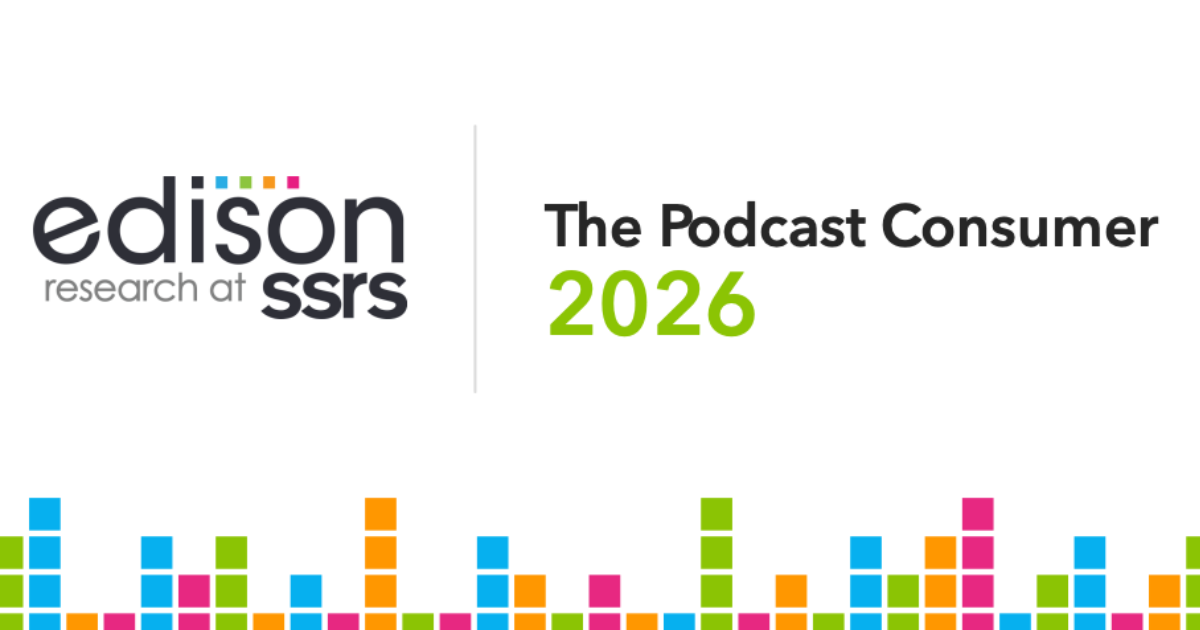
A new Edison Research report on podcast consumption shows a medium that is growing across age groups, moving further into the home, and continuing to deliver measurable advertising results. But beyond those trends is a more important takeaway for marketers: podcast audiences are often building relationships not just with shows, but with the people who host them.
“The Podcast Consumer 2026,” published by Edison Research and SSRS, draws on data from “The Infinite Dial,” “Edison Podcast Metrics,” “Edison Share of Ear,” and other studies. Its findings do not suggest that content, formats, or platforms no longer matter.
Rather, they suggest that brands evaluating podcasts solely through those lenses may be overlooking the role of host trust in driving audience loyalty and advertising effectiveness.
Podcasting Is No Longer a Narrow Youth Channel
Podcasting is often viewed as a younger-skewing medium, but Edison’s data paints a broader picture. Monthly podcast consumption among adults ages 35 to 54 reached 68% in 2026, the highest of any age group. Adults ages 12 to 34 came in at 64%, while adults 55 and older reached 44%.
The importance is not just demographic reach. Podcast audiences are now mainstream, and many listening habits are built around recurring voices rather than one-off content experiences. For brands, that means evaluating not only who a show reaches, but whether its host has built enough credibility with listeners to influence purchasing behavior.
The Listening Context Has Become More Personal
Podcast consumption is also becoming more home-centered. Sixty-six percent of weekly podcast consumers said home was their primary listening location in Q1 2026, up from 61% in 2024. In-vehicle listening fell to 13%.
This shift matters because podcasts are increasingly woven into daily routines. Whether listeners are working, exercising, cooking, or relaxing, they are often spending extended periods with the same hosts. That repeated exposure creates familiarity and trust that traditional advertising channels may struggle to replicate.
For advertisers, the value of a podcast placement is therefore tied not only to audience size or category alignment, but also to the strength of the relationship between host and listener.
Financial Support Shows Where Loyalty Is Directed
One of the strongest indicators of that relationship comes from direct audience support. Twenty-one percent of weekly podcast consumers said they financially supported a podcast in the previous year. Among those contributors, 47% said they did so to support a host or other individual, while 36% paid for membership benefits or exclusive content.
The distinction is important. Exclusive content clearly has value, but nearly half of the contributors said their motivation was supporting the person behind the show. Listeners may discover podcasts through topics or guests, but loyalty often consolidates around the host.
That dynamic helps explain why podcast advertising frequently resembles talent partnerships more than traditional media buys. A host-read endorsement is not simply ad inventory; it is a transfer of trust from the host to the advertiser.
AI Approval Reinforces the Human Boundary
Edison’s findings on generative AI point in the same direction. Weekly podcast consumers were generally comfortable with AI being used behind the scenes. Sixty-nine percent approved of AI for research and brainstorming, while 64% approved of AI-generated social graphics and 63% approved of AI-created cover art.
Support dropped sharply when AI moved closer to the listener experience. Approval fell to 48% for AI-generated scripts, 43% for AI-assisted audio editing, and just 25% for AI-generated hosts using synthetic voices.
The pattern suggests that listeners are not rejecting AI outright. Instead, they appear protective of the human relationship at the center of podcasting. That concern is reinforced by another finding: 62% of weekly podcast consumers said AI poses at least some threat to podcast credibility.
For marketers, the implication is straightforward. AI may improve production efficiency, but audiences still assign credibility to human hosts. Replacing that human element risks weakening one of podcasting’s most valuable assets.
Ad Effectiveness Depends on Human Qualities
Podcast advertising continues to perform well. Seventy-six percent of weekly podcast consumers said they had taken some action after hearing a podcast ad, whether visiting a website, making a purchase, using a promo code, or seeking more information.
When asked what makes them pay attention to ads, listeners highlighted qualities closely associated with trusted personalities. Fifty-six percent said humor would make them much more likely to pay attention, while 52% cited honesty and transparency, and 51% cited uniqueness.
These are not merely creative attributes. They are qualities audiences often associate with hosts themselves. Humor, authenticity, and originality are difficult to separate from the personalities delivering the message.
What the Data Suggests for Brand Marketers
The Edison findings describe a medium whose commercial value is tied to human trust. Podcasting now reaches a broad audience, is primarily consumed at home, generates direct financial support from listeners, and shows clear resistance to replacing hosts with AI-generated alternatives.
Content, topics, and platforms still matter. But the audience relationship often runs through the host. For brands, that means audience size and category fit are necessary but incomplete measures of value.
The more important questions may be whether a host has earned trust, whether listeners see that host as a reason they return, and whether a brand message can fit naturally within that relationship. In that sense, podcast advertising increasingly resembles a talent partnership. The show provides the context, but the host provides the credibility. And that credibility may be the most valuable asset brands are buying.
Image source: Edison Research The full report is available here
Dragomir is a Serbian freelance blog writer and translator. He is passionate about covering insightful stories and exploring topics such as influencer marketing, the creator economy, technology, business, and cyber fraud.

















A new Edison Research report on podcast consumption shows a medium that is growing across age groups, moving further into the home, and continuing to deliver measurable advertising results. But beyond those trends is a more important takeaway for marketers: podcast audiences are often building relationships not just with shows, but with the people who host them.
“The Podcast Consumer 2026,” published by Edison Research and SSRS, draws on data from “The Infinite Dial,” “Edison Podcast Metrics,” “Edison Share of Ear,” and other studies. Its findings do not suggest that content, formats, or platforms no longer matter.
Rather, they suggest that brands evaluating podcasts solely through those lenses may be overlooking the role of host trust in driving audience loyalty and advertising effectiveness.
Podcasting Is No Longer a Narrow Youth Channel
Podcasting is often viewed as a younger-skewing medium, but Edison’s data paints a broader picture. Monthly podcast consumption among adults ages 35 to 54 reached 68% in 2026, the highest of any age group. Adults ages 12 to 34 came in at 64%, while adults 55 and older reached 44%.
The importance is not just demographic reach. Podcast audiences are now mainstream, and many listening habits are built around recurring voices rather than one-off content experiences. For brands, that means evaluating not only who a show reaches, but whether its host has built enough credibility with listeners to influence purchasing behavior.
The Listening Context Has Become More Personal
Podcast consumption is also becoming more home-centered. Sixty-six percent of weekly podcast consumers said home was their primary listening location in Q1 2026, up from 61% in 2024. In-vehicle listening fell to 13%.
This shift matters because podcasts are increasingly woven into daily routines. Whether listeners are working, exercising, cooking, or relaxing, they are often spending extended periods with the same hosts. That repeated exposure creates familiarity and trust that traditional advertising channels may struggle to replicate.
For advertisers, the value of a podcast placement is therefore tied not only to audience size or category alignment, but also to the strength of the relationship between host and listener.
Financial Support Shows Where Loyalty Is Directed
One of the strongest indicators of that relationship comes from direct audience support. Twenty-one percent of weekly podcast consumers said they financially supported a podcast in the previous year. Among those contributors, 47% said they did so to support a host or other individual, while 36% paid for membership benefits or exclusive content.
The distinction is important. Exclusive content clearly has value, but nearly half of the contributors said their motivation was supporting the person behind the show. Listeners may discover podcasts through topics or guests, but loyalty often consolidates around the host.
That dynamic helps explain why podcast advertising frequently resembles talent partnerships more than traditional media buys. A host-read endorsement is not simply ad inventory; it is a transfer of trust from the host to the advertiser.
AI Approval Reinforces the Human Boundary
Edison’s findings on generative AI point in the same direction. Weekly podcast consumers were generally comfortable with AI being used behind the scenes. Sixty-nine percent approved of AI for research and brainstorming, while 64% approved of AI-generated social graphics and 63% approved of AI-created cover art.
Support dropped sharply when AI moved closer to the listener experience. Approval fell to 48% for AI-generated scripts, 43% for AI-assisted audio editing, and just 25% for AI-generated hosts using synthetic voices.
The pattern suggests that listeners are not rejecting AI outright. Instead, they appear protective of the human relationship at the center of podcasting. That concern is reinforced by another finding: 62% of weekly podcast consumers said AI poses at least some threat to podcast credibility.
For marketers, the implication is straightforward. AI may improve production efficiency, but audiences still assign credibility to human hosts. Replacing that human element risks weakening one of podcasting’s most valuable assets.
Ad Effectiveness Depends on Human Qualities
Podcast advertising continues to perform well. Seventy-six percent of weekly podcast consumers said they had taken some action after hearing a podcast ad, whether visiting a website, making a purchase, using a promo code, or seeking more information.
When asked what makes them pay attention to ads, listeners highlighted qualities closely associated with trusted personalities. Fifty-six percent said humor would make them much more likely to pay attention, while 52% cited honesty and transparency, and 51% cited uniqueness.
These are not merely creative attributes. They are qualities audiences often associate with hosts themselves. Humor, authenticity, and originality are difficult to separate from the personalities delivering the message.
What the Data Suggests for Brand Marketers
The Edison findings describe a medium whose commercial value is tied to human trust. Podcasting now reaches a broad audience, is primarily consumed at home, generates direct financial support from listeners, and shows clear resistance to replacing hosts with AI-generated alternatives.
Content, topics, and platforms still matter. But the audience relationship often runs through the host. For brands, that means audience size and category fit are necessary but incomplete measures of value.
The more important questions may be whether a host has earned trust, whether listeners see that host as a reason they return, and whether a brand message can fit naturally within that relationship. In that sense, podcast advertising increasingly resembles a talent partnership. The show provides the context, but the host provides the credibility. And that credibility may be the most valuable asset brands are buying.
Image source: Edison Research
The full report is available here
Subscribe to Our Newsletter
Check Out Our Podcast