





Agency
This 19-Year-Old Creator Economy CEO Thinks Your Brand’s Creator Strategy Is Broken

Follower count was supposed to be the holy grail that made Influencer Marketing digestible and enticing to brand marketers. Braden Blacker, the 19-year-old CEO of Los Angeles-based social media and influencer marketing agency The Content Code, believes that this premise is now the primary reason many campaigns underperform.
Braden started managing creators at 14, joined Fixated at 16, as what he describes as the agency’s youngest talent manager, and launched The Content Code at 17, funded by money earned from managing talent. The agency, now in its third year, combines social media management, influencer-led marketing, and creator talent management under one roof. Clients have included Sports Illustrated Predict, Rainbet (both prediction market platforms), and Chalkboard, a U.S. sports betting operator.
Braden believes that the metrics which brands have historically used to evaluate creators are no longer as impactful or relevant. A large following, Braden notes, no longer legitimizes a creator for a brand campaign. Instead, he looks at signals such as audience demographics, engagement rate, and comment sentiment. One metric he believes matters most is whether people actually share the brand integration.
“The main point is: does the influencer create actual impact?” he says. “When this creator posts a brand deal, does it get shared? Do people really care?”That shift has consequences for mid-tier and micro-creators. Braden sees a widening gap between the top tier, which still captures a disproportionate share of brand budgets, and everyone else.
Follower count losing its value has reshaped the middle of the market. Many mid-tier creators are now competing not just with other influencers, but with UGC creators and affiliate-style partnerships. “It is becoming a race to the bottom for mid-tier and micro-influencers as follower count has lost its value,” he says. “UGC [user-generated content] has shifted how some brands are looking at micro-influencers as affiliate channels rather than traditional influencer marketing.”
One Agency, One Strategy: Why Siloed Marketing Is Slowing Brands Down
The Content Code was built around a gap Braden identified early: most influencer marketing agencies did not also run social media, and most social media agencies did not touch influencer marketing. Brands were often managing separate teams, briefs, and reporting structures for social media and influencer marketing, two channels that increasingly now need to function as one.
“Imagine you are trying to get on a call with your social team, and then you are trying to get on a call with your influencer team,” he says. “It is very scattered. You are creating inorganic inefficiencies across your business.”
The agency now operates three divisions. The Social Media Marketing Arm runs brand pages end-to-end, as it has done for Chalkboard. The Influencer Marketing Division handles creator sourcing, budget allocation, brief development, and campaign execution. The Talent Management Arm is deliberately selective, focused on creators who want to build something beyond content, whether that means a podcast, a production, or a longer-term IP play.
Braden also points to a structural advantage tied to his age. He believes agencies often struggle to authentically reach and engage Gen Z because the people designing or planning campaigns are removed from the generation they are targeting. “A lot of brands want to connect with the Gen Z audience, and they are hiring people who perhaps do not reflect or understand this demographic,” Braden says. “Who can relate more to what Gen Z is dealing with in today’s world? It is obviously going to be Gen Z.”
‘Gamers vs. Greats’: FaZe Clan and NBA Hall of Famers in the Same Room
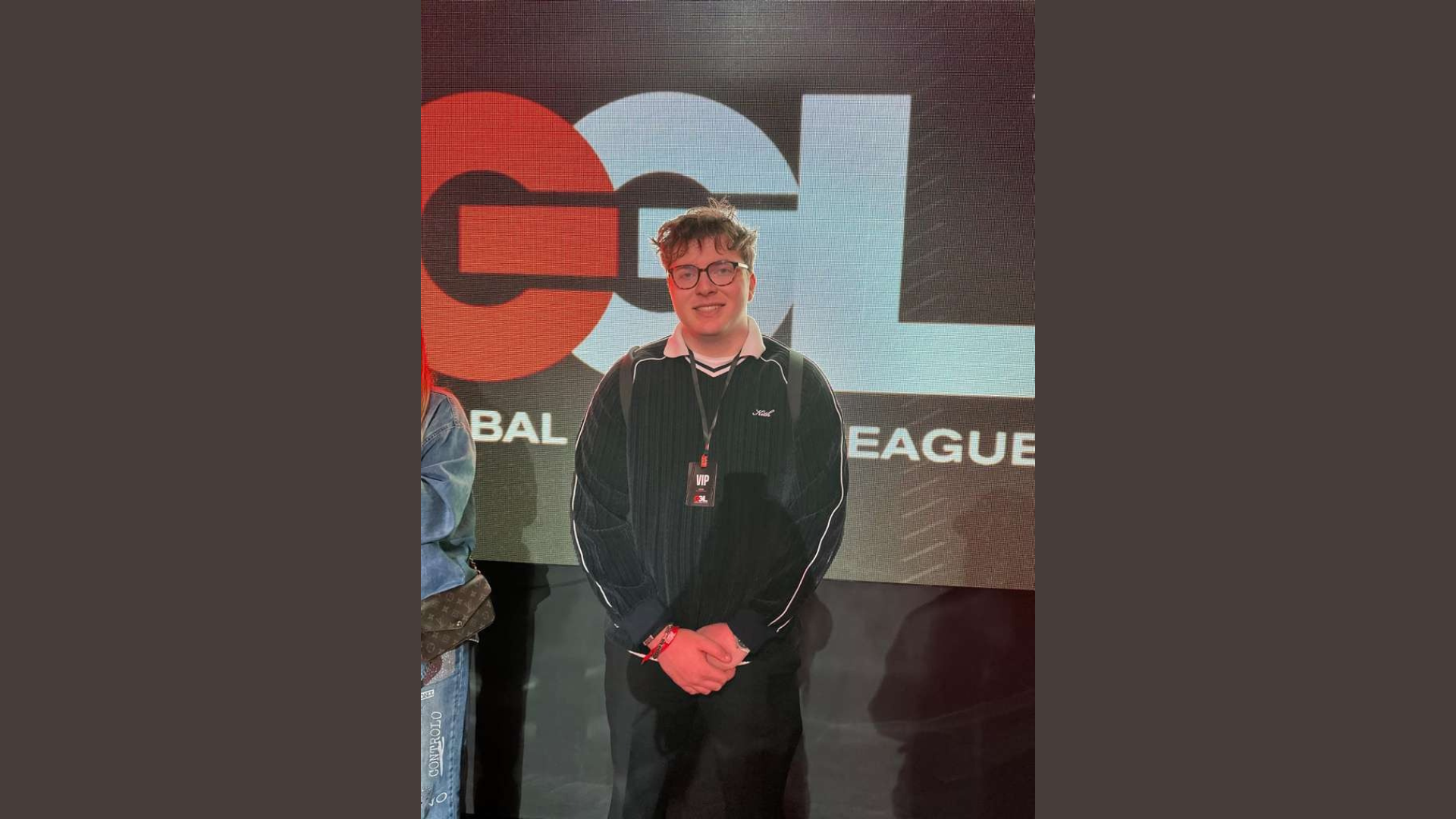
For Braden, the most visible case study in The Content Code’s early history came in June 2025, when the agency executed the launch of Sports Illustrated Predict, a prediction markets platform from Galactic Markets. The concept was co-created with Connor Jennings, CCO of Galactic Markets. The activation, titled “Gamers vs. Greats,” brought together FaZe Clan members such as Lacy, JasonTheWeen, and Stable Ronaldo, retired NBA players Dwight Howard, Iman Shumpert, and DeMarcus Cousins, with a halftime show performed by Ty Dolla $ign, and a guest appearance by Yung Gravy.
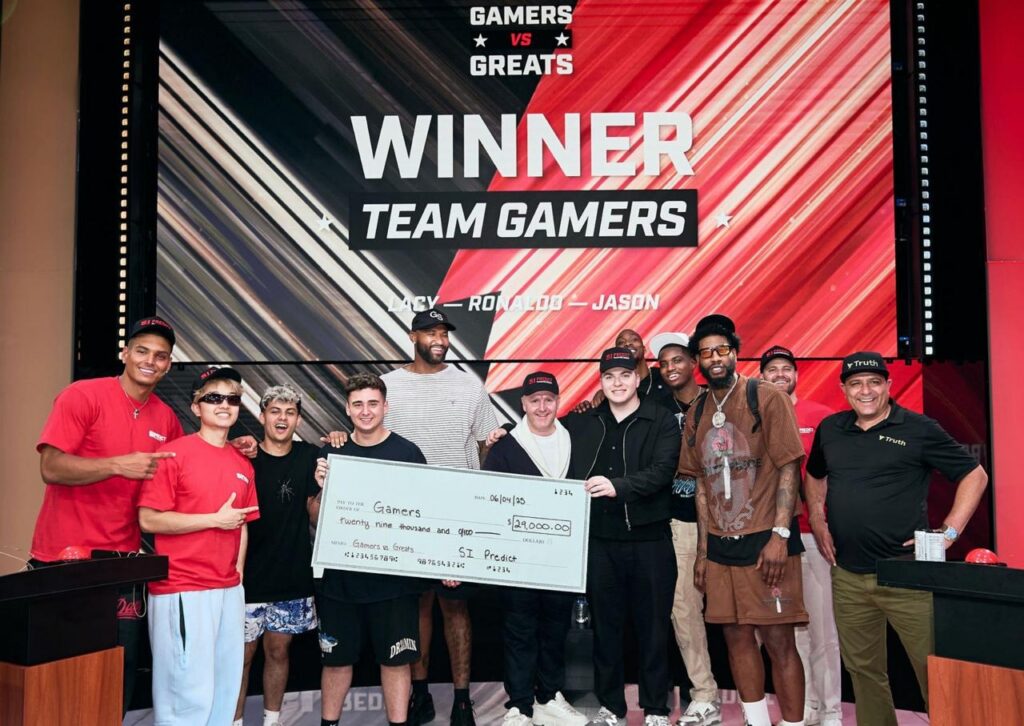
Photo: ‘Gamers vs. Greats’
The campaign generated close to 200 million views across clips and earned media, representing an estimated $5 million to $10 million in earned media value depending on CPM calculation, according to Braden. The first episode of a co-founded companion show surpassed 100 million views across social.
The cross-generational casting was deliberate. Howard and Shumpert brought nostalgia to generations of Sports Illustrated readers, while the FaZe Clan crew carried Gen Z. The event was filmed at a TV-studio level production facility, not a streaming setup, because Braden believes production quality signals legitimacy even in a Twitch context.
“The fans feel and appreciate the work of such a quality production,” he says. “Offering this level of sophistication makes it feel like an elevated experience, even if you are streaming live to Twitch.”

Photo: ‘Gamers vs. Greats’
Regulation Is Sending Marketing Budgets Toward Creators
Braden points to heavily regulated industries like casinos and prediction markets, where restrictions on paid advertising often push marketing budgets toward creator partnerships. In those cases, budgets that might otherwise be allocated to traditional media, sometimes reaching $100 million annually, are now flowing directly into creator partnerships.
He draws the same logic to Netflix’s recent shift toward creator partnerships as a strategy to compete with YouTube for attention. Platforms with massive marketing budgets and limited paid channels, in his reading, are now treating creators as the new media buy.
Working in regulated categories has also forced discipline on The Content Code’s approach to creator briefs. Prediction markets operate as financial exchanges, not gambling products, and require creators to use legally precise language that bears little resemblance to how streamers typically communicate on camera.
As Braden shares, teaching talent that distinction without stripping out their authenticity is one of the harder operational problems the agency has had to solve.
“How do you keep it authentic but keep it legal?” he asks. “If you look at that cast of characters, I do not think the first word I would use is that they are super careful with every word they say. They are funny and comedic. That is why people love them.”
Photo: Braden Blacker at ThinkLA Creative Summit 2025
Brands Are Still Getting Co-Creation Wrong
Braden’s broader critique of how brands engage with creators centers on creative control. In his view, the biggest mistake that brands make is forcing creators to use language that is not theirs, treating them transactionally, and failing to involve them in shaping the campaign idea.
“Treat them like humans. Treat them well. I talk to so many creators who are like, ‘I hate working with this brand because they just treat us like we are a billboard.'”
He also challenges the assumption that a single large creator constitutes a genuine creator investment. A Super Bowl-level commitment, in his view, means distributing across multiple creators with strong organic content that can be repurposed for paid media, rather than a single hero placement.
He singles out banks, airlines, candy companies, sports teams at the franchise level, and traditional sports hydration brands as categories that are meaningfully underinvested in creator marketing. His read is that those brands default to celebrity or athlete endorsements that make them feel out of reach for the consumers they actually want to acquire.
Growing the Infrastructure Around the Work
The Content Code’s next phase involves expanding its paid advertising and UGC capabilities alongside its existing influencer and social operations. Braden recently brought on Aaron Kirschenberg as president, a 30-year-old with more than a decade in creator management, including a stint as head of talent at Fixated. The hire aims to balance the agency’s Gen Z positioning with operational credibility for clients who remain skeptical of youth.
Braden is also serving as Global Head of Content, Talent, and Growth at Galactic Markets, overseeing creator strategy for a prediction markets platform launched with Time magazine and expected to be activated in summer 2026.
The pattern he sees in the market points toward organic creator content serving as both the primary channel and the raw material for paid distribution. For brands still treating the two as separate line items, he argues, the gap between them is closing whether they plan for it or not.
“We have a ton of campaigns where we are making organic creative now specifically to be run for paid media. Organic that performs–typically does well for paid,” the young entrepreneur says. “Soon enough, these will not be separate strategies nor different teams. This will be one incredible and symbiotic ecosystem.”
Subscribe to Our Newsletter
Check Out Our Podcast