





Strategy
The SuperHeroes X Lenovo Collaboration: How Creator-Led Production Became A Global Brand Engine

The long-running collaboration between SuperHeroes and Lenovo is a case study for how brands can use creators not as distribution channels, but as core creative partners. Through “Made with Lenovo Yoga,” the global technology company and the independent creative agency have built a creator-led production model designed to reach digitally native audiences who increasingly avoid traditional advertising formats.
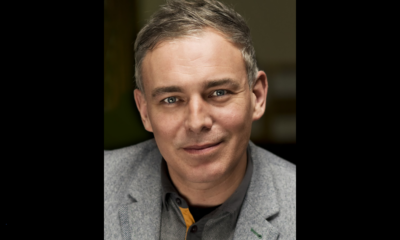
Launched three years ago, the partnership positions Lenovo Yoga laptops at the center of real creative workflows, while giving digital artists the freedom to build culturally relevant stories on their own terms. According to Rogier Vijverberg, founder and Chief Creative Hero of SuperHeroes, the result is a continuous stream of platform-native content that blends entertainment, utility, and brand storytelling, without relying on celebrity endorsements or conventional global shoots.
“At Lenovo, Yoga was historically positioned as a premium laptop for millennials,” says Rogier. “But a younger audience was coming up and locking into systems very early. Lenovo needed to become relevant to them in a way that felt real.”
From Traditional Campaigns to an Always-On Creator Program
Rather than launching a single repositioning campaign, SuperHeroes and Lenovo designed “Made with Lenovo Yoga” as an always-on initiative. New creative briefs were issued every six to eight weeks, each rooted in cultural insights drawn from Gen Z behavior and creative communities.
“We always start with what’s relevant for them,” Rogier says. “Dating culture, creative burnout, the Gen Z stare, and right now, football (soccer) because the World Cup is coming.”
This approach marked a shift away from polished, infrequent brand moments toward continuous experimentation. Digital street artists, i.e., creators who combine real-world footage with VFX and animation, became the foundation of the program.
“These artists are powerhouses of creativity,” Rogier says. “Everything they make comes from a strong inner drive. Brands were underutilizing that.”
‘The Detour’: A Global Creator Production in Motion
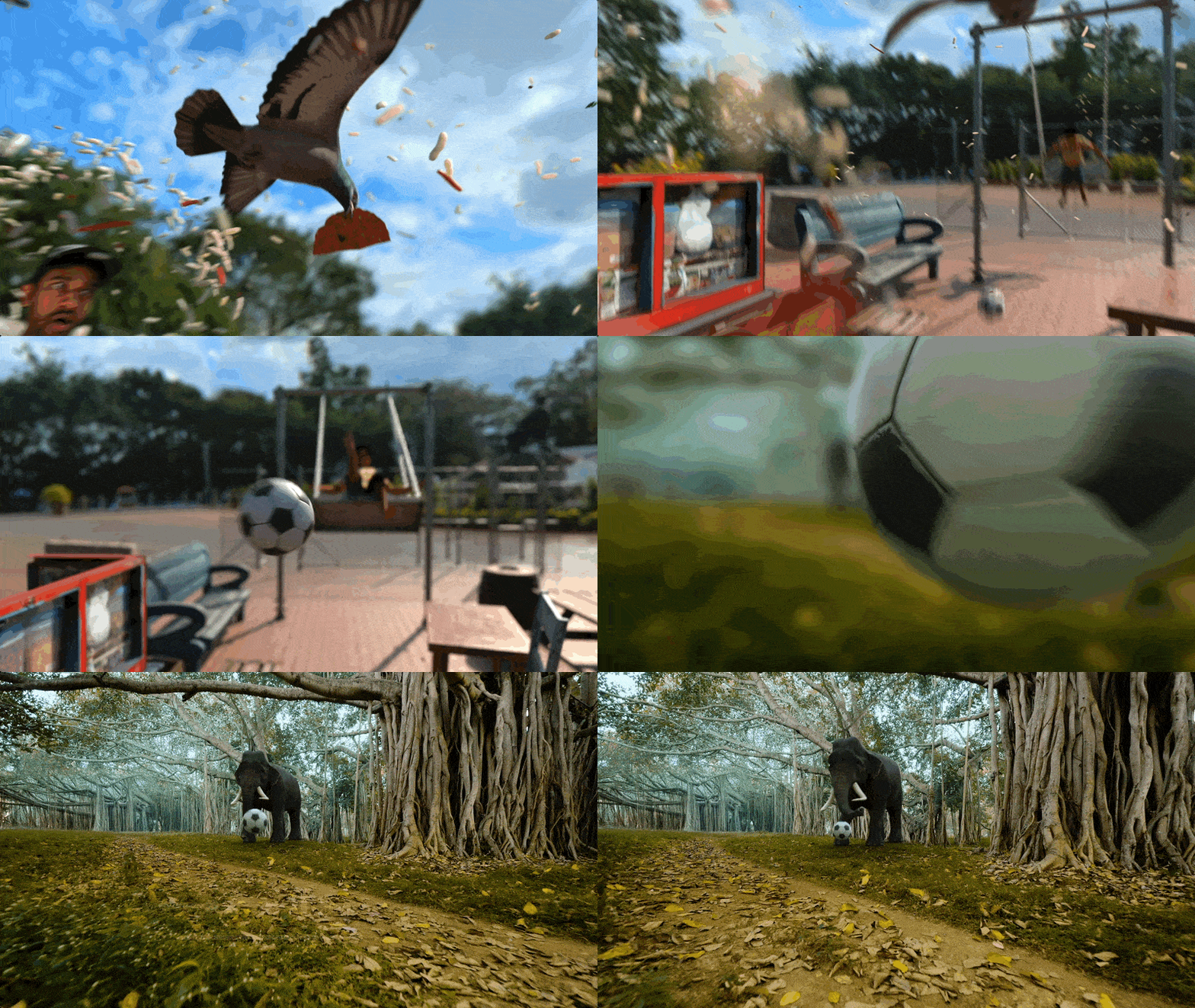
The latest execution, “The Detour,” illustrates how the SuperHeroes/Lenovo model works at scale. The campaign follows a single soccer ball on a surreal journey across six countries, each chapter created by a local digital street artist.
The ball travels from Los Angeles to Brazil, Qatar, India, Germany, and Canada before returning to LA, forming a continuous narrative stitched together through coordinated motion and shared digital assets.
“We didn’t just want something about soccer,” Rogier explains. “We wanted teamwork to be part of the idea, artists collaborating across borders, just like the sport itself.”
Each creator embedded the ball in familiar local environments – markets, bridges, streets, and landmarks – reinforcing the idea that creativity and culture live in everyday spaces, not just on global stages.
To maintain continuity, every artist worked with the same digital soccer ball and coordinated entry and exit points. “The path of the ball had to be mirrored perfectly,” Rogier says. “They spoke a lot, experimented, and made sure it worked.”
The Creators Behind ‘The Detour’
“The Detour” collaboration brought together six digital street artists, each contributing a chapter from their own city and creative perspective.
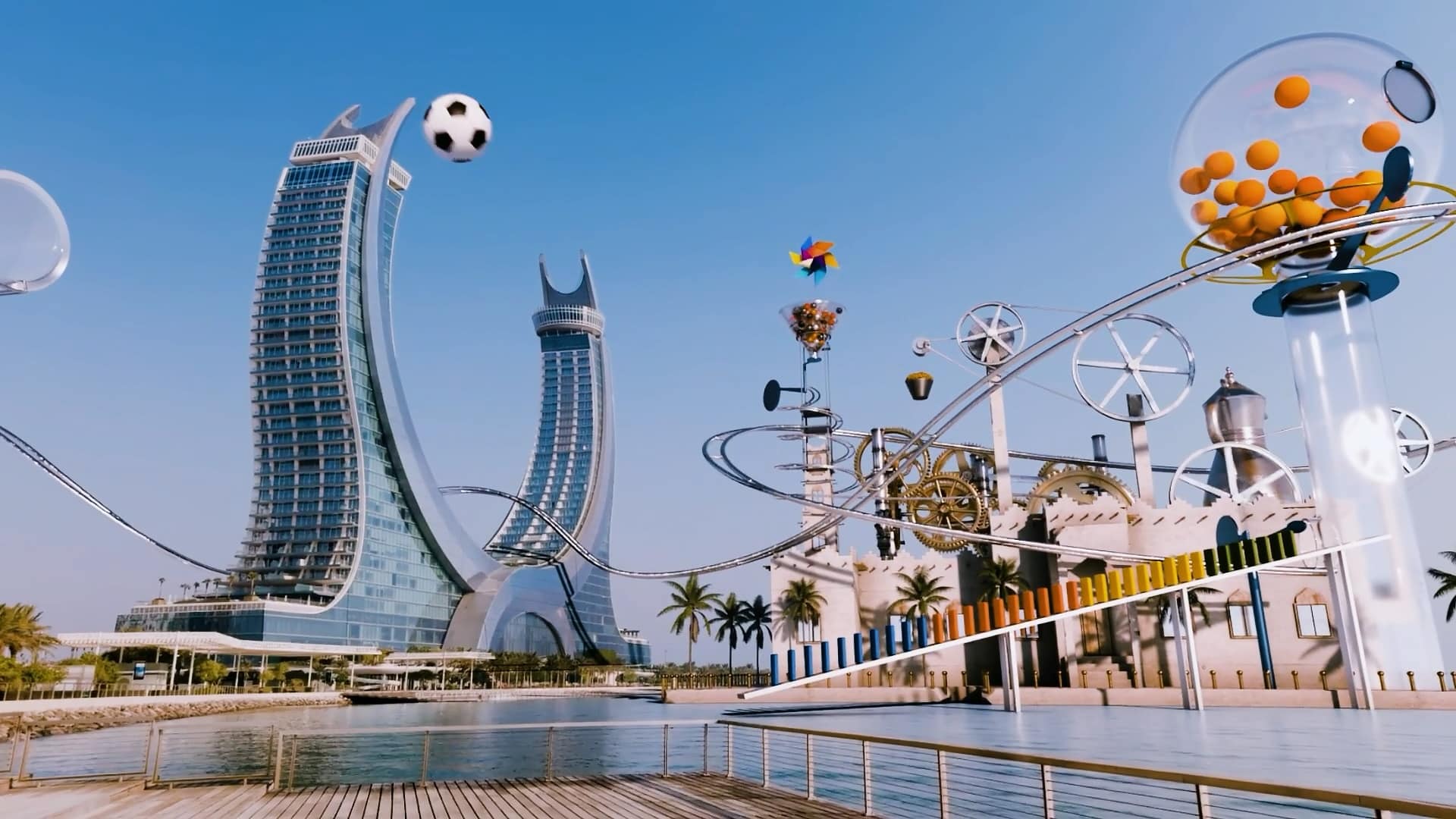
The campaign begins in Los Angeles with NudeRobot, whose missed free kick sends the ball into motion. From there, the ball travels to Brazil, where Gabriel Benicio animates the scene at Brasília’s Three Powers Square, before moving on to Qatar through Ghost3Dee, who incorporates the Katara Towers into a kinetic, Rube Goldberg-style sequence.
In India, ShutterAuthority places the ball inside a bustling street market, triggering a chain reaction through everyday objects and traffic. The journey then moves to Berlin, where M_Editat reimagines the ball as part of an analogue, marble-run-inspired street art sequence woven into the city’s facades.
The final chapter takes place in Toronto, where CamylBuena sends the ball ricocheting through the urban landscape and up the CN Tower, launching it back to Los Angeles to complete the loop.
Each artist worked from their local environment, using the same digital ball asset and coordinating entry and exit points to maintain continuity across borders.
Showing the Product by Showing the Process
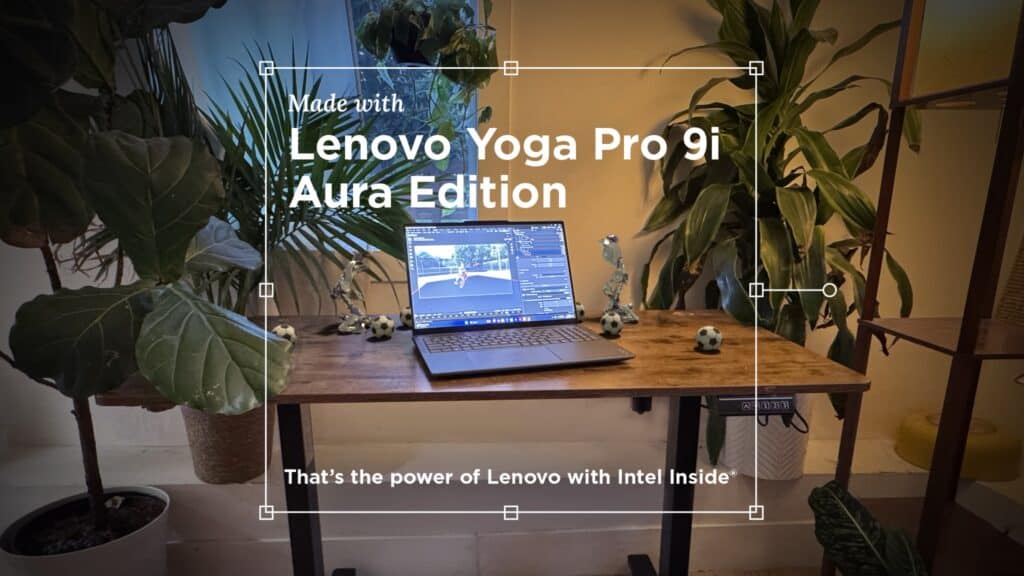
A defining element of the collaboration is how Lenovo Yoga appears in the work. Rather than foregrounding product features, the laptop is presented as an enabler of creativity.
“We show the output of what it does instead of talking about what it can do,” Rogier says. “The product is central, but it’s not constantly explained.”
Every creative execution is paired with a behind-the-scenes “How I Made It” video in which artists walk through their workflow, technical challenges, and creative decisions, while also highlighting useful laptop features and, in this case, the laptop’s powerful Intel processor performance. “These videos are sometimes even more popular than the artworks,” Rogier notes. “People really want to understand the process.”
All participating creators actively use Lenovo Yoga devices throughout production, and the collaboration extends beyond content creation. Artists regularly provide feedback to Lenovo’s product teams through structured panels.
“They tell Lenovo what works, what could be improved, and how the devices perform in real creative environments,” Rogier says. “Those insights feed back into product development.”
A Long-Term Creator Ecosystem
Unlike transactional influencer partnerships, the SuperHeroes x Lenovo relationship is built around continuity. Creators often return across multiple campaigns and participate in additional program-related initiatives.
One of those extensions is Digital Art School, a free educational platform where artists publish multi-hour courses, share project files, and break down their creative workflows in detail.
“We saw how popular the ‘How I Made It’ videos were, but they’re limited to one or two minutes,” Rogier says. “People wanted more. Digital Art School became a natural next step.”
The platform strengthens the ecosystem around “Made with Lenovo Yoga,” positioning Lenovo not just as a sponsor of creativity, but as an active contributor to creative education.
Measuring Impact Beyond Engagement
From a performance perspective, the collaboration has delivered across brand and commercial metrics. According to Rogier, awareness of Lenovo Yoga among Gen Z and young millennials has increased significantly since the program launched.
“We’ve seen higher sales volumes, more website visits, and increased search volume,” he says. “Across the board, the metrics have been outperforming.”
The program has also received industry recognition, including awards for social and creative effectiveness. Still, Rogier emphasizes that efficiency was never the primary objective. “It’s not about cutting costs,” he says. “It’s about relevance. We pay our artists well, and everyone involved is valued.”
A Blueprint for Creator-Led Advertising
For brands evaluating creator-led production as an alternative to traditional global campaigns, the SuperHeroes x Lenovo collaboration offers a different starting point.
“If you want long-term impact, you need deeper relationships,” Rogier says. “Product placement alone isn’t enough.”
He also points to the importance of reversing the traditional campaign funnel. “We often start ideas in social,” he explains. “Once there’s proven success, we translate them into other formats. Working bottom-up instead of top-down changes how brands show up.”
What’s Next?
With additional campaigns already in development and a growing focus on AI-assisted creativity, the collaboration shows no signs of slowing. “There’s a lot of new work coming,” Rogier says. “Different ideas, different formats, but always rooted in creators and culture.”
As brands continue to seek credibility with digitally native audiences, the partnership demonstrates that creator-led production can function not as an experiment but as a sustained business model.
“Advertising doesn’t have to feel like advertising,” Rogier says. “If it’s playful, recognizable, and grounded in real creative work, people choose to engage with it.”