




Agency
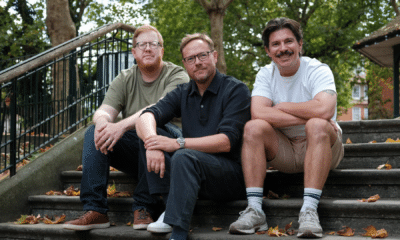
Status MGMT’s Max Elk on Why Creators Are the Next Generation of Talent and What That Demands From Management

Max Elk believes talent management for digital creators has largely adopted the same model that governed Hollywood representation for decades: categorizing talent by type, distributing pitches across a team, and waiting for deals to close. According to him, that’s exactly the problem.
Max launched Status MGMT in February 2026, two and a half years after joining the industry as a senior talent manager. Before entering the management side of the business, he spent years on the other end of the equation, signed with Ford Models and Wilhelmina, training as an actor in New York. That dual perspective, having experienced the frustration of being managed and then the mechanics of doing the managing, shapes how he approaches a business he believes is structurally misaligned with the talent it serves.
“They have this following. They have this mini platform,” Max says of digital creators. “It’s more like a merger. It’s like a partnership between a brand and a creator.”
Status launched with 50 creators on its roster and a model that, by design, looks different from the larger agencies where Max spent his management career. The agency handles brand partnerships and song promotions, operates with Max personally managing every creator relationship, and offers a financing option that pays creators within two days of a campaign close rather than making them wait the industry-standard 30 to 60 days.
Creators Are Outpacing Hollywood. The Industry Is Still Lagging
Max’s core thesis is that creators are, by most measurable standards, already operating at the level of traditional entertainment talent, but haven’t received the institutional recognition that comes with it.
“If you watch network television, some of the creators on my roster are getting more views on one video than these massive networks are getting on Monday night at 8 p.m.,” he says. “How can you not have respect for that and call that the next generation of talent?”
He points to rate disparity as the clearest evidence. Guest spots on network television, historically the benchmark for mid-tier acting work, now pay less than what a creator can earn on a well-placed brand deal. The cultural visibility gap is closing, too. At the Oscars, references to MrBeast as a potential host circulated as jokes during the ceremony. Max reads those jokes differently. “They’re making fun of it,” he says, “but at the same time, it’s like, ‘Why not?’”
For Max, this convergence makes the timing of his launch deliberate. “It still feels early,” he says. “Ten years from now, I’d be like one of the early agencies that started.”
The Niche Pigeonhole Problem
One of the most direct criticisms Max levels at the current talent management market is its reliance on category-based matching, the practice of routing creators into vertical silos (gaming, lifestyle, beauty, fitness) and pitching them only for brands that fit their declared content type.
“I’ve interviewed at other agencies, and it was very much, ‘Which department would you want to be a part of, gaming or lifestyle?'” he says. “With us, we don’t separate by niche.”
His alternative treats creators as multidimensional: a creator whose content focuses on hair and makeup still has an audience with diverse interests, and that audience will follow their recommendation into adjacent categories if the trust is there.
“I have a lifestyle creator and her followers absolutely trust her,” he says. “I could pitch her for a video game, and she could sell that. Her followers are going to go, ‘I don’t play video games, but I follow this creator I love, and she loves this video game.'”
Max asks creators directly which brands interest them, which they would refuse, and which competitors they believe should be landing deals but aren’t. Outreach is then specific rather than mass-distributed. “I’m not just sending them stuff there’s no interest in,” he says.
Against the ‘Spaghetti Agency’
The management experience that most shaped Max’s operating model was not from behind a desk. It came from being talent on a roster and not knowing whether anyone was actually working for him.
“You’re always wondering and worried: am I still on the roster? Am I getting dropped? Are they pitching me?” he says.
His answer at Status is constant, proactive communication, even when there is nothing concrete to report. “If it’s slow for brands this quarter, I’m telling you that. I was pitched for this brand and this brand. Just not keeping creators in the dark. Keeping people in the dark is when their brain starts running.”
He contrasts this with what he calls “spaghetti agencies,” management operations that sign large rosters and rely on volume rather than individual attention. “A lot of agencies, it’s kind of like they sign a creator, they get on the roster, and the whole team sends them out and shares them, and they get emails from random people at the agency,” he says. “With me, it’s all like texts.”
Max manages all 50 creators personally, with his sister Samantha serving as COO, having come on board from the start and grown into the role alongside the agency. Several managers joined the team recently as the agency scales.
Authentic Appeal Over Rate
On the brand side, Max’s approach starts with a prerequisite that many agencies skip: having the creator actually use the product before committing to a campaign.
“A lot of the time we try to have them use the products before they commit to jumping on a campaign,” he says. “They do have trust with their audience. You don’t want to break that trust.”
His criticism of brand behavior centers on two recurring problems. The first is a conversion fixation that misreads how creator content actually works. “You’re not going to see something one time and make a purchase,” he says. “It’s over time. You see this energy drink again and again, then go to Target and see it. You choose it because you’ve seen it on social media.” Brands that measure a single campaign against immediate sales, he argues, are using the wrong frame.
The second is over-scripting. Max describes a recent campaign for a fitness brand in which a creator was given a rigid script, and the content underperformed compared to the creator’s typical videos. He pushed the brand to allow a second piece on the creator’s own terms. “Brands that are very firm on ‘Say this and say that’ are missing the point of it all,” he says. “Who knows more than the creator what’s going to perform with their audience?”
Max notes that the song promotion side of his business avoids this friction almost entirely. He works with major record labels to place creators in content that organically integrates new music releases, generating income for creators without disrupting their editorial voice. “It doesn’t turn a creator’s page into a bunch of advertisements,” he says. “It just looks like you’re having fun.”
Financing as a Recruiting Tool
Among the services Status offers, Max believes its payment financing model is the most operationally unusual. When a deal closes with a brand Max trusts, Status pays the creator within two days, charging a small fee in exchange for fronting the payment and absorbing the collection risk. More than half of his current roster opts in.
“They can’t wait 60 days,” he says. “They have to pay their rent. They got to pay for groceries.”
The risk sits with the agency. Brands occasionally default. Max describes one case where a company he was pursuing for payment on a song promotion campaign filed for bankruptcy mid-collection, leaving the debt unrecoverable. “There’s a chance I don’t get paid,” he acknowledges. “That’s why most agencies aren’t willing to do it.”
He views the risk as a calculated trade-off. The financing option is a key differentiator at the point of creator recruitment, particularly for creators who rely on deal income as their primary source of income.
A Seat at the Table
Max’s plan for the first year centers on controlled growth. The emphasis is on adding managers who are genuinely motivated by the space rather than scaling headcount to chase revenue.
“Some agencies just bring on any person with a pulse to be a manager to make more revenue,” he says. “I want real people who are excited about the space.”
He also sees the music sector as a significant growth vector, with record-label relationships already generating recurring song-promotion campaigns that sit alongside traditional brand deals on his creators’ schedules. Artists breaking on TikTok are discovered through exactly these kinds of integrations, he notes, pointing to how musicians build audiences today. “These creators are discovering their favorite artists,” he says. “Artists are blowing up huge on TikTok.”
On the broader question of where the creator management category goes from here, Max’s framing is simple. The creators he manages are building platforms with the reach of small media companies and commanding the same kind of audience loyalty that once required years of theatrical releases to develop. The management infrastructure around them, he argues, hasn’t kept pace.
“This space is getting a real seat at the table,” he says. “And I think Status is going to be at the table as well.”
Subscribe to Our Newsletter
Check Out Our Podcast